Welcome to my first newsletter. You are here because you paddle or are paddle-curious. Or maybe you just thought SUP has something to do with food or drink? I will try to satisfy all comers. Perhaps there are recipes we can share 🙂
I recently did a round up of some of my favourite standup paddle locations around Perth so I thought I would start with those. These are not the only places you can paddle in Western Australia; we are very lucky to have so many spots to splash, and I will continue to review and add places to paddle in future issues.
Claughton Reserve, Bayswater
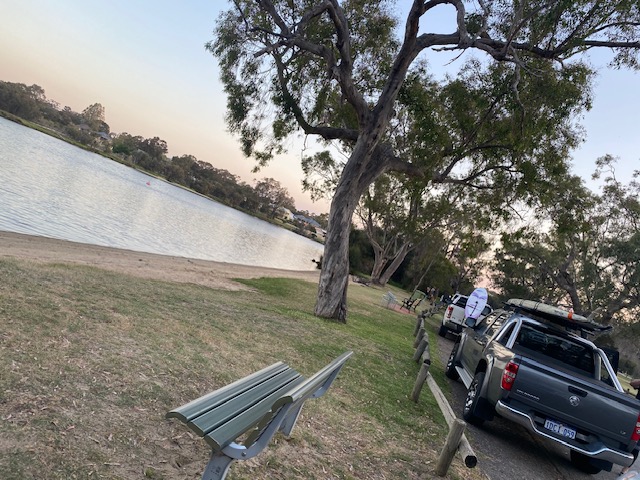
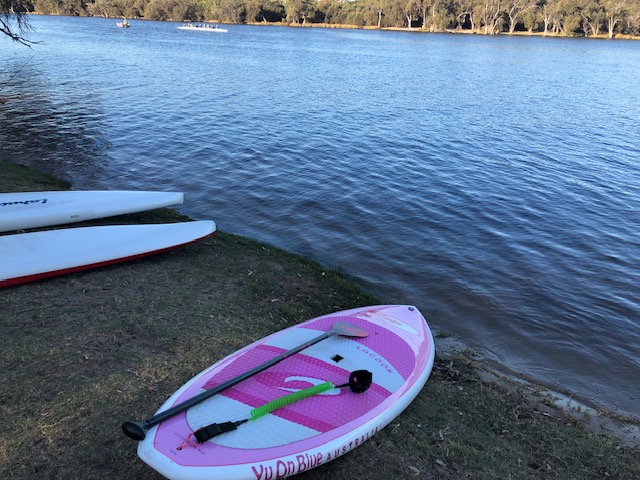
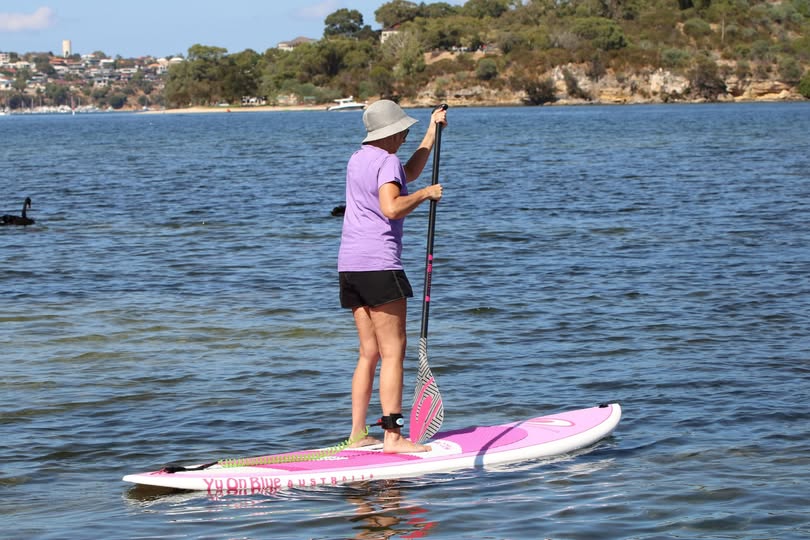
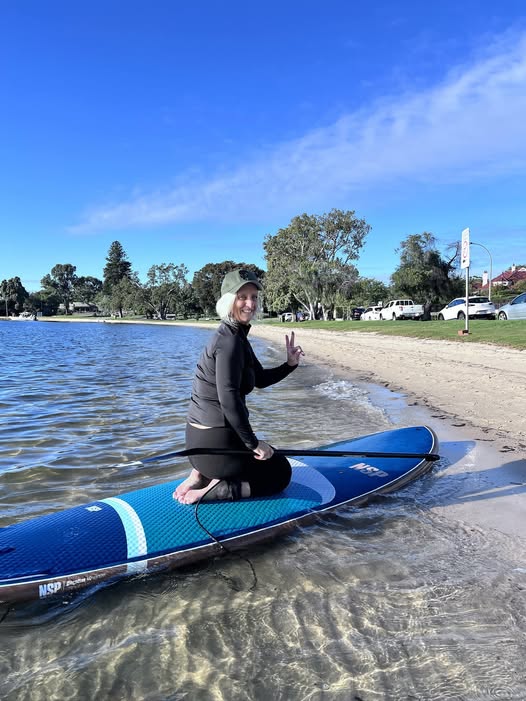
Looking for a sheltered upriver paddle location. Claughton Reserve in Katanning Street, Bayswater is one of my favourite SUP launch spots.
there’s heaps of parking
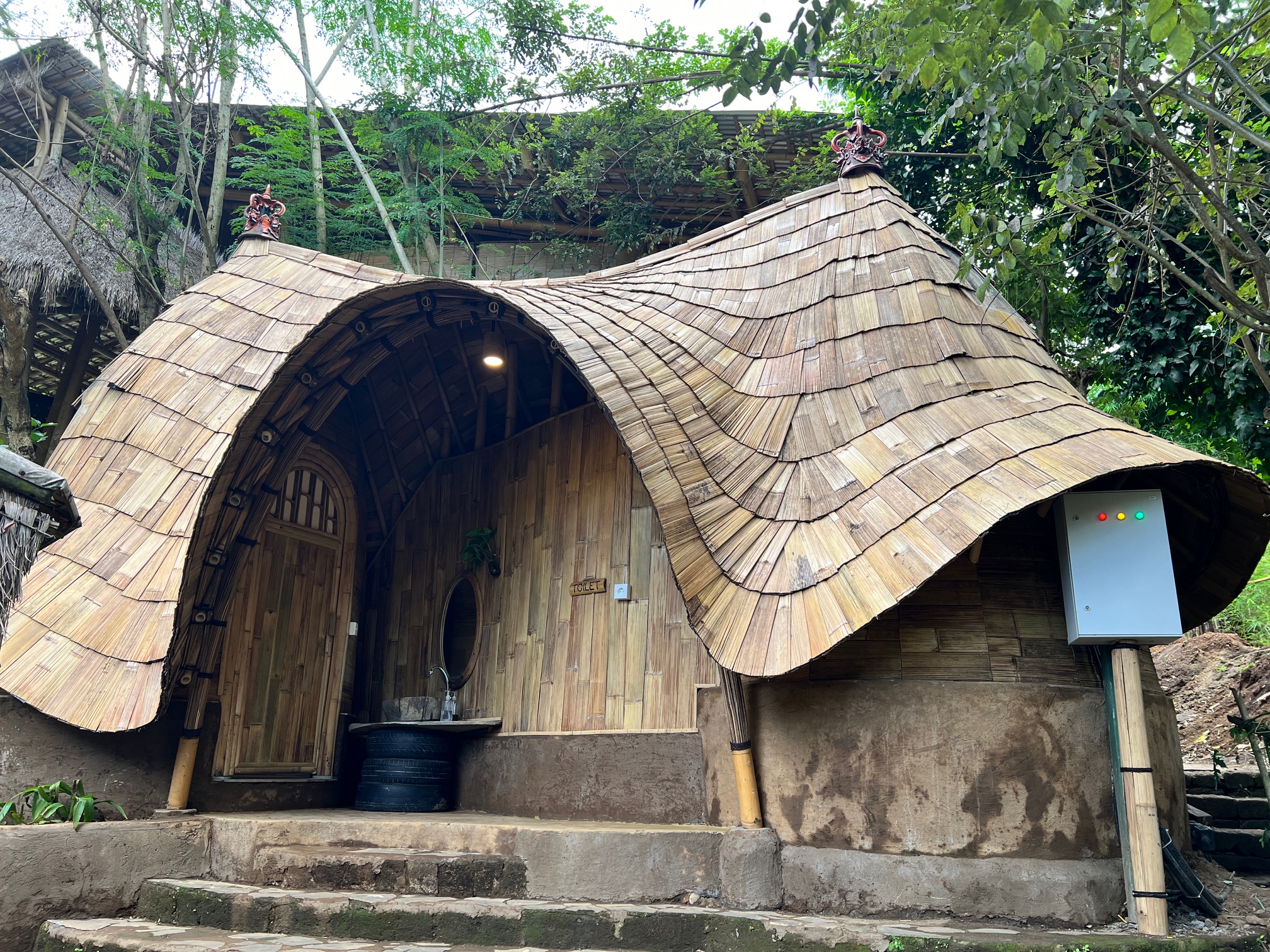
a toilet block (in fact one of the funkiest toilet blocks I have ever seen!)
It’s a great place to explore up or down the river depending on the winds. A nice short paddle from there is up river and around Ron Courtney Island.
Ocean Paddling Perth
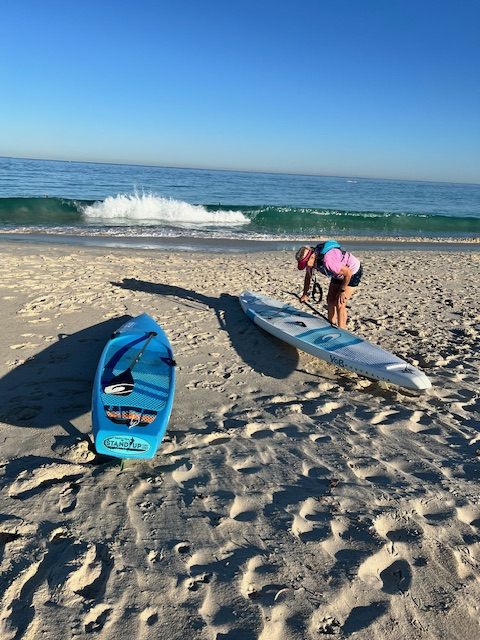
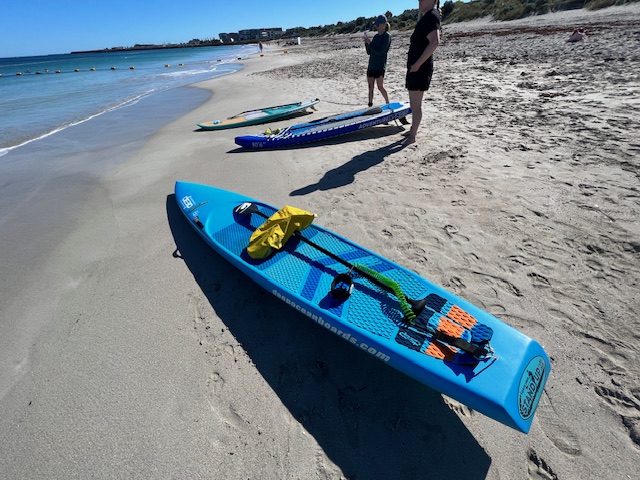
Perth’s southern beaches; Leighton, South Beach & Coogee Beach are wonderful when the conditions are right. It’s knowing when the conditions are right that is the tricky part.
As with most outdoor activities in Perth I always go out in the mornings – the earlier the better.
In the Summer months from November to March the morning winds are more likely to be offshore (Easterly) and light. Once the Freo Doctor comes in it’s too late and too windy.
Not only is getting up early to paddle good for getting the right or no winds, but also to avoid the hottest part of the day.
Perth’s southern beaches:
are easy to get to
have free parking – but can be busy the later you arrive (see, getting up early has other benefits!)
have great cafes
have showers and changerooms
you can sometimes see dolphins, whales & sealions
North Coogee has the Omeo Wreck – great for SUPing around but also a very popular snorkelling spot. Pack your gear!
Go with a group or a buddy if you are a first timer on the ocean, ALWAYS use a leg leash and don’t go out further than you are comfortable with. Be prepared to get wet and HAVE FUN!
Point Walter Reserve Bicton
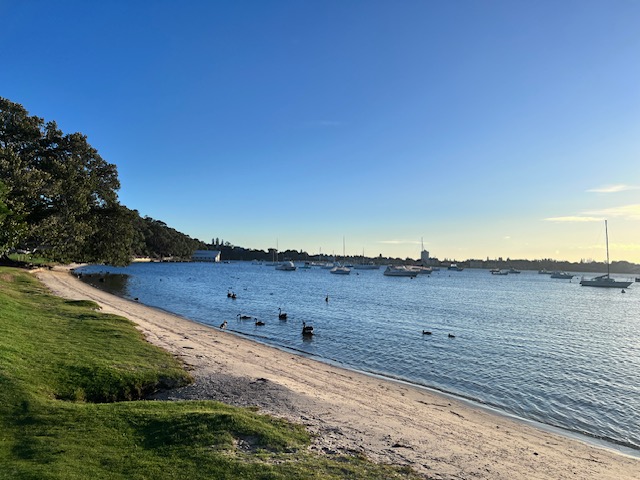
You can paddle down river from the Point Walter sandbar, up past the cliffs at Blackwall Reach. Depending on the wind it can be quite sheltered through there.
Keep paddling down to Bicton Baths and turn around or alternatively (depending on wind) do the reverse.
Handy tip: always paddle into the wind on the way out so you get a free ride on your return. It makes a difference
parking is usually available closeby and if it’s not you can drop and park.
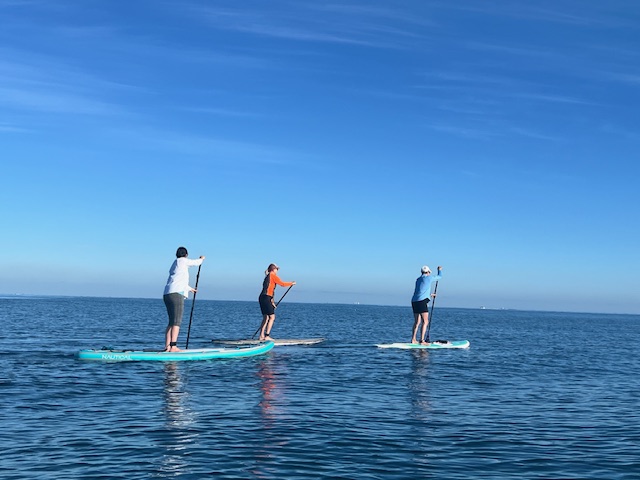
Freshwater Bay in Peppermint Grove is a beautiful spot to get out on the water. There’s usually sheltered waters close to the shore for those venturing out for the first time. Or for the more adventurous, a paddle along the cliff’s edge to the yacht club is a lovely paddle. Dolphins are common in this area.
the water is clear
the shore easy to access
parking not usually a problem
cafe close by for coffee and snacks
Some links to previous articles and websites of interest:
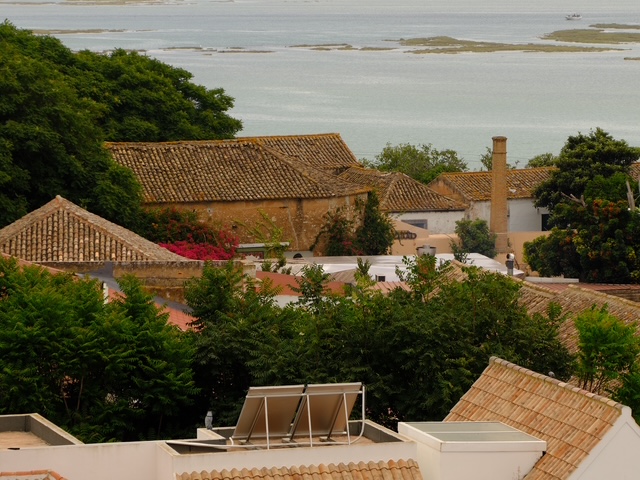
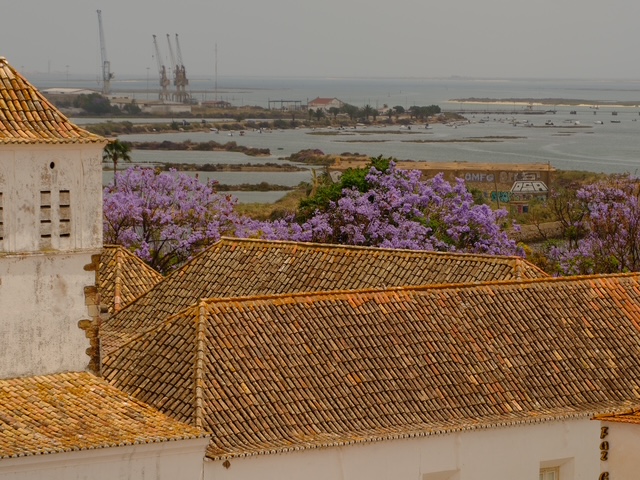
On the beautiful Atlantic Ocean coast sits the small town of Faro; a town of contrasts and the best piri piri chicken in Algarve
Where possible. I always prefer train travel when exploring Europe. I’ve done the hire car thing a few times but find it stressful; trying to park, paying for parking and the whole ‘driving on the wrong side of the road’ business. I love a slow-travel experience, the downtime for writing and reading, and just watching the landscape speed past. Olive trees, grape vines, and Tassie blue gums swishing past in a swirl of muted greens. Hay stacks, cows and sunshine! All while sipping a cold Estrella and gnawing on some jamon and kicking back. It’s the summer daydreams are made of.
Pastel de nata always on the menuTime for a bit of writing
On a recent trip to Spain and Portugal, I set the itinerary to the train timetable and chose stopovers according to their ease of access to train stations, connections, and points of interest. Being our first trip to Portugal, we planned to visit the major cities of Porto and Lisboa, but as I’m ever the bird nerd and nature-nut, I also wanted to hang with the birds and lose myself in wilderness.
Sunset on the first night in Faro – bloody stunning!
For the Algarve part of our trip, we chose Faro. Firstly because it was a single two-hour train journey from Lisboa. Two hours being the optimum time for train relaxation and people watching. Faro, or Cidade de Faro is the southern most city and capital of the district of Faro. It forms part of the Algarve region and from my research had some interesting historical points.
The area was known as Ossonoba in the 4th Century BC and it was the most important urban centre of southern Portugal; a commercial port for agricultural products, fish, and minerals. Later came the Romans, then the Byzantines, and then the Visigoths, before the area was conquered by the Arabic-speaking Muslims known as Moors in 713.
From the third century onwards and during the Visigothic period, it was the site of an Episcopal see, the Ancient Diocese of Ossonoba (306-688). The Byzantine built the towers of the city walls during the Byzantine period. Following 500 years of Moorish rule the Moors were defeated and expelled in 1249 by the forces of the Portuguese King Afonso III. The rest they say, is history and a very rich one it is!
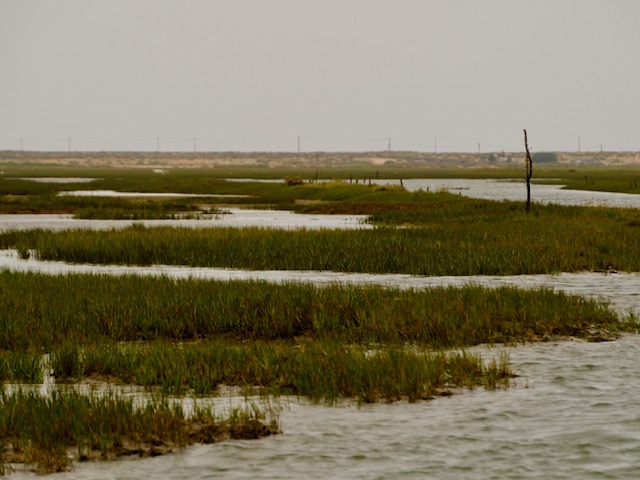
It’s also right on the shores of nature-lovers Parque Natural da Ria Formosa. The Ria Formosa (Beautiful Estuary) is an estuary park of natural canals, islands, marsh lands and sandy beaches. The park extends 60 km along the coast. It’s home to a diverse range of flora and fauna, including hundreds of species of birds, marine mammals and shellfish.
My first impression of Faro the town on the short taxi trip from the train station to our accommodation? I had an instant and overwhelming urge to get back on the train and continue to the more popular tourist destination of Lagos. I had my phone out searching for train fares to Lagos before I had even given Faro half a chance. Which is not like me at all to have such a visceral reaction to a place.
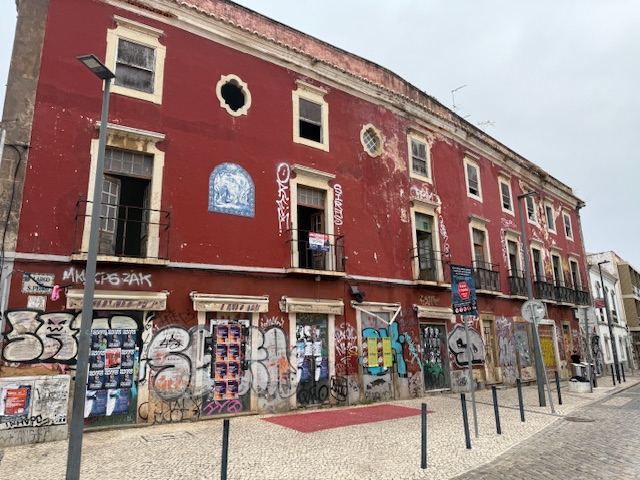
Abandoned buildings
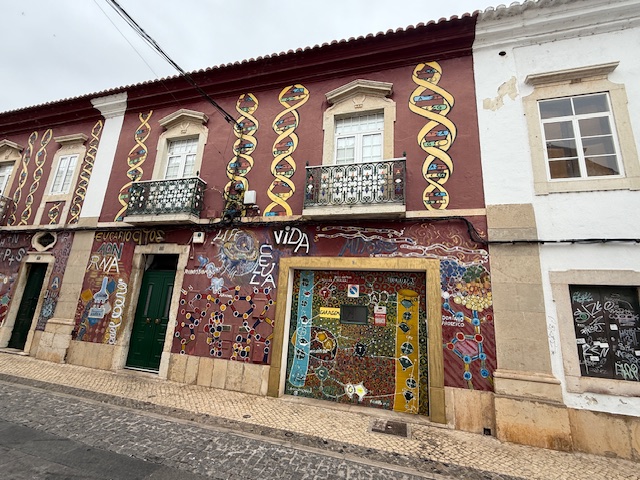
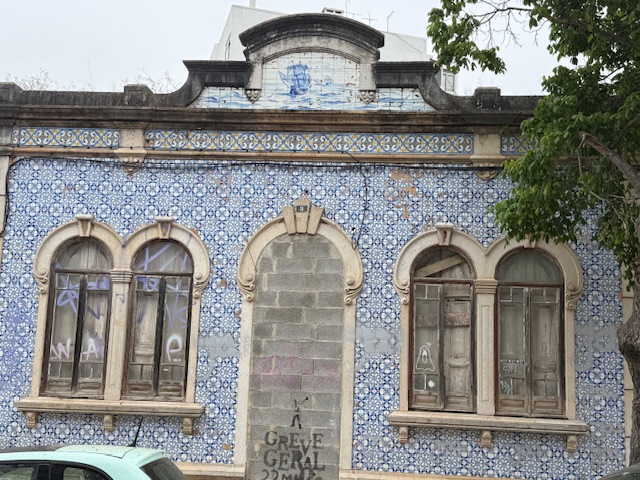
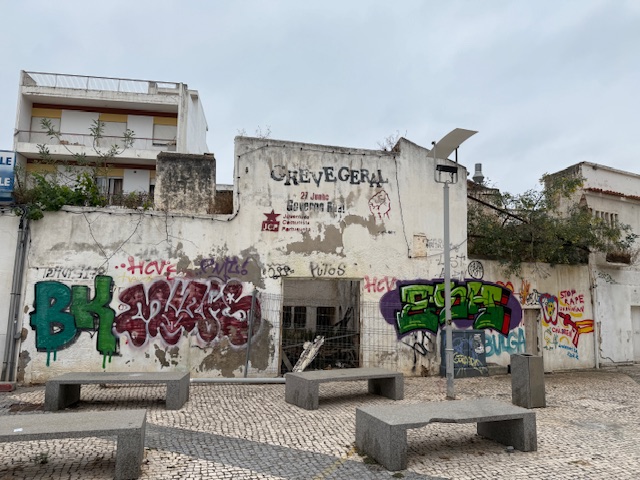
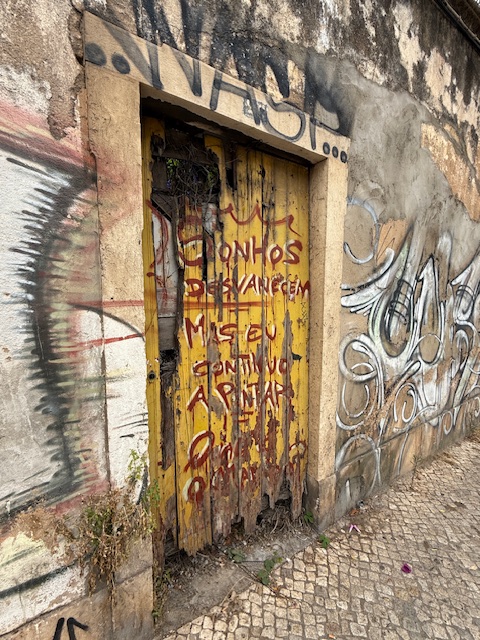
Like many towns and cities in Portugal old buildings in Faro are in a state of decay and because Faro is a small town/city it was shocking that such a large proportion were in ruins and not just one or two buildings in a street. Entire streets of buildings had been consumed by graffiti and were turning to rubble; centuries old and now irreparable. Quite beautiful in a warzone kind of way.
When I spoke to one of the locals about this later, he said despite there being an accommodation crisis in Portugal, houses fall into disrepair when the older generations pass, and their children and grandchildren don’t have the money or the will to restore or maintain the ancient buildings. Some of them are also owned by the state who also have no intention to restore them. Portugal has some grand architecture and it’s sad to see it so bereft.
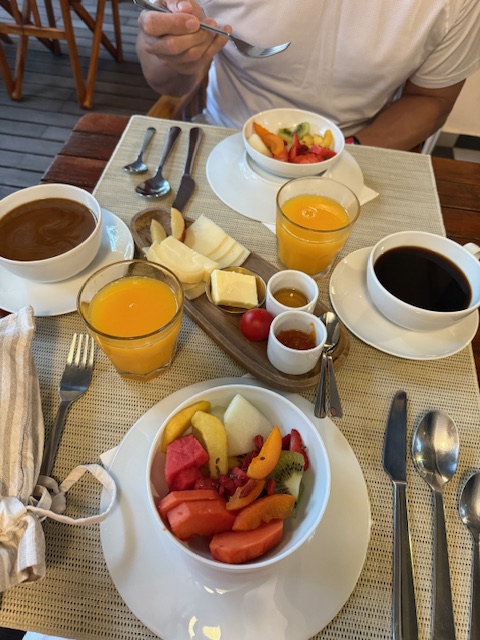
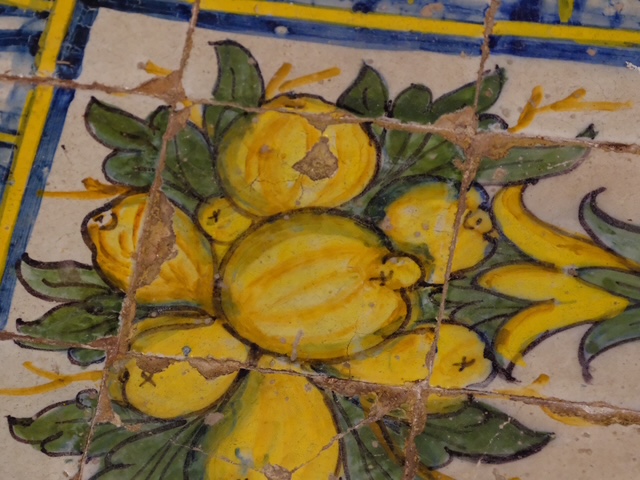
Lemon Tree StayBreakfast included
Once my partner and I settled into our gorgeous accommodation, Lemon Tree Stay, a cosy bed and breakfast surrounded by tumbling down structures on all sides, we went to explore. The old town is fortressed by the obligatory ancient stone fortress walls and paved with beautiful mosaics. The paved streets took us away from the decay of the abandoned buildings and I could see Faro had another side. A side where wealthy American and European tourists could dine out and shop at high-end shops. Such contrast.
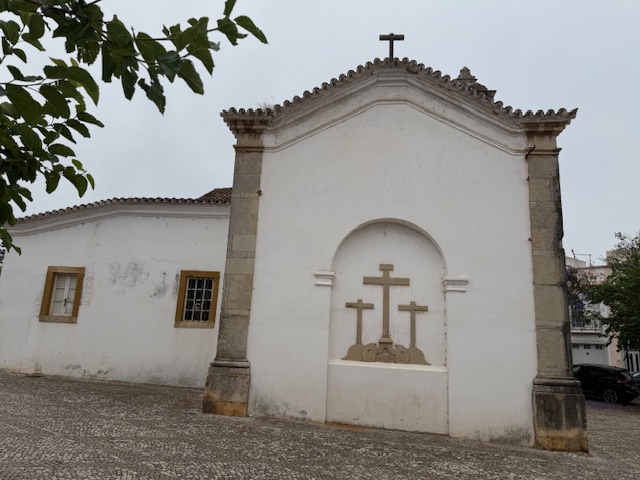
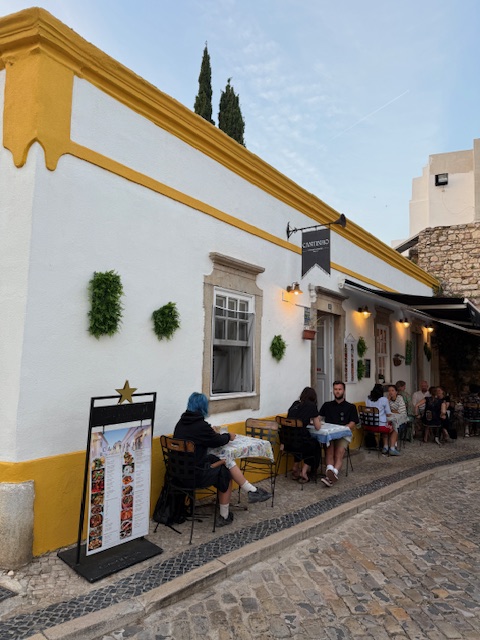
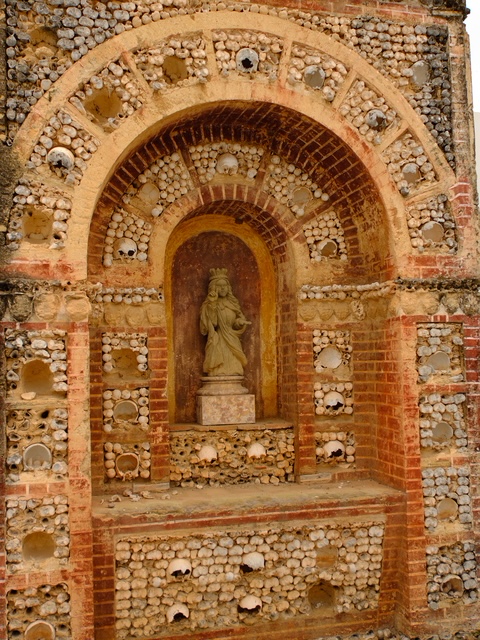
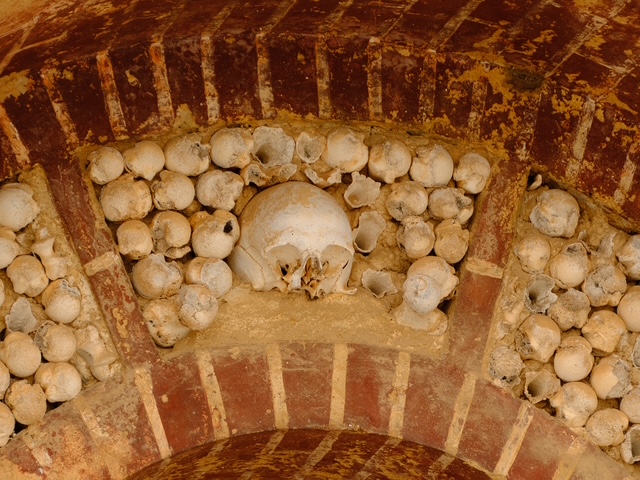
What we discovered over the days we spent in Faro was a town of beauty, history and contrasts catering to a range of tourism styles from the tourist seeking Michelin star restaurants and oysters by the sea, to the tourist seeking small bars and churrascarias (local grill restaurants) and a more authentic experience where locals hang out. It was in the back streets that we eventually discovered the most amazing piri piri chicken. The old buildings and churches including the macabre Capela dos Ossos (Bones Chapel) are worth a look. Most restaurants in this part of the town cater to seafood lovers.
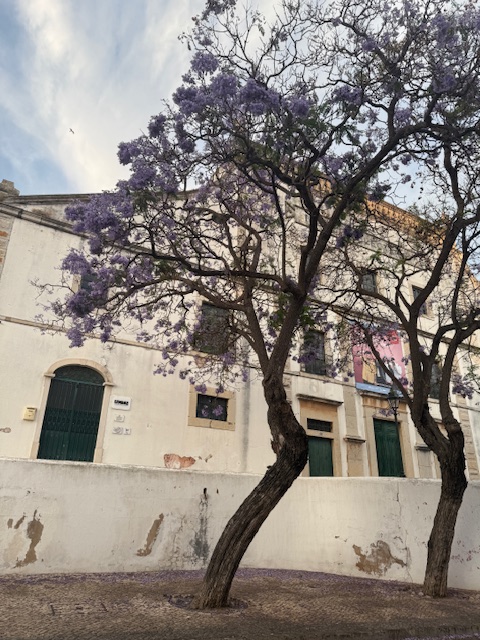
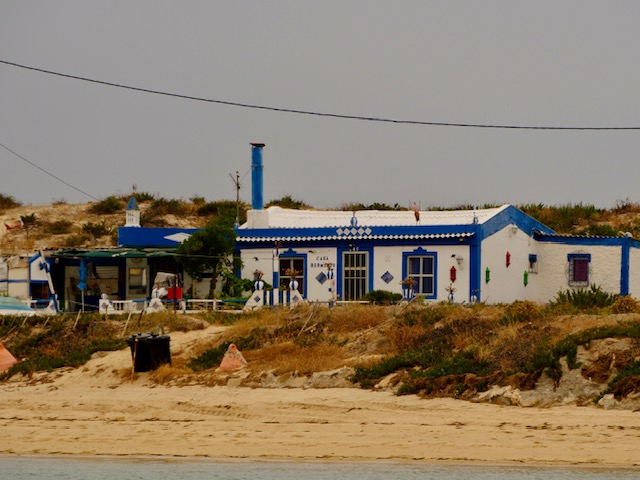
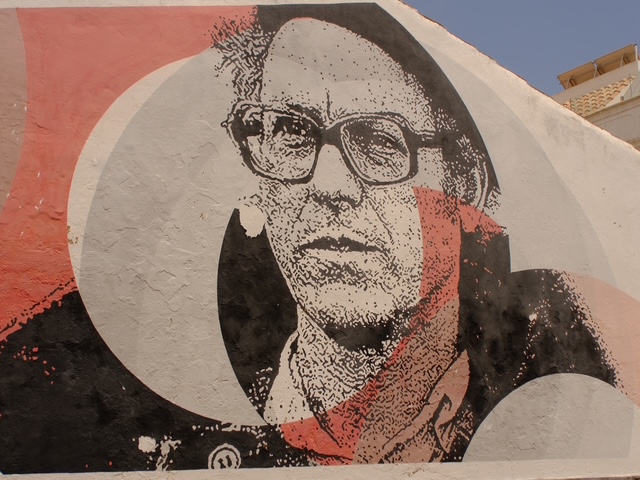
António Ramos Rosa – Faro poetPina Coladas Fishing shack on the beachJacarandas in full bloom
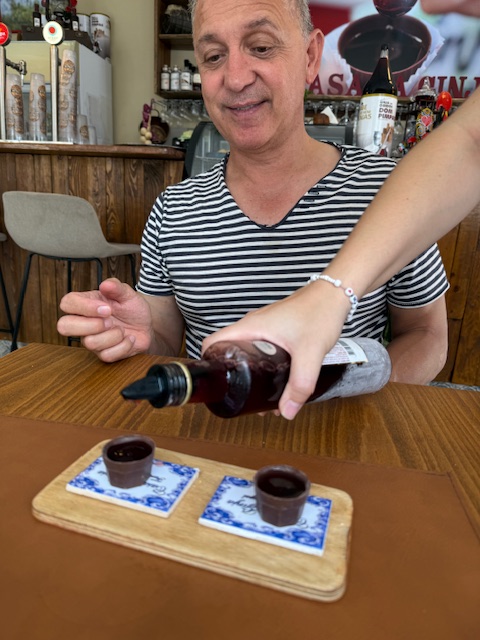
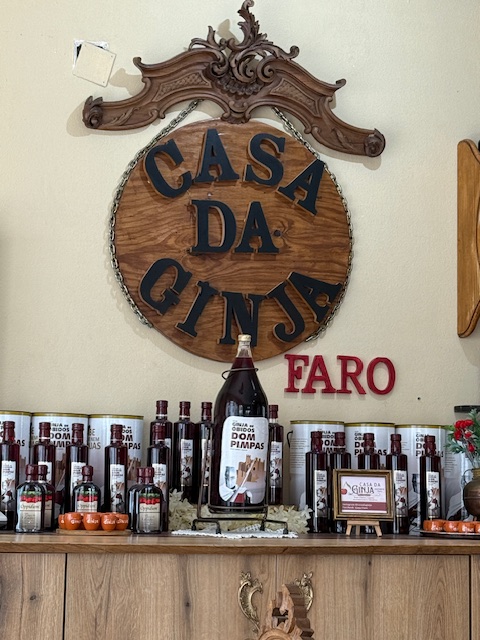
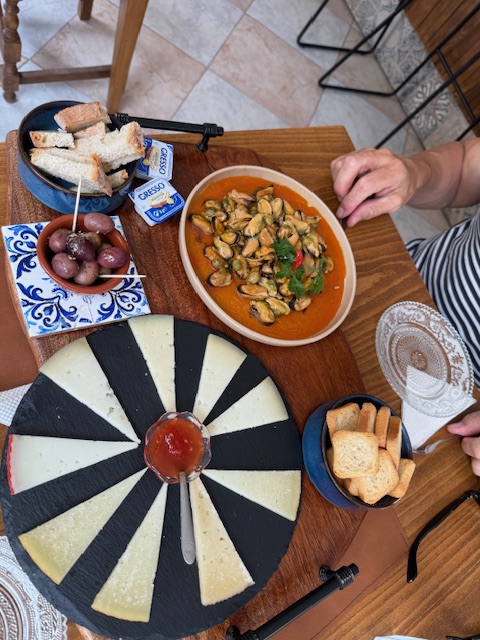
For our first meal, my partner and I found a local bar where we ordered a plate of mussels, cheese and olives. The Casa da Ginja Bar in Faro is the place to try the local cherry liquor, Ginja, a sweet drop served in a small dark chocolate cup to be eaten after you have drained it. So we decided it was mandatory to have one to start with and then one to finish. It certainly put a warm glow on my initial impression of the town.
Cas da Ginja
Following our feast and warmed by the Ginja I canceled the hastily booked train tickets to Lagos, and we decided to give the town a chance and explore as far and as wide as we could. We were not disappointed.
I knew the Ria Formosa Natural Park was right on our doorstop so I booked an eco-tour on a solar powered boat the next day to go birdwatching and get out to the beach which is not immediately accessible to Faro – there was some legwork and a boat ride required to get there. The morning of our boat trip we woke to drizzling rain, not ideal for birdwatching or beach combing, but I was excited to get into nature after spending the last eight days in the big cities of Porto and Lisbon. So, we packed some delicious tuna empanadas from the local supermarket, the obligatory tarts and some drinks for our four hour adventure.
Faro is the site of one of the largest international airports in Portugal so it was not absolutely peaceful out on the water with a constant stream of planes taking off and landing right overhead. I got the feeling our guide was not a fan of the airport traffic but he was being very diplomatic about it. Consequently we got some pretty crazy views of the big metal birds. A great spot for plane spotters!
We were lucky to be only two of three passengers on our eco boat. Us two and a lovely German tourist in Faro for a long weekend. Our knowledgeable guide, a lovely local man who had a passion for birds and the region, kitted us out in life jackets and gave us a set of binoculars before firing up the silent motor. We noted the cloud cover hadn’t cleared, but adventure was afoot and the weather waits for no one!
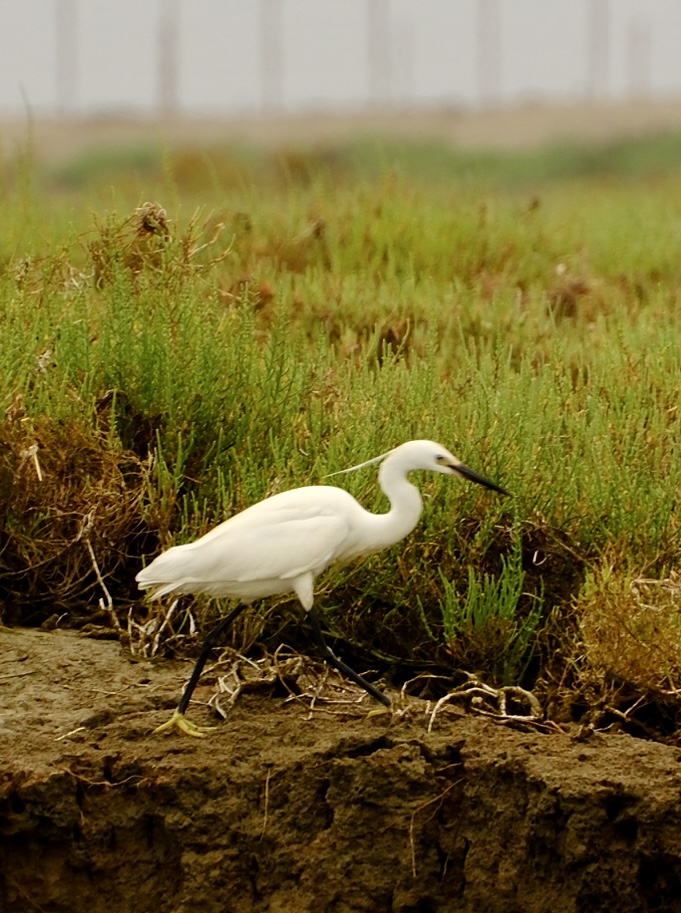
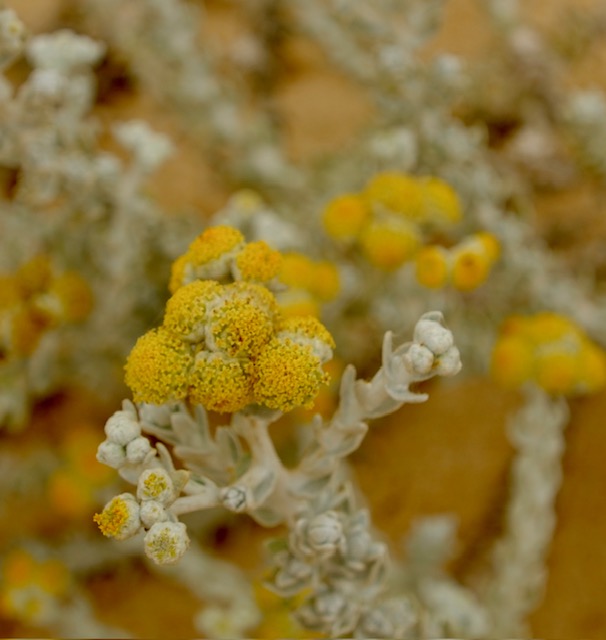
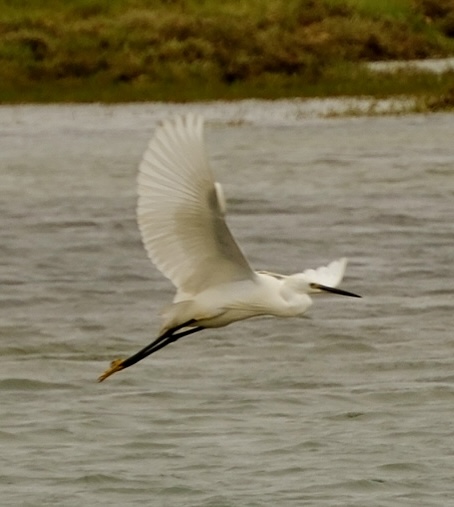
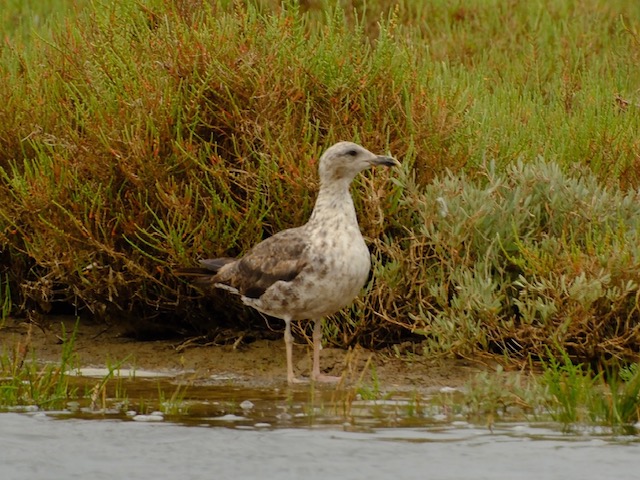
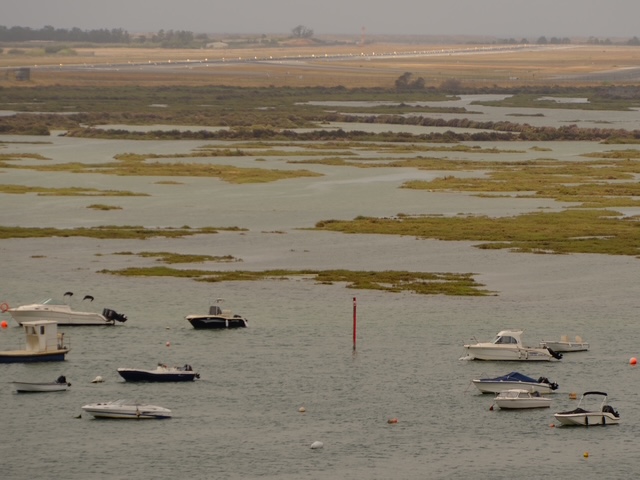
We didn’t have to glide too far before our guide pointed out our first bird, a white heron striding across the flats followed by a gull or two. We zoomed in close to the muddy islands where fiddler crabs waved their white claws at the boat almost like they expected to be rescued. Our guide informed us that locals harvest the claws from these crabs but not to worry because they regenerate! I wondered why the crabs haven’t learned to stop waving their tasty claws around. The Ria Formosa is a salt marsh affected by extreme tides. The hardy salt-tolerant Sarcocornia perennis disappears under water at high tide and emerges again into a soft island-like landscape.
Oyster buoys were scattered throughout the area, but our guide informed us that Portuguese don’t eat oysters as they can’t afford them and the ones we could see were grown by the French for French restaurants and general consumption. “And why are they grown in Portugal and not France?” He asked us. I jokingly replied “because Portuguese water is better” and he nodded his head sagely. But of course.
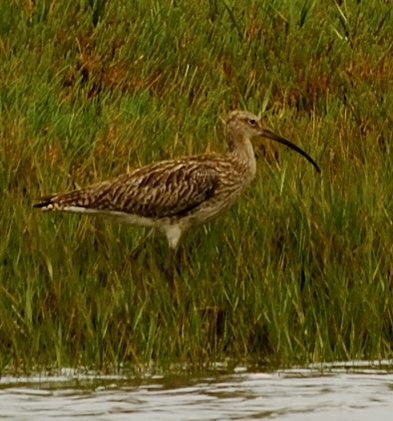
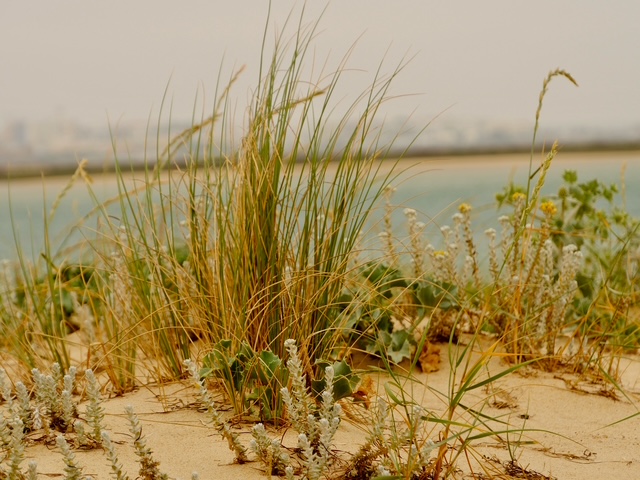
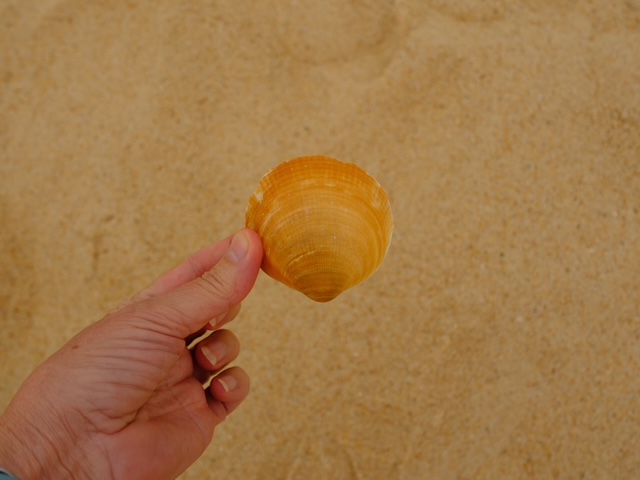
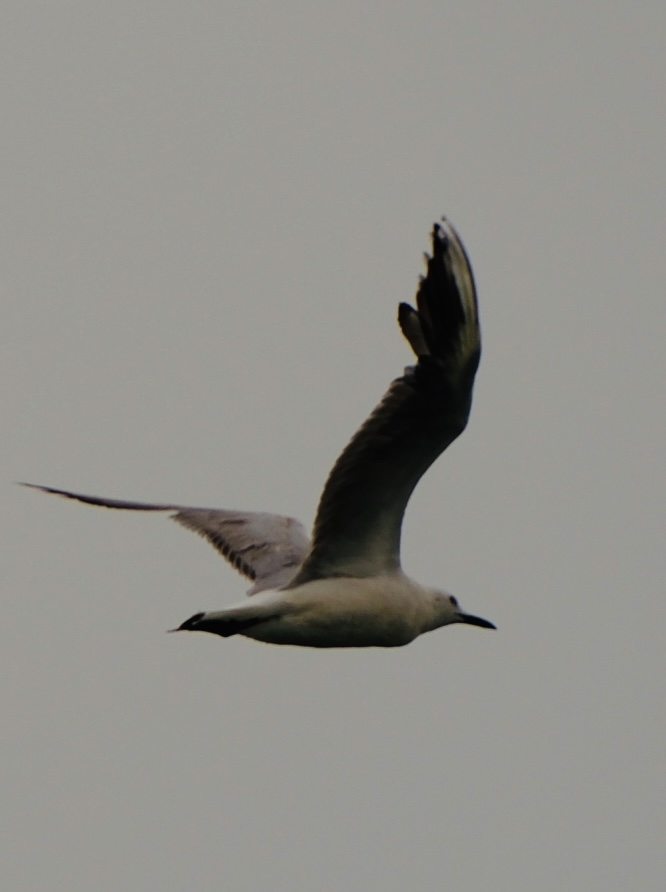
The birds appeared from all angles now. We saw a pair of Shell Ducks with 12 ducklings struggling against the swiftly turning tide; a black beaked gull (our guide was super excited about this one) and some swooping little terns catching fish. As we reached the quiet beach with golden sand and dunes covered in grasses and plants, our guide said he would leave us here for 50 minutes so we could explore and hopefully see nesting terns. He warned us to stay well back from nesting birds. The water was cold as we stepped off and despite my resolve to swim in the vast North Atlantic Ocean, I settled for cool toes and the soothing feel of course sand beneath my feet.
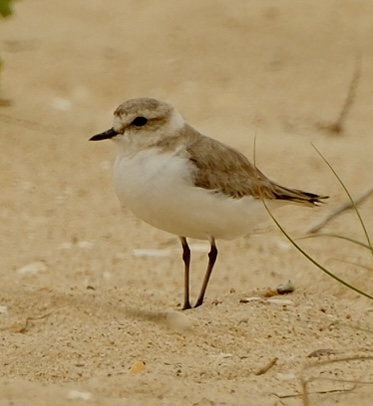
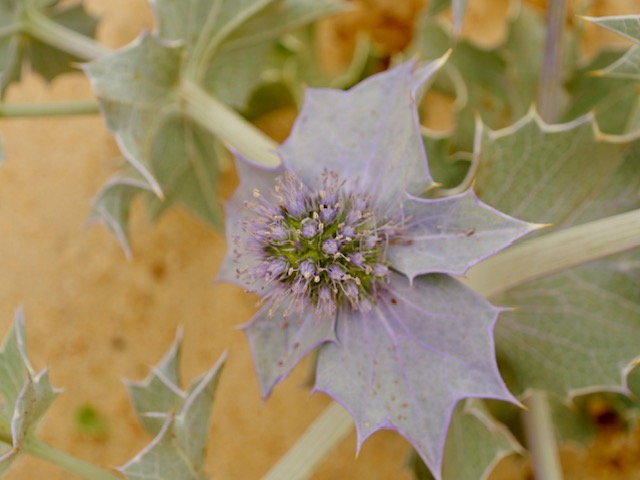
As a beach lover, this part of the trip really floated my boat. I am always happy with the wind in my hair and the sand underfoot. We found the nesting terns and viewed them from a distance as they wheeled and swooped. I stopped and took photos of the unusual dune plants before we turned to make our way back to the boat. Just before we got back to our craft, I sighted a small Kentish plover on the dunes and quickly snapped some shots. Our guide who had stayed back to have his lunch was impressed that we had found another species without his local knowledge.
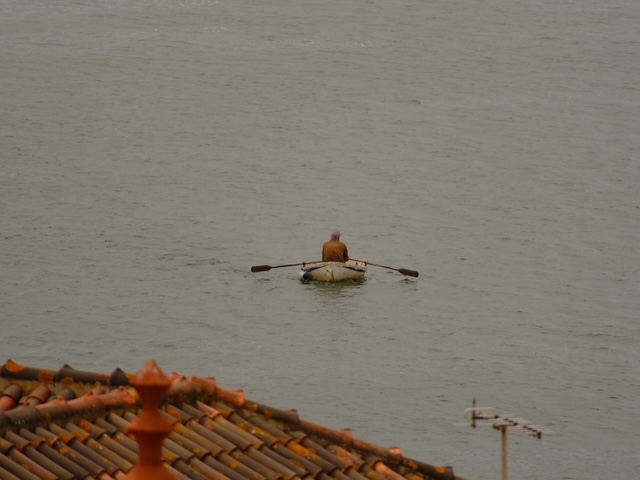
The return trip was very different. By this stage, the tide had turned and all the green ‘islands’ we wove through on our way out had disappeared under water. So too the unsightly plastic oyster buoys. The current pulled us back to shore as our guide continued to point out species of birds. He informed us we wouldn’t be able to disembark in the same spot we boarded because the bridge we came under was now too low for our boat to pass. So we headed back to a jetty on the outside of the mariner.
Before we disembarked, our guide informed us that despite the cloud cover, we had exceeded expectations and had a very good day of bird spotting with 16 species seen in all. I was happy with the morning’s bird sightings because as all birdwatchers know, sometimes you see many birds, sometimes you see none. My only regret was not seeing the flamingos that live a little further around the coast. It looks like I may just have to return.
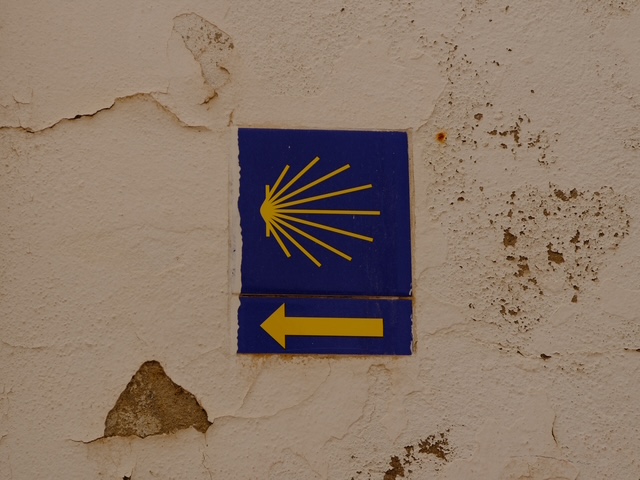
Camino signs are everywhere
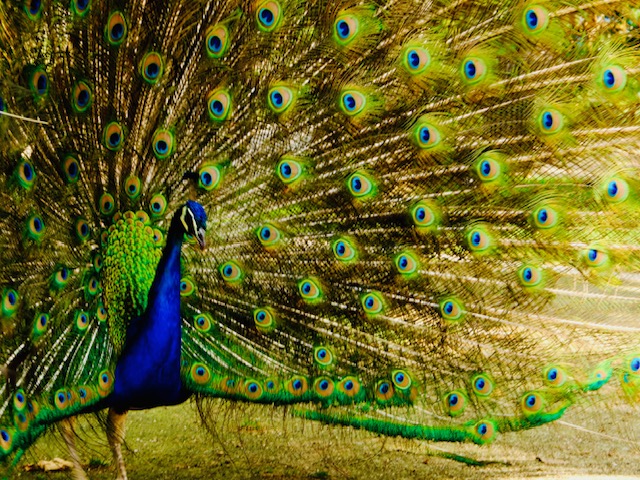
We spent the rest of the day exploring the parts of Faro we had not yet explored. We found a big park with some exhibitionist peacocks all vying for some disinterested female peahen’s attention. We were impressed though. We also visited the local library where famous Faro poet, António Ramos Rosa (1924 – 2013) is featured in a small exhibition of his works and a mural of his face. He was very much a revolutionary who was once arrested for his beliefs and the part he played in the forming of the movement Movimento de Unidade Democrática.
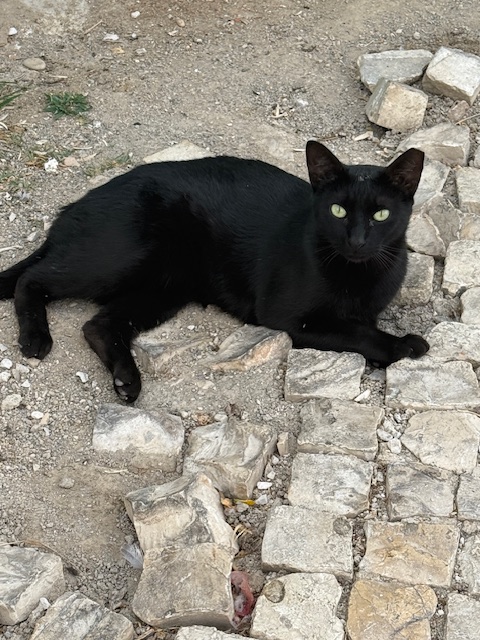
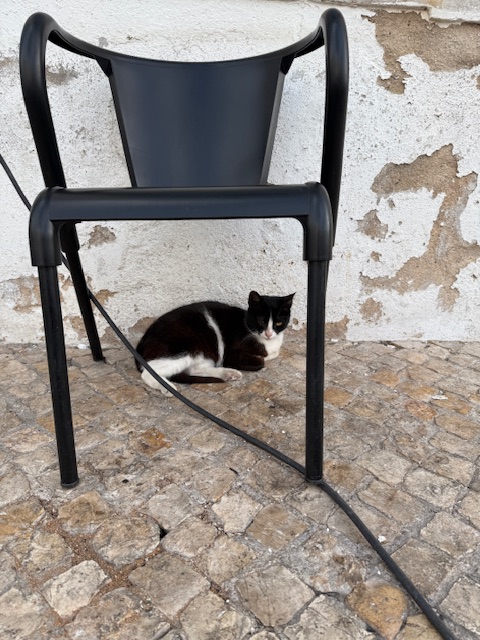
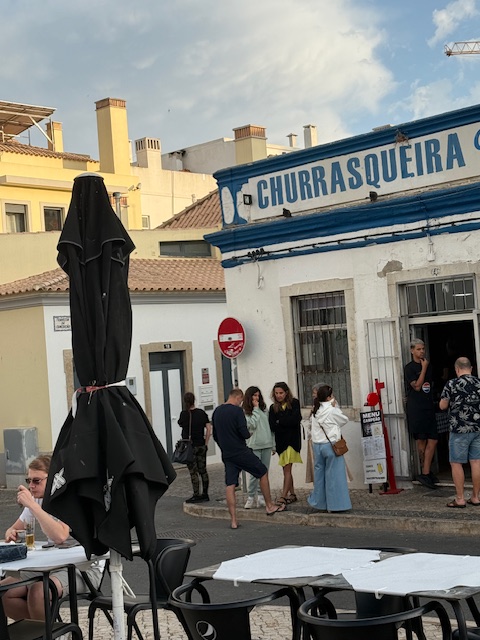
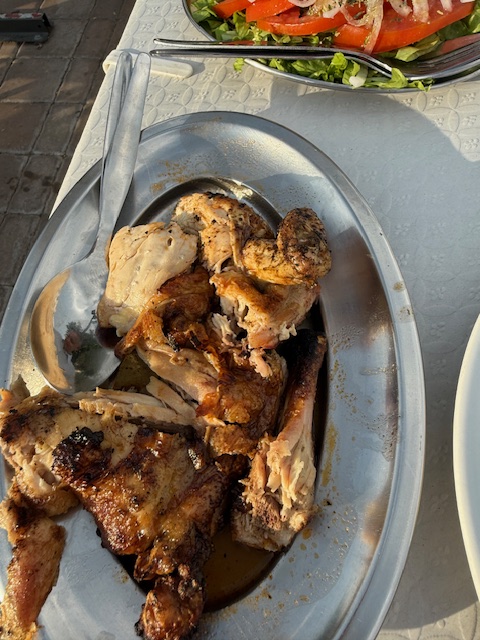
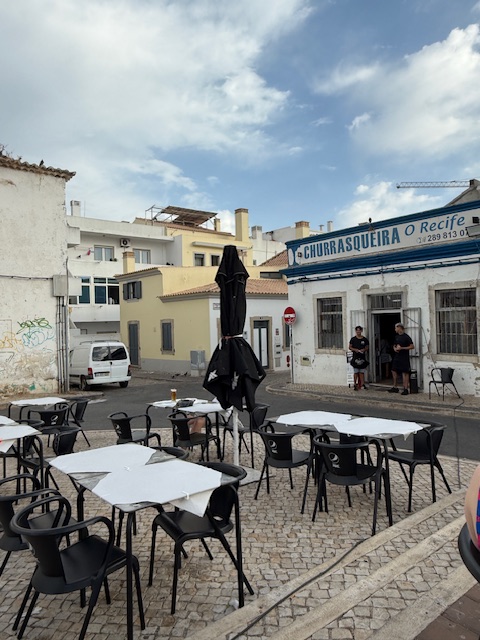
Later that evening we went off in search of piri piri chicken, a dish that tourism guides had informed us was a speciality in this region. We left the paved streets of the ‘old town’ and set forth into the back streets to find a grill restaurant. Turns out we didn’t have to stray far and our noses were correct in picking up the delicious smell of grilled chicken at the popular Churrasqueira O Recife. We had a meal like no other – two generous serves of spicy chicken with fresh salad and fries, all washed down with a huge mug of beer. The constant stream of people including the local cops who came to pick up takeaway and dine at the grill, along with the local cats and pigeons kept us entertained.
Piri piri chicken
When we left Faro the following morning to go Entroncamento via Lisbon, before we headed back over the border into Spain, we were sad to leave because despite first impressions this town had grown on us and I will ever remember it as Faro-dise!
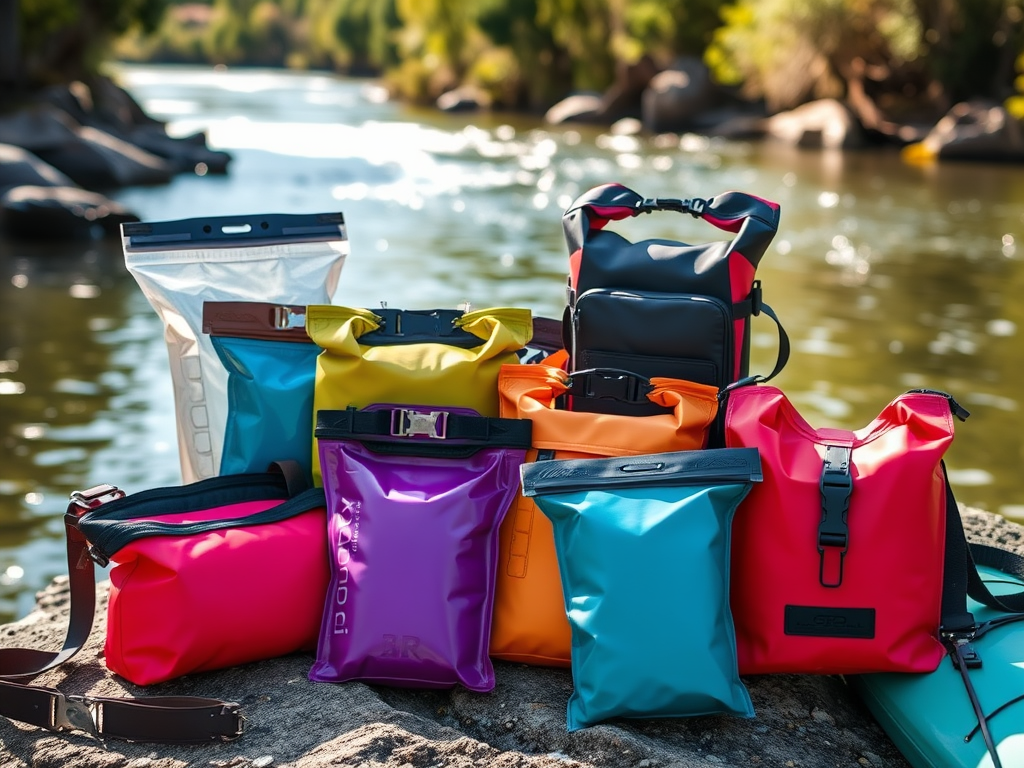
Dry bags for wet situations! A look at ways to keep your stuff dry when on the water.
I have used all types of waterproof bags in my paddling life. As a rower, kayaker and SUPer I have worked my way through dry bags, phone cases and plastic bags. I’ve tried waist clips, shoulder clips, board clips and a string around my neck. I have more dry bags than handbags.
Of course it will always be up to personal choice and comfort so there is no perfect solution for everyone. The perfect solution is the one that works for you.
Dry Bags
The good old dry bag is a sure thing. It’s purpose built to keep your stuff dry, and provided you fold the top over correctly (at least 3 times) it will work. I use a dry bag to carry things on my board because I have straps that I can clip onto.
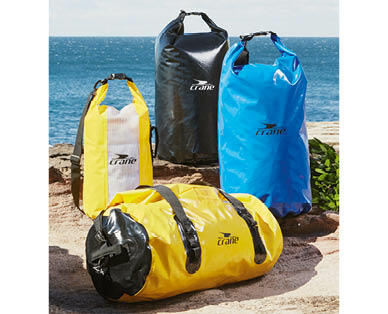
Who doesn’t love an Aldi bargain?
You can buy affordable dry bags anywhere. My faves are a set I got from ‘the aisle of dreams’ at Aldi. I also have bags from Sea to Summit which are more lightweight but just as effective. I have used the heavy-duty bags from Red Equipment – the 30L Waterproof Roll Top Dry Bag Backpack is great for using on your board or on your back.
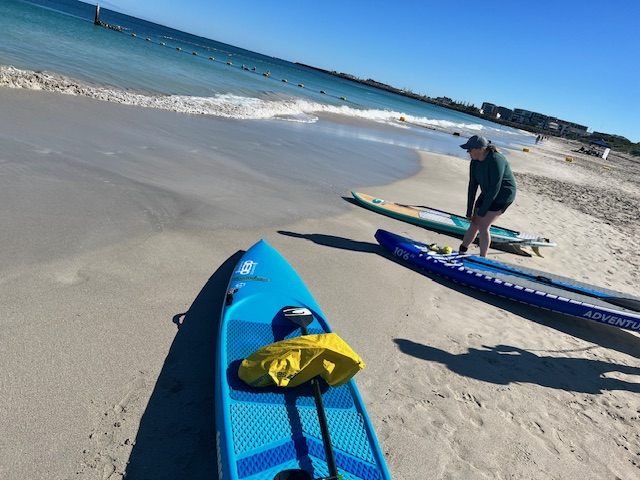
Dry bags all the way when on the ocean!
Phone Cases & Bags
Since the dawn of the smart phone we have been seeking ways to protect them from getting wet, getting cracks, or getting lost!
Like everyone, I have purchased every new phone case known to woman. I had a great one that used to clip around my waist but the seal eventually gave up the ghost and I resorted to dry bags.
Disclaimer:I am an affiliate for Red Equipment but this doesn’t influence my opinions. While I believe in their products, my reviews are my opinions only.
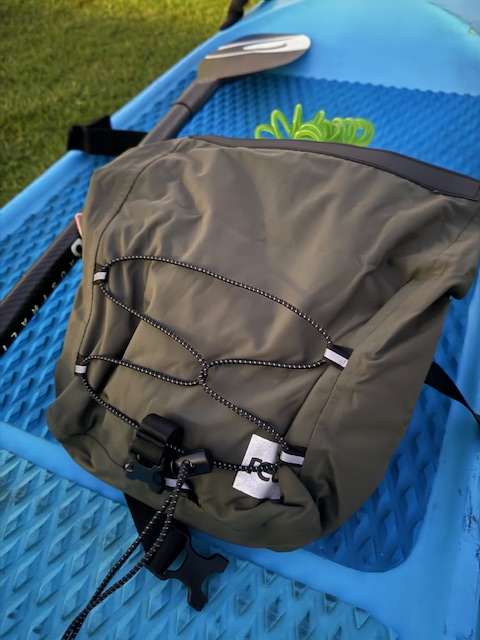
This 7L bag is the ideal size for carrying your phone, keys and a piece of clothing. I carried my lightweight puffer jacket, phone, snack, keys and glasses on my latest hike. I used it as a crossbody bag for a while, before changing it to my waist. I found the waist placement much more comfortable and easier to access.
When I carried it on my SUP board last weekend I used it as a crossbody bag which was better than I thought. I had thought it would get in the way of the paddle but it was snug enough to keep out of the way. In future I will use it on my waist as that is my preference.
I persevered with using it in the crossbody style because that’s what it’s marketed as. It is better as a waist or shoulder bag in my opinion.
The bag does have a separate zip pocket inside for your phone and keys which would keep them dry, but I’m not convinced that your other gear would stay dry if fully immersed in water for any length of time. It has the roll down top used on dry bags which works better the more you put in the bag (if that makes sense).
I am an experienced paddler so falling in is not (usually) on the cards for me (if I chose not to) so I feel comfortable using this bag to protect my gear.
Were I to be out on the ocean or in a situation where falling in was a certainty, I would probably opt for a dry bag on my board or extra protection within the Red bag.
The bag itself is a nice looking bag and it comes in three different colours. It has an adjustable crossbody/waist/shoulder strap, and outside zip pocket, straps for bike handlebars and an external bungee system for extra items.
It is hardy and feels like it would survive almost anything I could throw at it or in it. This bag retails for $78.95 – if you use my link you get 15% discount.
So I guess it’s dry bags all the way for me on the water. They are good in most circumstances due to their reliability and cost. If ,like me, you love a good ‘fanny pack’ , ‘bum bag’ or whatever you call them, the RED Equipment Waterproof Crossbody bag is a pretty cool addition to your bag wardrobe.
Mt Cooke Summit Hike WA – an out and back hike in winter to enjoy the Western Australian bush at it’s finest.
A Sunday morning in June, we woke before daylight to the intrusion of an ugent alarm. Setting off as dawn showed her sleepy face. The roads were quiet and mist lay low over the highway – parting as we approached. Currowongs littered the road side foraging for early morning roadside snacks – I have never seen so many before.
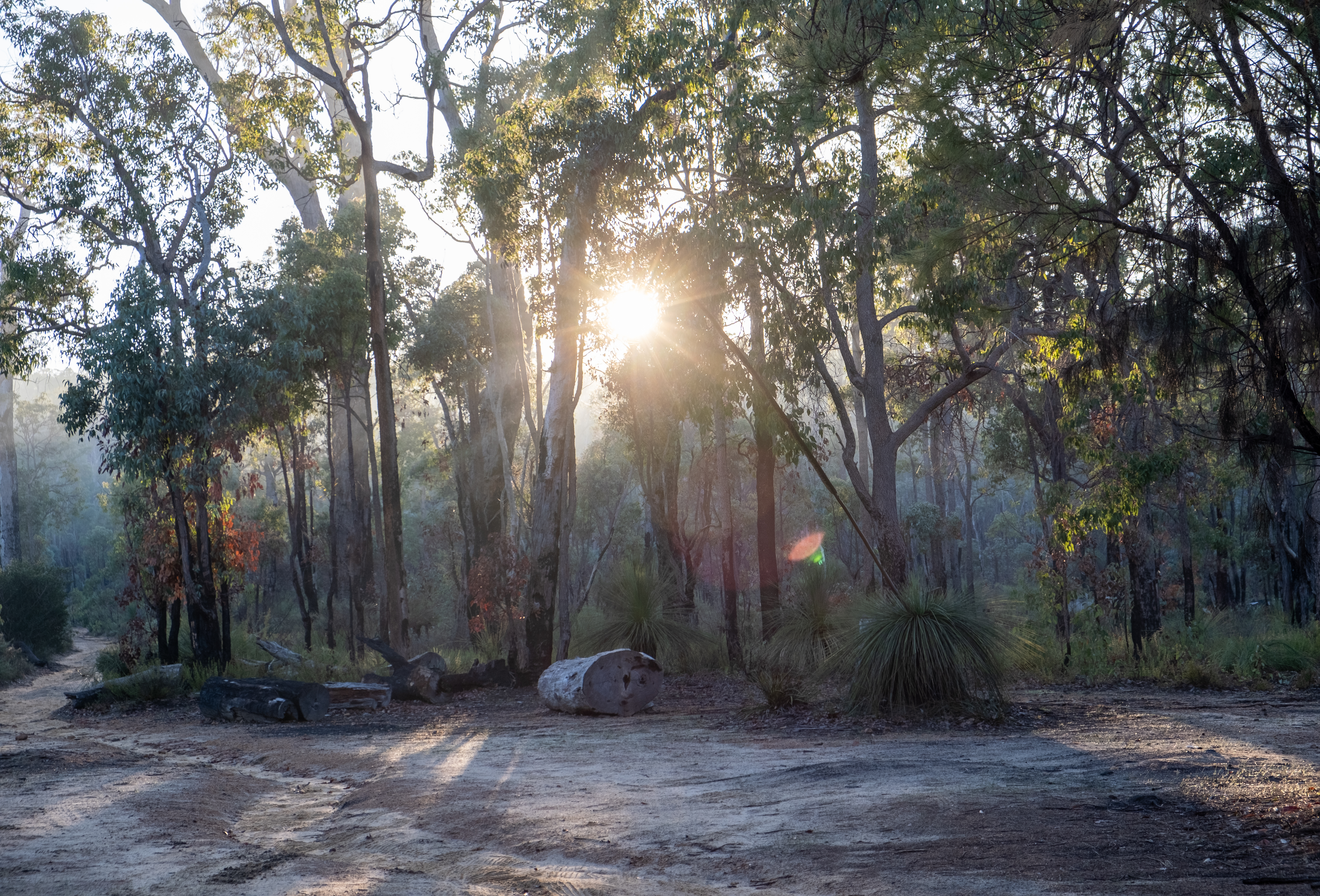
We needed maps to find the entrance to the hike off the Albany Highway about 50 minutes from Perth. No sign posts, just a sandy track through plantation pines and scrubland.
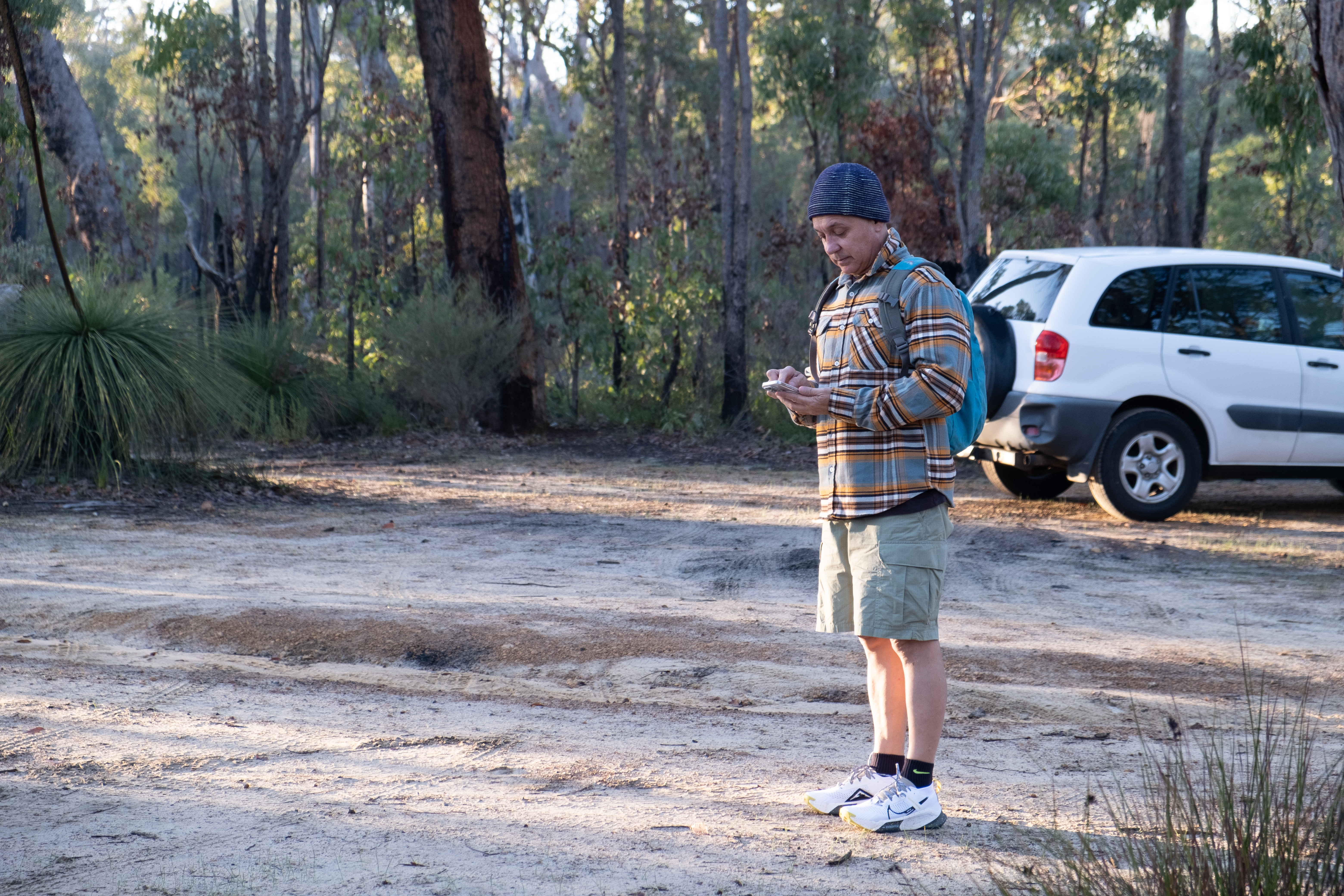
Cars in a row marked the beginning of the hike. A quick check of the AllTrails app confirmed we were indeed in the right spot. The sun peeked through the trees and I knew we were in for a treat!
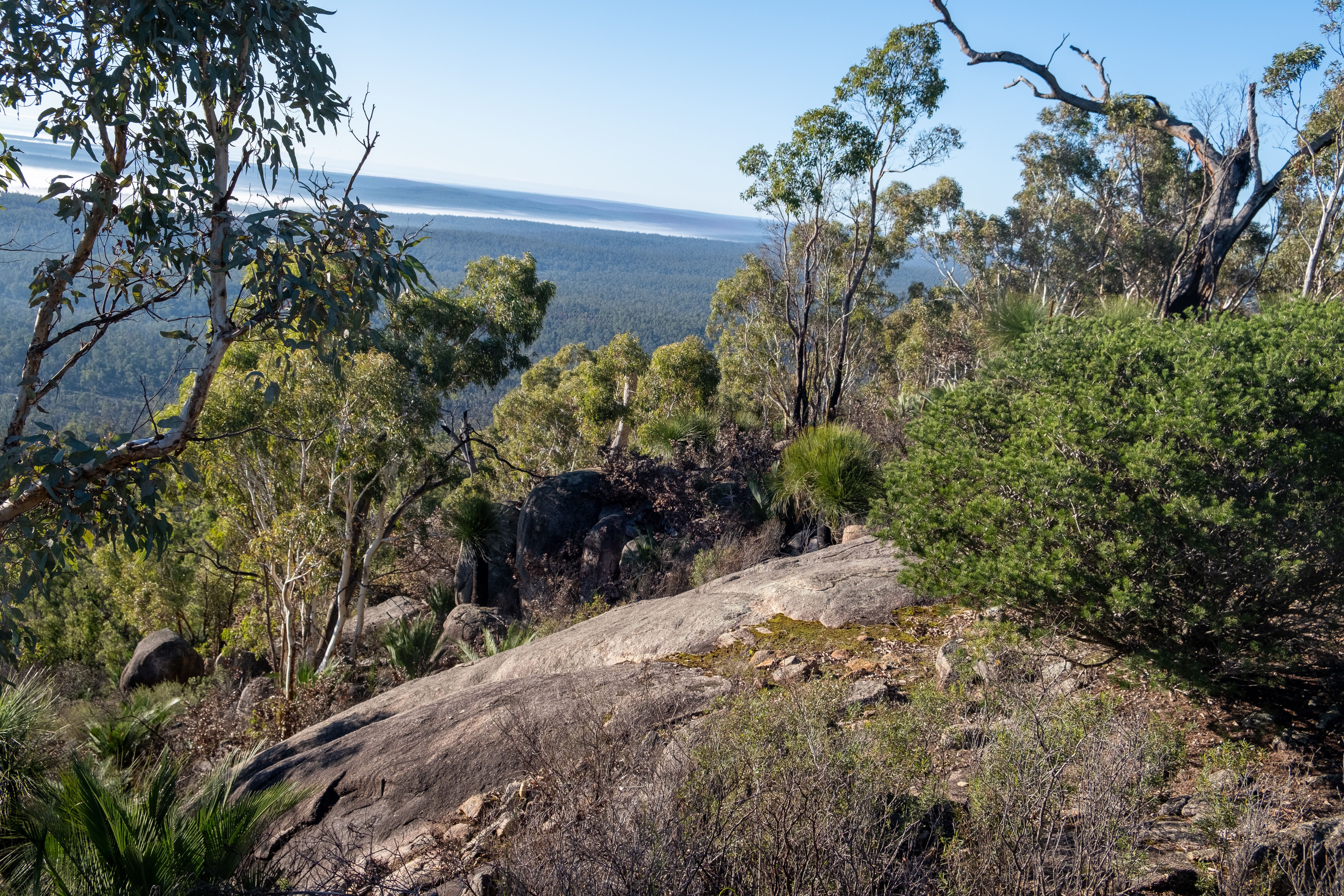
The hike started gently with a narrow trail, damp with last night’s dew and covered in boot prints meandering through grass trees, jarrah and rocky outcrops. The climb to the ridge was steep and sometimes slippery. Rocks glistened in the morning sun with water and sodden moss – green and lush.
The bush in this part of the scarp seems to have suffered less from the recent drought than bushland in Kalamunda. Some sapling had died back in the understory but the mature plants appear unscathed.
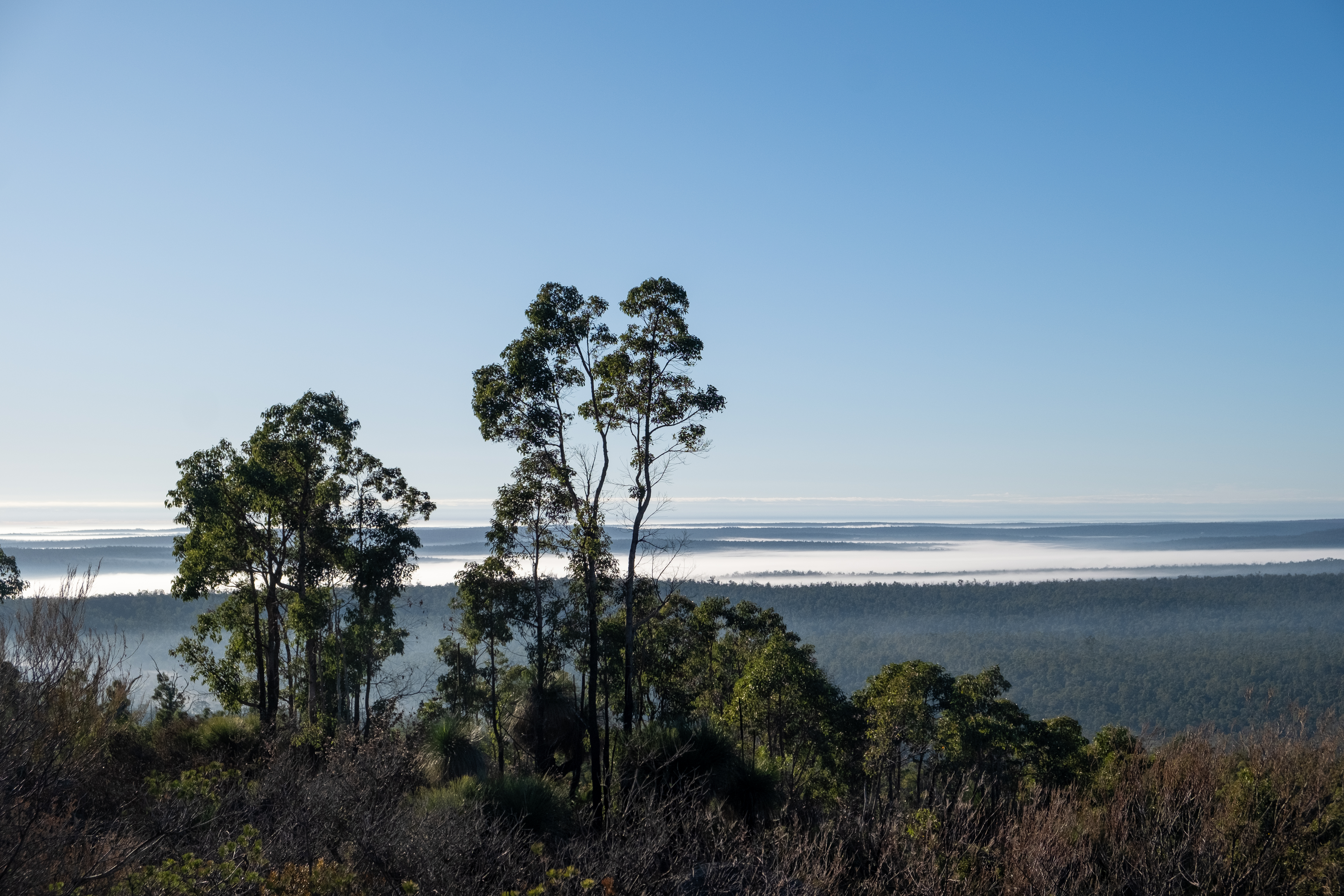
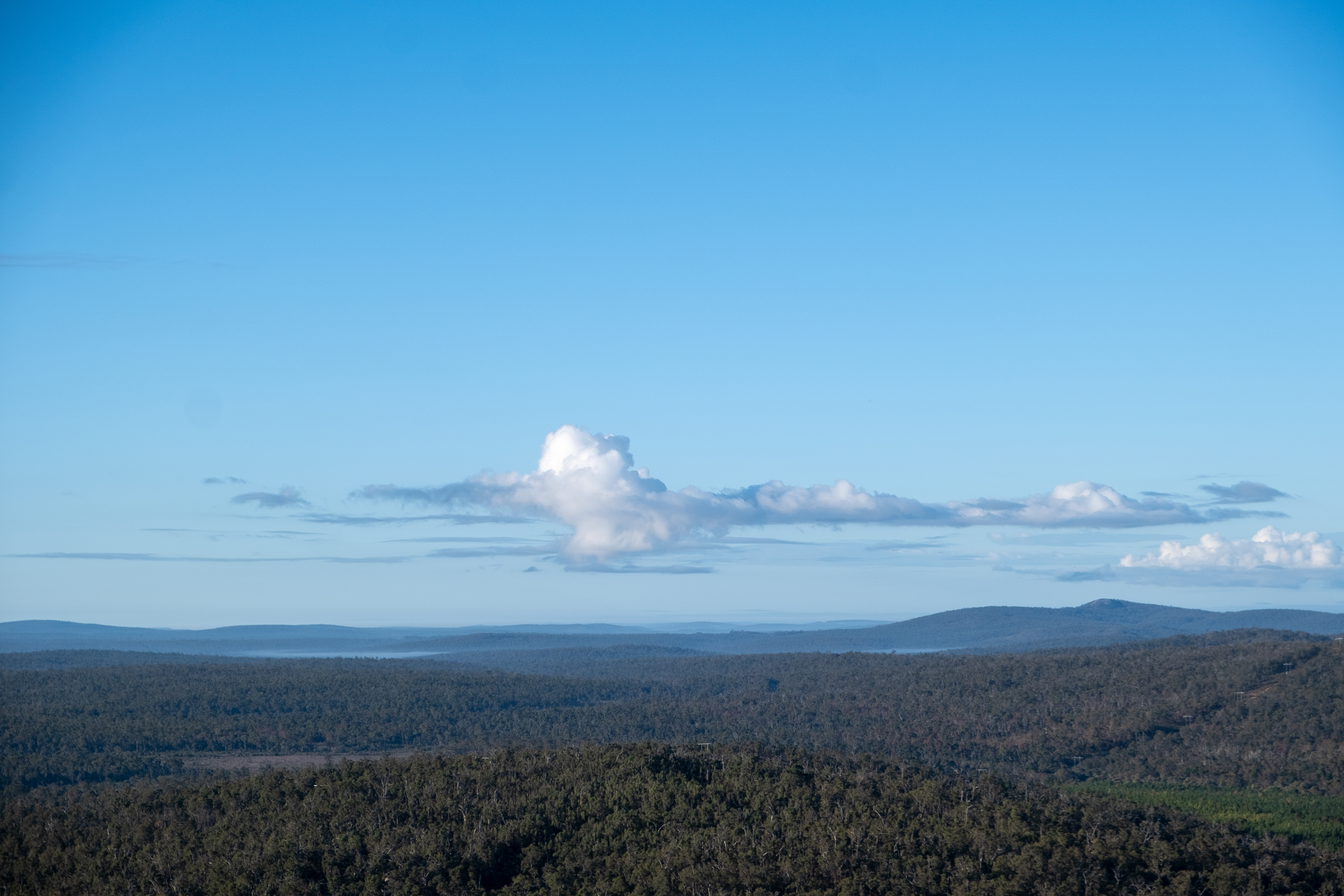
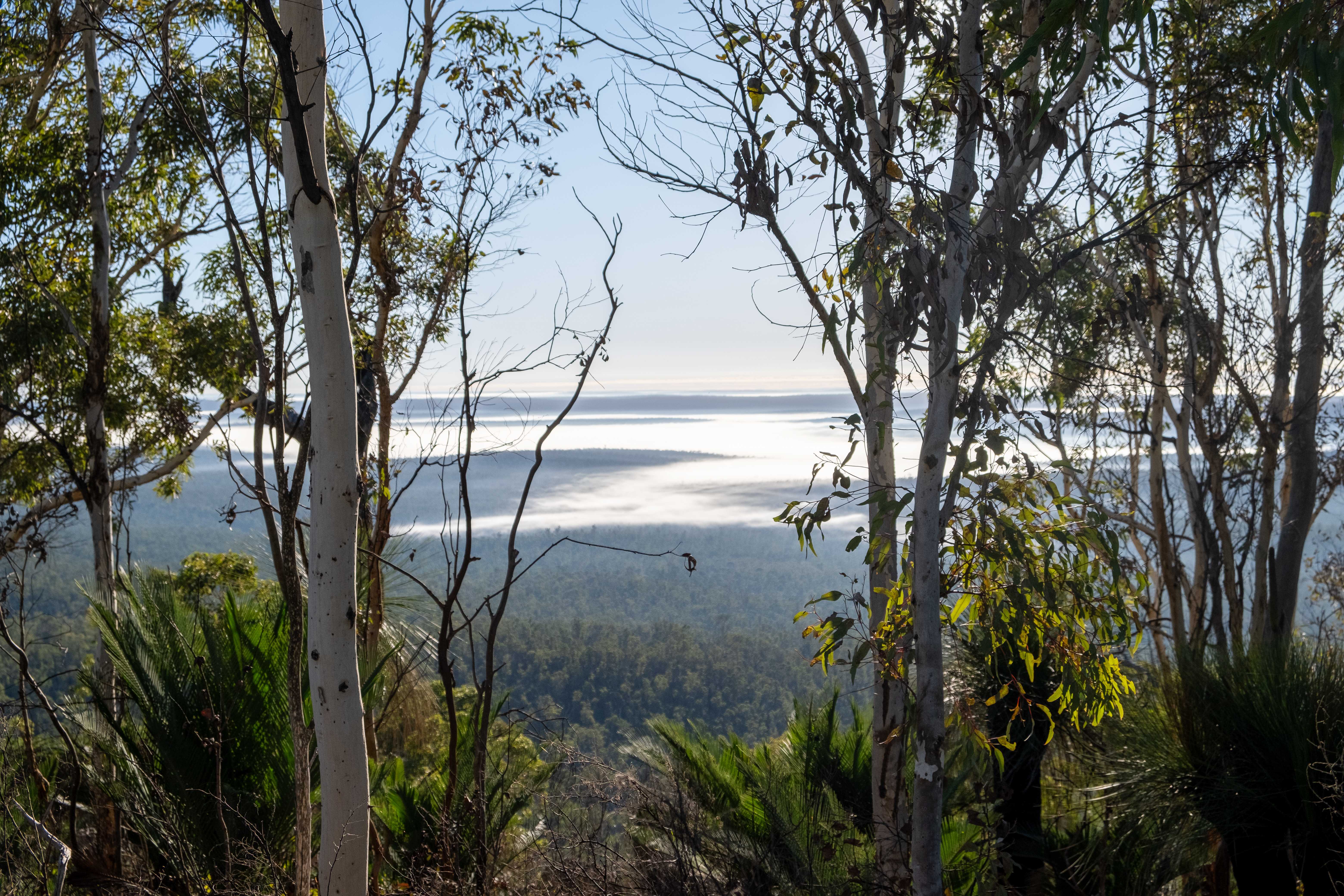
The trail led across the ridge where 360 degree views of the forest and surrounding lands took our breaths away. When we reached the summit a low mist was still hanging over treetops – we felt like we in the clouds.
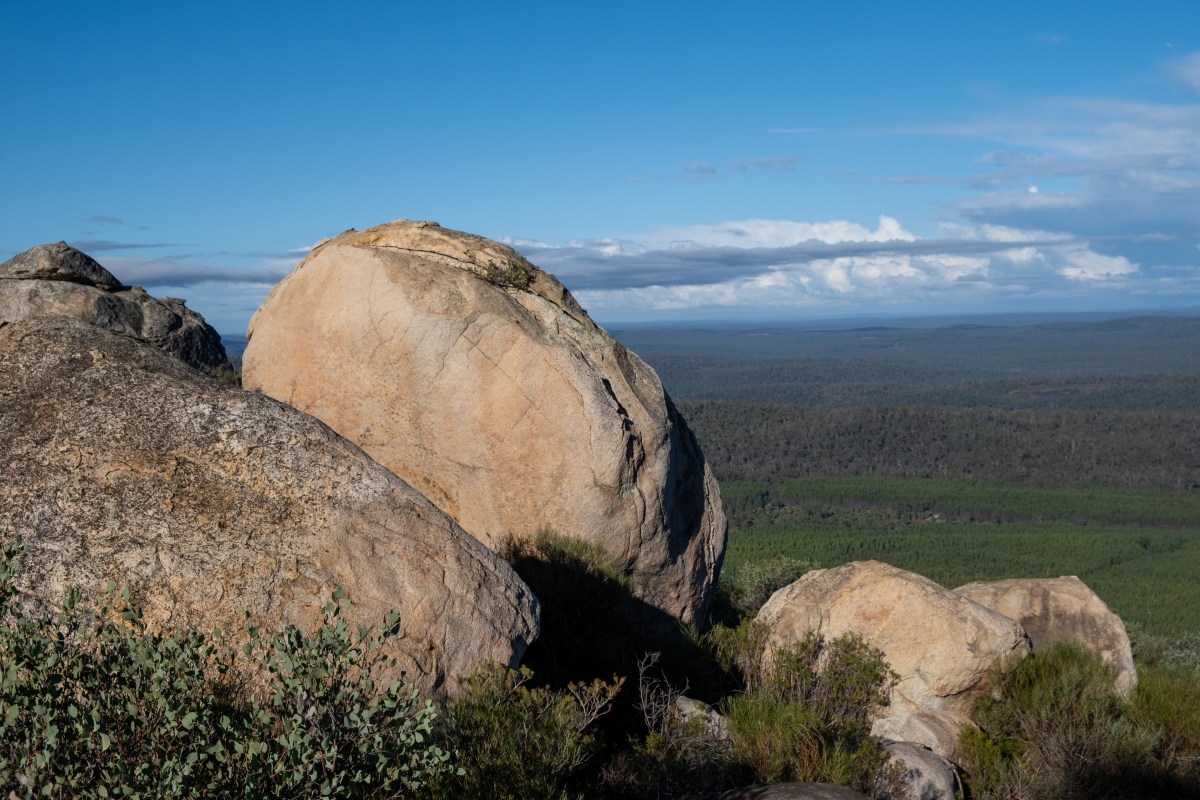
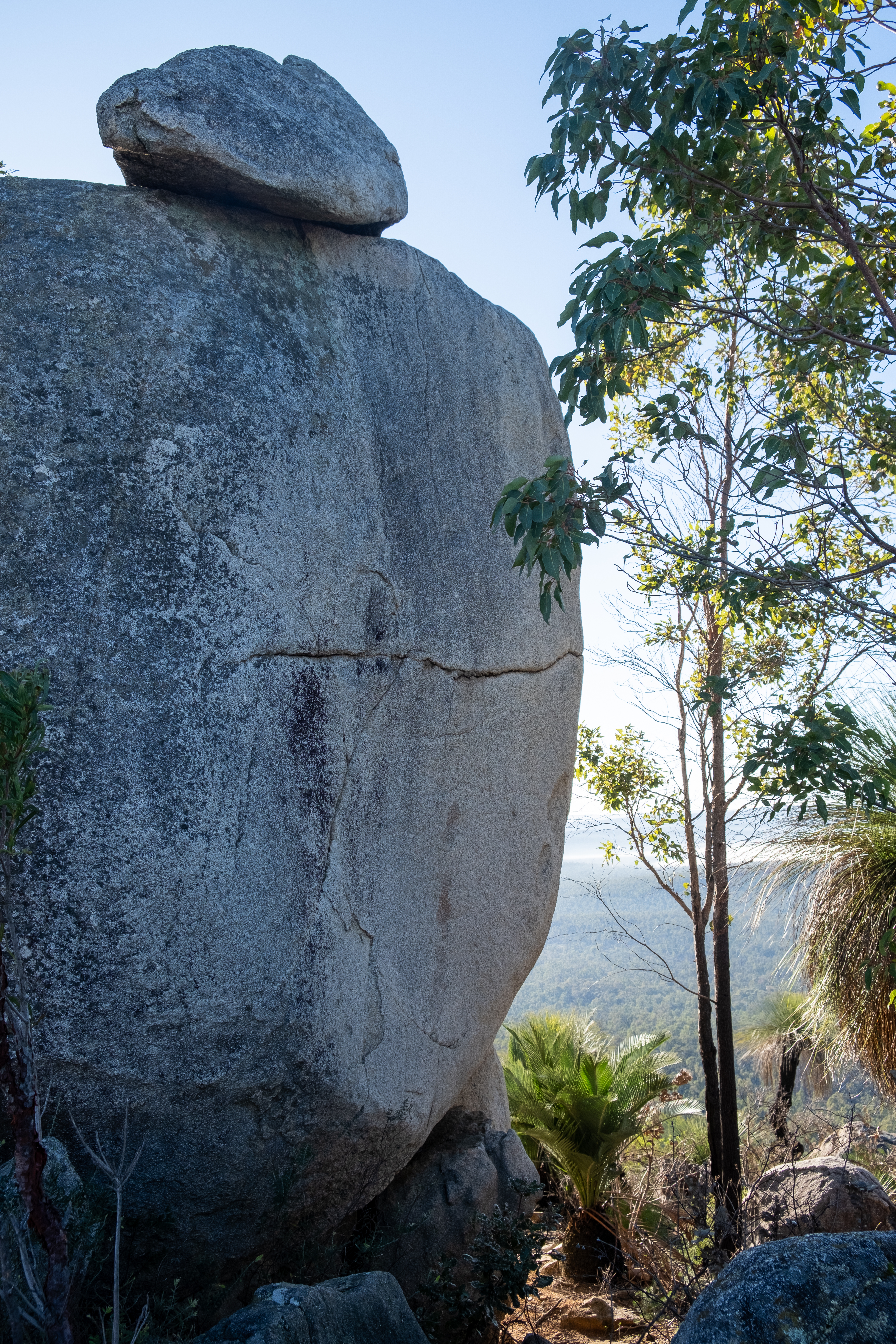
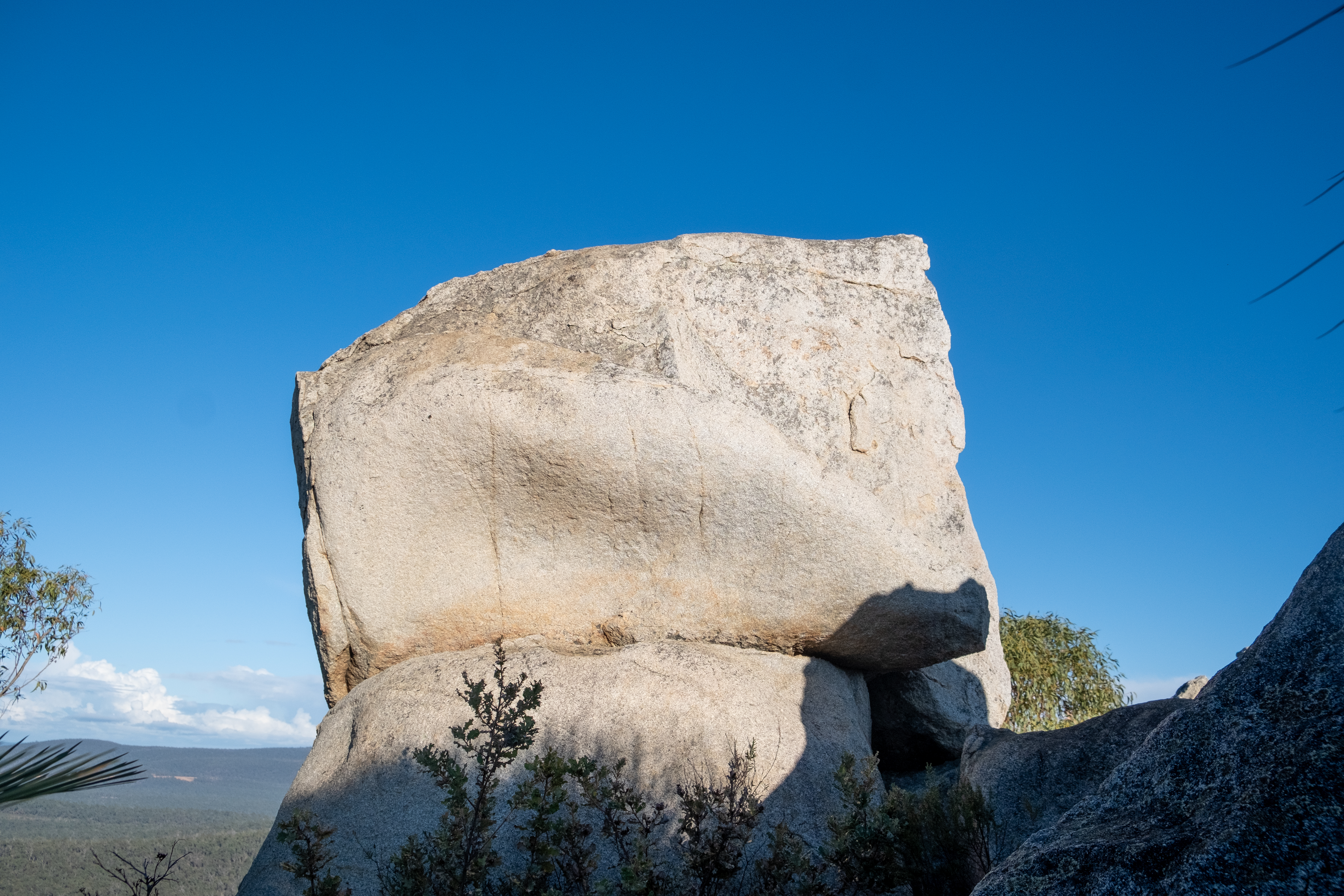
The summit to Mt Cooke, the highest point on the Darling Scarp, is marked by a pile of rocks. A skull shaped boulder greeted us as we turned the corner. 582 metres above sea level. We continued on for another 5oo metres finding a clearing for a rest and a drink.
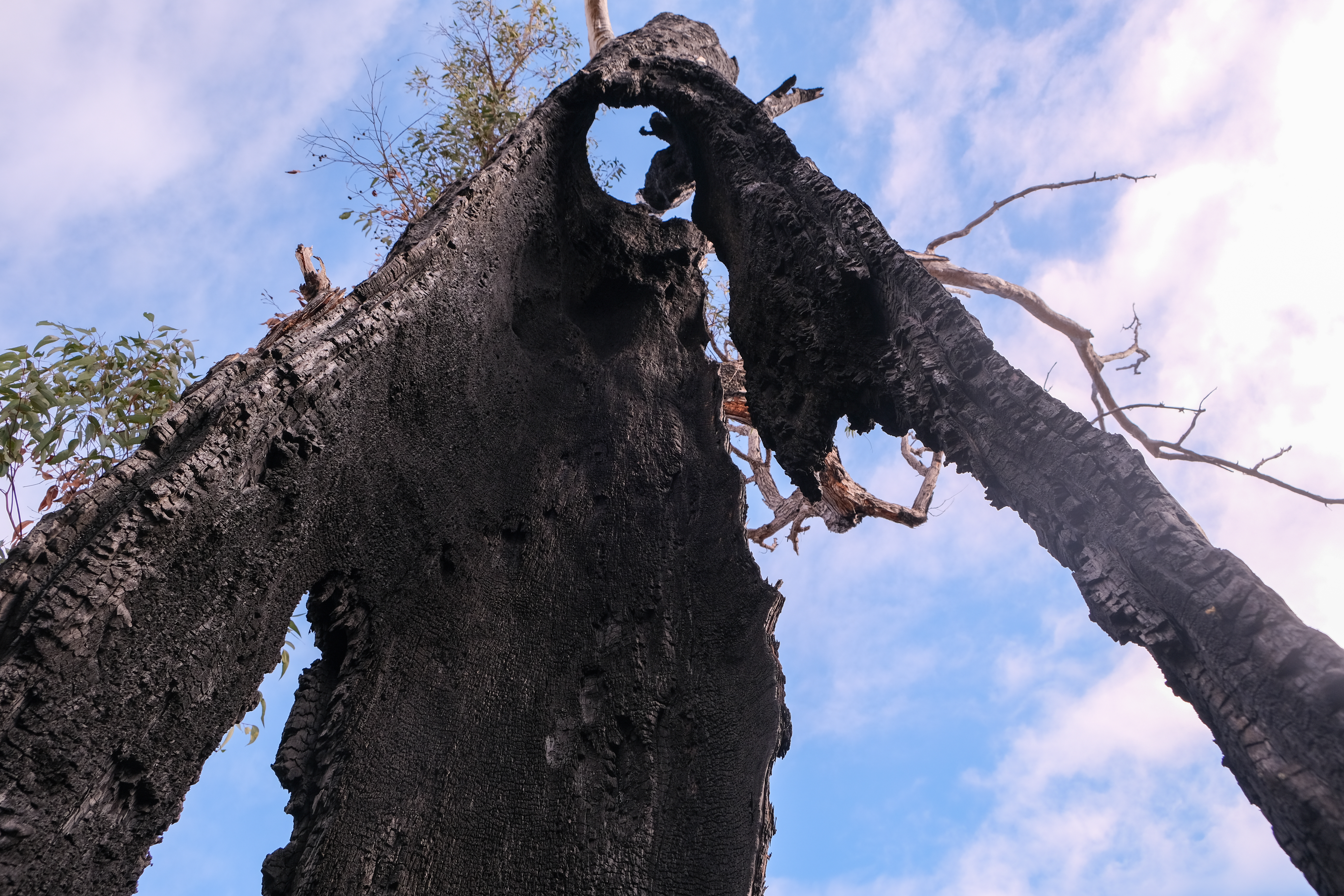
Some of the biggest Xanthorrhoea grass trees I have ever seen, towered over us. Their trunks blackened by a recent fire. The river beds were dry aside from some small pools of shallow water from recent rain. Enough to keep wild life sated.
The sun warmed us as the clouds and mist lifted slowly revealing the lands and trees below. We really had chosen the perfect time of day and weather for this 2 hour hike. Fellow hikers were few and far between despite several cars at the base.
A short rest and some snacks at the top before we turned back the way we had come. The way down was a bit treachourous and slippery, but we reached the car quickly while enjoying the views all over again on the way down.
An extremely beautiful and moderate hike! I will definitely be back to travel further and to complete an overnight hike in the area in the future.
What’s the skinny?
The Mt Cooke Summit hike is a 80km drive from Perth on the Albany Highway
Three and half hours gets you to Bali from Perth. Why not go for a weekend?
Day One
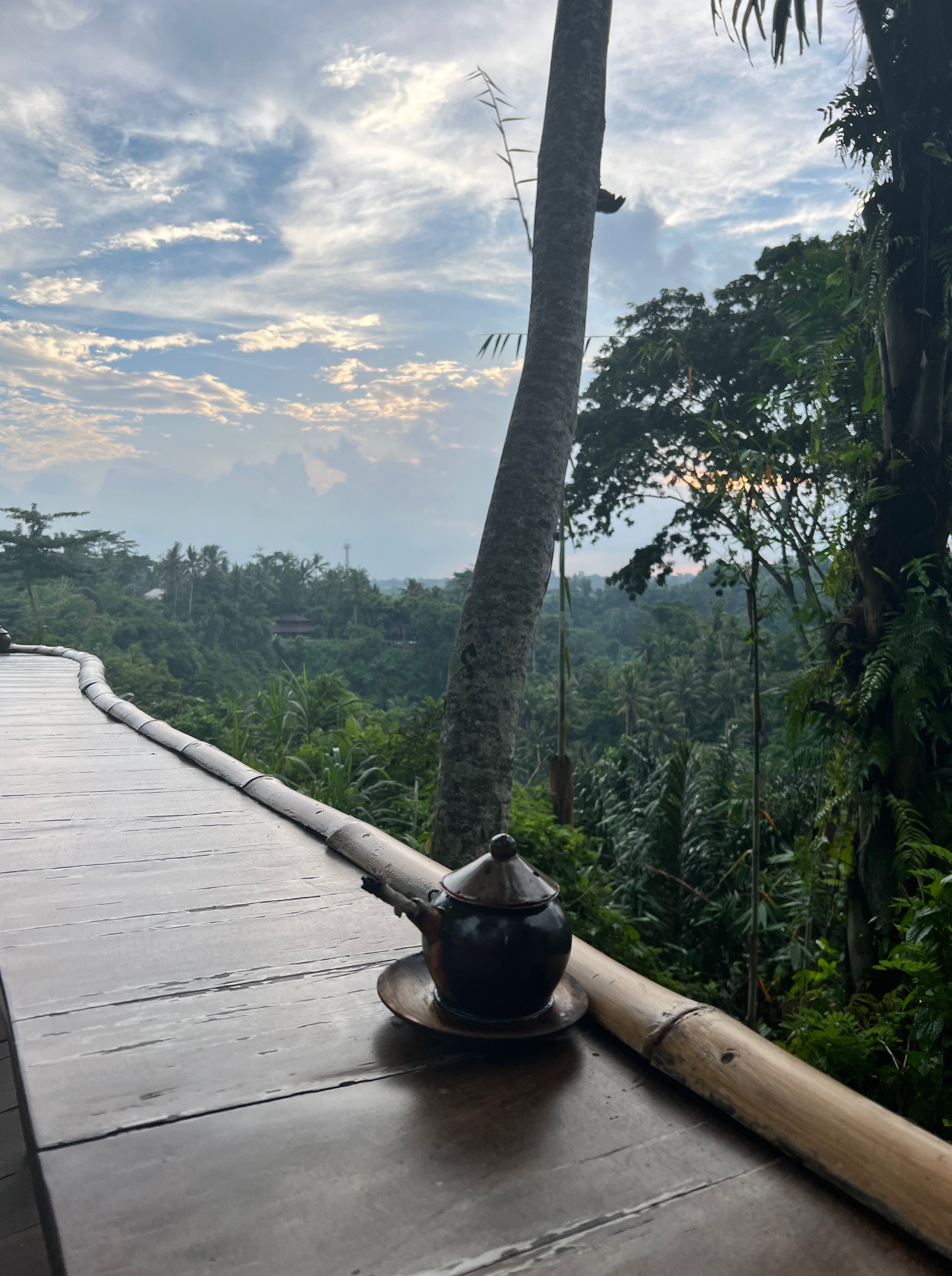
As we wind through narrow streets and torrential Bali rain, we dodge scooter drivers with no rear lights, helmets or shits given. Water covers the narrow treelined roads, almost jumping out to catch our car. Our intrepid driver grips the wheel as he honks the horn gently at each corner to warn of our approach.
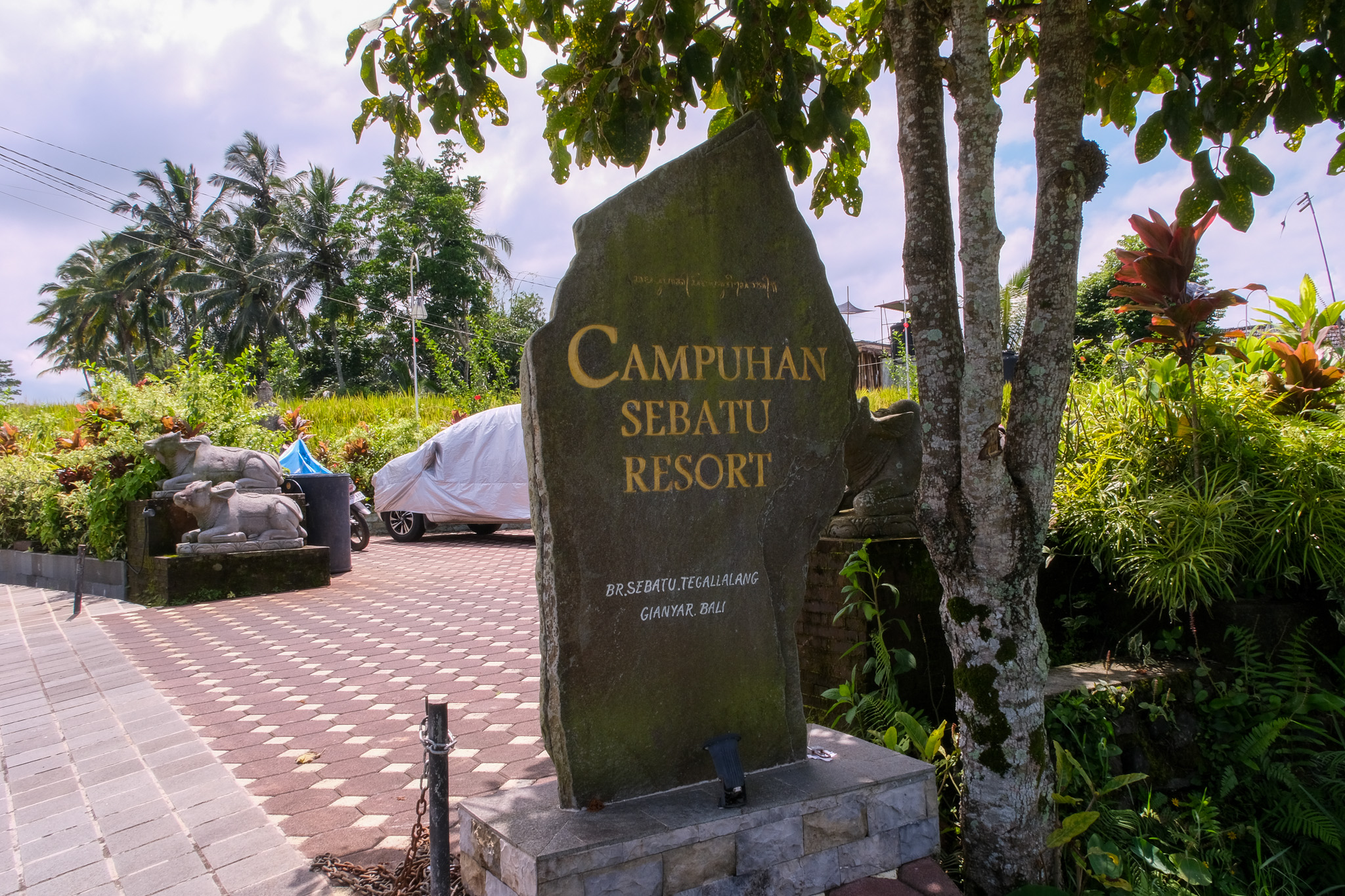
An hour and a half from the craziness of Bali and the International Airport we arrive at our destination, Campuhan Sebatu Resort and our Balinese host who has waited up for our arrival. I hand our relieved driver an extra 100000 Rupiah knowing he still has to drive back!
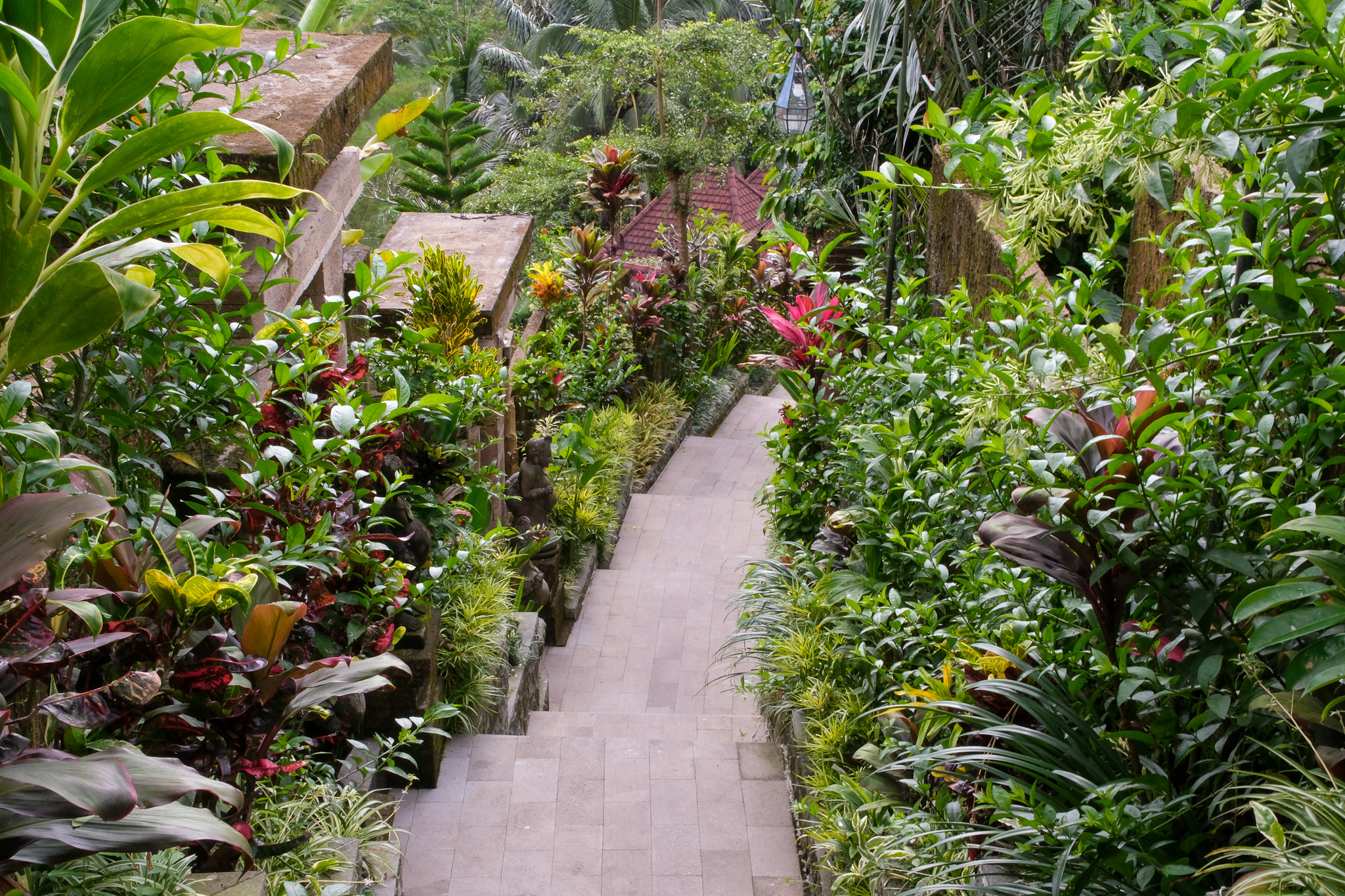
Our accomodation is lush and I slip immediately into our private plunge pool before drying off and climbing into crisp white sheets beneath the shroud of a white muslin mosquito net and the whirring sounds of the forest.
Day two
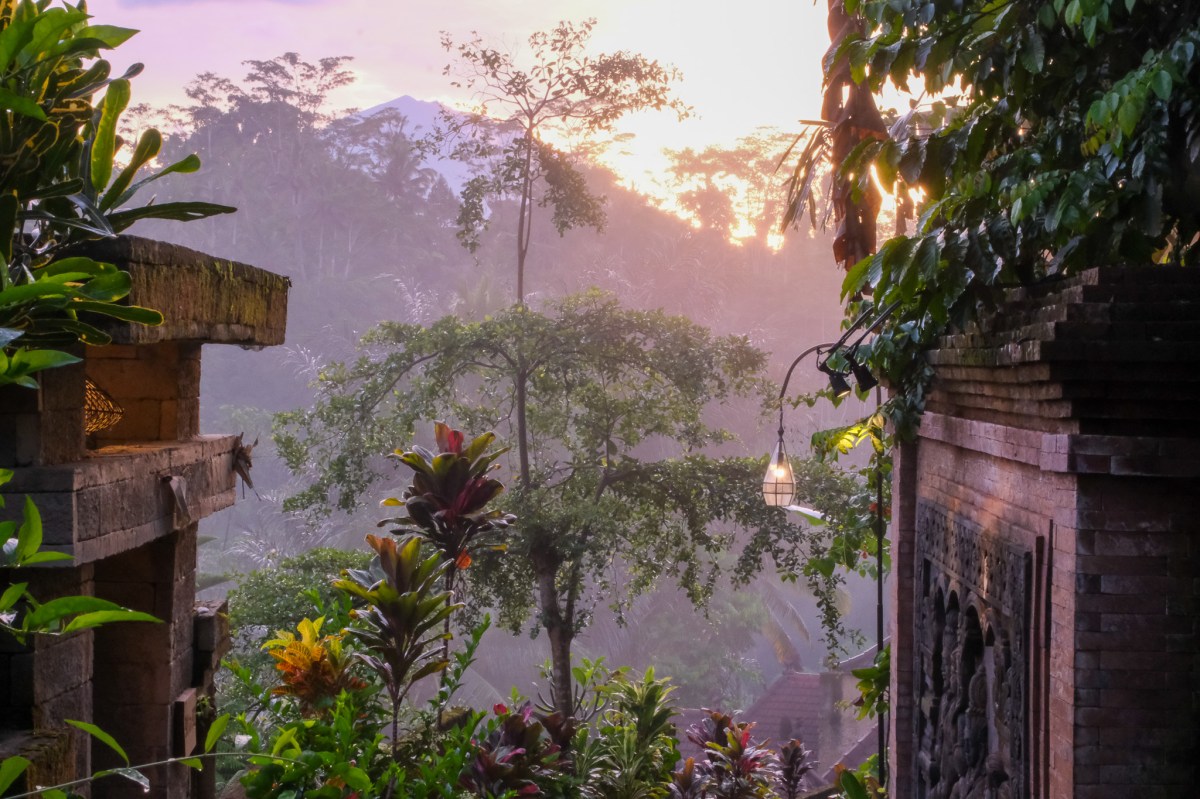
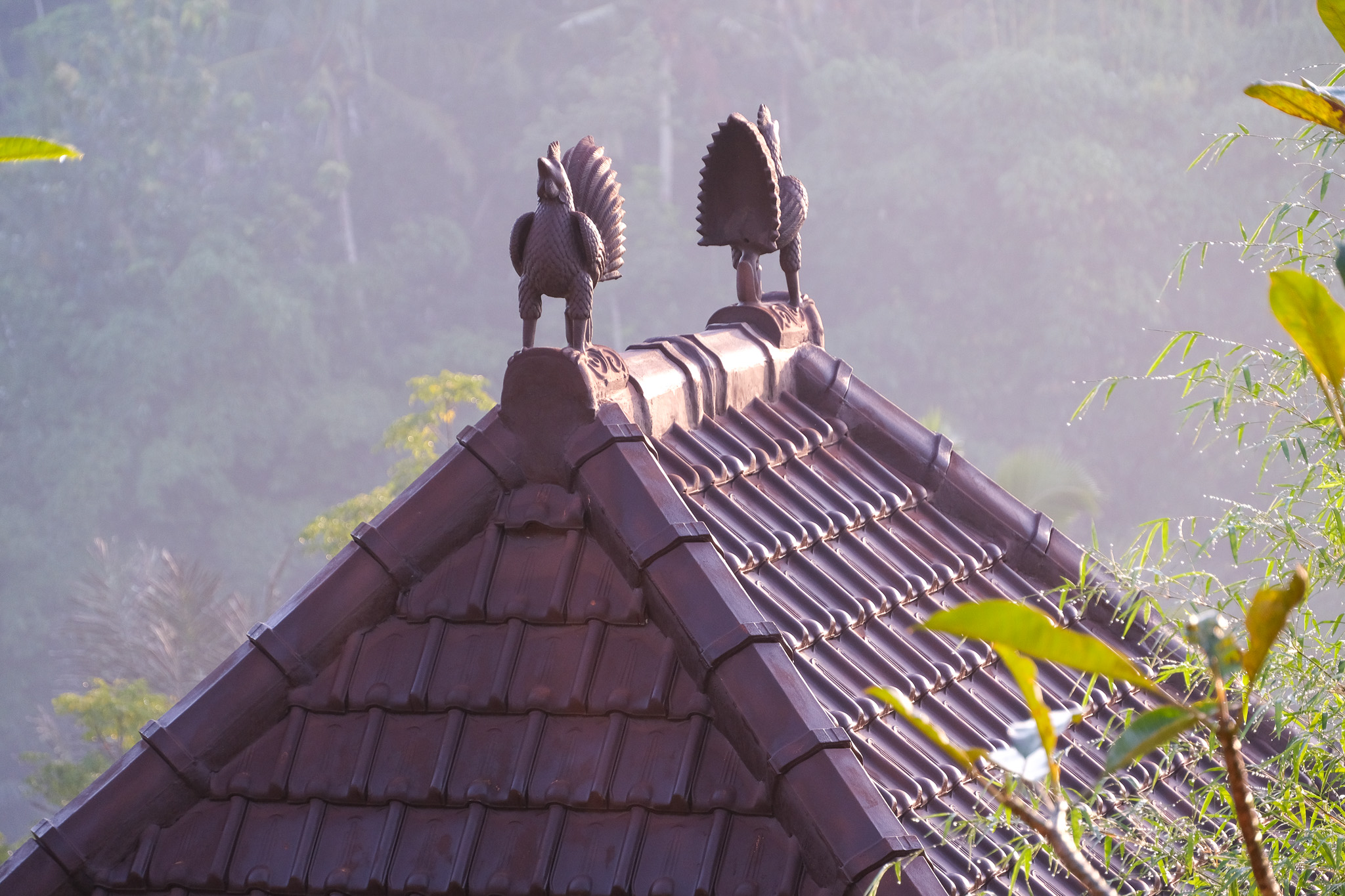
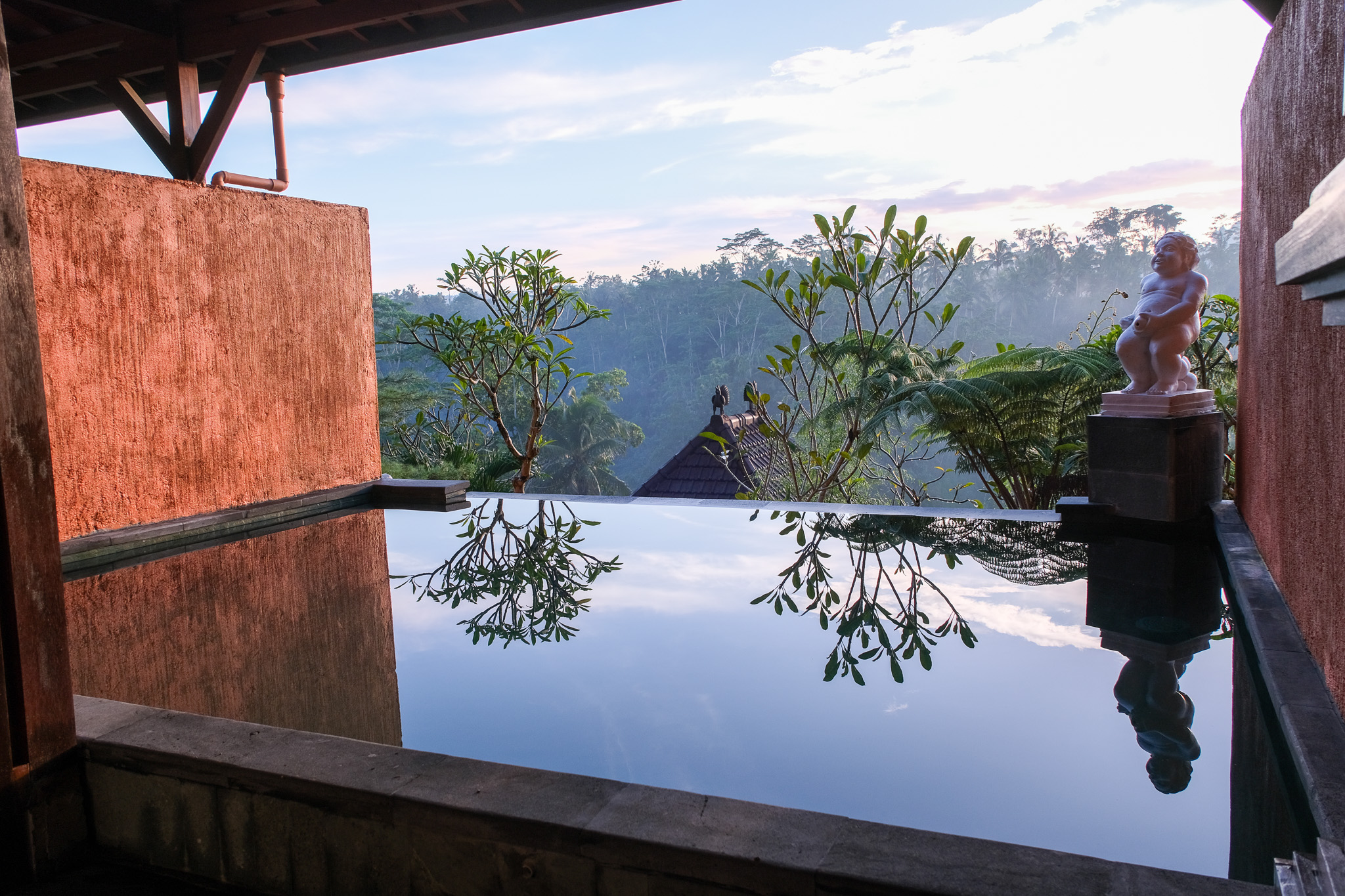
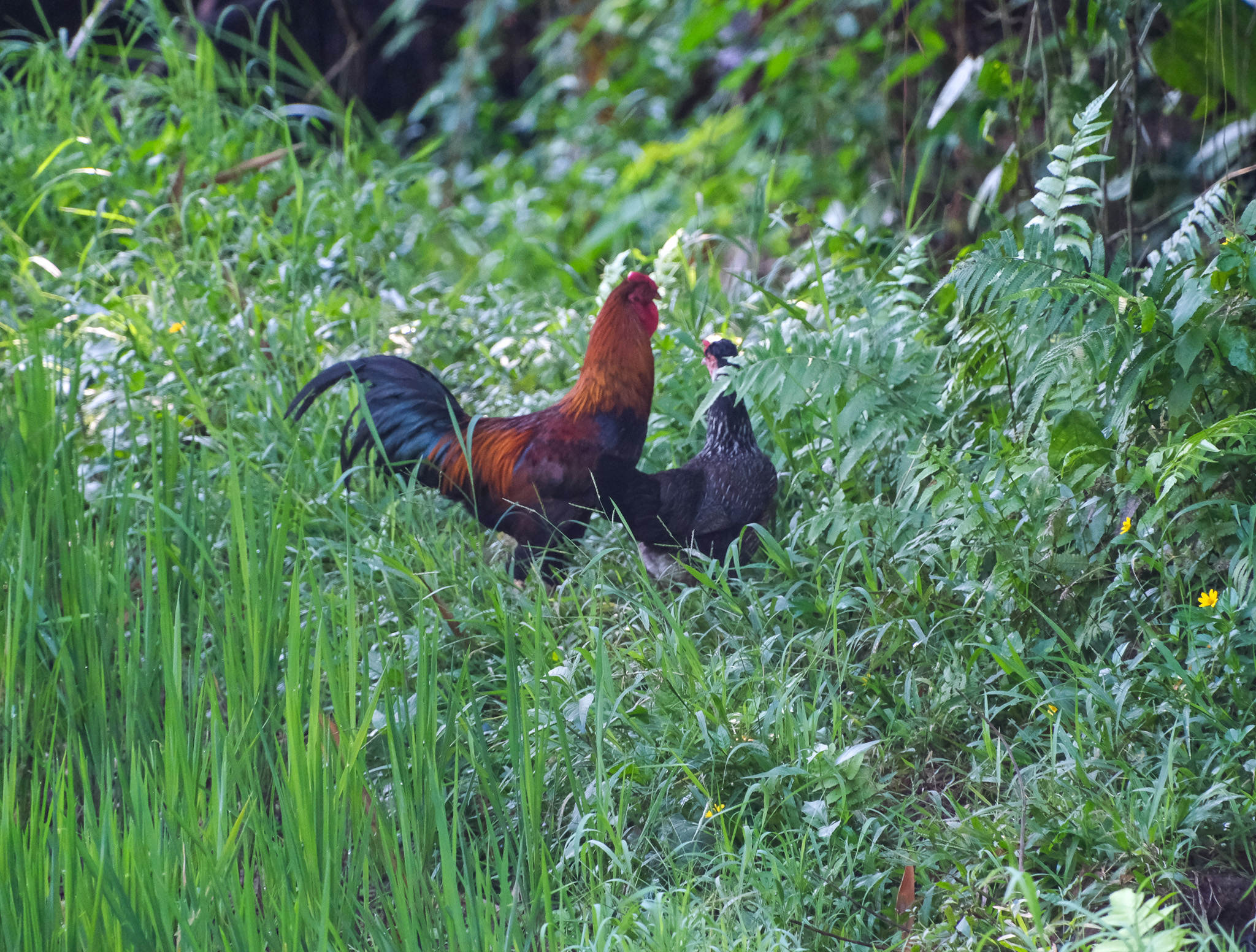
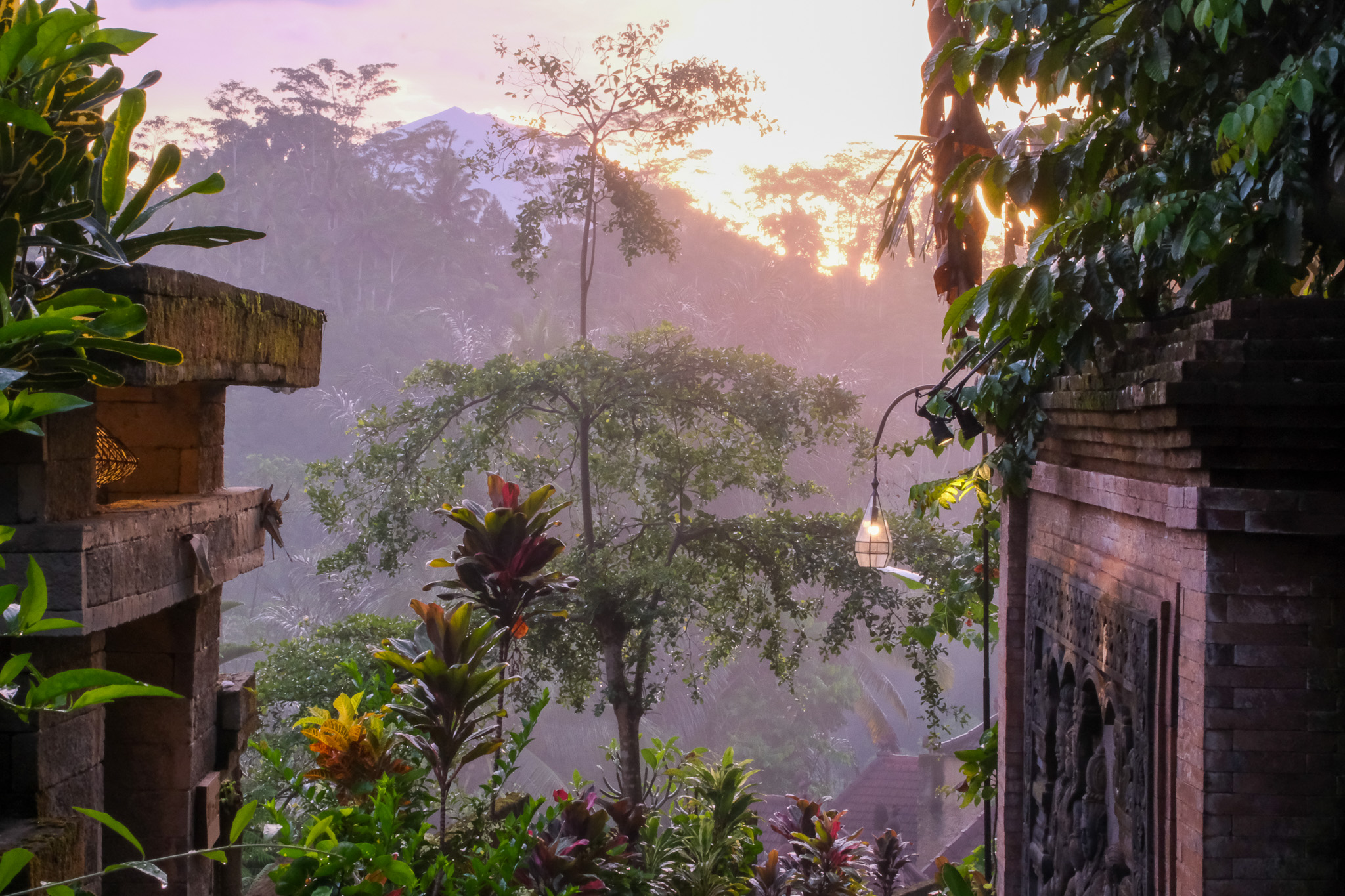
Roosters, birds and forest sounds awaken me and I know that no matter how sleep deprived I might be, the view needs to be viewed and damn I am not wrong! Soft light reveals jungle as far as the eye can see (which is not super far with my bleary eyes!) The roof of the building in front of ours has a proud statue of a rooster and the pool reflects frangipanni trees so clearly it’s hard to distinguish reflection and reality.
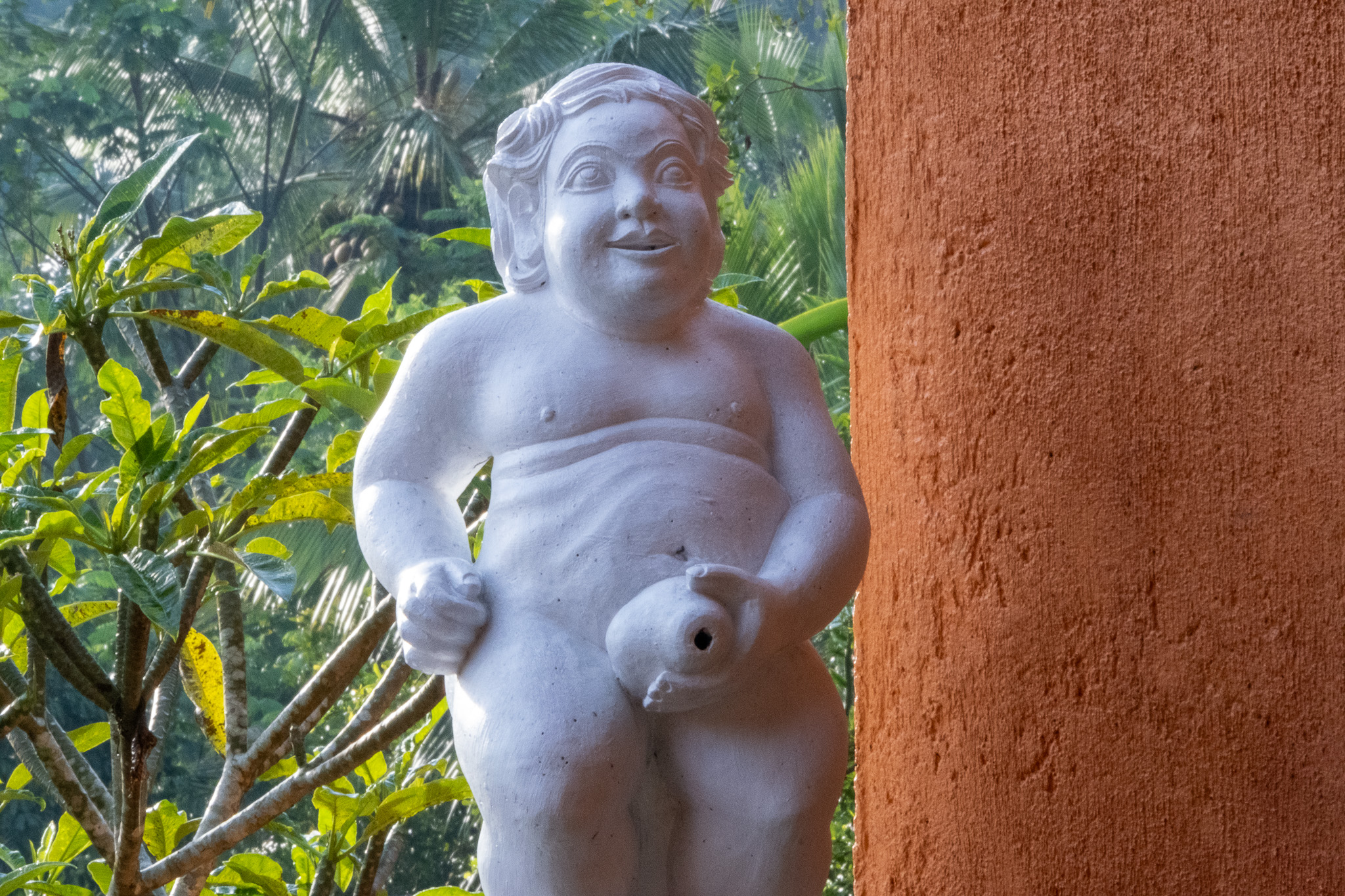
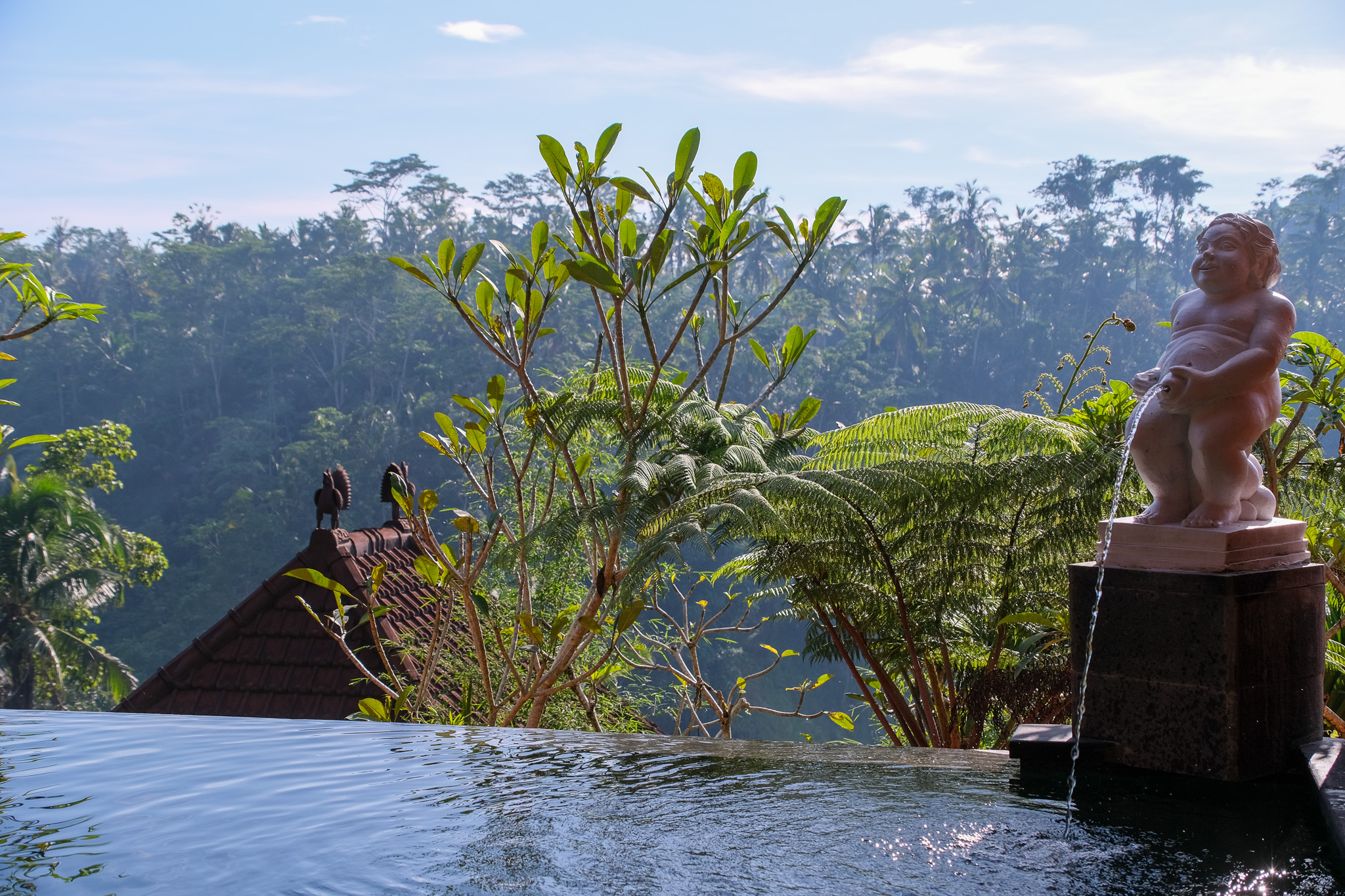
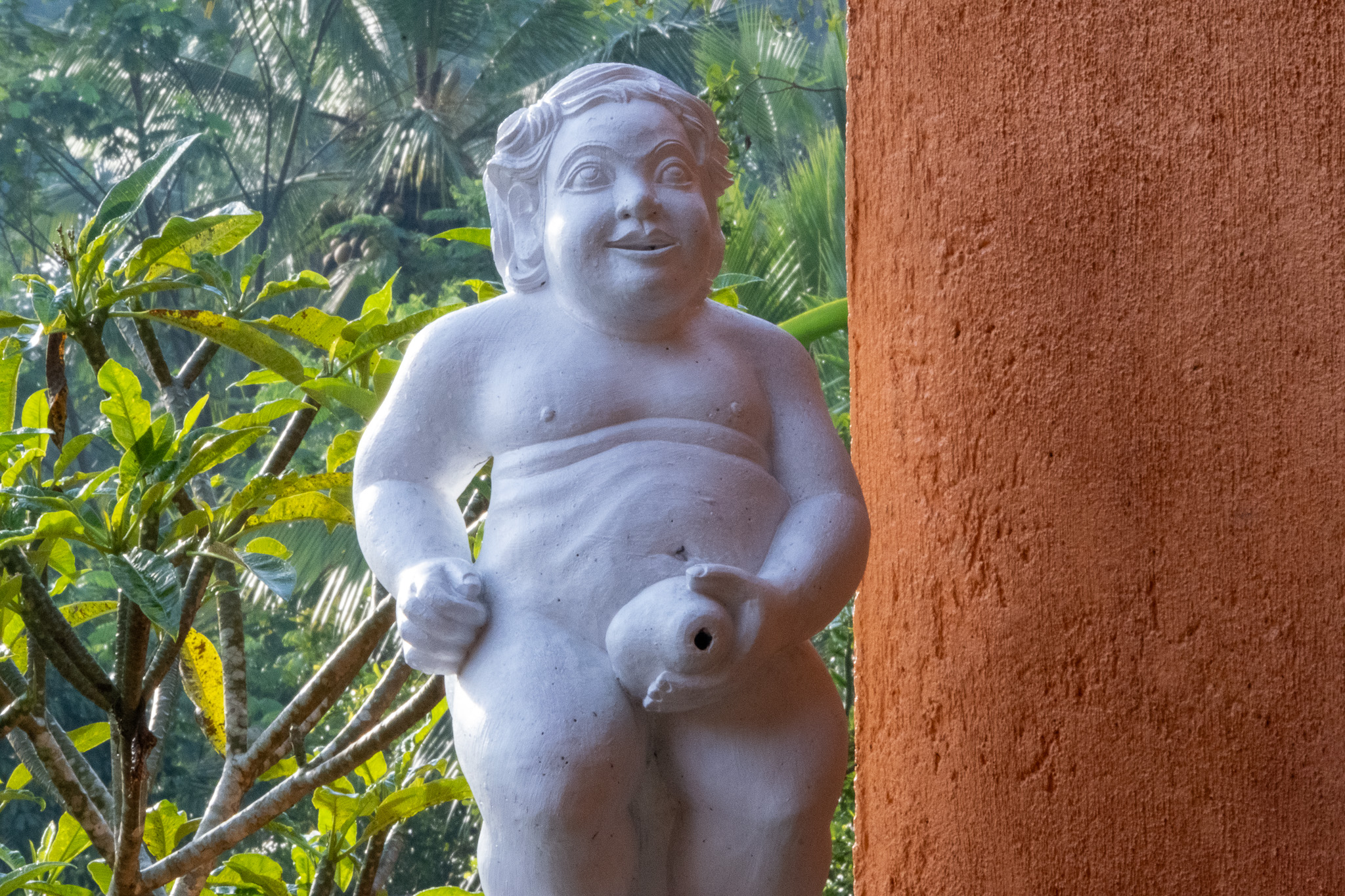
The water in our pool is a cool green and we have the obligatory pissing boy on the corner, waiting for the fountain to be switched on so he can piss into our pool. The sounds are times ten louder outside the room – roosters, cicadas, frogs and birds loud and encompassing. I have indeed landed in paradise!
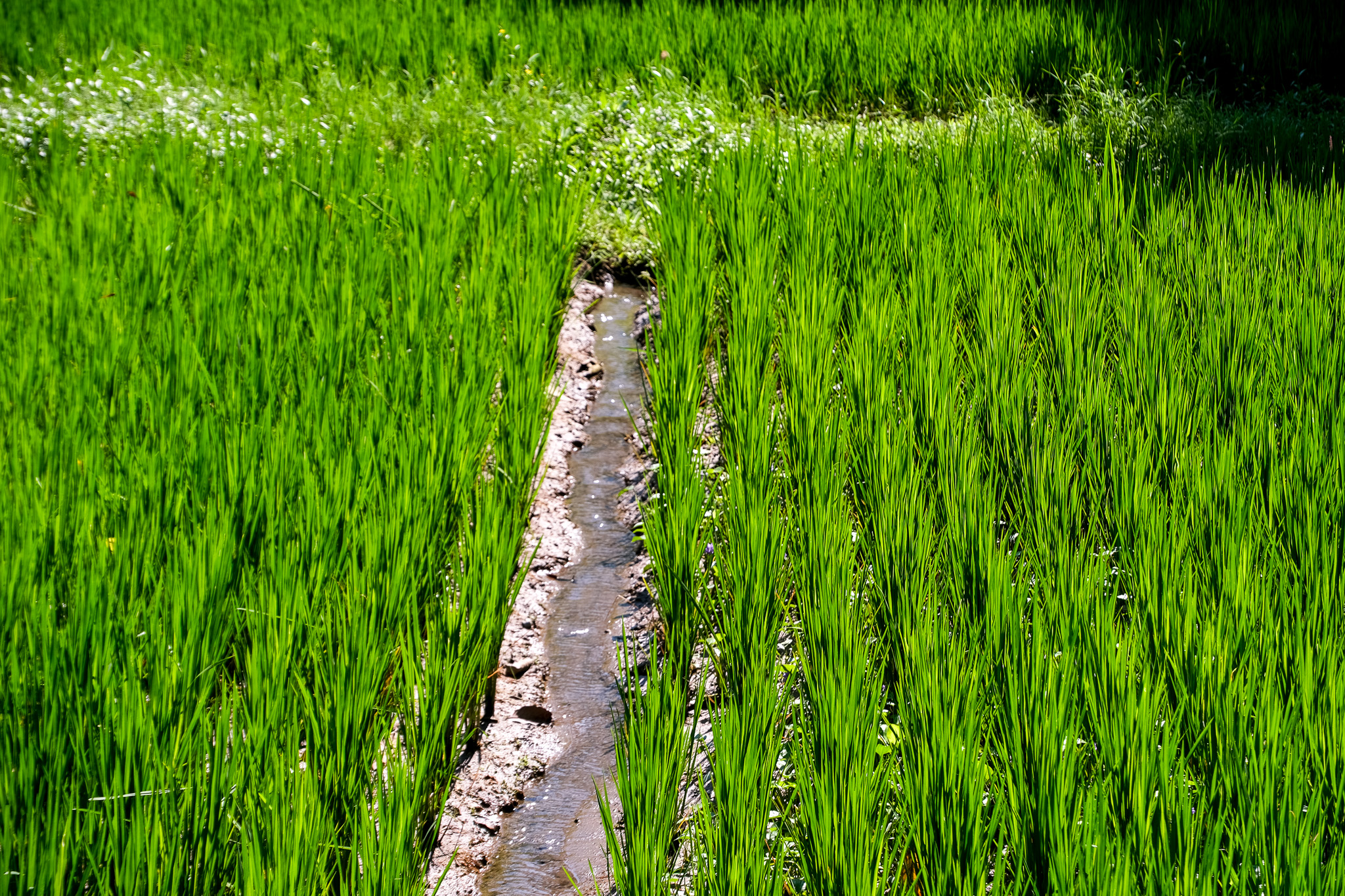
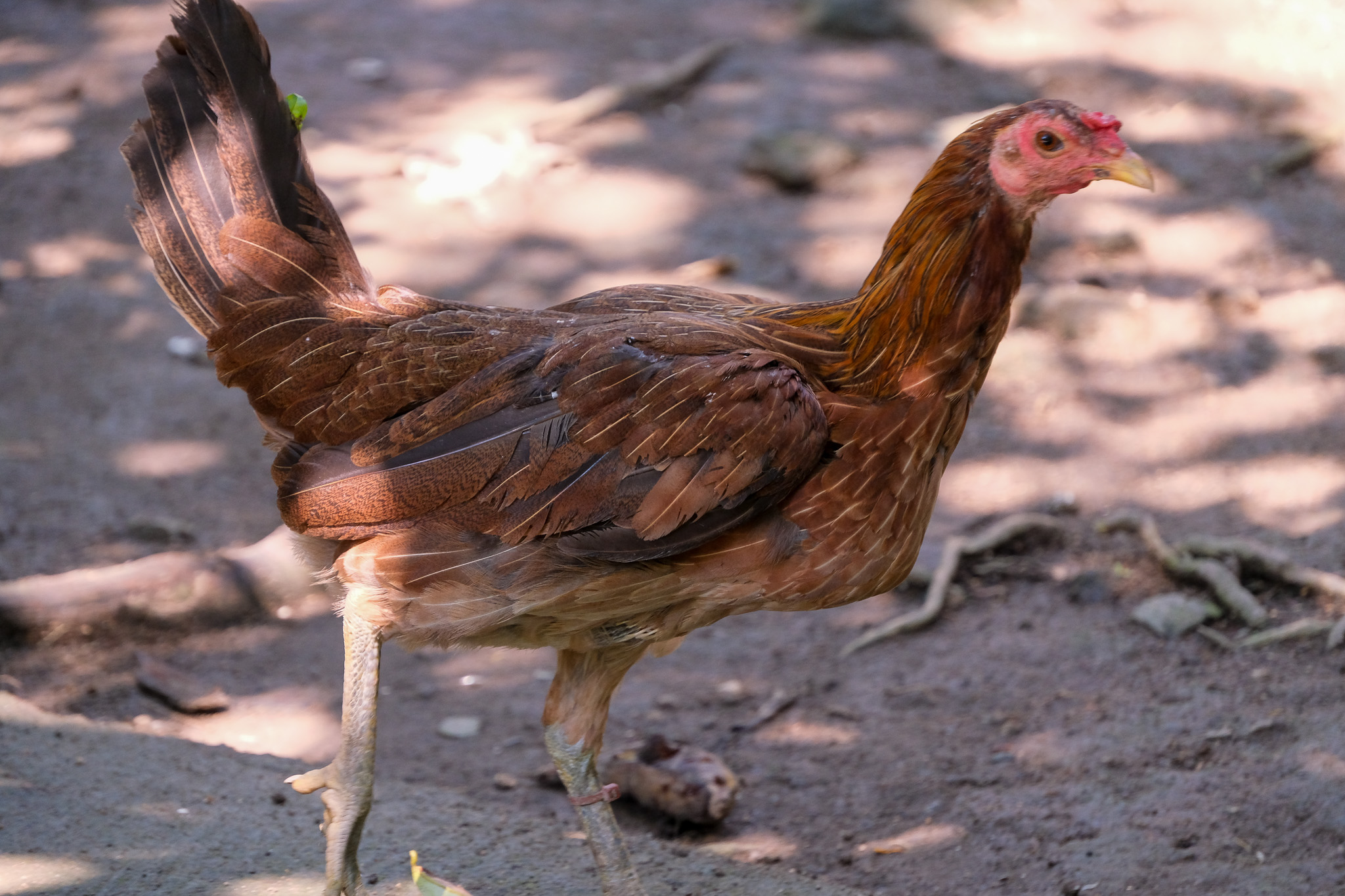
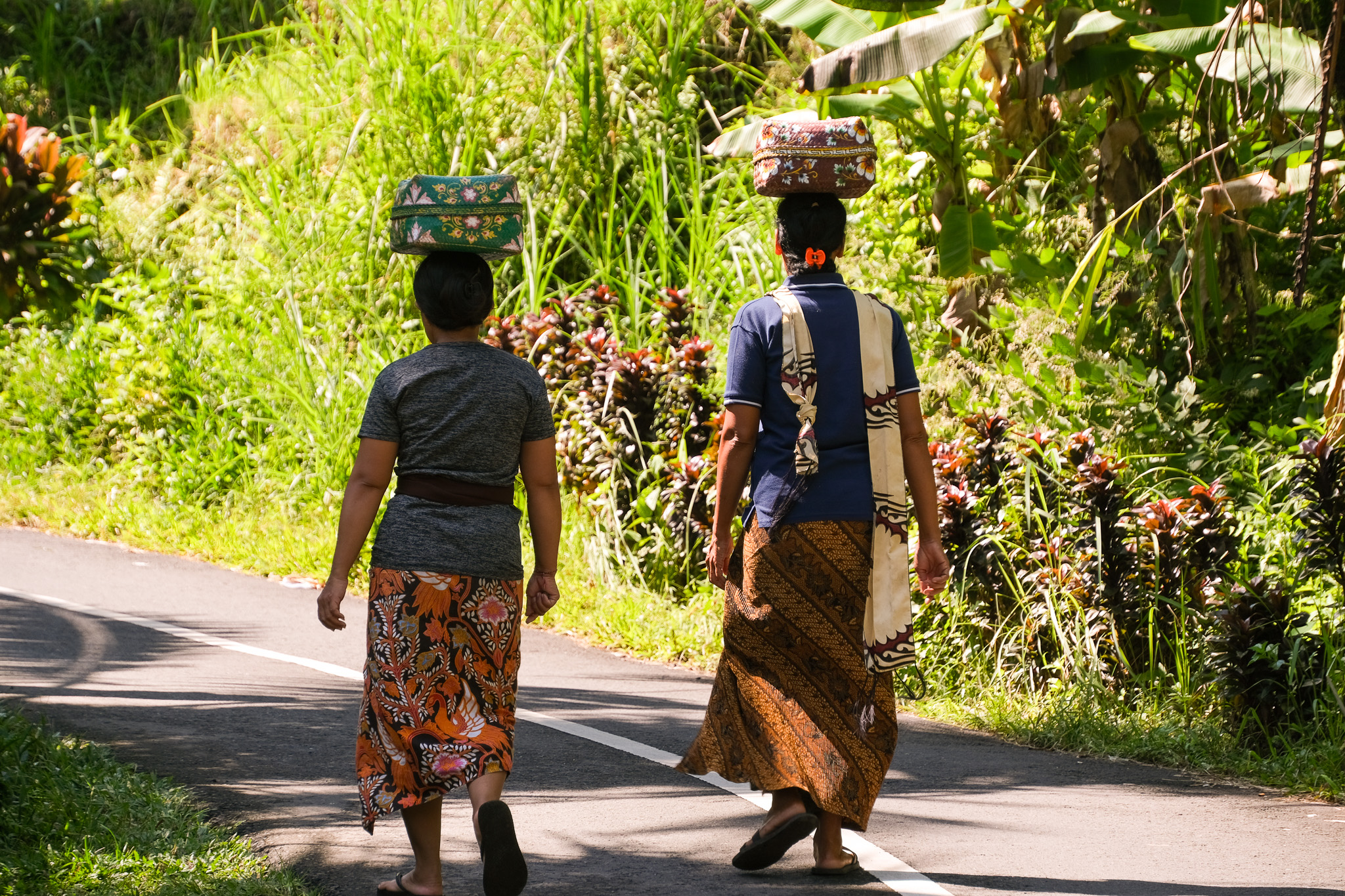
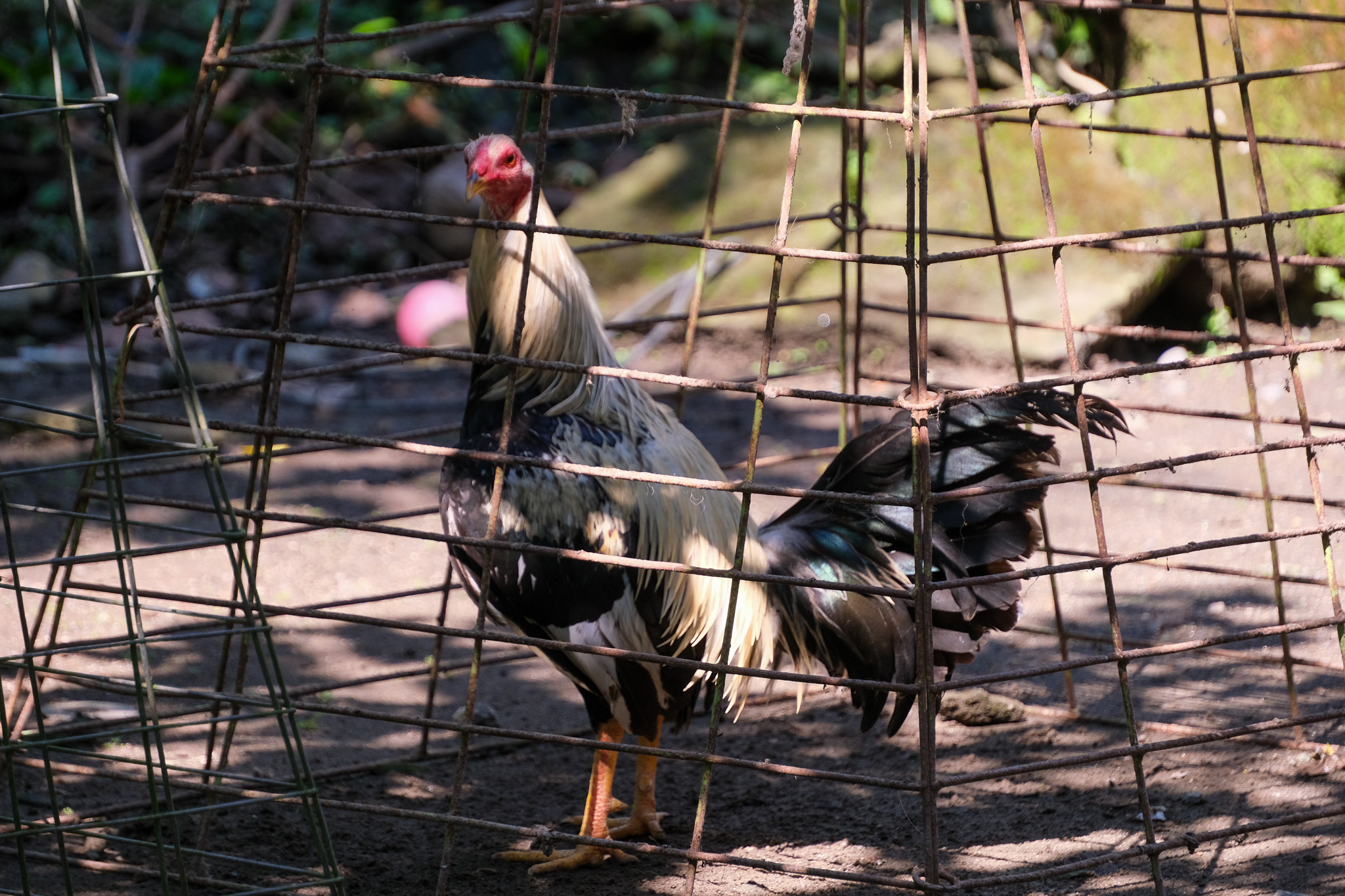
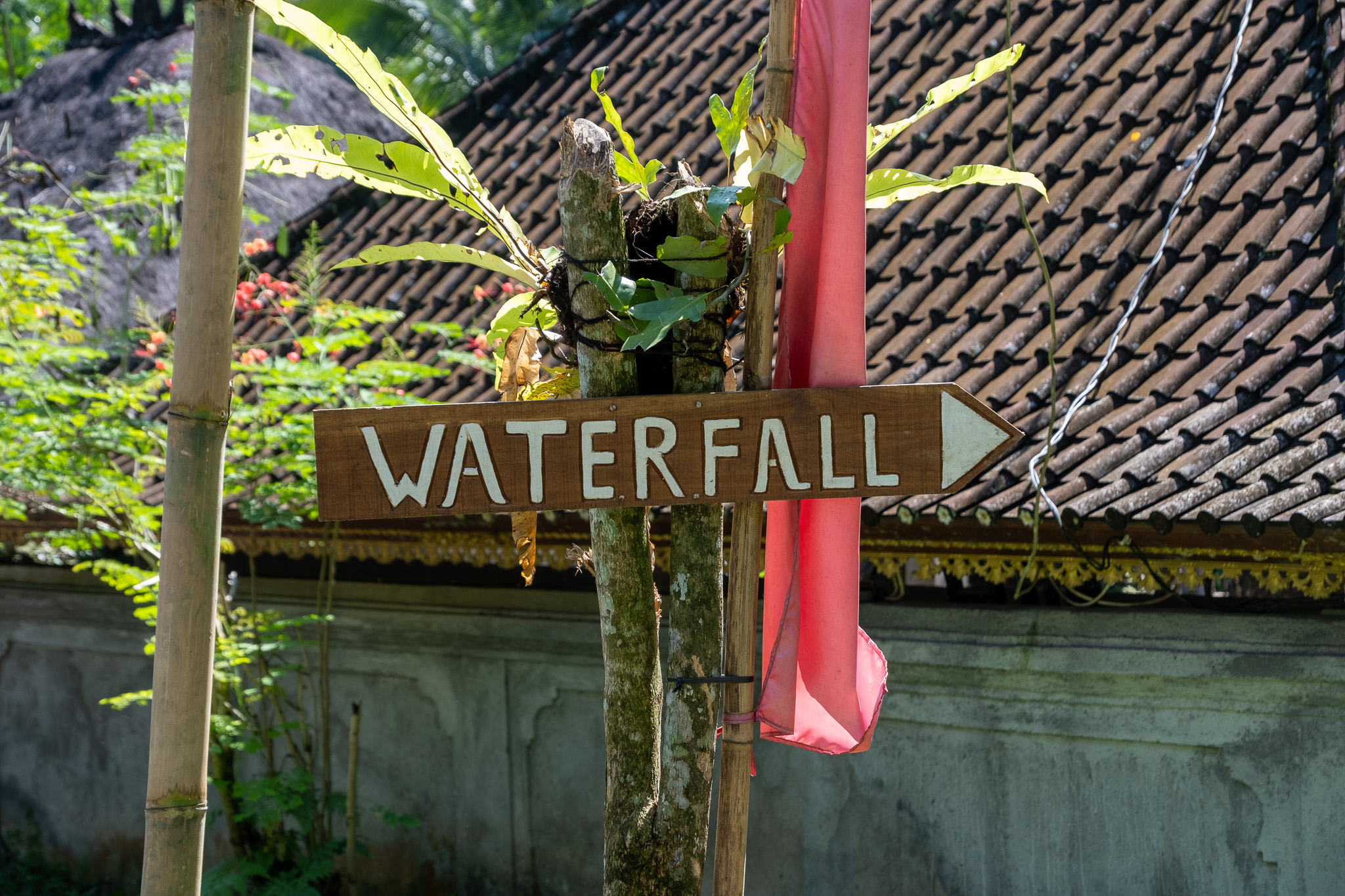
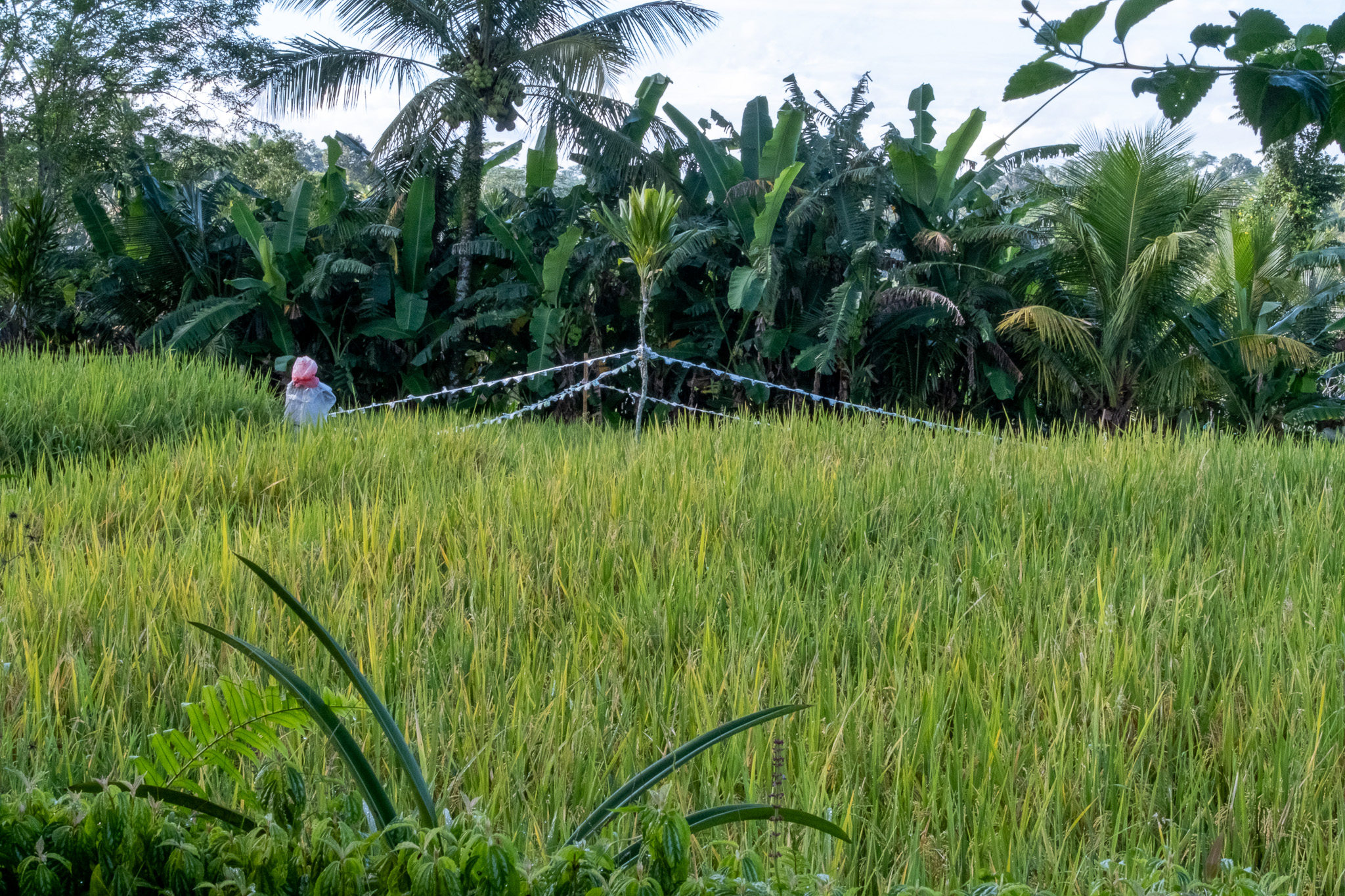
We have a day of wandering to water falls down narrow country roads flanked by rice fields and jungle. Two Balinese with woven carry baskets balanced on their heads stroll effortlessly before us, their low murmurs floating back to us. Chickens, athletic looking Balinese chickens, with long legs and no fluff forage roadside. A proud cockeral is locked in a small wire enclosure declaring his distaste for being locked up. A fighting cock perhaps?
Bali dogs never restrained and incredibly streetwise trot around with tails in the air. They don’t care for people. Two dogs see us off as we pass their property and check out two perfectly restored split-screen combis. I walk without looking back, unleashed dogs freak me out – twice bitten, always shy!
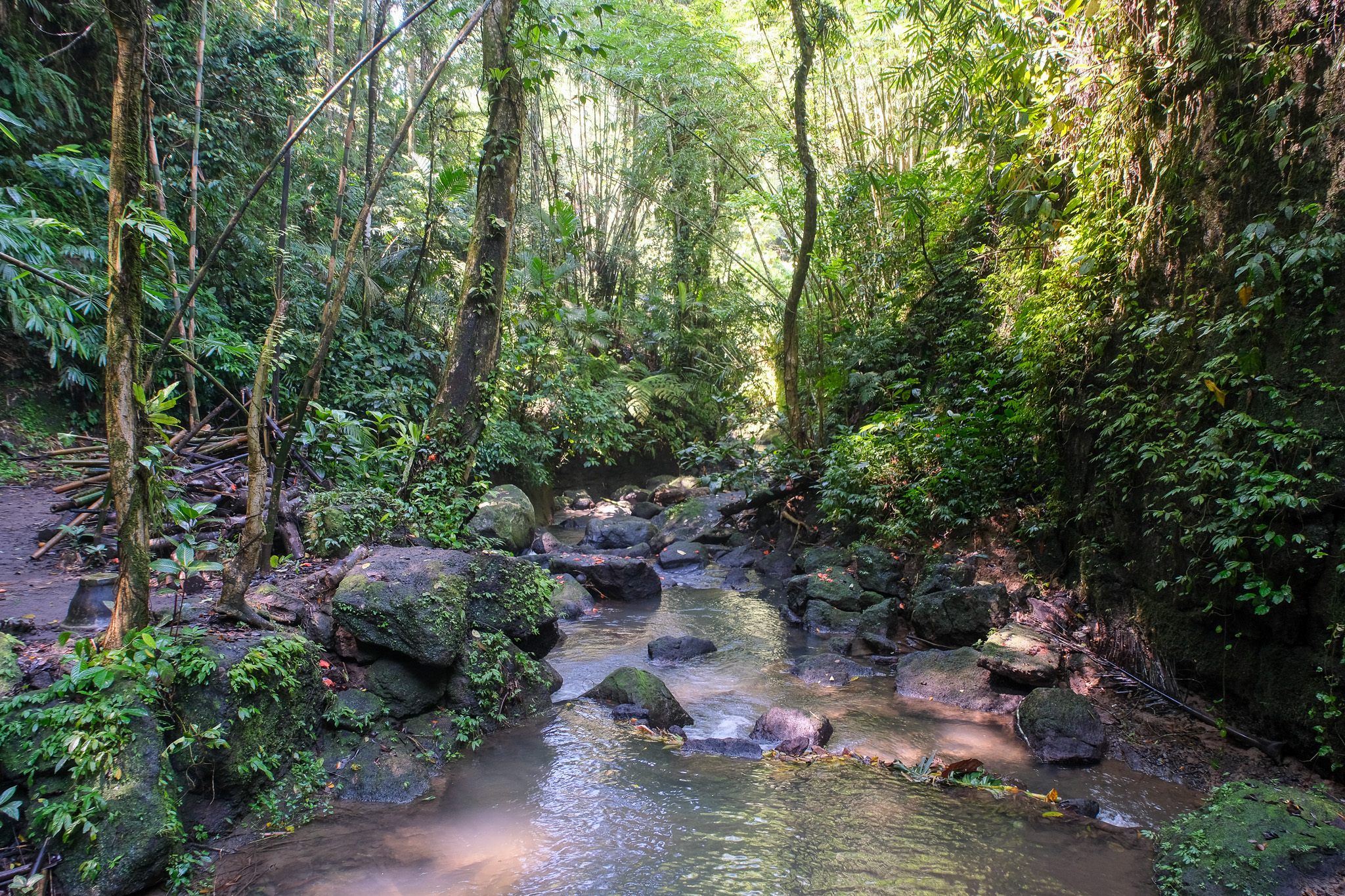
The waterfalls are not far down the steep road. 60000 Rupiah to enter Ulu Petanu. We can hear the water thundering from the road. Below the falls are hundreds of colourful carp swimming lazily with mouths agape and tails swishing. The ground is muddy and mud squeezes through our toes and hiking sandles.
The main waterfall is where everyone stops and strips down to their swimmers for Instagram pics – most don’t venture any further up the jungle path. We leave them all behind to find ourselves alone at the next small fall where we hold onto a rope and cross the river to see if we can find the cave that is apparently close by. No luck.
When we get back to the main fall the crowds have increased and the queue to get your insta pic is long. There are entire tours with the title ‘Instagram Tours of Bali’ it really is quite amusing.
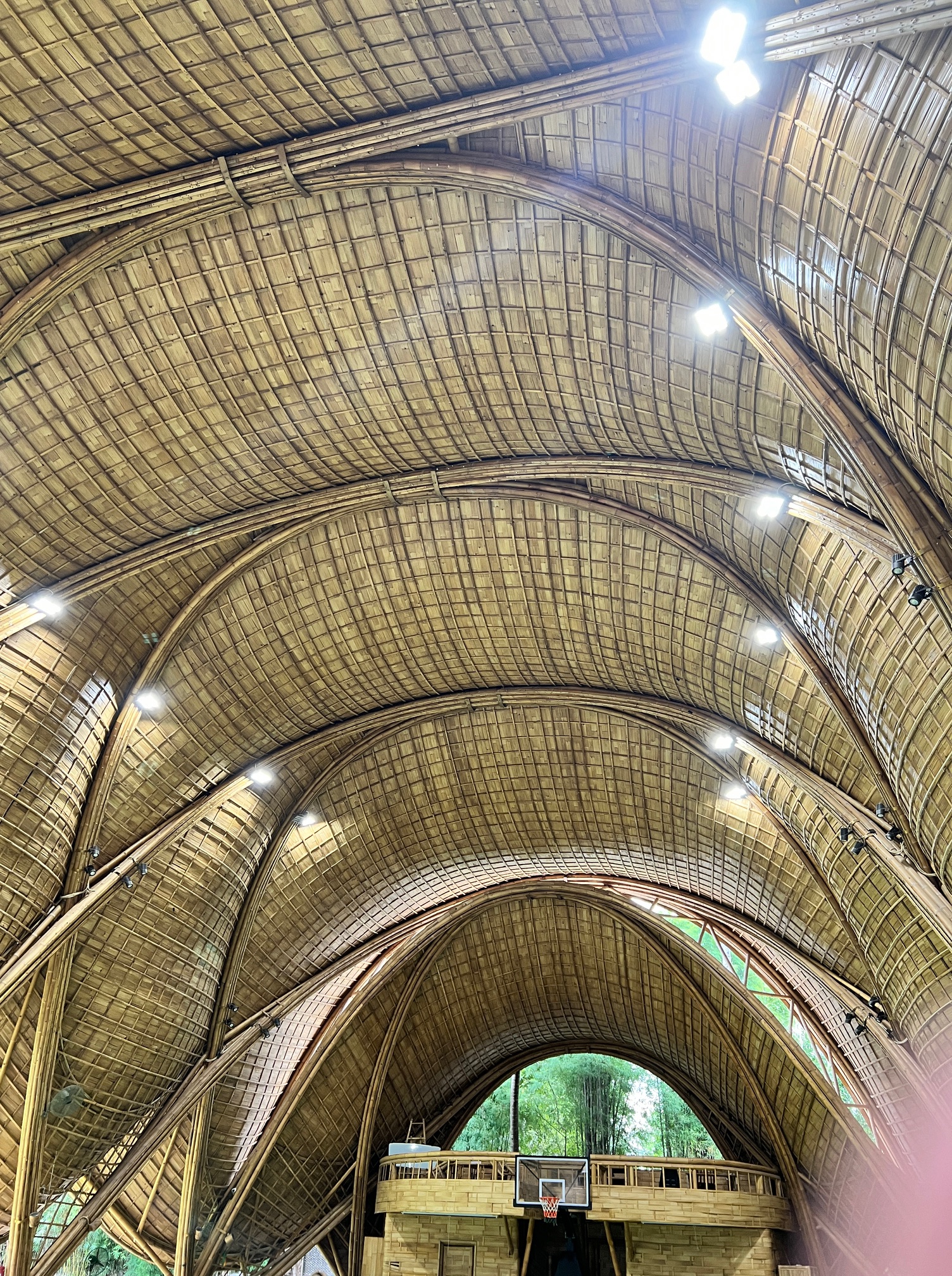
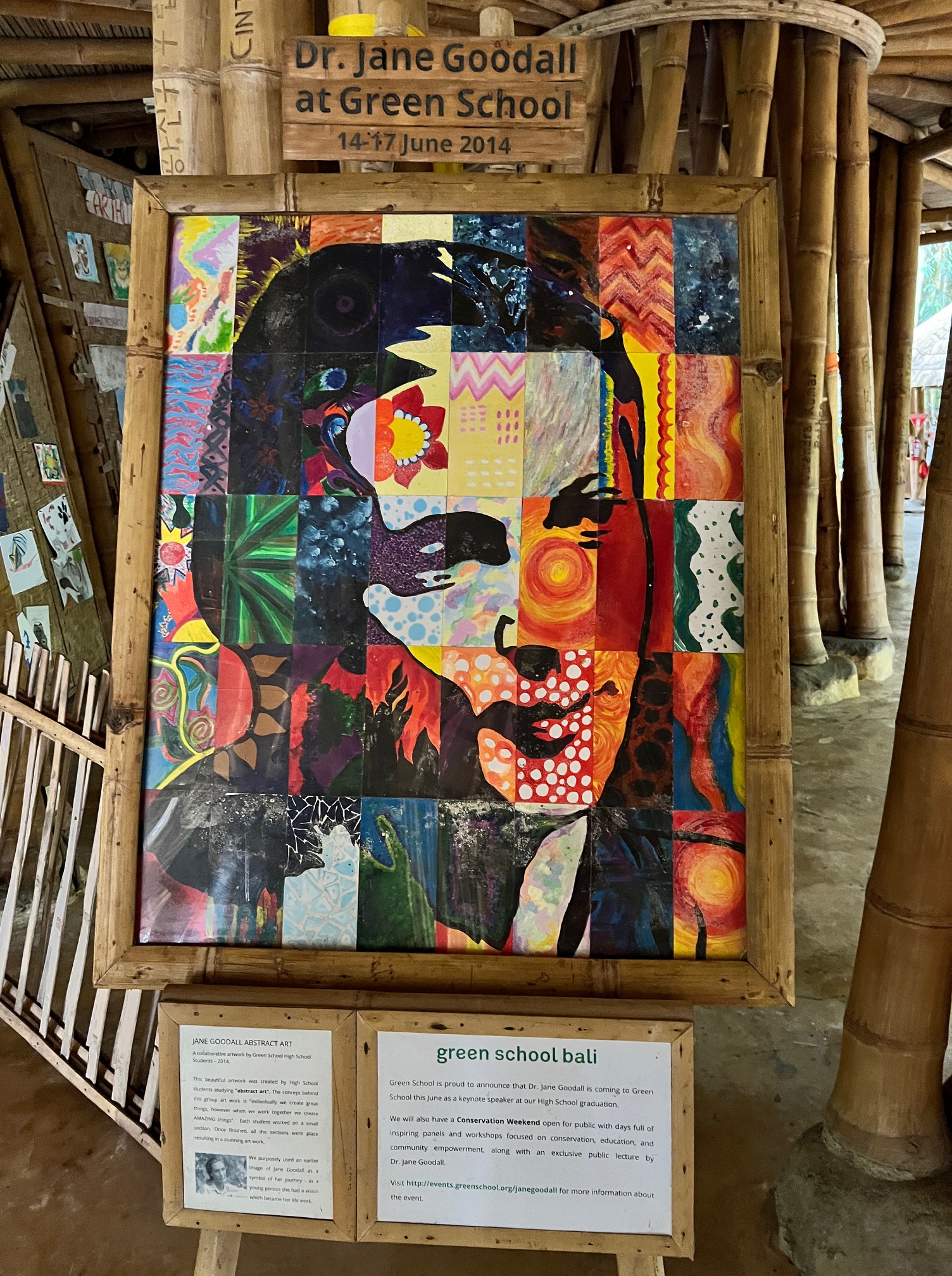
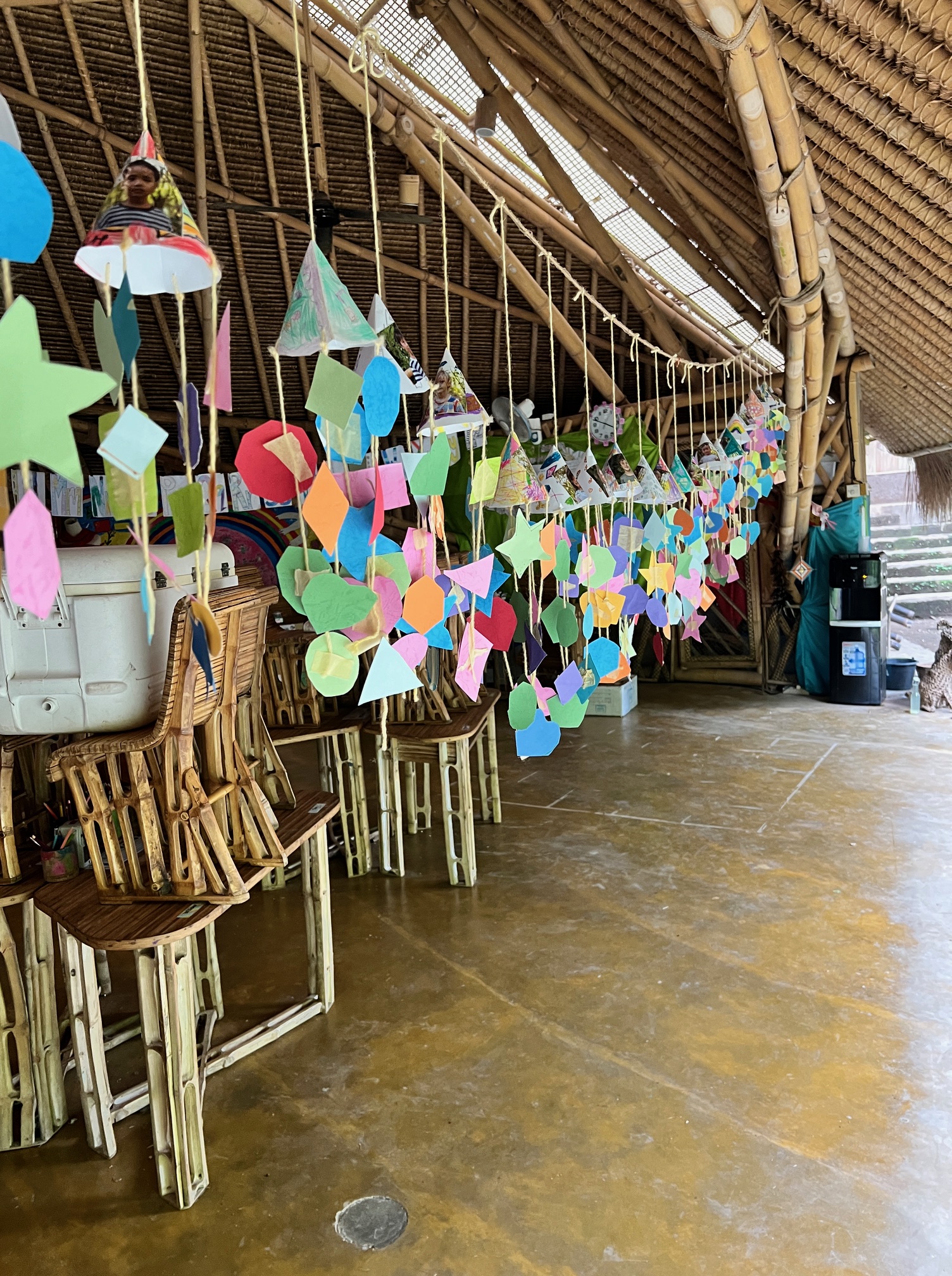
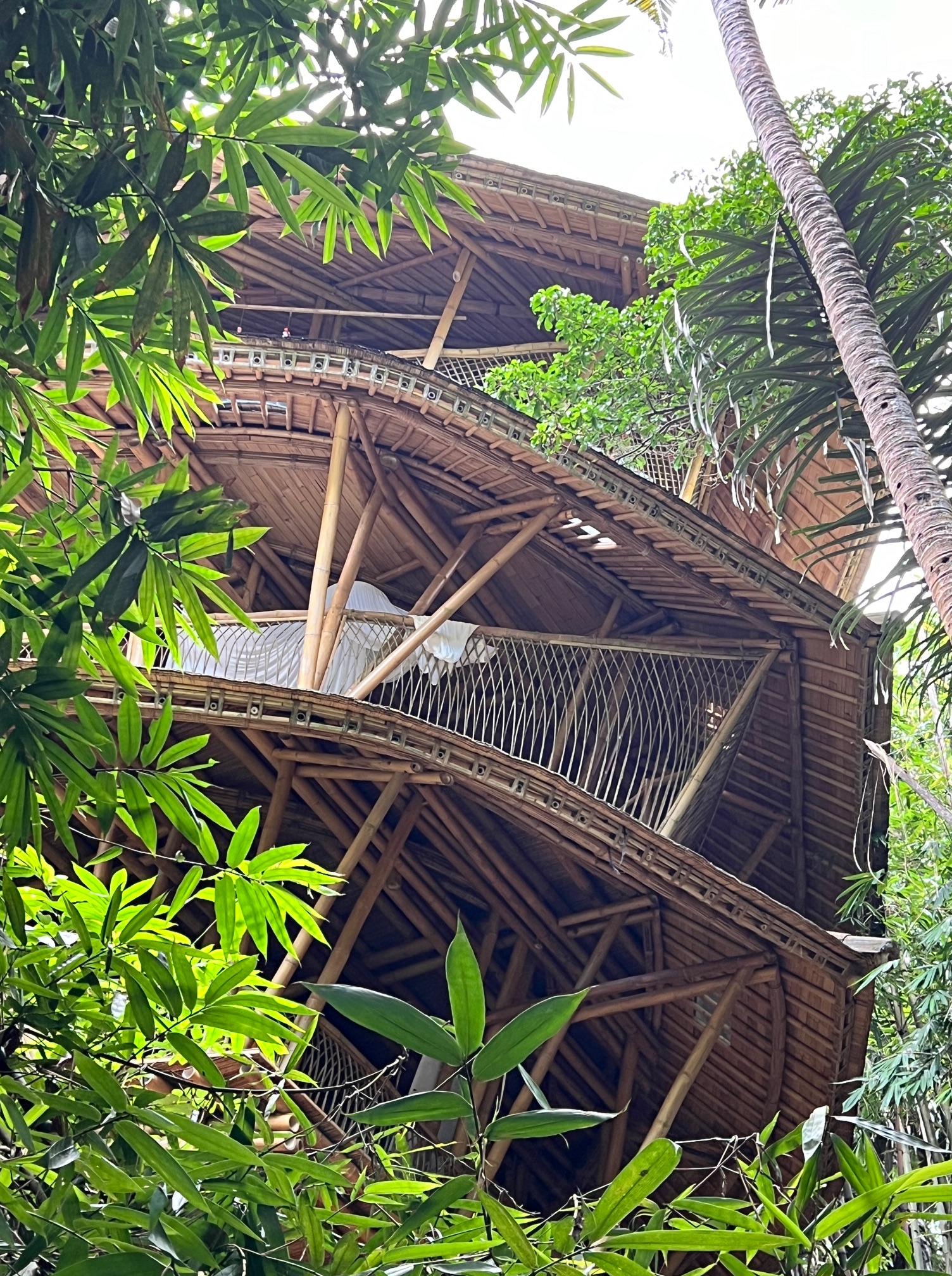
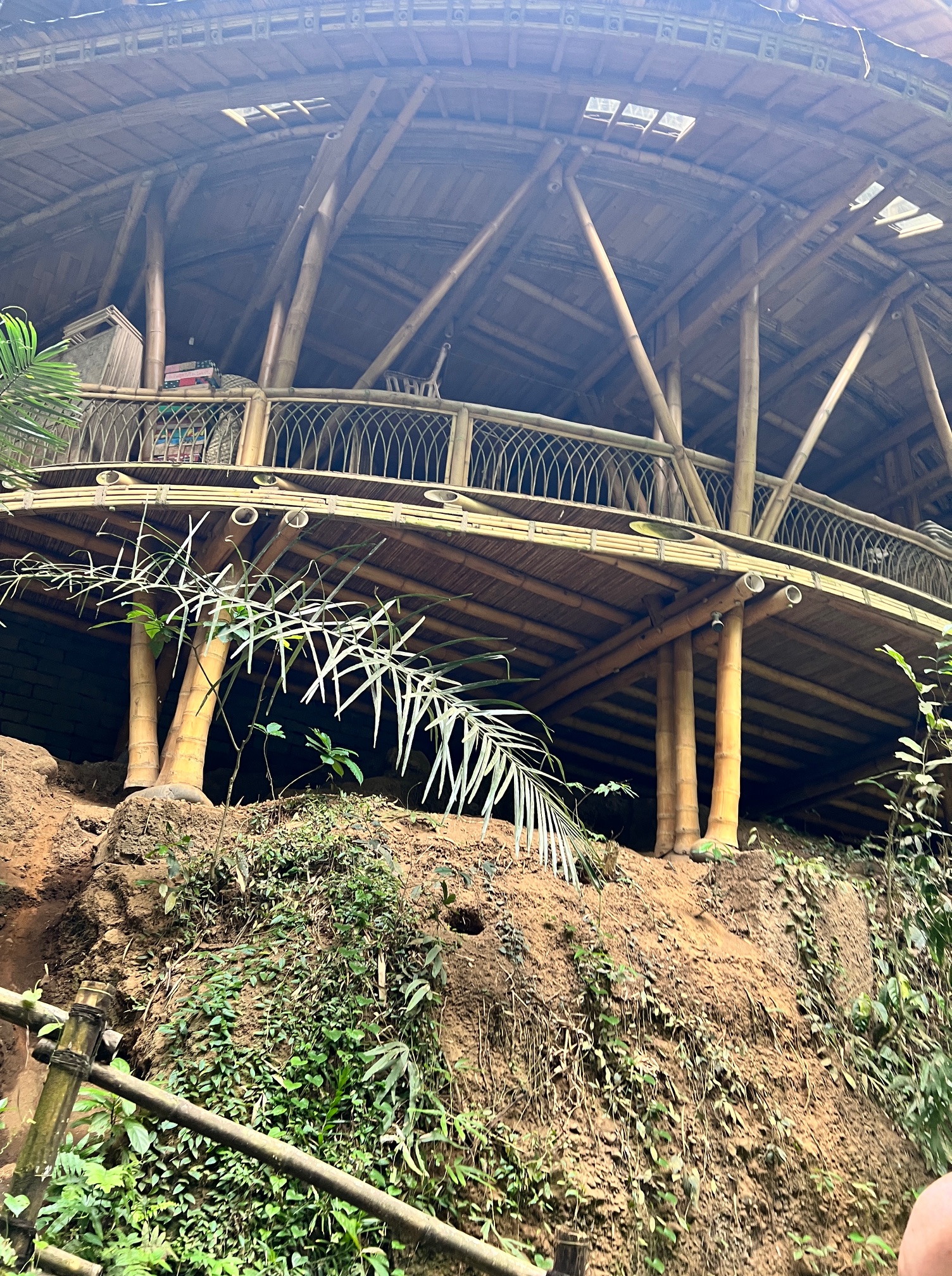
We decide to head back to paradise. Wait, what – I think we are already there! Later that afternoon we meet up with my great friend and ex-teaching partner in crime, Jim, at the Bali Green School. Our trip back down the mountain now revealed in daylight what we couldn’t see the night before. We got the grand tour. Incredible bamboo structures, classrooms with no walls (hello open planning!) No airconditioning aside from fans and the jungle.
Animals with a chance of snakes including a mini herd of cows, pigs, rabbits, a pack of Bali dogs and a jungle playground with no restrictions, where the children run wild with no shoes! Every teachers ‘duty of care’ nightmare! They even have their own ambulance (I wonder why?)
Snakes are frequently spotted and removed during the school day. At the very bottom of the grounds is a mud pit where the kids play and learn. That afternoon’s lesson had been testing floating craft and the class went home covered in mud.
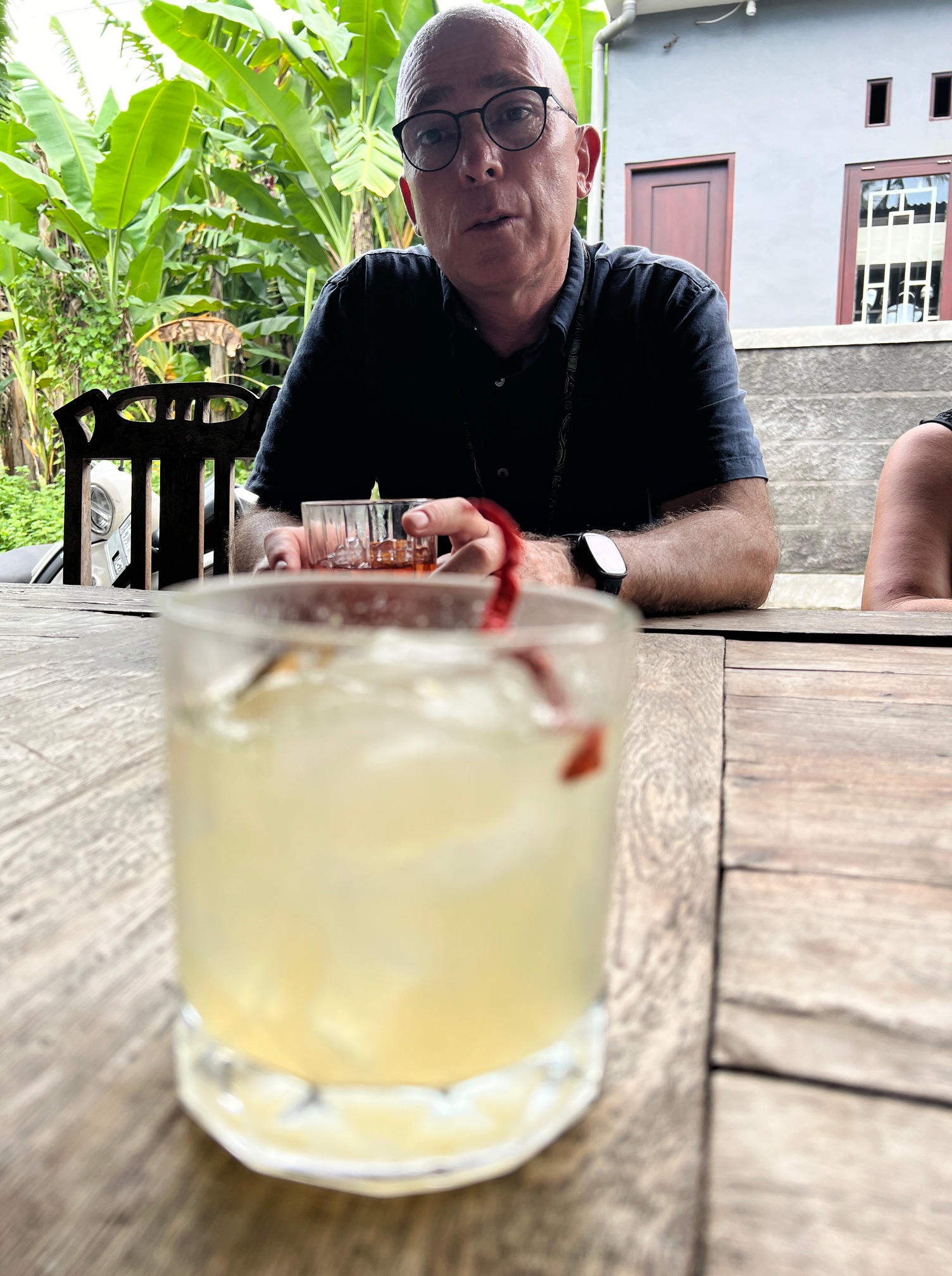
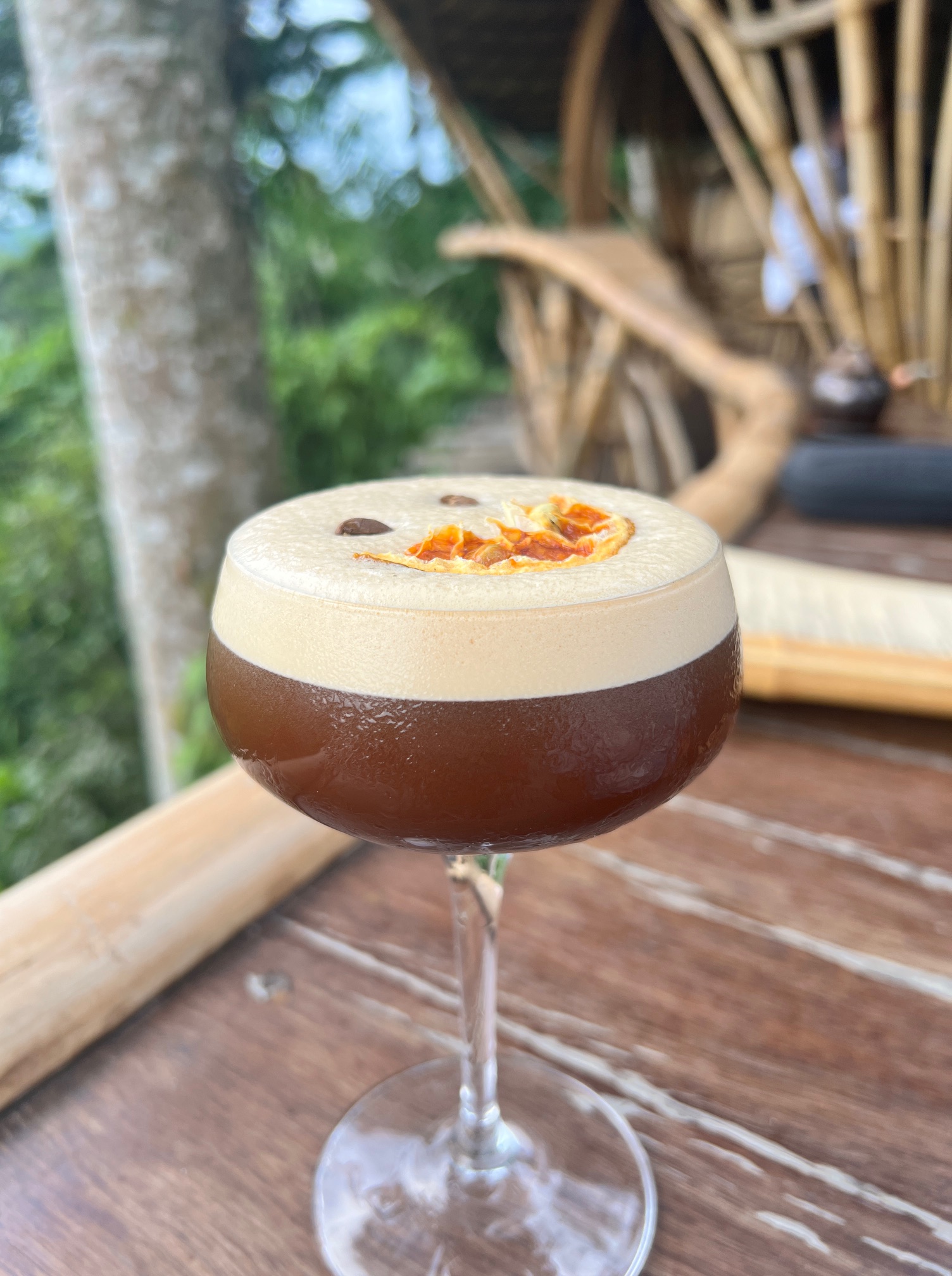
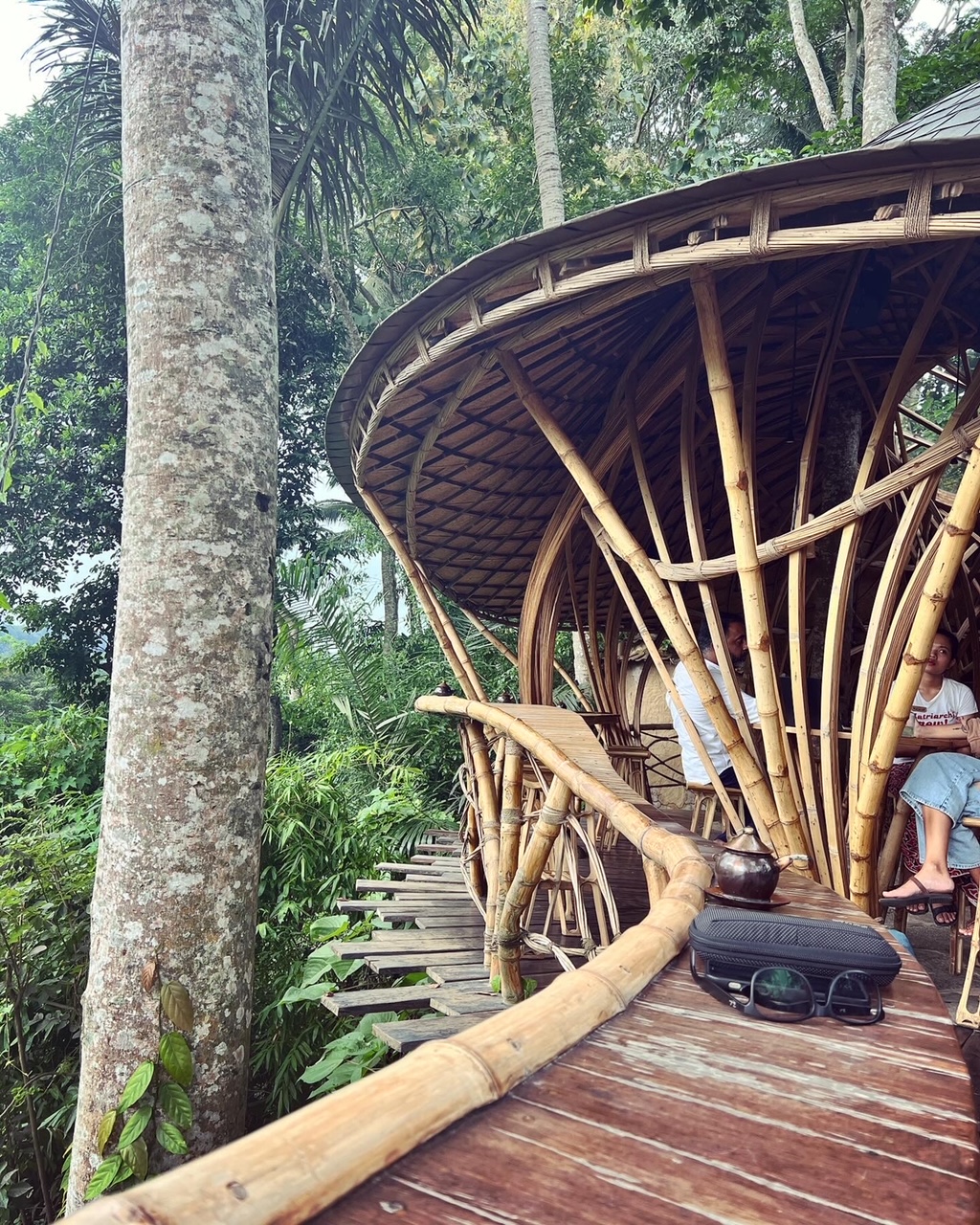
The tour over, we hand back our bamboo passes and wander across the road to a cocktail bar frequented by teachers enjoying Friday drinks. The cocktails are flowing and live music pumping. Two margaritas and some loose arrangements to meet up at Bambu Indah in Ubud later, we grab a Gojek driver and head back up the mountains. Bambu Indah is designed by the same people who designed the Green School so we were expecting loads of Bamboo!
So we get to the entrance of Bambu Indah which is sort of nondescript but we had googled the property beforehand so knew what to expect. The entrance, once we had signed a waiver (yes, a waiver) was this long stone tunnel so we headed for the light! Our host simply pointed us down the tunnel and disappeared so when we arrive at the crossroads it was a ‘choose your own adventure’ type experience.
We chose a fork and ended up in this amazing bar high above the rice fields and palm tree tops. We informed the waiter we were headed for the restaurant but she ushered us to some stools and took drink orders, trying to ply us with satays. We once again said ‘no, it’s ok we are going to the restaurant but we will wait for our friend’ (Jim)
Half an hour later we noted that some people were being ushered into a bamboo lift and disappearing down below. So we wondered if we were in the right spot. We took matters into our hands and asked if we could go down in the lift. ‘yes of course!’ Oh, OK we just had to ask? We had been sitting watching the sun go down (which was incredible!) while waiting patiently to be invited!
Down we go in this rickety bamboo structure carved into the cliff only to emerge into another tunnel. It soon becomes apparent why we signed a waiver! Once again we were pointed in a general direction until we reached a fork in the path. A swinging bamboo bridge or a rocky climb? We chose the swinging bridge. We continued to select our own turns and passing very close to a rushing river before stumbling (literally) into the restaurant!
It was dark by this time and we laughed about being on a Lara Croft type adventure to get to dinner. When we arrive we are told we need a reservation and that they have no tables but we were given a spot on some steps with a pillow or two and a low table. Jim arrived about 20 minutes later after taking a wrong turn!
Had we arrived at the restaurant in the light we would have seen the beautiful fresh water pools and swinging cane chairs – It’s ok I had googled it so I knew exactly what I was supposed to be seeing!
The amusing thing was the whole time we were there a table set for three was untouched – I’m sure it was ours! Anyway, we ate from a buffet type menu where all the items on the menu were grown and foraged from the property – delicious but way more expensive that any meals we had during our stay.
Day three
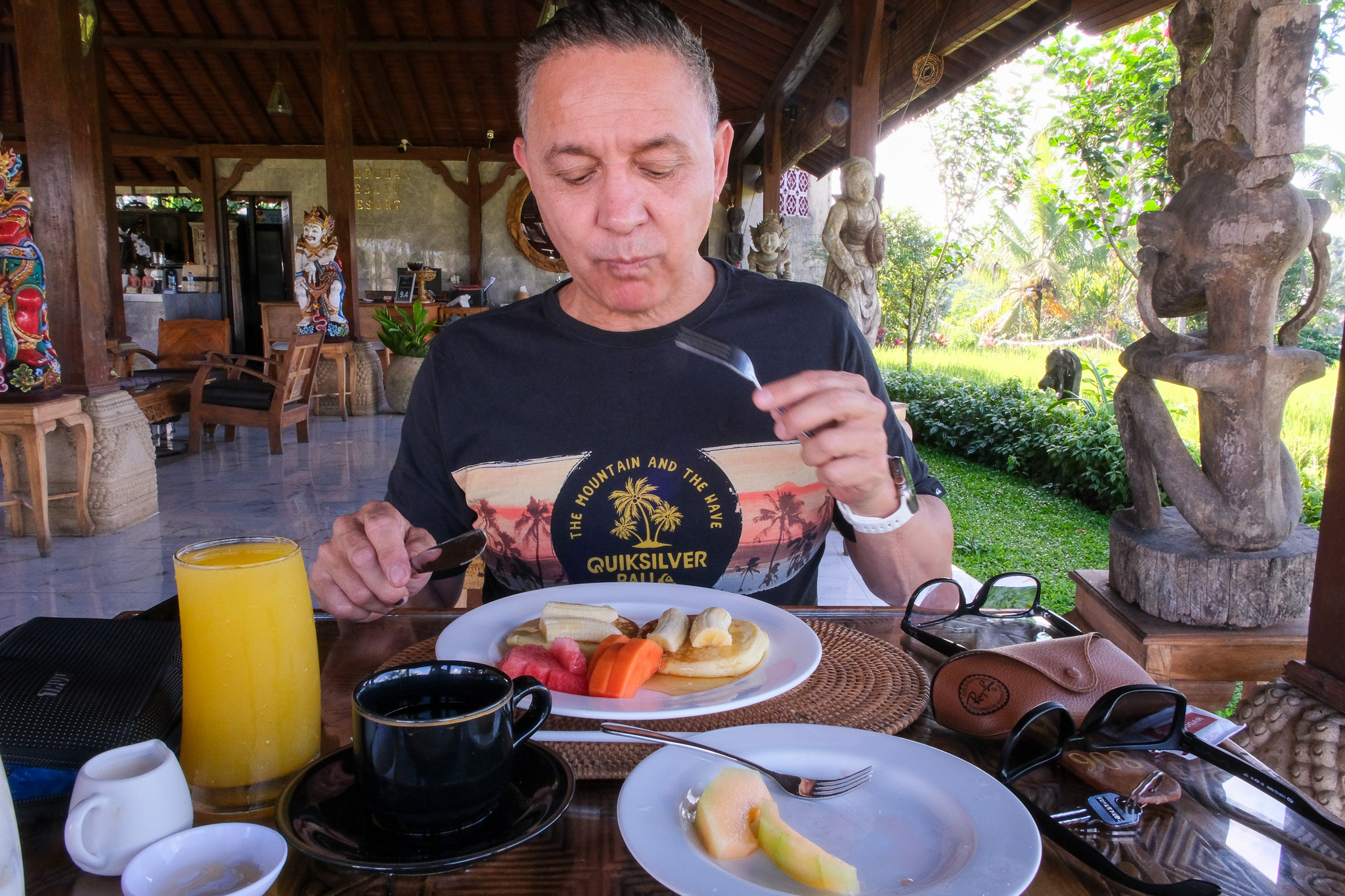
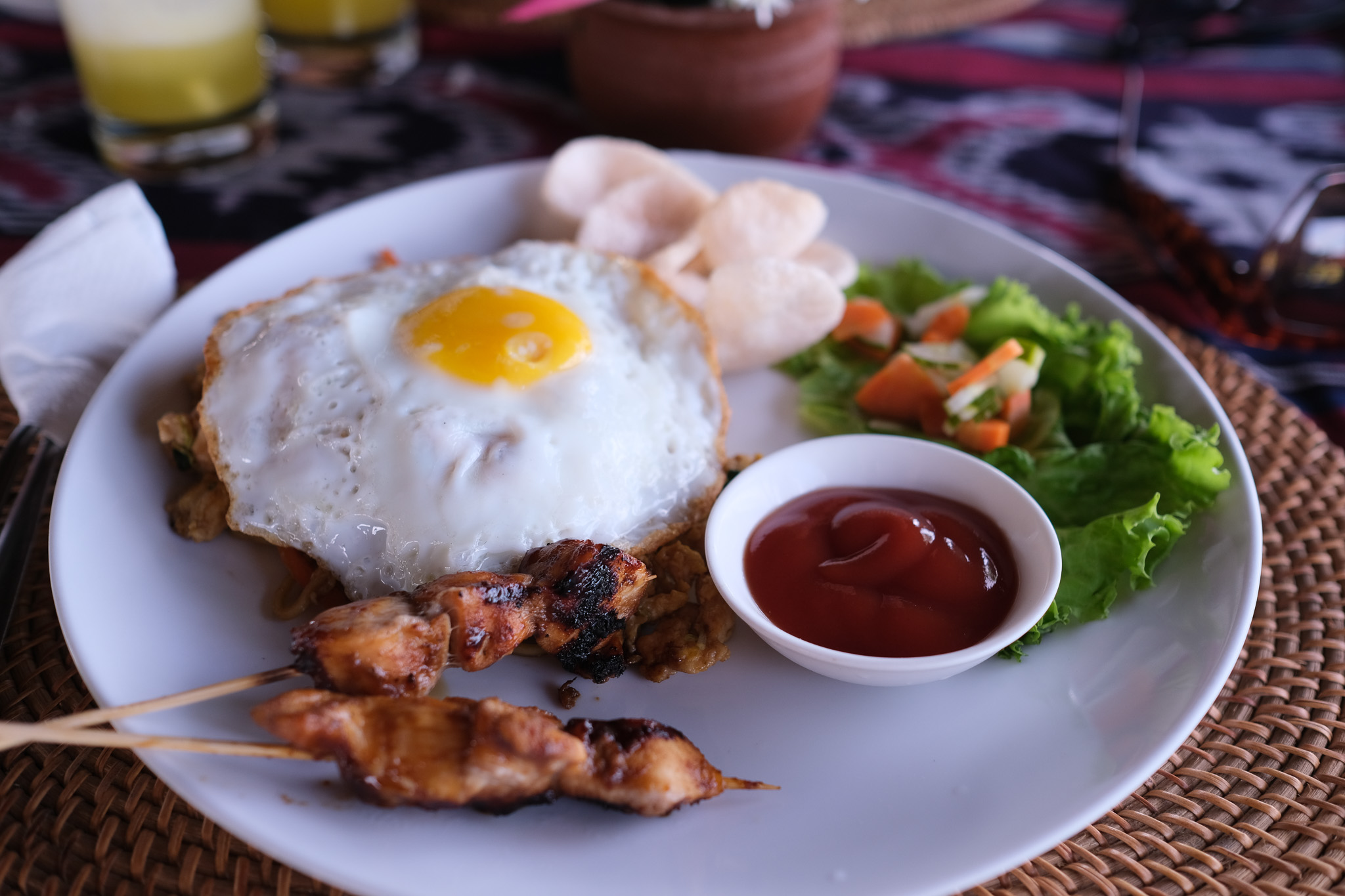
A delicious Nasi Goreng breakfast on the terrace at our resort washed down with fresh pineapple juice and Balinese coffee is followed by another swim before calling up a Gojek driver for an excursion into Ubud.
We have massage and day spa on our mind so following a wander through the town we settle on a small massage spa up a very steep stairway. Shoes off before we head up to be pummeled and scrubbed to within an inch of our lives! Two hours later and still wiping the petals off from our flower bath we decide to go to lunch.
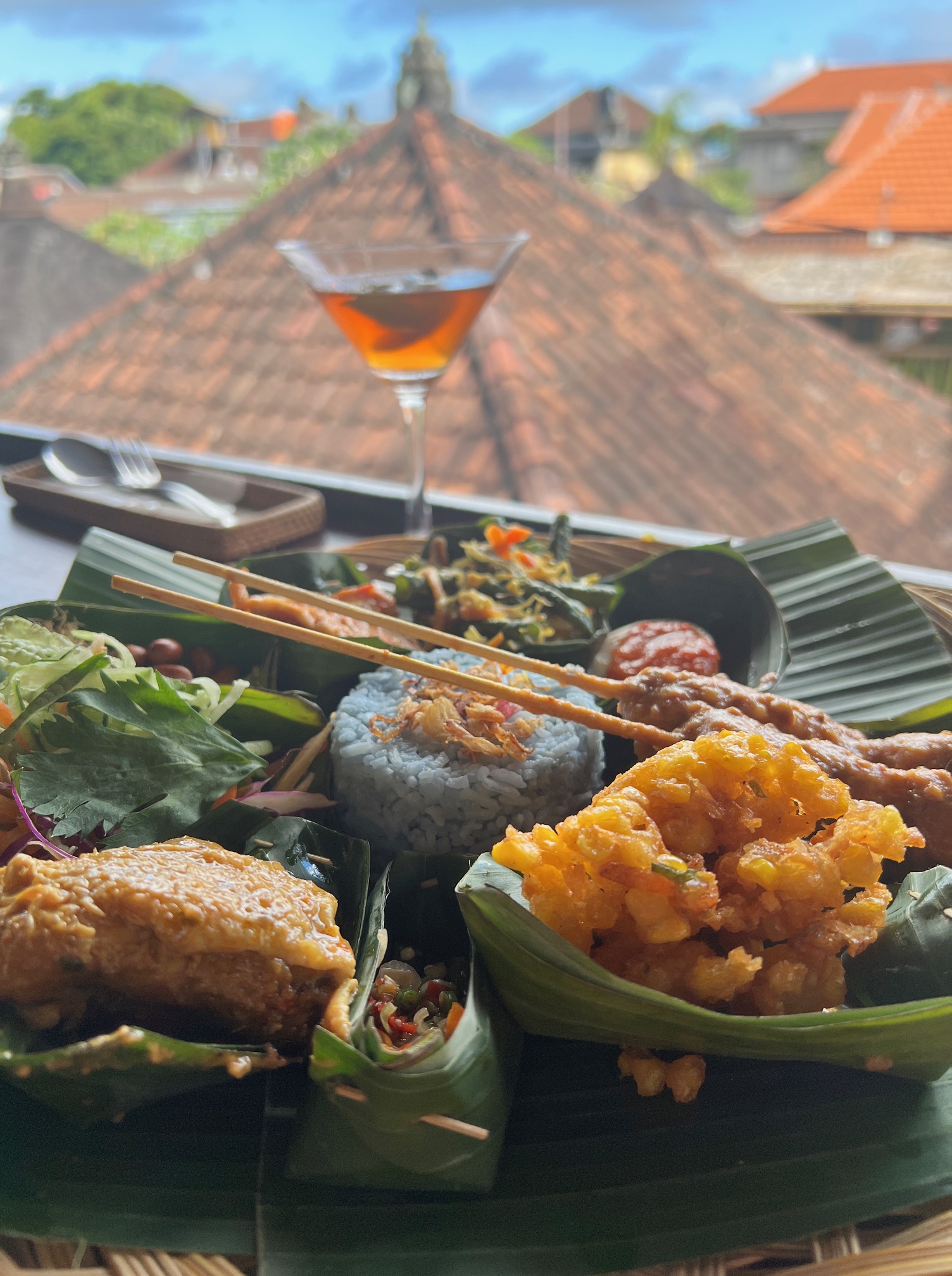
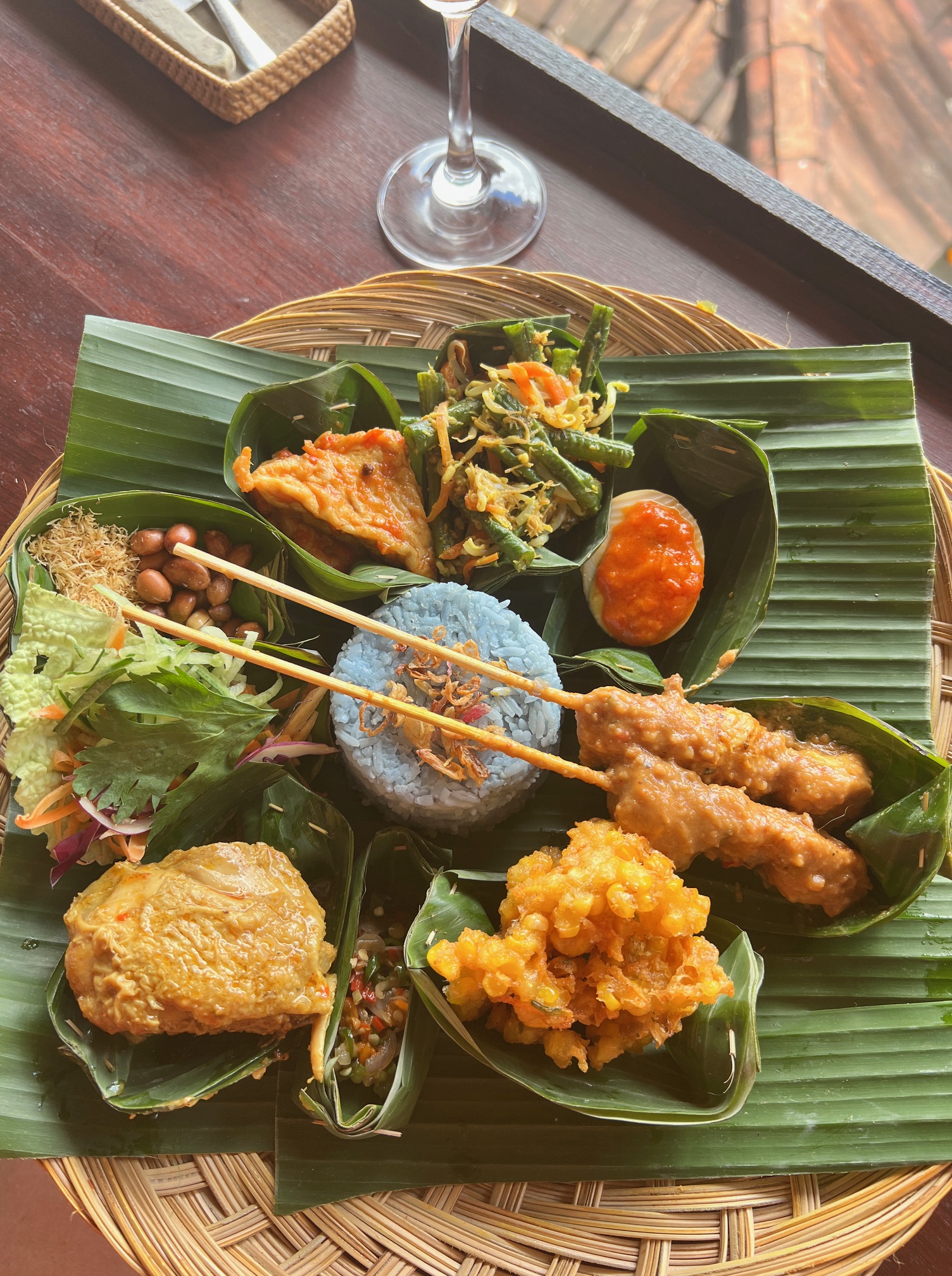
Sun Sun Warung had been recommended as the place to go for eats so we found a lovely spot overlooking the rooftops and ordered the blue rice Nasi Goreng and an Arak cocktail. All food was served in banana leaf containers and it was so delicious, spicy and aromatic, I will have dreams about it for a very long time!
A Balinese painter balances in front of us on a bamboo scaffold wearing jeans and a hoody with bare feet. We are sweating in our shorts! On top of this he is within falling distance of a tangled mass of powerlines. I can’t watch!
We head back for a quiet night with some snacks and plans to relax by and in our pool. Bliss.
Day four
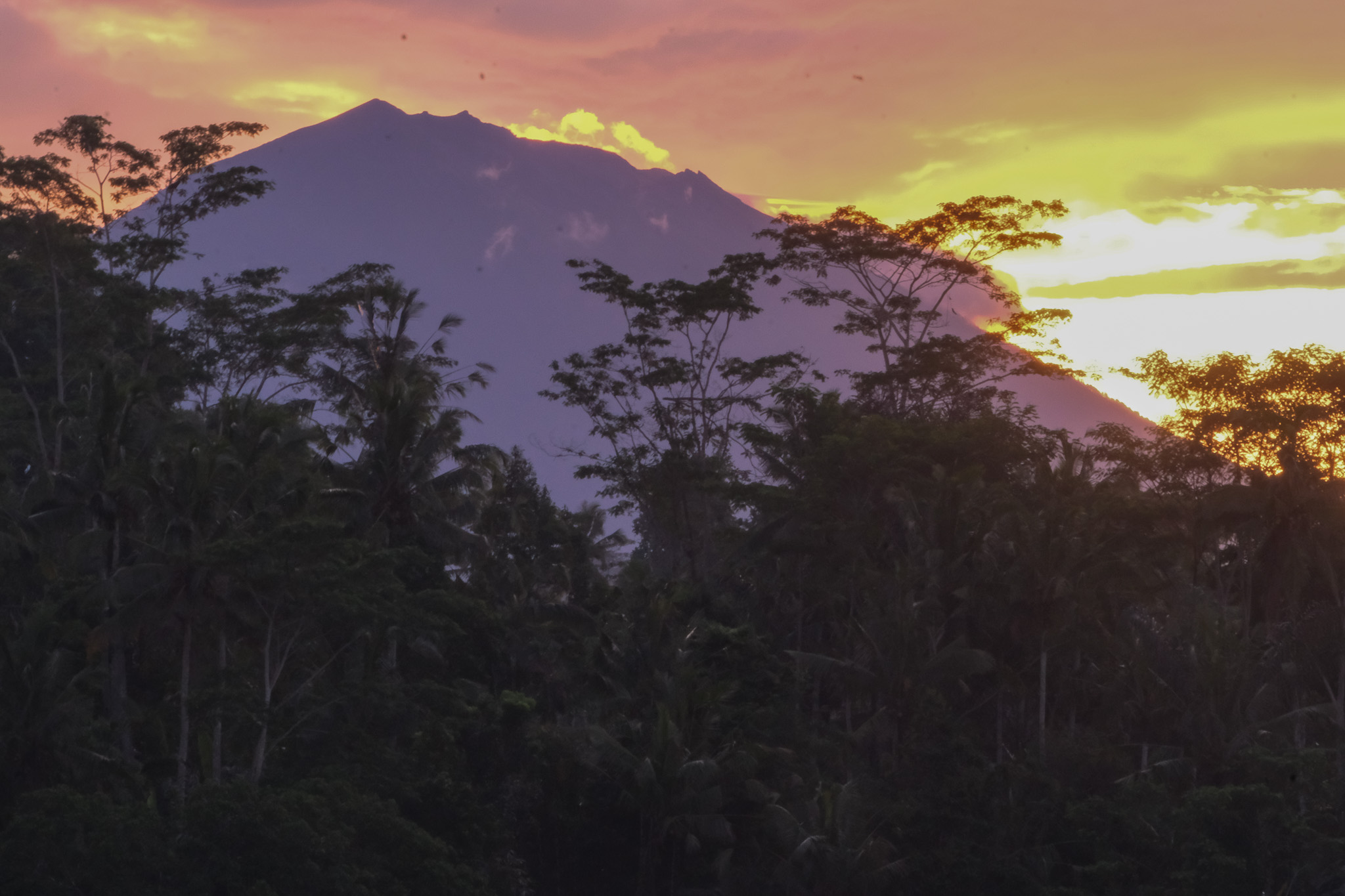
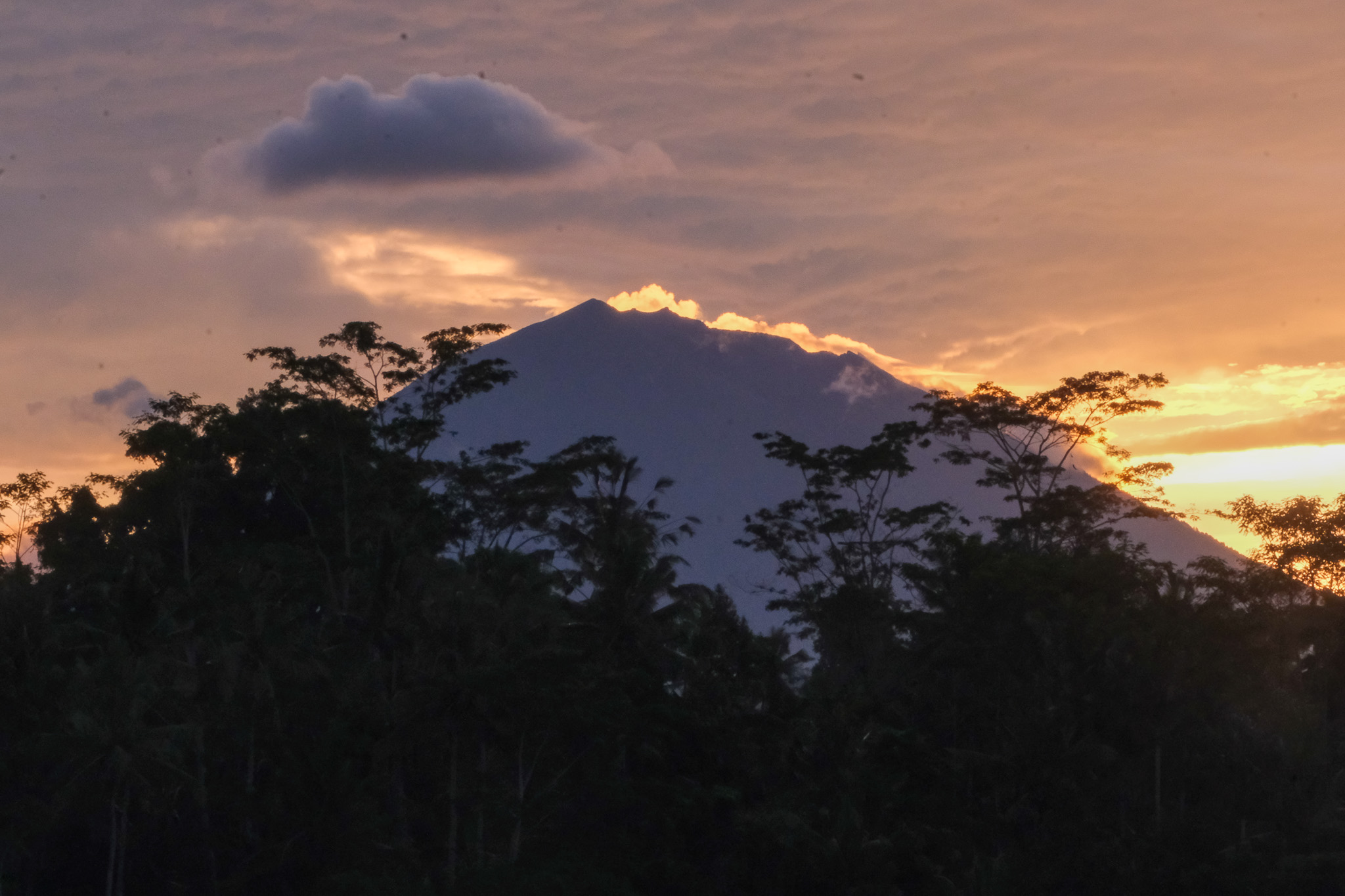
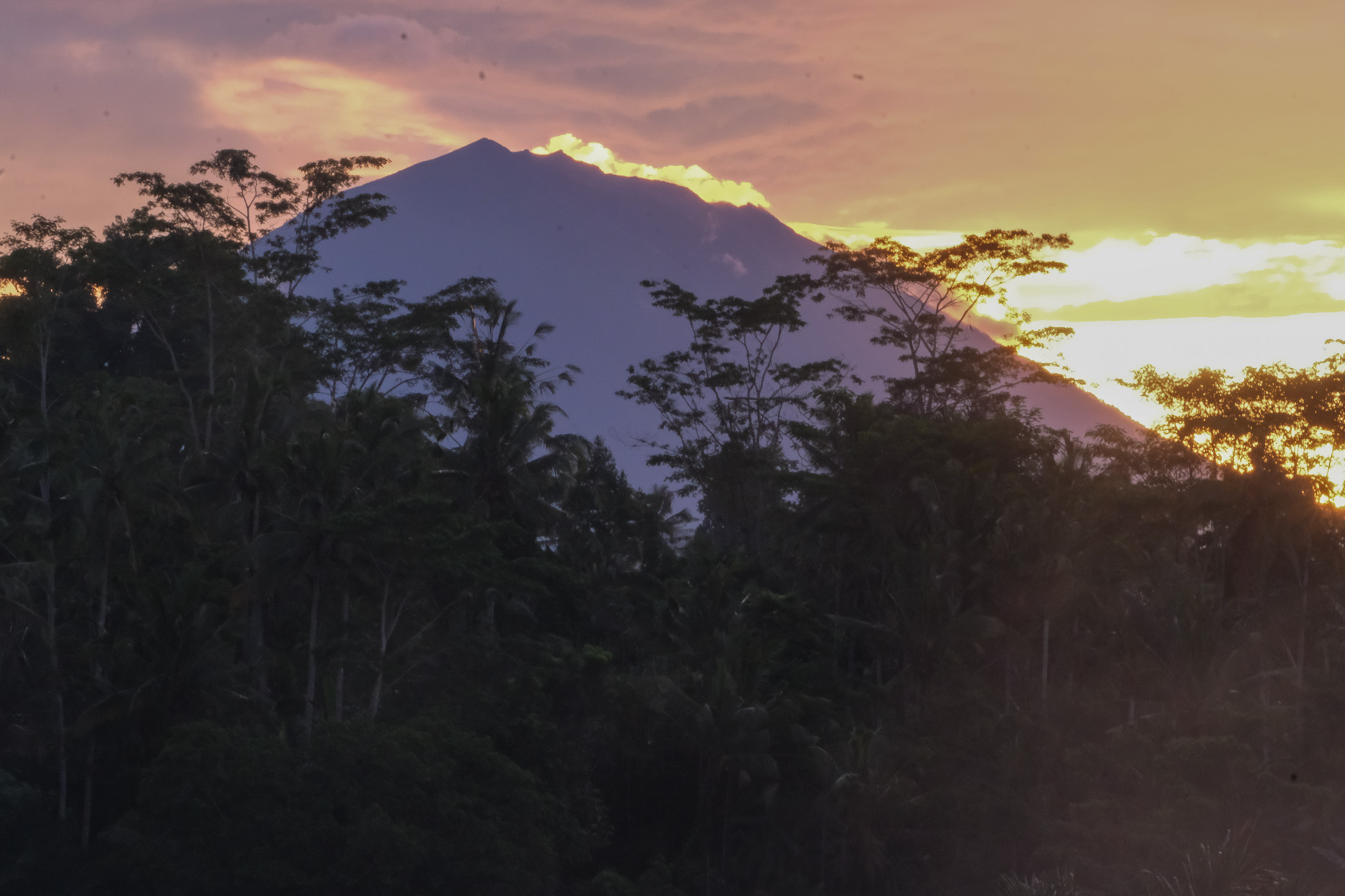
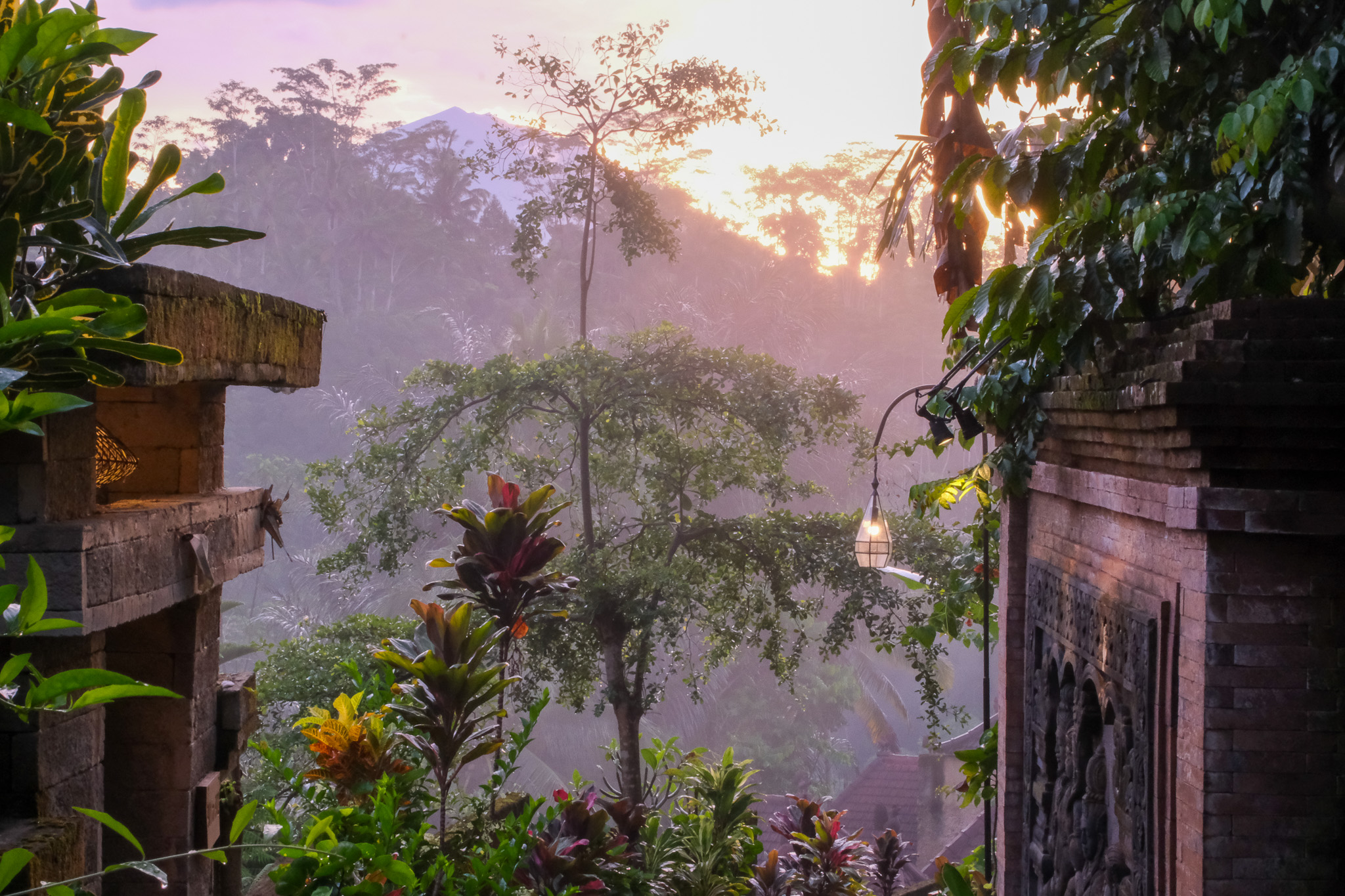
I woke up before the sun and crept out to capture the sunrise over Mount Agung, Bali’s highest mountain and still active volcano – last erupting in 2019. Sunrise did not disappoint!
Our flight that day was at 2:00 pm but knowing how long it takes to get from one end of Bali to the other we booked Made, our lovely driver, for 9:30 am. A swim or two while packing followed by Me Goreng and fresh juice for breakfast is a lovely way to spend our last morning. I even slip in a couple more swims after breakfast and make sure I absorb the view completely!
Bali in a weekend! We certainly packed a lot in and it truely was worth such a short trip, after all everyday can be an adventure!
What’s the skinny?
A few airlines service the Perth Bali run – we flew Air Asia which is budget but got us there and back o time with no issue. 3.5 hours from Perth
Our accomodation was pretty cheap as we went out of school holidays – Campuh Sebatu Resort is stunning and off the beaten track. Breakfast was included – delicious!
Transport around Bali is pretty easy to come by – we used Gojek (Bali Uber) and our drivers were all very accomodating. We actually hooked up with a local driver and he became our go-to for transport.
Heaven is a remote paradise. Ansons Bay is two hours drive from one remote mountain paradise, Myrtle Bank in northeast Tasmania, to the ocean and the Bay of Fires.
Note: I have written about this trip before with more details and links. A link to my previous trip is at the end of this piece.
The Drive
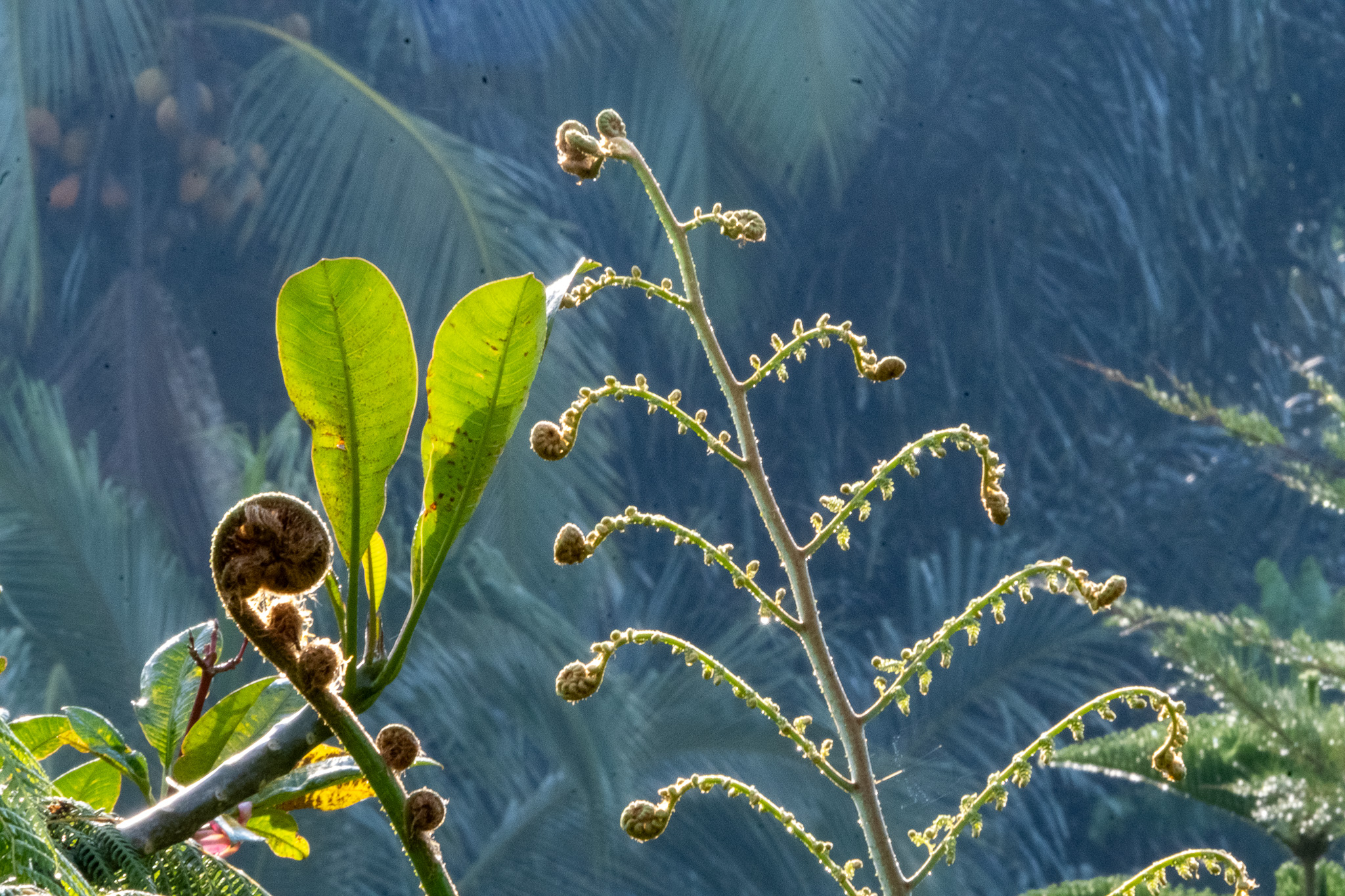
Forest flashes past with green speed. Man ferns (person ferns?) tower over shrubs and shade rocky outcrops from the dappled sun. Moss underfoot (were I walking) so spongey and vital, green and alive. Gradually the landscape changes to become coastal plains. Dust flicks from the wheels of the speeding car and sea mist coats the distant outline of coastal hills, a blanket, slightly damp and salty.
Day One
The breeze plays gently with this morning’s swimwear pegged at a jaunty angle on the green plastic clothesline cord. Op shop pegs. The bathers brush provocatively against the towel as rain threatens our previously sunny disposition.
Pending rain and it looks like it will be a laydown on last night’s sandy sheets for a nap, drifting off to the sound of pitter patter on the roof. The birds rejoice. Sandy feet and skin soft from salt water immersion in the sandy shallows at Policeman’s Point followed by a cool rainwater rinse.
Dad washes the dishes outside on the tank stand before the rain sets in “we won’t have to rinse these!” he says. A car passes on the road with mountainbikes atop ready for action in Australia’s mountain bike capital – the formerly sleepy town of Derby. He pauses his washing and looks up, a single word escaping his lips, “Derby” and returns to his dishes oblivious to other sounds with his earbuds in.
Day Two
Evening drinks in the Caravan seated on unmade beds with sandy feet. A spur of the moment walk down to the shore for exercise and “to blow out the cobwebs”. Children play along the shore, taunting one another with names and actions. They freeze as we approach and say “Hi” selfconsciously.
The sand is soft and the weed underfoot squelches through toes. We leave the shore and walk along the road past houses bunkering down for the evening. Smoke escapes some chimneys despite the warmth of this summer night. A border collie strains on its chain and barks a warning, or is it an invititaion?
A bit further on a tall Bennett’s Wallaby speeds across the road in front of us. We freeze and watch her bounding retreat.
Day Three
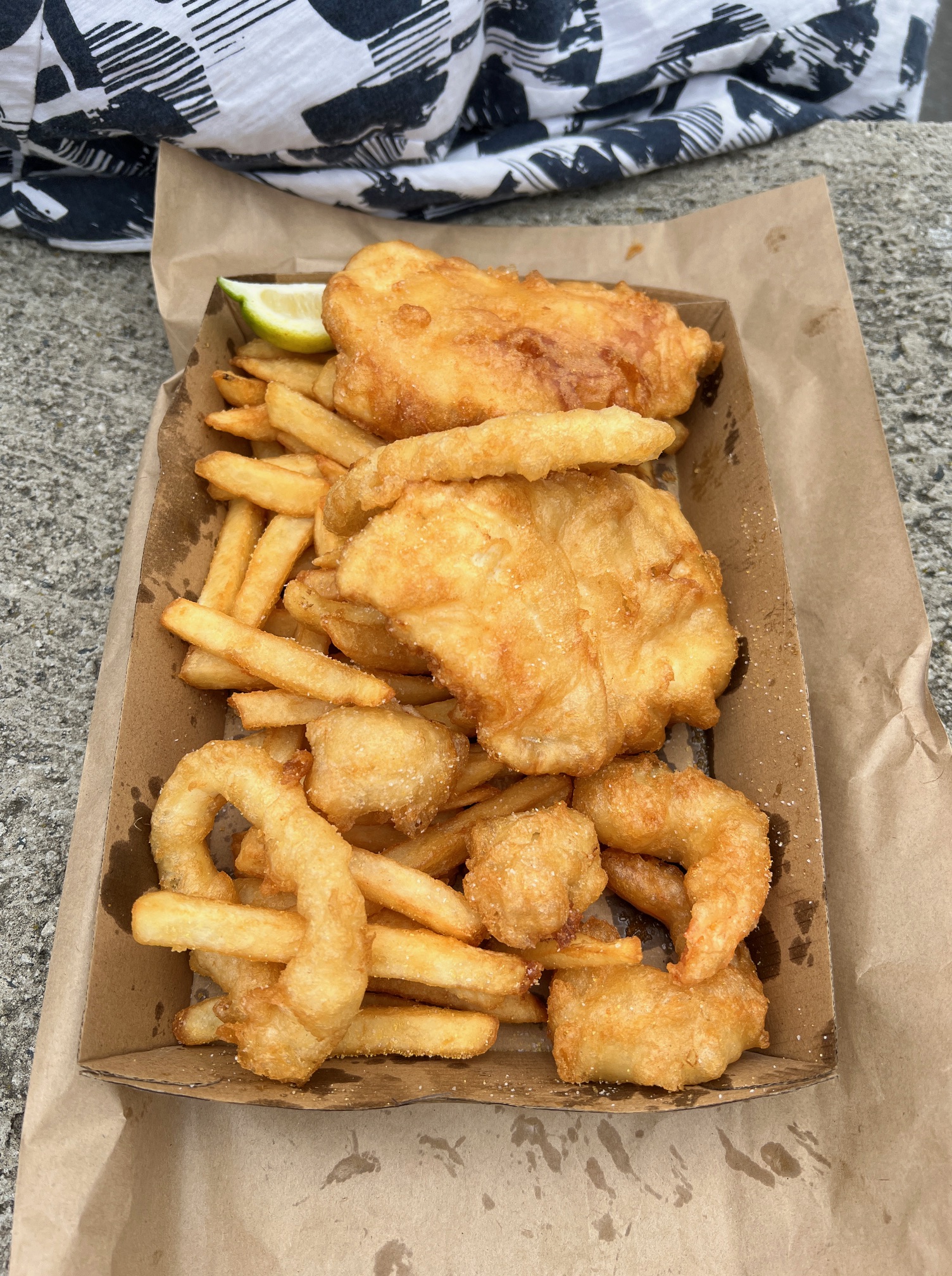
A trip to St Helens for supplies, op shopping and fish and chips. It’s a tradition and a necessity. We get to town in time for date scones and coffee at our favourite cafe, then it’s meandering from op shop to tip shop, to op shop again. We fill the back of the car with our treasures – clothes, bric a brac, books and jewellery.
By lunch time we are ready for fish and chips on the wharf. Families wait on the jetty while the delicious smell of fresh fish wafts across the water. Young children with fishing lines cast hopefully into the bay.
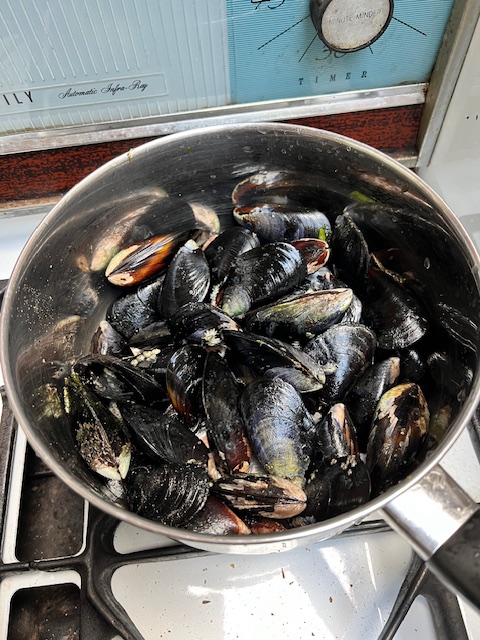
Back to Ansons Bay for a siesta and plans for mussell foraging in the shallows, later that evening.
Day Four
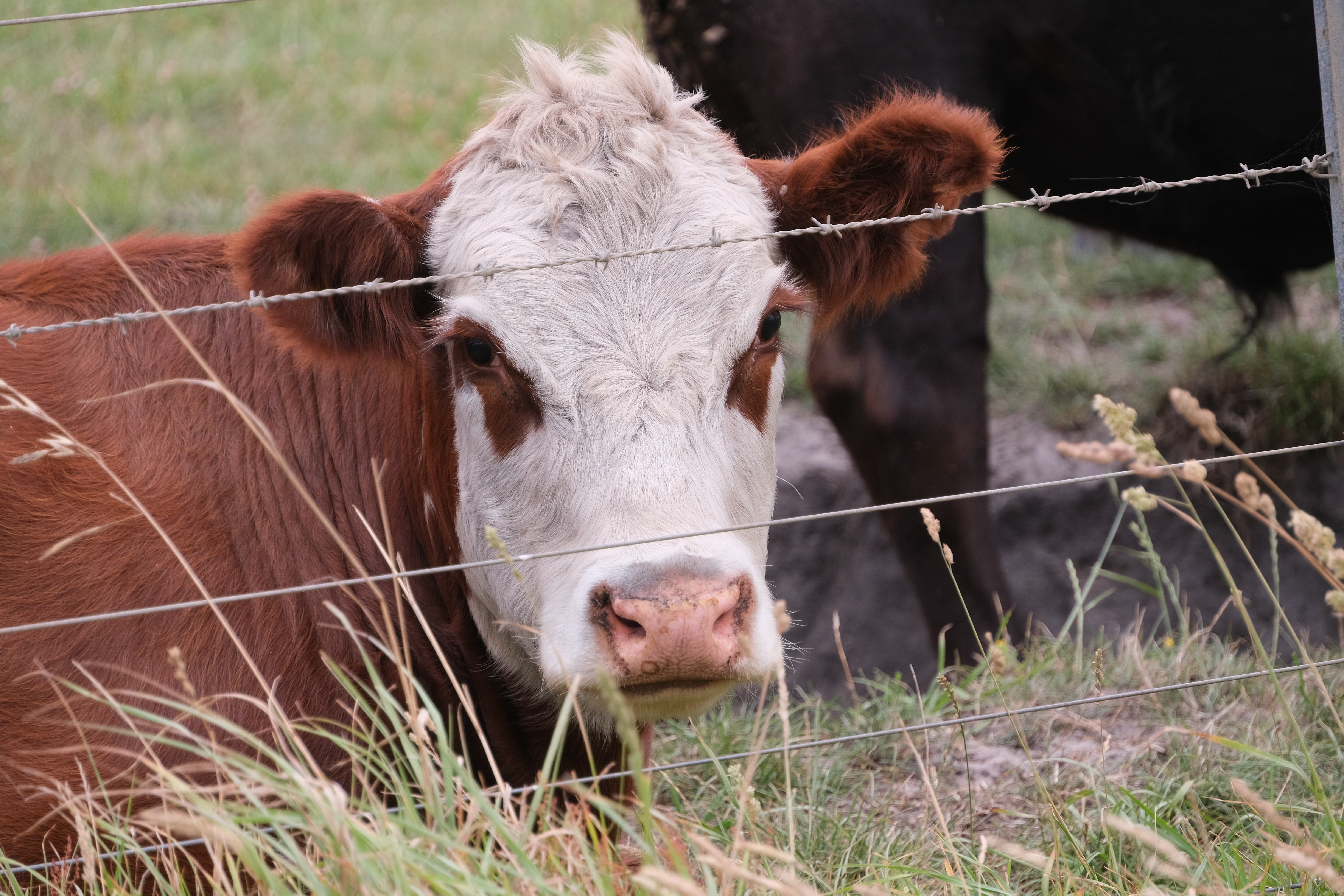
It’s all sunshine and blue sky on the bay. A great day for a paddle? Feelers have already been put out for a kayak to borrow, but no reply, so a trip to the beach it is. We always stop and chat to the cows.
A final swim at Policeman’s Point where the tide is out. The blues astonish with their depth of field, water of varying depths and colours. The tide is receding fast – there is only time for a quick dip and out. We finish with a walk along the beach before going back to pack up camp to head for home.
Fold up beds, clear out perishables, leave no crumbs for the ants, turn off the gas, the water and lock all the doors. Packing is frantic and some get left behind. But is there another way?
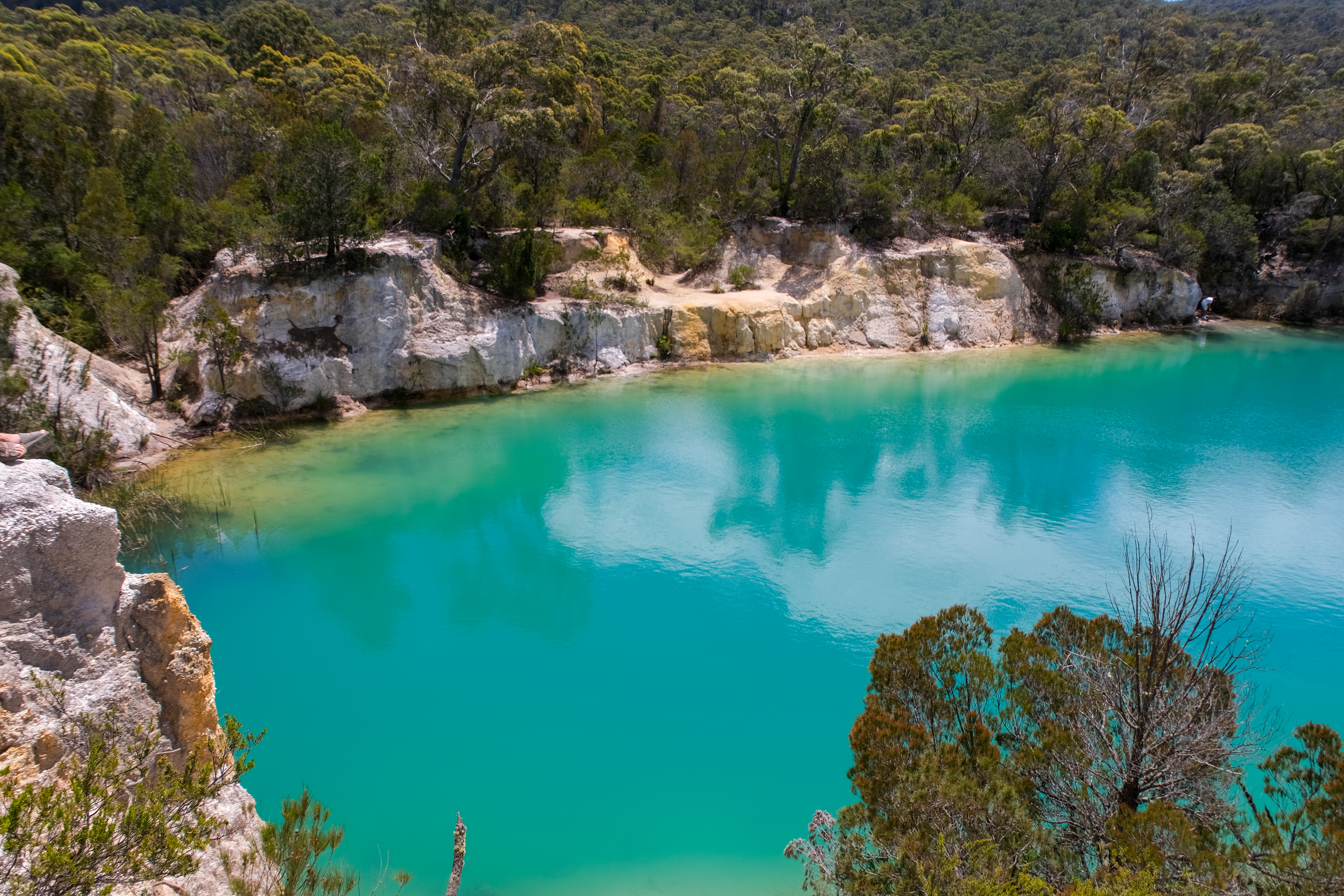
On our way home we stop to check out the Little Blue Lake just out of Gladstone. Astounding colours that could only be created by a disruption to the environment – an old mining site.
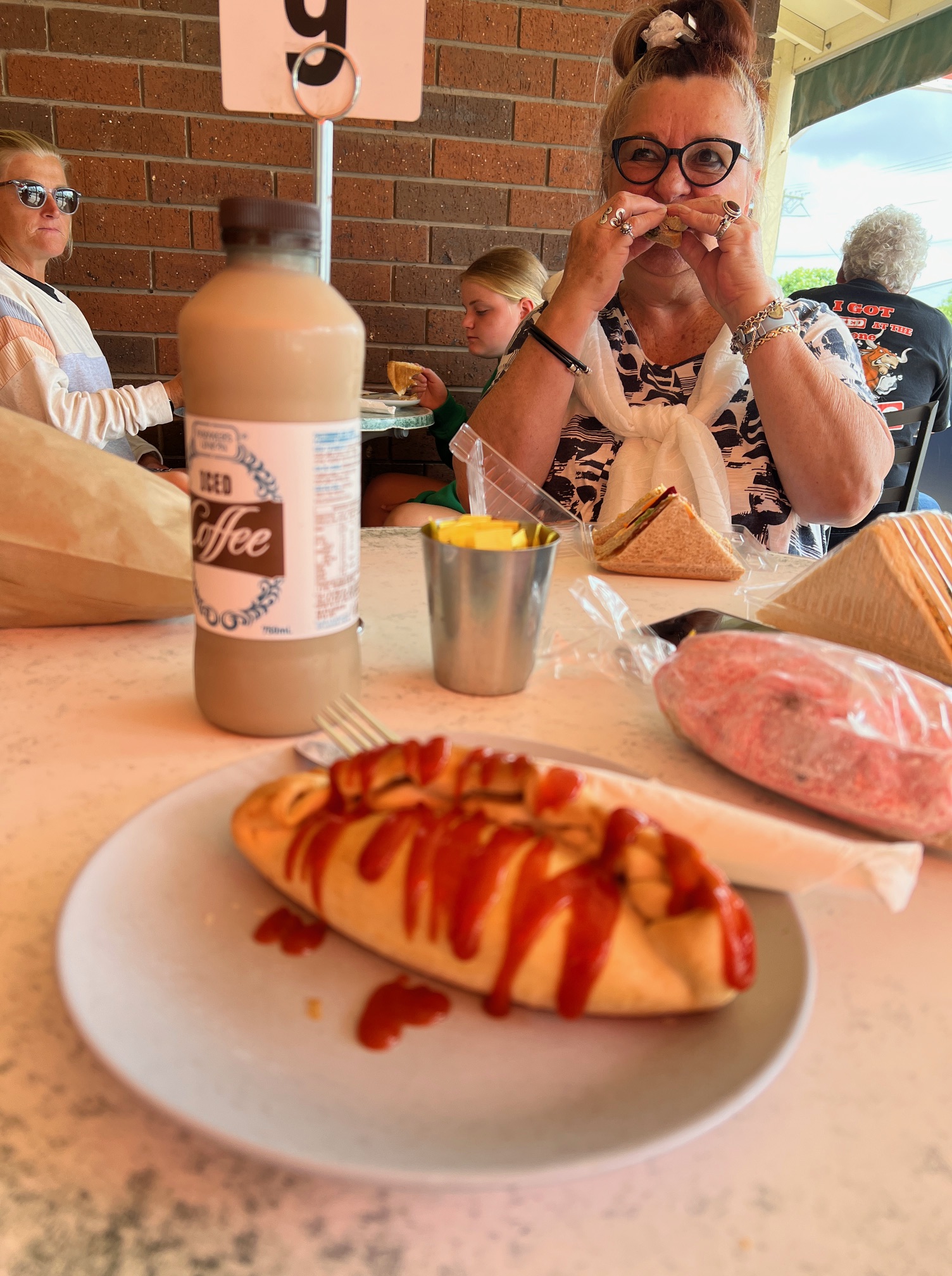
The trip back to Myrtle Bank is the reverse with a stop in to Scottsdale for pies and pasties, sneaky lamingtons washed down with Farmer’s Union Coffee on sidewalk tables. A chat with some locals – lean in for some town gossip, familiar and warm.
Groceries purchased, and a final browse of the local op shops, we pass the remainder of the trip uneventfully. Happy to get back to showers and comfy chairs. Back to mountain paradise! Check out another trip to this part of the world here.
Australians hit the road in droves when they could no longer travel overseas. Women travelling solo continue to make up a significant number of adventurers to call the road their home.
On any given day, there are thousands of people road-tripping around Australia. The numbers increased over the 2020 – 2022 period, with caravan and motorhome sales going through the roof. Many of these thousands of people travelling around this vast country are women travelling solo. This is their story.
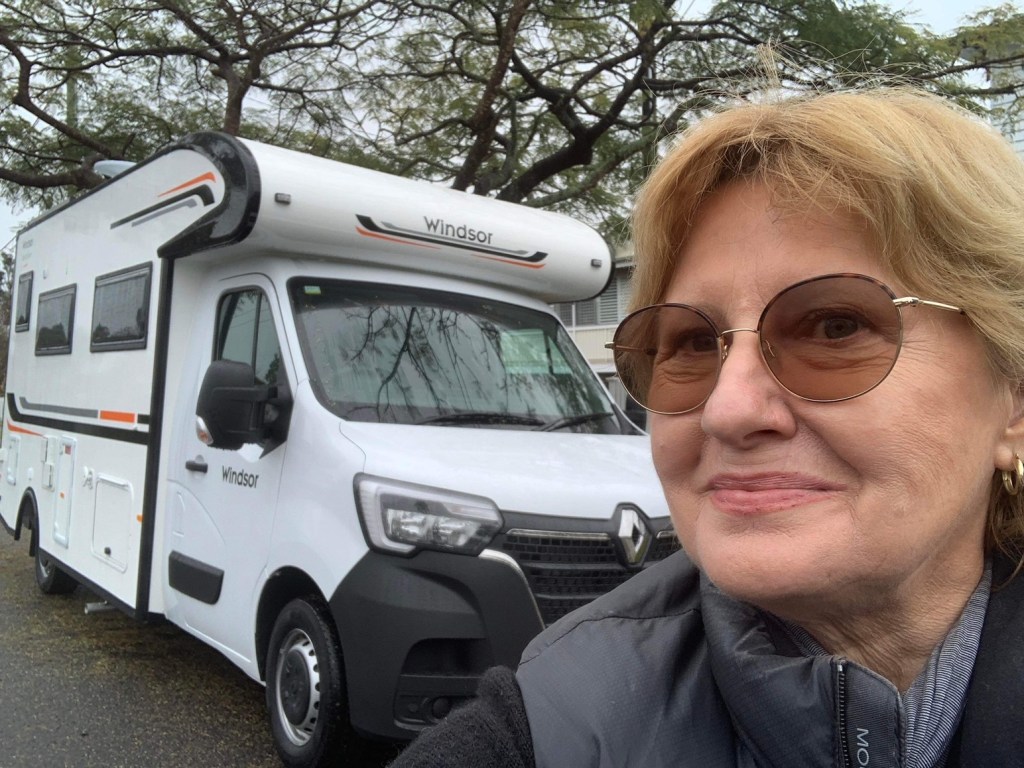
Queenslander Lynda Greening, 66, recently drove her Windsor Daintree motor home from Brisbane to Perth to visit her grand children. She travels alone because she loves road-tripping and camping, while her partner of 30 years prefers not to.
Linda’s Windsor DaintreeLinda – on the road
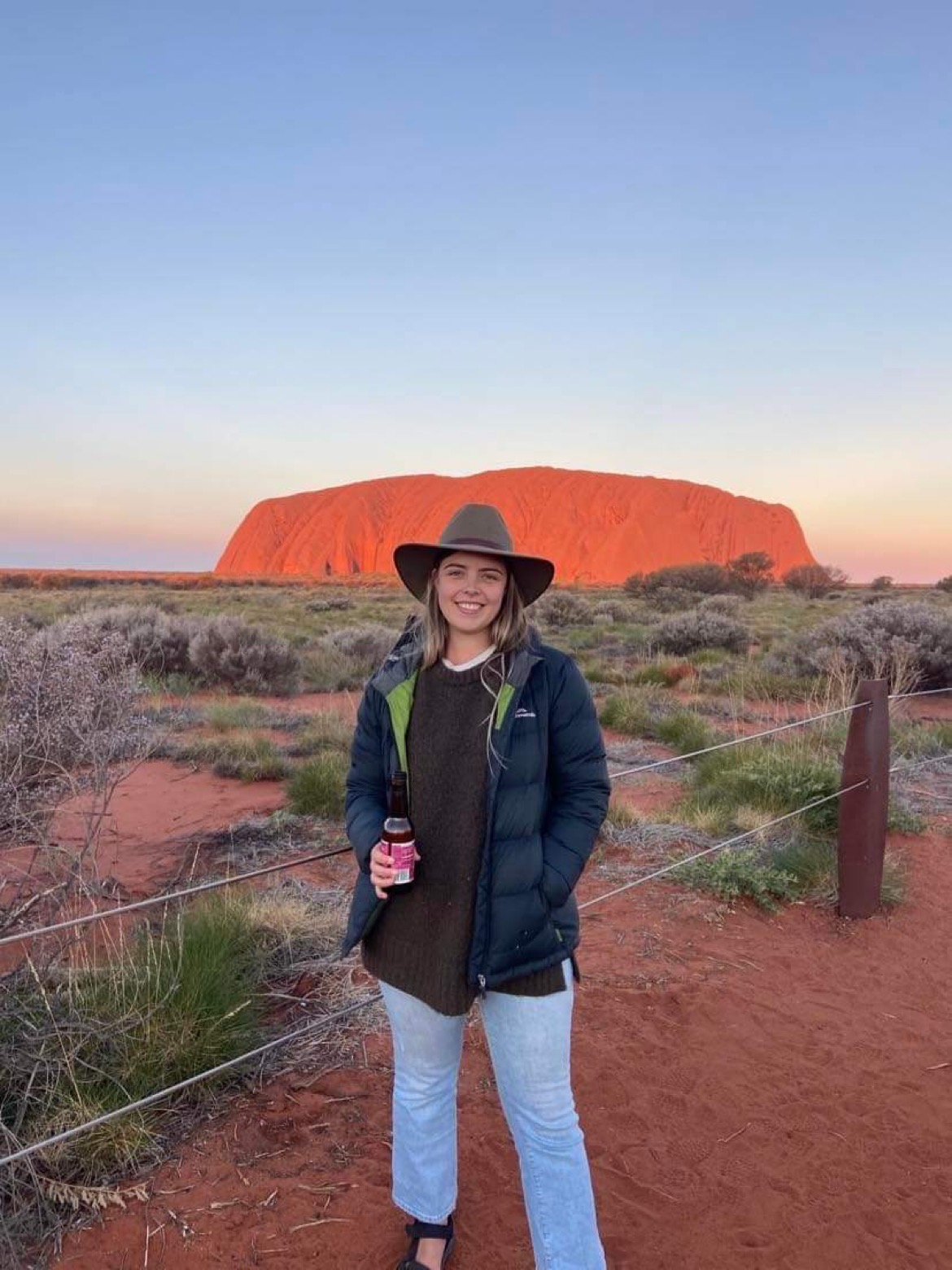
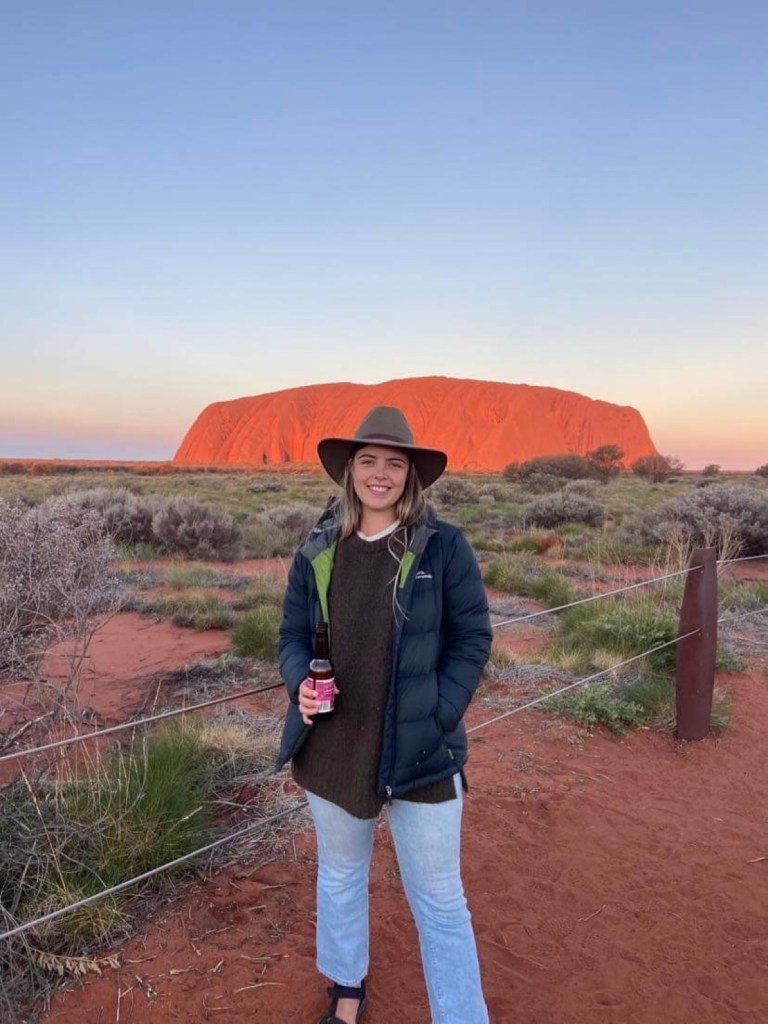
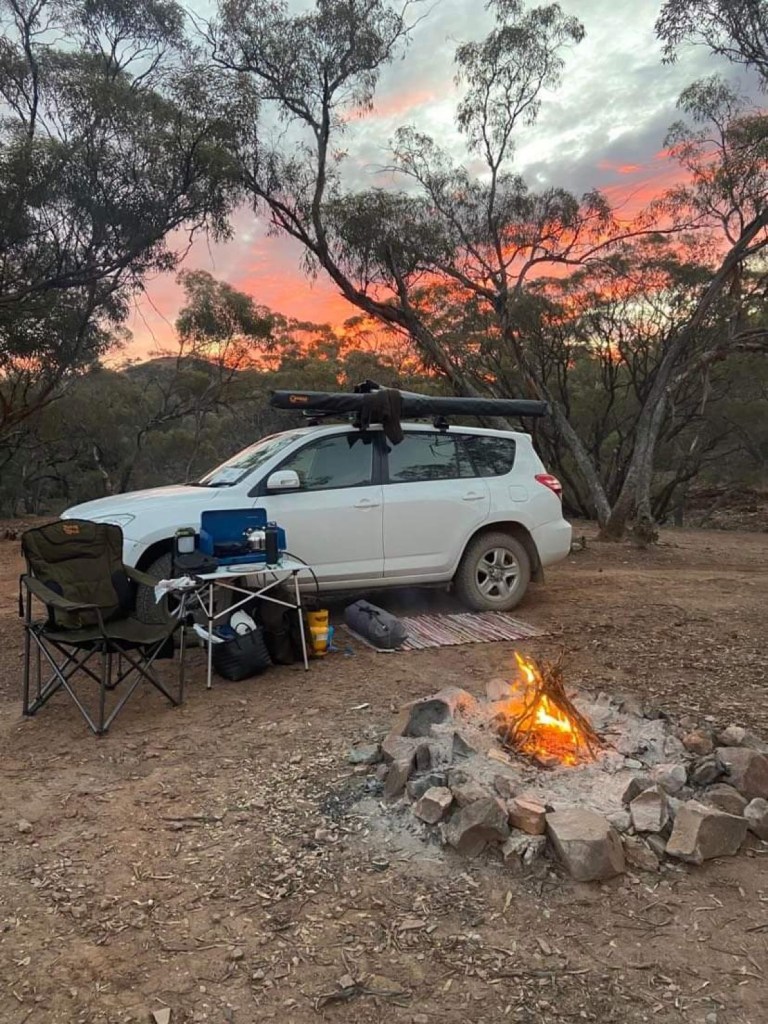
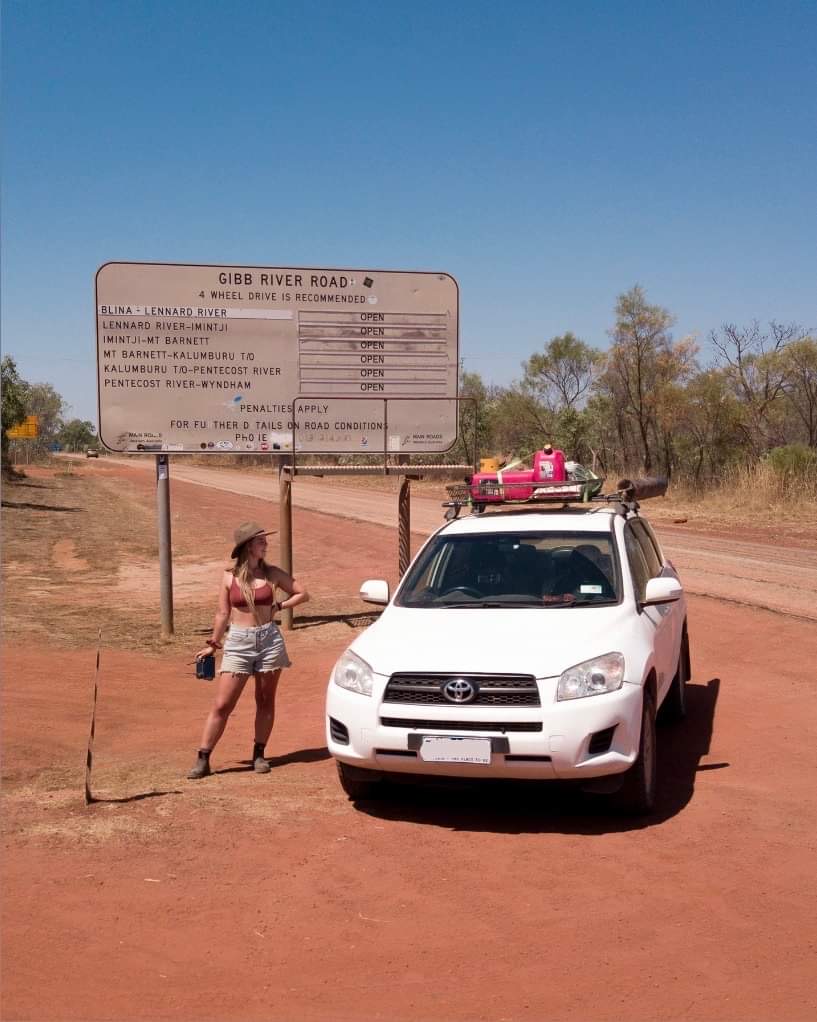
Melbourne local Ashleigh Hobson – 28, road-tripped solo for 18 months through 2021 and 2022. Ashleigh is a freelance writer who quit her “perfect job” and hit the road in her decked-out Rav4 for a trip of a lifetime!
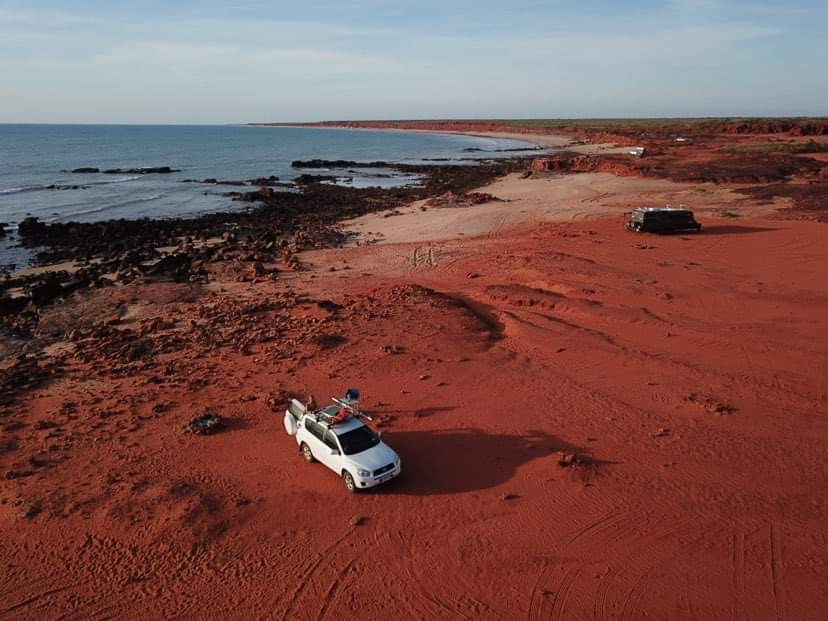
Ashleigh – UluruAshleigh’s Rav4Western Australia
Elaine Dowd, 57, is a public servant from WA. She enjoys camping in her HiAce Van or Subaru with a pop-top tent. She regularly camps on her own throughout WA and has plans to drive solo from Perth, WA to Tasmania, with a few stops along the way.
Elaine enjoying life on the roadSetup
Visiting the grandkids
Lynda is a marketing consultant who is able to take her work on the road. She works 20 hours a week – pulling into caravan parks and connecting to the internet to service her clients. When in Perth, she stays in caravan parks close to her family and takes short trips away.
Lynda is part of the Facebook group Women Caravanning, Camping And Travelling Solo Australia. She found the page helpful in garnering travel tips and support while preparing for her trip. The page has 22K members and caters to women who “must be travelling solo”. According to the group admin Carlea Visco, the page is “a safe place for women to have a laugh, inspire and encourage each other when travelling solo.”
Lynda also joined the Windsor Daintree Facebook group (not a women’s only group), which helped her with advice and information specific to her motor home.
The trip of a lifetime
Ashleigh drove her Rav4 from Melbourne to South Australia, through the centre to Darwin, across to Western Australia, where she took the Gibb River Road, visited the Kimberley, and then travelled down to Margaret River. She stopped for six months in Margaret River and worked in a winery. From Margaret River, she headed back up to Exmouth and then Bali for a change of scenery. She has recently arrived back in Melbourne after crossing the Nullarbor.
This adventurous young woman is no stranger to solo travel. She has previously travelled overseas on her own, but she said that didn’t really prepare her for life on the road in Australia, especially during the Covid lockdowns.
When Ashleigh stopped on her first night on the road, she arrived in a dark, deserted park and questioned her decision. The Facebook Group Women Caravanning, Camping And Travelling Solo Australia were there for her when she posted her thoughts, and the feedback she got from the group helped her pass her first lonely night.
Ashleigh consulted the group while she prepared for her trip. She loved that she could post any questions without fearing ridicule for asking “stupid questions”. Ashleigh also used the Facebook group Planning a Lap of Australia to help with her planning.
Ashleigh was two weeks into her trip before she started to see that she had made the right decision. Darwin and the Northern Territory gave her hope as she met and made like-minded friends and spent time with her fellow travellers.
Setting out from WA
Elaine started as a member of the Rolling Solo Australia group, “an online, offline and real-time community that provides support, friendships, information and connections for independent female road-trippers interested in camping, outdoor adventure and travel in Australia.” The group operates on a subscription-based membership.
Elaine no longer subscribes to Rolling Solo as she found the mass gatherings (of 500 upwards) not her thing. However, she has used the same Facebook site as Lynda and Ashleigh and found the advice and support invaluable as a solo woman traveller. The fact that there are never any “stupid questions” when it comes to solo travel or camping in a group is one of the reasons Elaine uses the page.
Meeting up with other women campers and travellers
Elaine has found that members of Facebook groups expressly set up for solo women campers have been willing to meet up for coffee and chat about their travel experiences. Members will post on the page that they are planning to arrive in a town or city at a certain time and if there are members in the area, they arrange to meet for coffee or a meal. Sometimes a friendly face or company on a solo trip is most welcomed.
Camping Stories
The groups provide a place for women to check in with others before travelling. Elaine and Lynda agree that there is never a shortage of topics to chat about in the groups and at caravan parks. Travellers have many things in common, even if they have had different experiences and come from all walks of life. And who doesn’t love to talk about their setup?
All three agree that there is a higher percentage of solo women travellers on the road in Australia, than men. There are women on the road for many reasons and who have differing circumstances, from the recently widowed to those on a working holiday. Or, as in Lynda’s case, they have a partner who prefers not to camp or travel.
Age is no barrier
While there is no age limit for those who join the Facebook page – Women Caravanning, Camping And Travelling Solo Australia, the group tends towards retired or semi-retired women in their 50s and 60s. Elaine says she has come across women in their late 70s and even 80s who are camping and road-tripping on their own, sometimes for the first time.
Many women travel with dogs for company and security. Security is always forefront of everyone’s mind. It is high on the list of topics discussed in the Facebook groups and the caravan park chats or meetups. While women do occasionally report negative experiences on the road, the women I spoke to were not overly fearful of travelling alone.
The Facebook groups are all closed groups, meaning that women must answer a series of questions before being allowed into a group. While this gives some peace of mind to solo women travellers it is important to practice cybersafe habits when posting to any social media platform.
Lynda says that she had security concerns when she first set off on her trip and initially felt nervous. However, in 2.5 months of travel, she hasn’t had any negative experiences and finds that she can talk to anyone while travelling. The Facebook group helped her to realise that their other women out there travelling solo. Her only fears now are breaking down or getting a flat tyre on her big van in a remote location.
Ashleigh said had no security concerns and has always felt safe on the road. She thanks her Mum for doing the worrying for her!
Elaine says she very rarely feels unsafe, apart from the occasional incident where she errs on the side of caution. There is truth in the adage “safety in numbers.” The Facebook groups’ sheer size is a testament to the many women taking to the road to see this amazing country.
With so many other women hitting the road there’s no need to feel alone. If you are considering a solo trip, get in touch with a group today and start planning your getaway!
In November 2016, my partner and I traveled to Taiwan. One of the reasons we decided on Taiwan, apart from the fact that neither of us had been before, was because we had read an amazing account of a hiking and mountain bike adventure in Taroko Gorge.
Taroko Gorge is in the Taroko National Park on the east coast of Taiwan. The mountains are incredible, spoiled only by a massive concrete factory at the foot of the mountains. The limestone and marble is quarried for concrete and jade.
Before we traveled to Taiwan we had researched and planned to stay at Taroko Lodge, a home stay set at the foot of the Taroko mountain range. This modest accommodation is run by Rihang and his family. Rihang purchased National Park passes for us and assured us that he would be at the train station to pick us up when we arrived.
True to his word, a white van was waiting at Xincheng station, and we were greeted warmly by Rihang. Rihang spoke some English and his son, who we met later, also spoke quite good English.
We stopped at the 7-Eleven for supplies and then settled ourselves into our accommodation. Taroko Lodge is the front part of the family home. The sleeping arrangements were very comfortable, with our own bathroom, and a shared living area.
The only other guests at the time were a group of Americans who were leaving the same day as us. We had access to bikes the whole time so we could cycle into the town for snacks or meals.
The first morning, following a delicious home-cooked breakfast on the veranda, we were piled into Rihang’s van with our bikes and transported to the top of the Taroko Gorge access road. Rihang let us out with a few words of warning about the tunnels we had passed through on the way up.
We strapped on our helmets and waved goodbye to our host with some trepidation. We had a brief discussion about the tunnels which were numerous and completely dark and the fact that we had no lights on our bikes! Too late now, we were at the top and the only way was down.
Luckily there didn’t appear to be a lot of traffic on the roads, that was until we saw the stream of tourist buses making their way up the winding road. Tourist buses that I wouldn’t like to meet in a pitch-black tunnel with no light! We watched them approach and started our descent. Once the last tourist bus had reached the top and the crowd of local and Chinese tourists had disembarked for their obligatory selfies and group shots, we decided it was time to go.
The initial part of the descent was fine. We stopped along the way to take photos and to take in the incredible views. Our first tunnel was one of the shorter ones and there was light at the end so it was easy to navigate. “We’ve got this!” we thought.
The next tunnel was one of the super long ones, no light at the end of this one. There came a point where we were literally plunged into pitch black. Fumbling for phone torches while avoiding potholes. A huge sigh of relief when we reached the other end and had not been taken out by a tourist bus or fallen off. We lost count of the tunnels and needless to say we got to the end without further incident. Rihang’s white van was a welcome sight!
Gauging from the loose health and safety precautions of the previous day, we prepared for our upcoming hike on the Zhuilu Trail with some caution. The region had experienced an earthquake in the months leading up to our visit and we were informed that parts of the trail were unstable. The ranger let us onto the trail through a locked gate and checked our permits. Apparently, they only allow a limited number of people on the trail per day. The signs warn of not attempting the climb if you have a fear of heights or a heart condition. Venomous snakes and falling rocks are also something to look out for. None of this deterred us but we proceeded with caution, nonetheless.
A suspension bridge that spans the entire gorge is at the beginning of the trail. We were two of maybe 5 other people hiking that day. Breathtaking and exhilarating are the only words I can use to describe our adventure. The trails were used by the indigenous inhabitants of this region for centuries before our arrival and later by Japanese forces in their bid to control the area. Towards the top of the climb the trail becomes a very narrow ledge of around 1m in width and there was nothing but a steel cable to hold onto and a 700m drop. There was only one-way traffic on this stretch of the path.
We had a clear day, so the view was phenomenal. Such experiences do not come along very often. If the thought of the Zhuilu Trail is enough to give you vertigo, there are plenty of places to hike or take in the view without balancing on a ledge.
The beginning of the “ledge”
That night we had a lovely meal at a local restaurant with our fellow travellers from America. It was the eve of the US election results in 2016 and they were certain that Trump would not be elected. They left early the following morning before we knew what the result was. I often think about them and how disappointed they must have been.
The final morning was spent exploring the small village and venturing onto the deserted, rocky beach. Rihang took us back to the train station and we said farewell to our lovely host before heading back to Taipei.
Fancy seeing the world from the top? A sunrise hike up one of Western Australia’s highest land forms will not disappoint.
We were up at 3:15 am on a Friday to climb WA’s highest mountain in the South West! Bular Mial/Bluff Knoll stands 1095m above sea level and it is classed as a grade 4 climb of 6.8 km. Bluff Knoll is part of the region in the Stirling Ranges originally inhabited by the Mineng and Goreng people. The mountain is a four hour drive south from Perth on the way to Albany. https://parks.dpaw.wa.gov.au/site/bluff-knoll-car-park-trail-head
The summit of Bluff Knoll at sunrise
The night sky was lit with bright stars and there was no cloud cover to be seen when we strapped ourselves in the car to drive 45 km to the base of Bluff Knoll. We were staying in accommodation at the Karribank Chalets in the Porongurups. A stunning part of the world and a first time visit for my partner and I.
Being around 6 degrees Celsius, we layered our clothing and made sure we had something warm to put on at the summit. Water, a small flask of coffee and some nut bars for sustenance, were jammed into our backpacks. I decided against taking the big camera and opted for my GoPro instead.
The car park was empty – we were the first to arrive! We paid our National Park Fee of $15/car at the Trail head using the automatic machine. This is a requirement of entering the park. Your docket must be displayed on the dash of your car. At 4:16 am we strapped on our head torches and found the beginning of the trail. Apart from the amazing skyscape all we could see was the imposing shape of Bluff Knoll looming above us in the dark.
The beginning of the trail lulls you into a false sense of security as it plunges down into a valley before rising. The paths is well maintained and made up mostly of steps fashioned into the granite rock and box wood construction. It wasn’t long before our glutes were singing and our heart rates pumping. After walking for around 30 minutes the path began it’s spiral around the Knoll. It was still dark so we were relatively unaware of the growing drop to our right.
It wasn’t long before we were warm enough to take off some layers and stop for a quick drink. We could hear another hiking group not far behind us and this spurred us on to keep going. Nothing like a bit of competition to inspire you!
Sunrise was supposed to be around 5:33 am and we started to see a change in the available light. The looming Knoll was very imposing. We also realised the sun was rising behind us so we quickened our steps to reach the summit in time. When the sun started to come up over the horizon we had reached a point on the climb where we could see the orange glow lighting up the peak. Perfect timing!
At 6:16 am we reached the actual summit, which is a bit further than you first think. Breathtaking! Our hiking competition arrived around 10 minutes behind us so we had the summit to our selves for the shortest time.
We were poised above the low cloud cover which made the view even more spectacular. There was not a breath of wind but it was certainly cold. Our layers were quickly relayered, coffee poured and we sat on top of the world looking down on some of the most beautiful country in the world.
Unable to bring myself to stand close to the edge like some of the young climbers who seemed hell bent on getting the most crazy Instagram photo they could, I lay down and peered over. Took my breath away. Sheer rock face all the way down. A sign warned us not to throw rocks off the edge as rock climbers could be below.
Once we had taken our photos and rested for a while we decided to head on down to see what scenery we had missed on our dark ascent. They say that “coming down is the hardest thing”, to borrow a song line from Tom Petty, and I must say my calves and knees are certainly paying the price 3 days later.
This climb is one I have always wanted to do and I was not disappointed. Come prepared, wear appropriate footwear and clothing in case of extreme weather on the summit. I used a stick that a previous hiker had kindly left by the beginning of the trail, and I would recommend walking poles especially on the way down.
If you love hiking and climbing the Porongurups are around 30 minutes away and boast amazing granite peaks with a number of climbs. We climbed up to Castle Rock and the Granite Skywalk which was well worth the walk. https://parks.dpaw.wa.gov.au/park/porongurup
Another stunning sculpture exhibit at Cottesloe Beach in Western Australia.
The beautiful beach of Cottesloe has once again hosted “Sculpture by The Sea.” Due to reduced government funding for The Arts the event is on shaky ground. This year the organisers asked attendees to pay $5 per person to view the sculptures. I had many favourites this year.
Below are some photos of artworks from this year’s show.

 there’s heaps of parking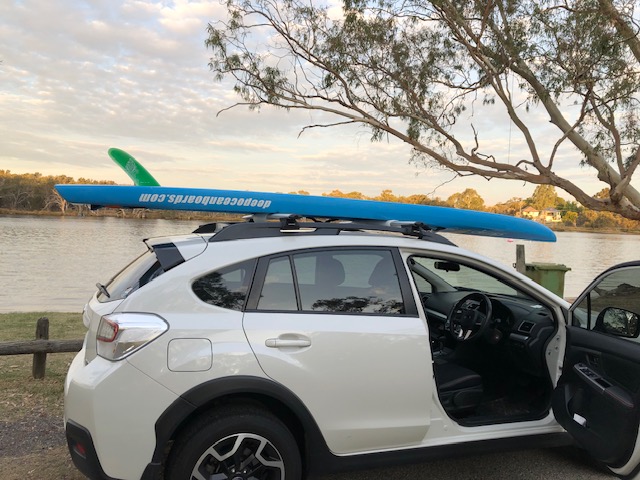
 are common in this area.
























 All in a Day Adventures