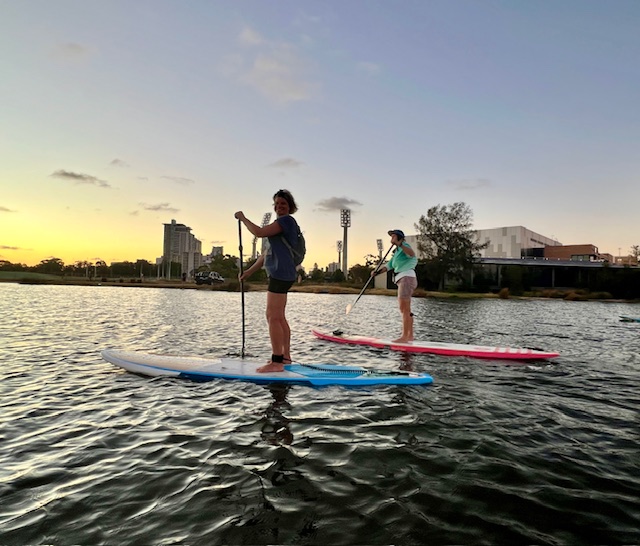
As the sun goes down on another year here are some more paddling locations to try in 2026
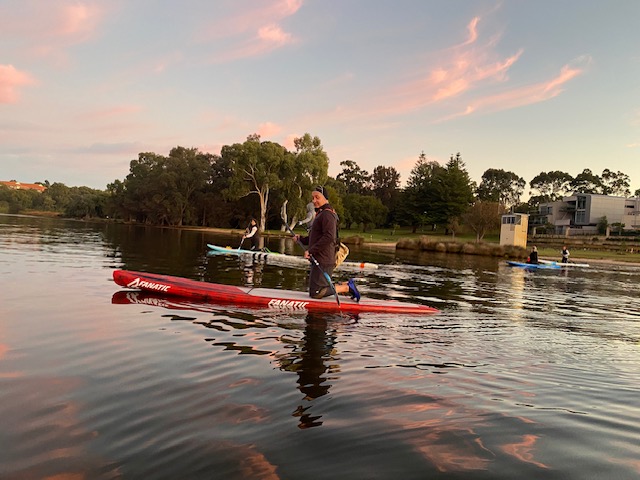
Happy post-Christmas SUPers! I hope ‘Sack Daddy’ (or Mummy) was kind and you scored some nice paddling gear for Christmas. I was treated to a few new dry bags (like I need any more!) and I got out on the water for a long-awaited paddle last week.
I even got my partner out and that’s a mission on its own. I lured him out to have a go on my Red Equipment inflatable. He was impressed. There may be another Red in my paddle stable before too long 🙂
As promised here are my next lot of paddle locations around Perth:
Kent Street Weir/Canning River Regional Park
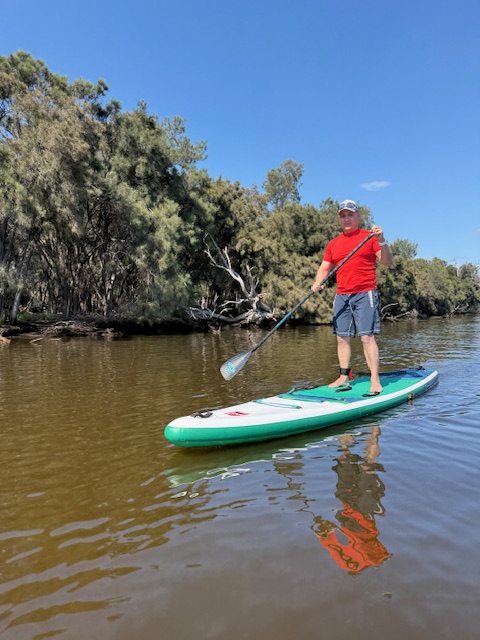
Kent Street Weir is one of my all-time favourites. I usually save this one for winter or spring days. The push-off point is in Canning River Regional Park. The beauty of this spot is that you have choices. Up-river for a leisurely paddle into the upper-reaches of the Canning River. I have paddled 11.22km up to Roe Highway before turning around, or as far as I could before the water became too tangled with sticks and reeds.
I also returned the following weekend (because I don’t ever say die) to see if I could start further up with my inflatable and make my way down. Once again, I was foiled by sticks, snags and shallow water, but I had fun trying!
Down river from the weir is a whole other experience with the river expanding as you get further towards the Swan River. I’ve paddled down as far as the Leach Highway (about 3 km one way) to have coffee at Lo Quay River Cafe right near the bridge before paddling back up.
Lo Quay River Cafe near Leach Hwy Bridge
💦Kent Street Weir is an easy launch spot and has plenty of parking – drop and park is available close to the entry.
💦Public toilets and a fantastic cafe on site for post-paddle eats and coffee.
💦Popular with mostly kayakers
💦Birdlife and spotting is brilliant especially in Spring when the darters and cormorants are nesting (fluffball alert)
Matilda Bay, Nedlands
Matilda Bay is a popular picnic spot so parking is not always guaranteed close to where you want to paddle from. The water in the bay is generally calm. But on a windy day it can be relentless. This is not my favourite spot to paddle unless it’s dead calm.
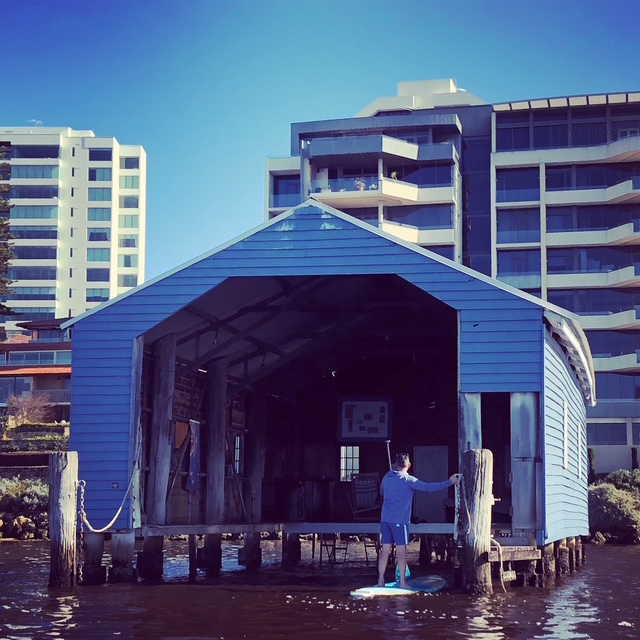
A nice paddle is up around the blue boat shed, an iconic Perth landmark built in the 1930s and much photographed, and Eliza the bronze statue just to check out what she might be wearing!
💦The beach at Matilda Bay is easy to launch from
💦Toilets and changerooms available
💦A great spot for a BBQ and a paddle – free gas BBQs on site
💦Cafe open on weekends
Garratt Road Bridge
Garratt Road Bridge is my go-to spot to launch. It’s close to where I live and I spent many years rowing from ANA Rowing Club so I know this part of the river intimately. It’s a super busy spot with kayakers, rowers and people enjoying the riverside but I have never had a problem parking or launching from here.
Up river or down river?
You can choose which direction you go depending on the wind. Down river towards the city is Kuljak Island – once you get under the Garratt Road bridge paddle about 200 m and turn left. This little loop is one of the most peaceful paddles I know. Bird life is prolific. You can keep going under the bridges (planking may be required when the water is high) and come out the other end to loop back via the main river or turn around and paddle back the way you came.
Up river, I usually head under the Tonkin Hwy bridge. Turning around at Garvey Park gives you around a 4 km round trip or you can continue up as far as you like. Ascot Kayak Club just past Ron Courtney Island is a great spot to stop for a coffee when the cafe is open. There are toilet facilities there also.
And if you want to keep going, Sandy Beach Reserve is another lovely spot to pull up paddles. Coffee vans are usually onsite on the weekends and toilet facilities are available. If you have littles, the playground there is pretty cool also.
💦The beach at Garratt Road Bridge is easy to launch from – beware of some submerged drains/rocks towards the bridge.
💦The cafe here is amazing and a great spot to have breakfast and coffee
💦Toilet facilities available
💦Parking is always available
Maylands Yacht Club
Maylands Yacht Club is a great spot to set off from and go left or right. I have paddled to the left – up river but only on a couple of occasions. I am usually joining the breakfast paddlers if I launch from the yacht club, and it’s usually early.
From launch to Claisebrook Cove is around 2 km. The Brekkie crew like to be on the water by 7:00 am, a leisurely breakfast at Partisan Cafe and paddle back to Maylands. Usually done and dusted by 9:00 – 9:30.
Breakfast ‘must remembers’:
💦A leash to tie your board up at the end and for safety
💦Card or cash for eats and coffee
💦Don’t leave any valuables in your car
Another Maylands Yacht Club paddle worth doing:
The bridge’s paddle around Heirisson Island is a good solid paddle of about 8.5 km. A good one to do early so you don’t get caught in the seabreeze as you round the island. Keep your eyes peeled for kangaroos!
If you missed the first SUPing Around it’s below! Until next time. 🙂
Giant whales drifting through wheat fields and wheat silos used as a backdrop for magical projections. What an incredible weekend of art and community in Goomalling!
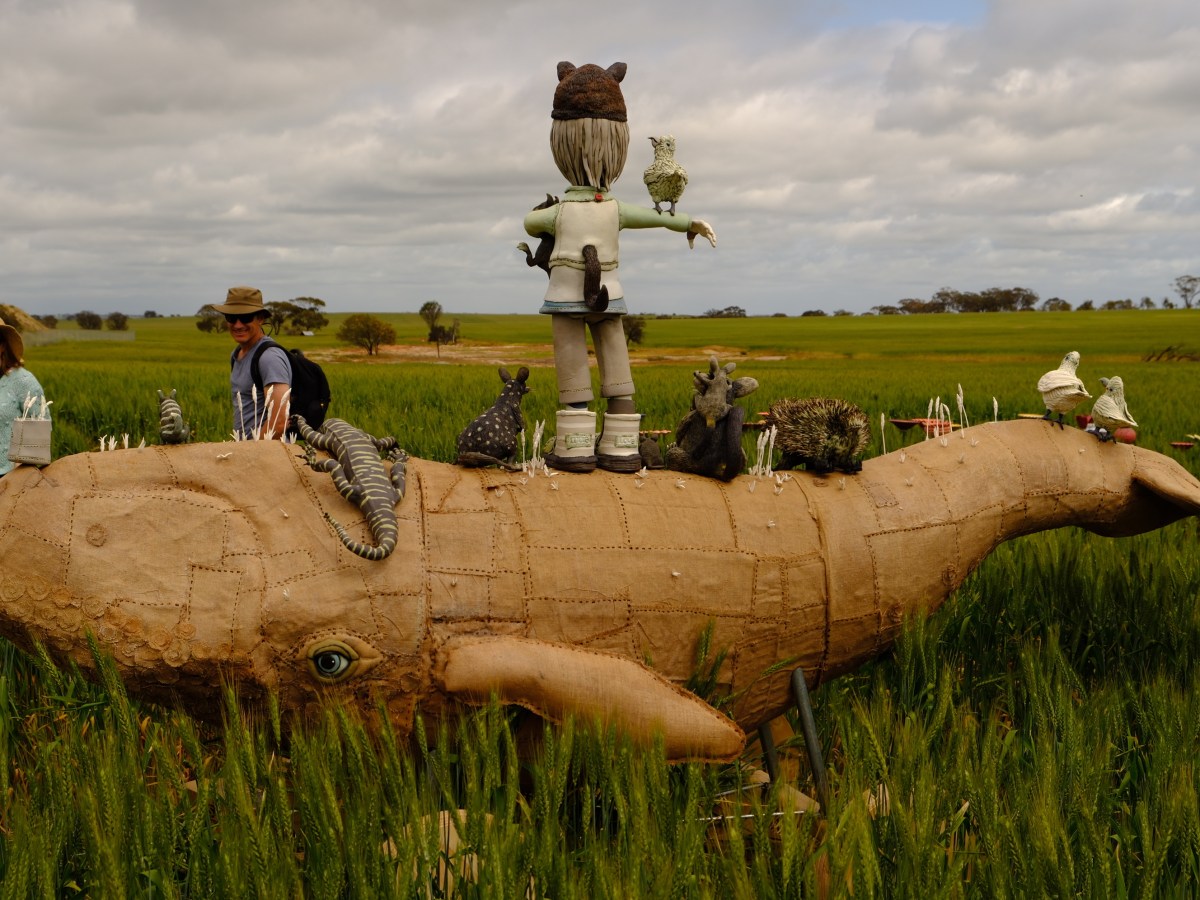
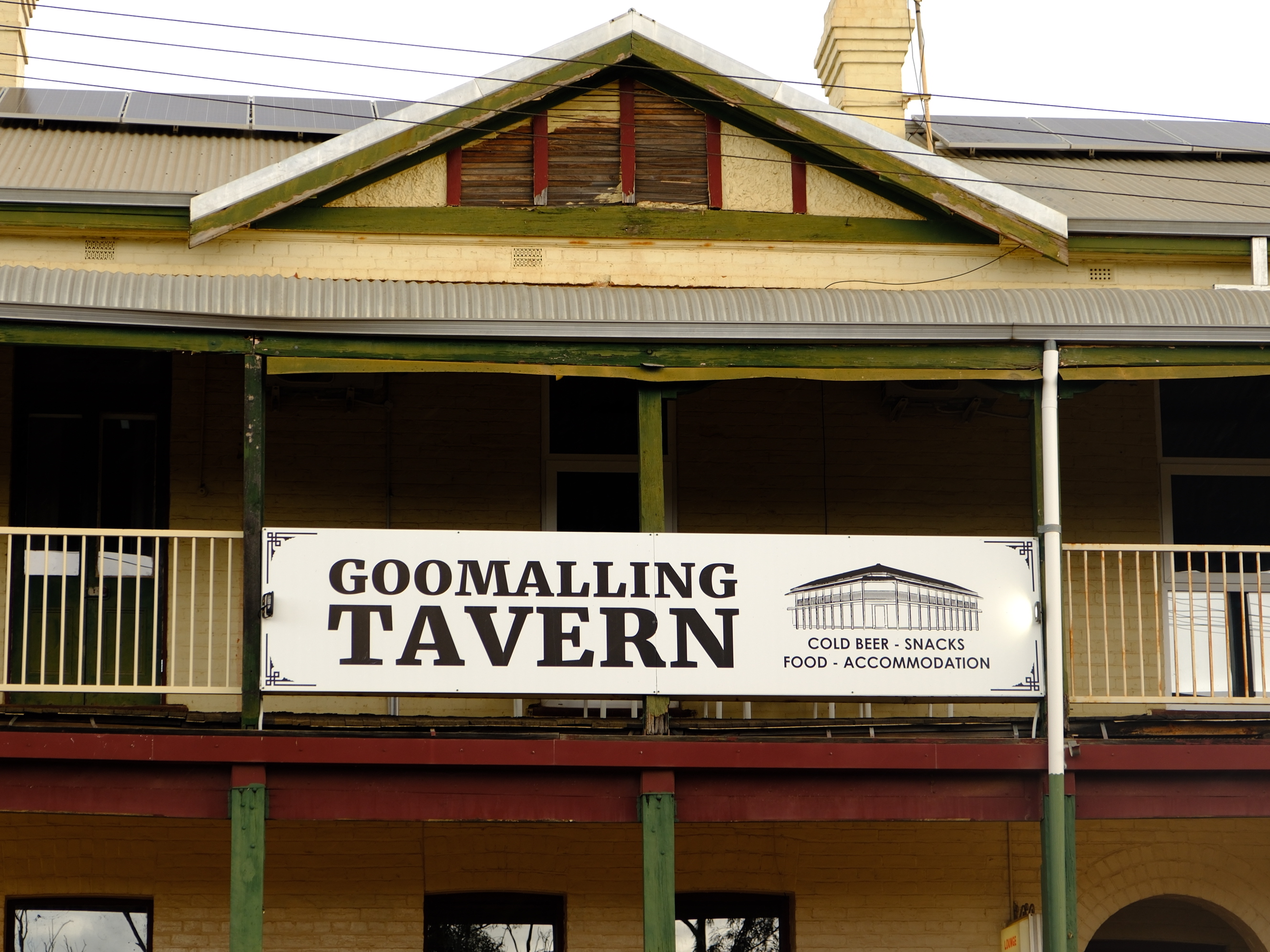
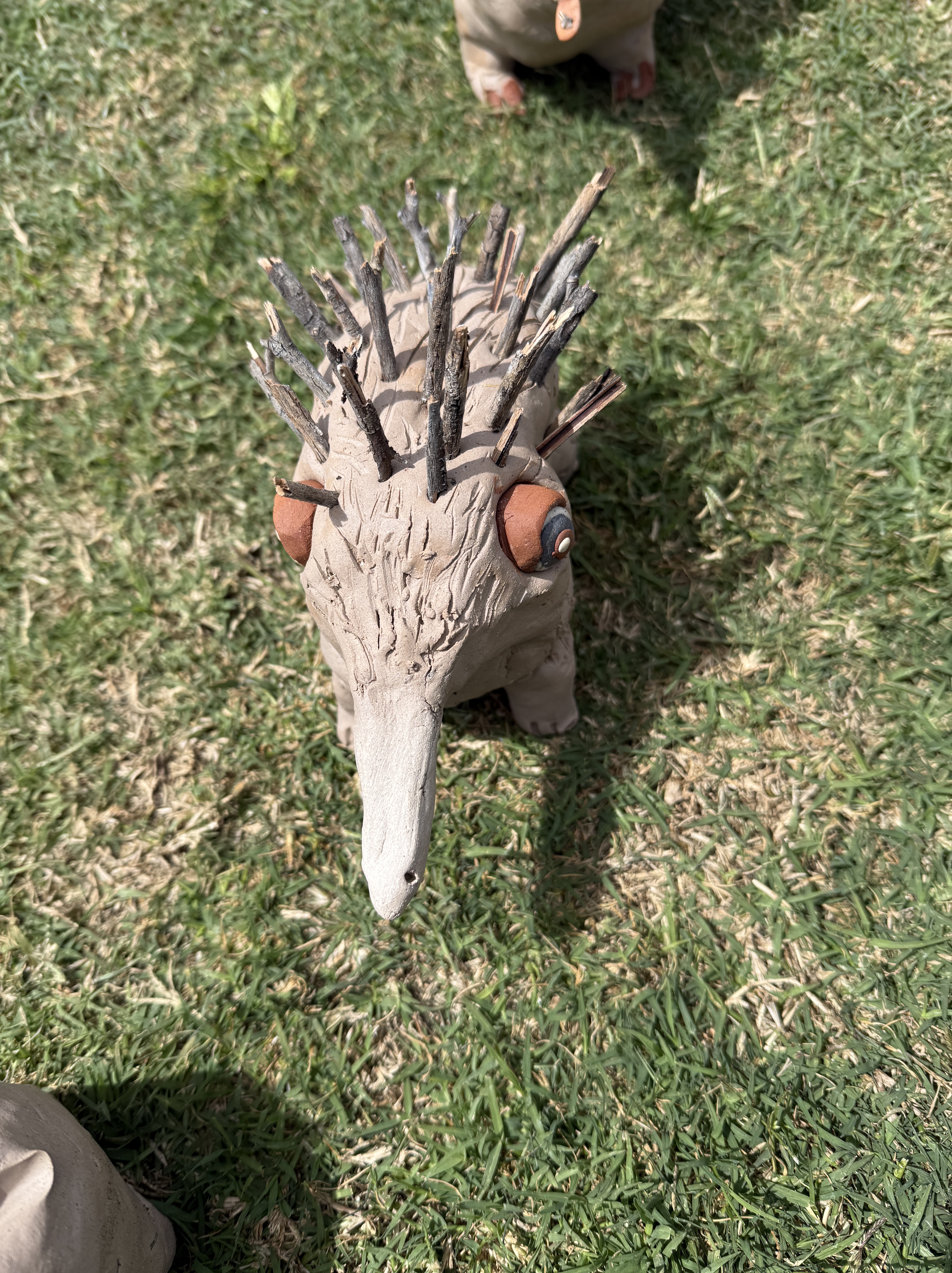
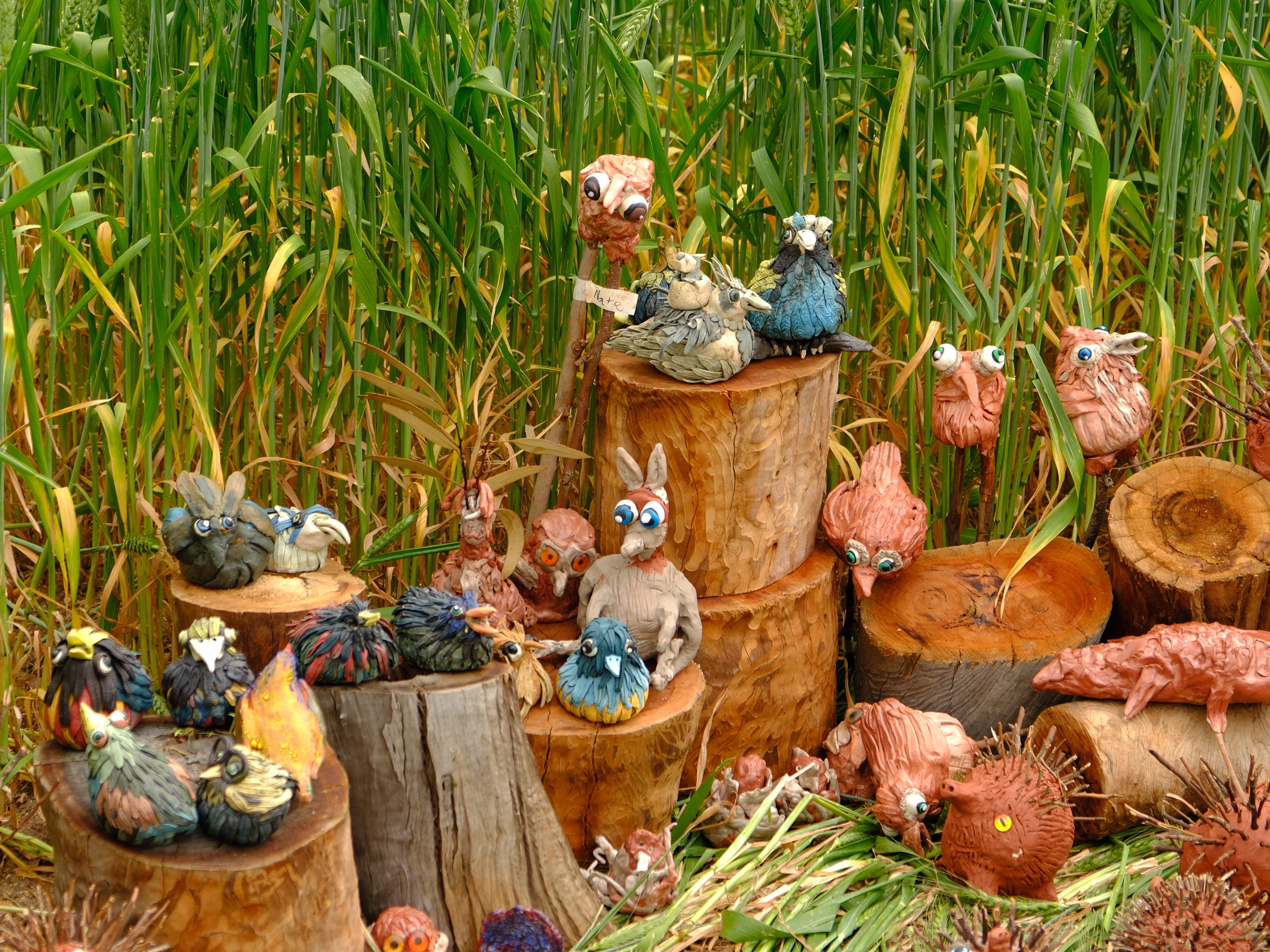
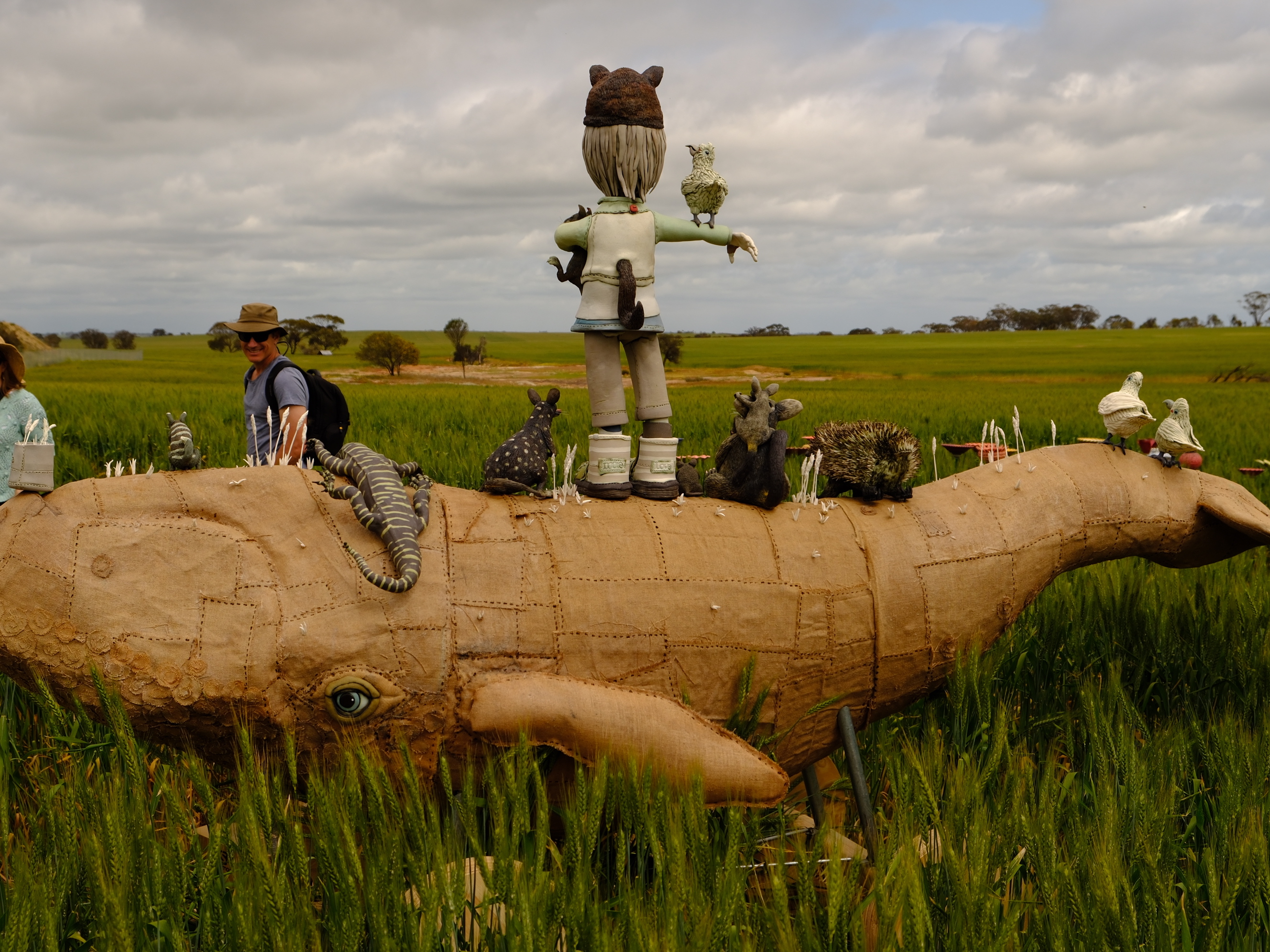
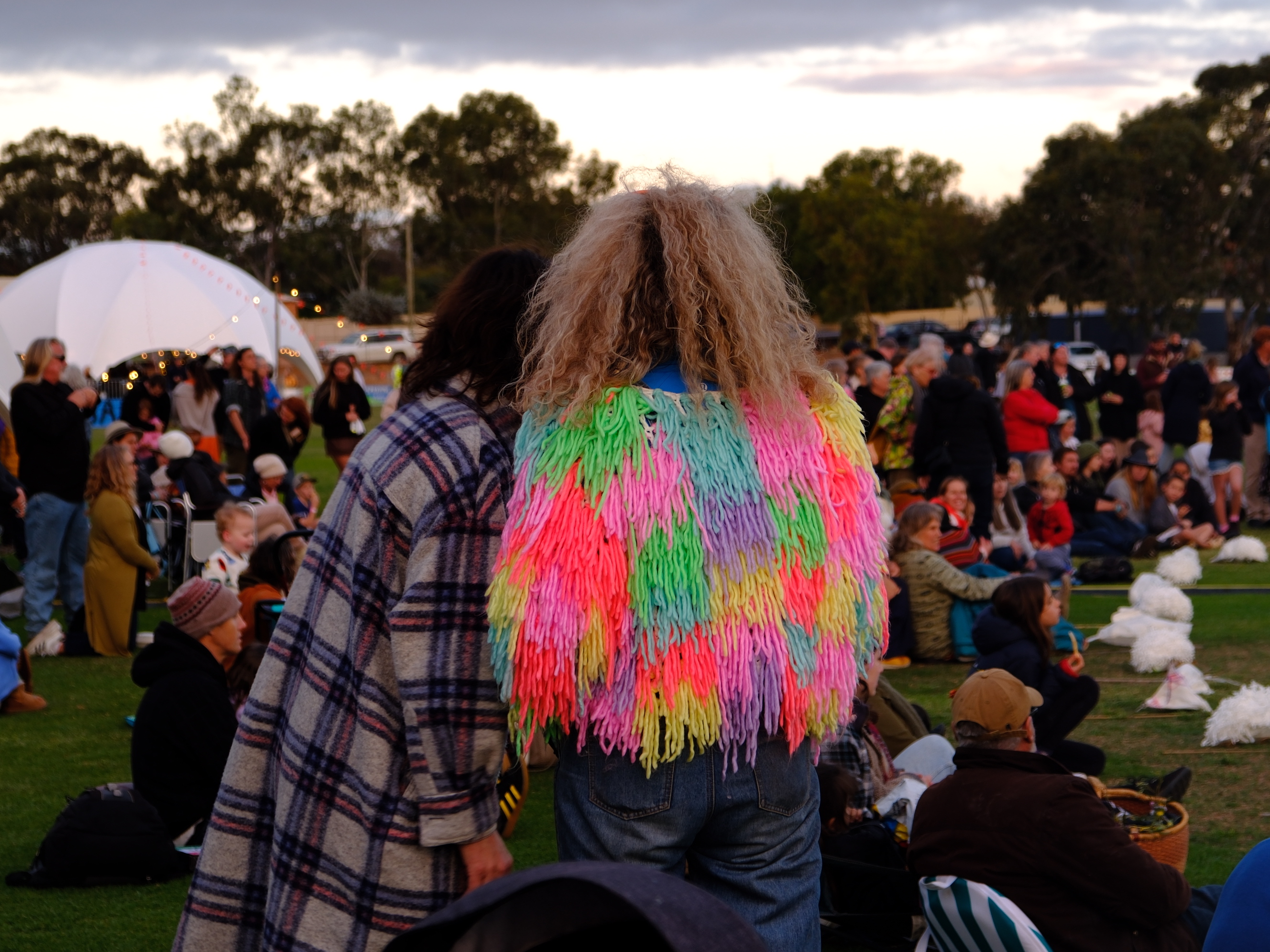
A whale in a wheat field, a parade of delightful ceramic echidnas as far as the eye could see, fresh crop circles that may or may not have been created by aliens, and some of the finest humans in the biosphere all gathered one long weekend in September in a tiny country town where not much usually happens. The Biosphere Boodja Arts and Wild Things Festival in Goomalling has just happened and I was lucky enough to be there!
The tiny wheatbelt town of Goomalling was the locus for this incredible happening, or ‘creative uprising’. It was the brainchild of Internationally acclaimed Perth ceramic artist and the festival’s creative art director, Fleur Schell, who was born in the wheatbelt town of Goomalling.
She had a dream, or perhaps more of a vision, that she brought to life with some funding from Lottery West, major sponsors, private donors and the local community. Collaborating closely with Ballardong Nyungar Elder Tracy De Grussa and with the local community including primary school children from the two small primary schools in the town and with the Goomalling Op Shop behind her, Goomalling definitely had a happening!
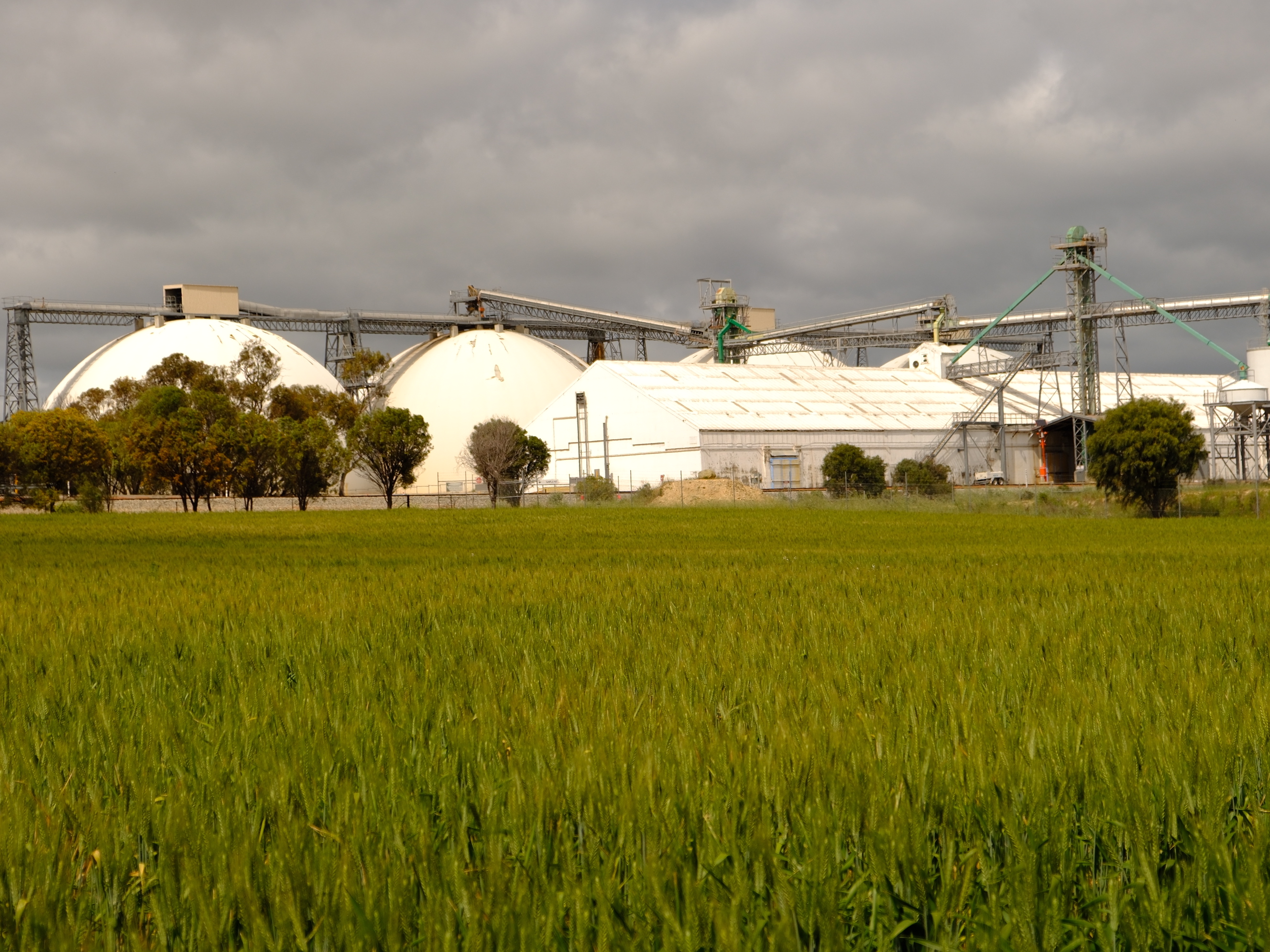
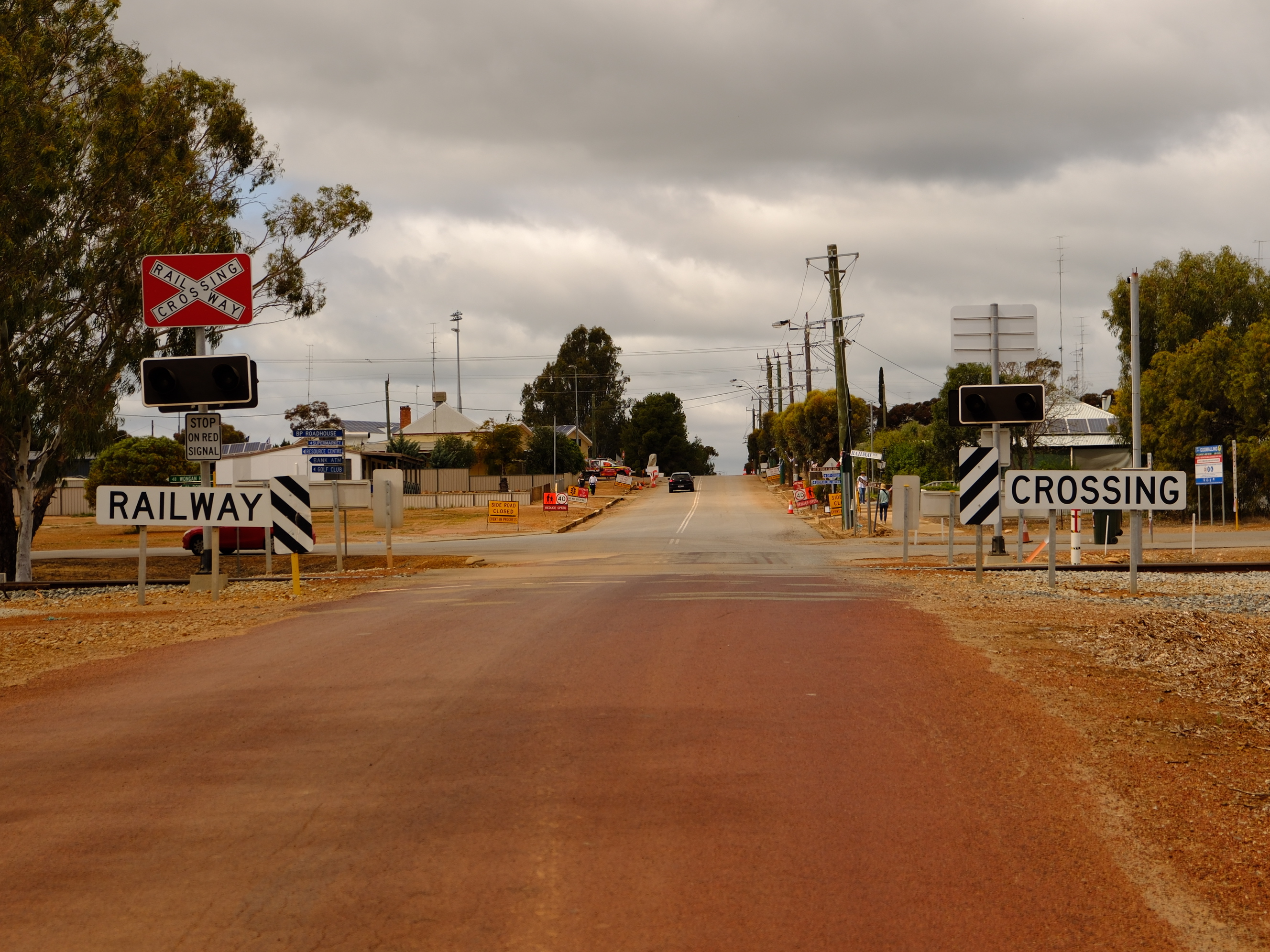
The small town of Goomalling is under two hours northeast of Perth in the Avon Valley and the Western Australian wheatbelt. Like all wheatbelt towns, it’s all about the wheat and it’s the enormous grain storage domes that immediately grab your attention when you drive into town that formed part of Fleur’s vision for the Biosphere Boodja Festival.
The giant spherical silos are pure white and look like something you may find on Mars if the future of life in space ever comes to fruition. When Fleur was a child they were really buried dinosaur eggs. They were also the perfect canvas for the incredible Totem Story projections that were cast that Sunday evening.
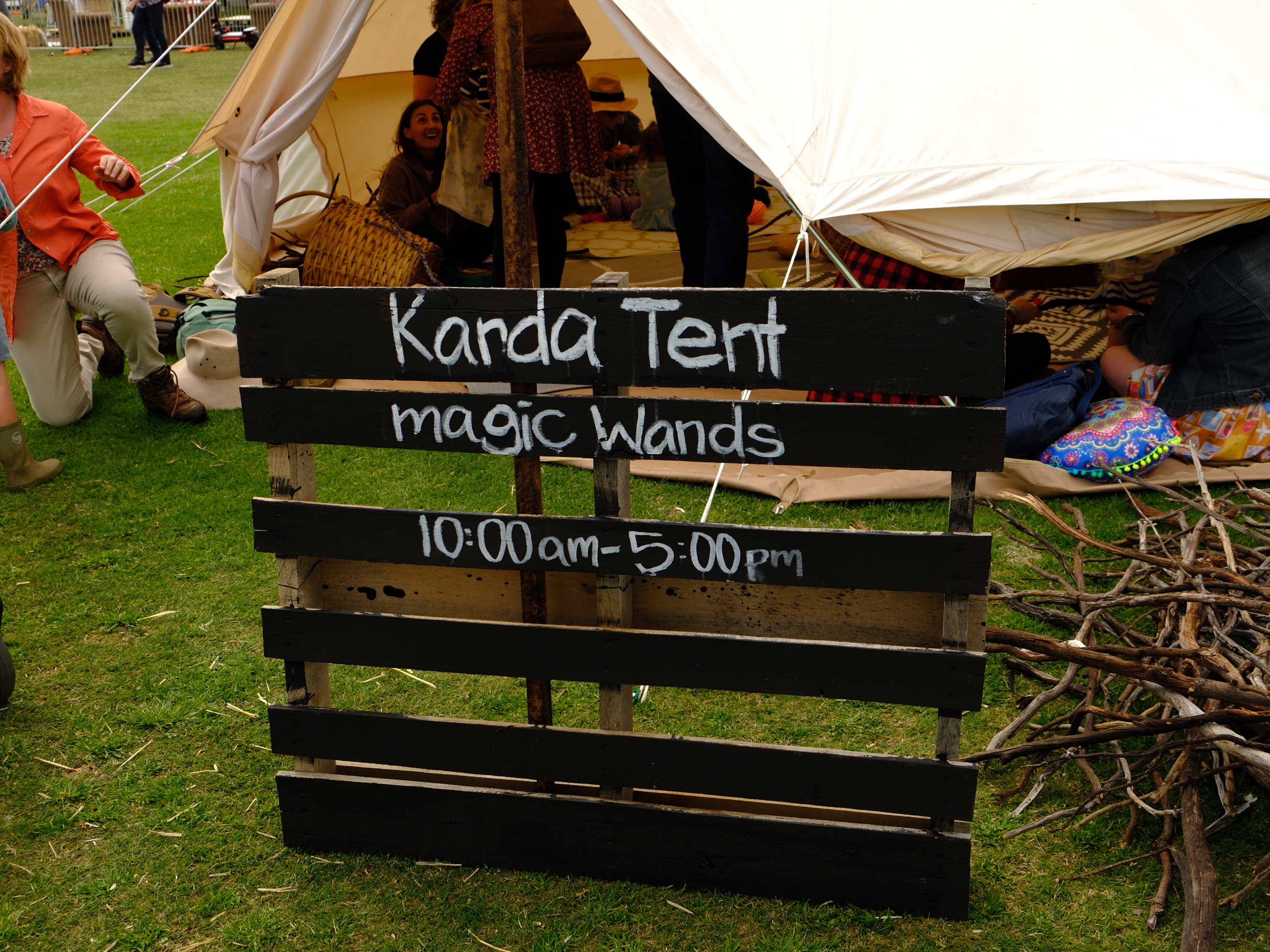
As a clay artist Fleur saw an opportunity to invite visiting ceramicists in Perth for ‘Wedge 2025: The Australian Ceramics Triennale in Fremantle’ scheduled for the following weekend in Fremantle. Clay play and ceramics with clay provided by Midland Brick, formed a large part of the festival and the workshops available for festival goers. Throw in some of Perth’s premier musos, a sculpture exhibition in a wheat field, some dancing, yoga and a giant puppet parade and the experience was out of this world.
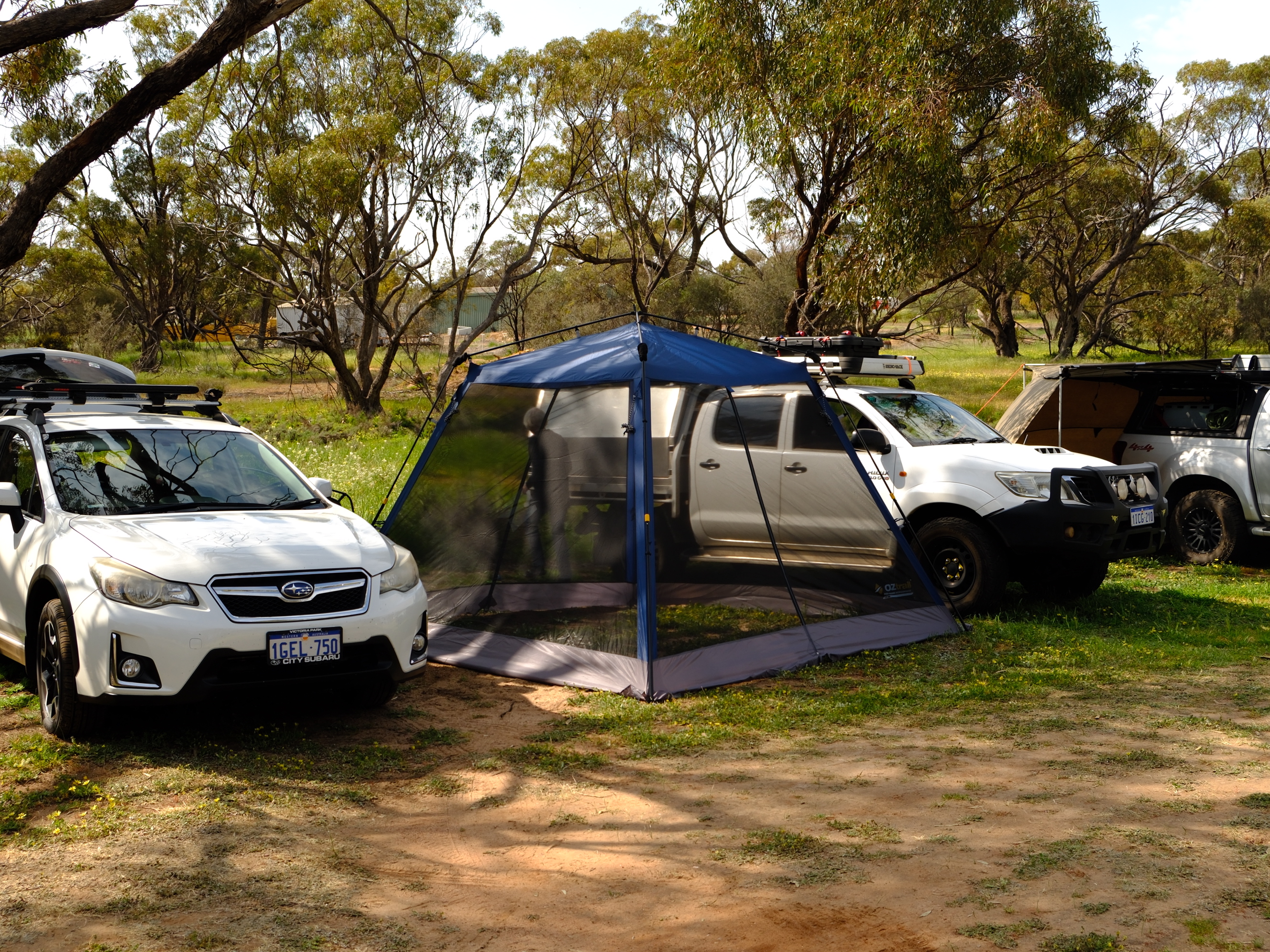
The festival was free to those who attended ; There were different camping options including glamping and family camping areas. We paid for bush camping on the decidedly rustic golf course. It was close to everything, including a million mosquitoes.
I’m a Tassie girl who grew up in isolated places and went to high school in a small country town so I have a thing for small country towns. While Western Australian wheatbelt towns are a far cry from the lush farming towns in Tasmania there is an essence that spans all country towns and ties them together. That essence is isolation and community.
For me, wheatbelt towns are not comfortably accessible all year round due to the extreme temperatures in summer. Not to someone who likes to spend time outdoors and camping anyways, so I try to get out there as much as I can during the cooler months. There is something magical about wide open spaces, random granite rocks and wheat silos.
This trip was my second foray into the wheatbelt this year; a couple of months prior I went and spent a day and night hanging in the Granite Way at Kwolyin Camp ground and Kokerbin Rock, one of my favourite places to explore. There really is nowhere better for star gazing!
So when Biosphere Boodja came up on my radar, I jumped at the chance, found a festival buddy and headed back into that wheat belt that I just can’t get enough of.
The drive out was ethereal; green wheat fields on either side and the fading flowers of the remaining canola, almost finished flowering. As drifted into towns surrounded by modest hills incredible mists filled the valleys. It was all I could do not to pull over every 10 minutes to take photos.
When I reached Goomalling at 8:30 that morning (yes I had got up very early to leave) I was the first bush camper to roll in and register. We were camping on the golf course and being a dry wheat belt town the golf green was not how you imagine a green in the big city. Nevertheless, they wanted to protect their fairway so we camped in the bush on the side of the daisy-covered fairway with about 10 million mosquitoes.
The town volunteers were all incredibly friendly. They popped me down at the end so I could drive out easily the next day and they saved a space for my friend Elaine who had a rooftop tent. Turns out we were first to arrive and last to leave. That’s how we roll.
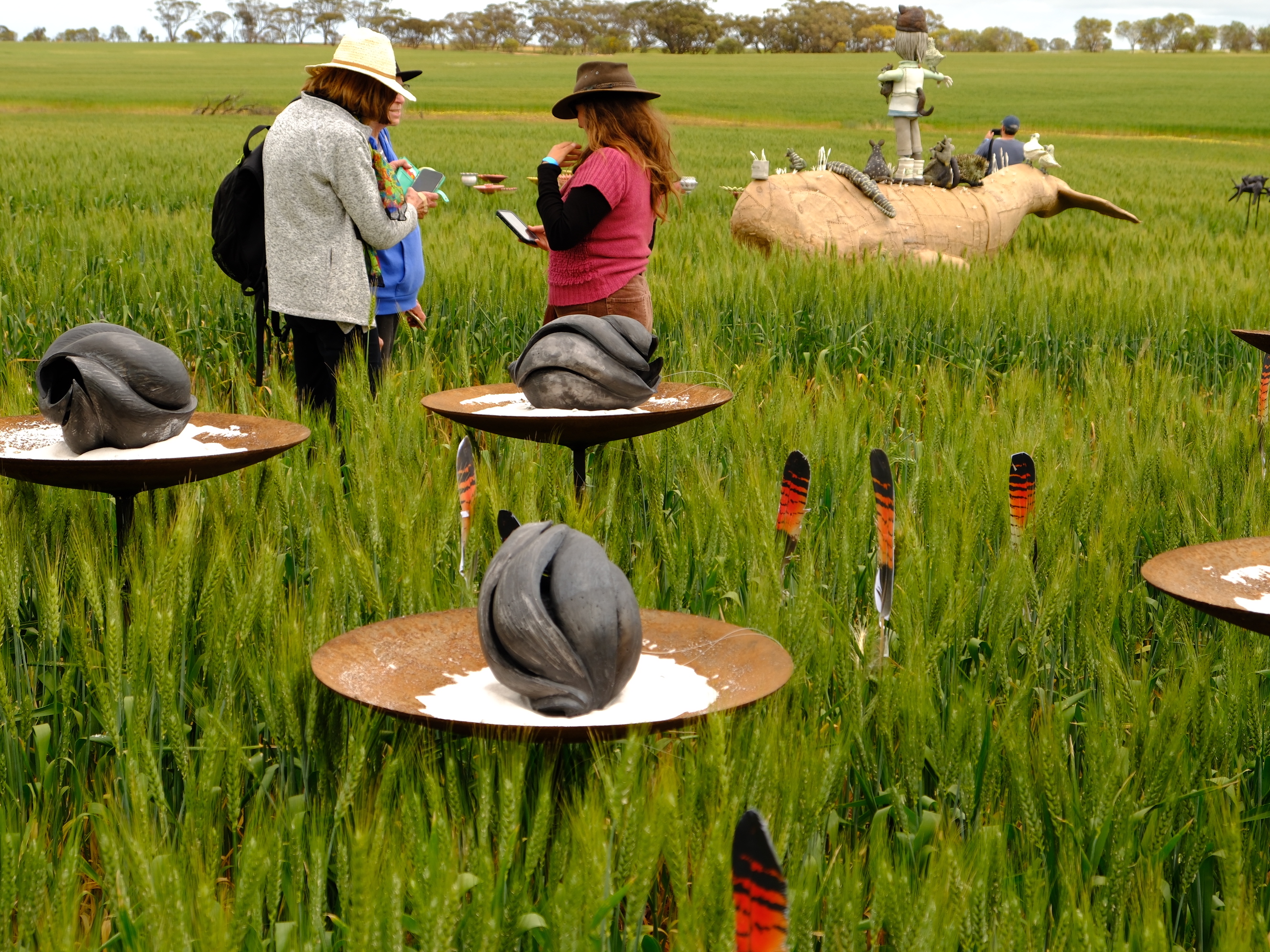
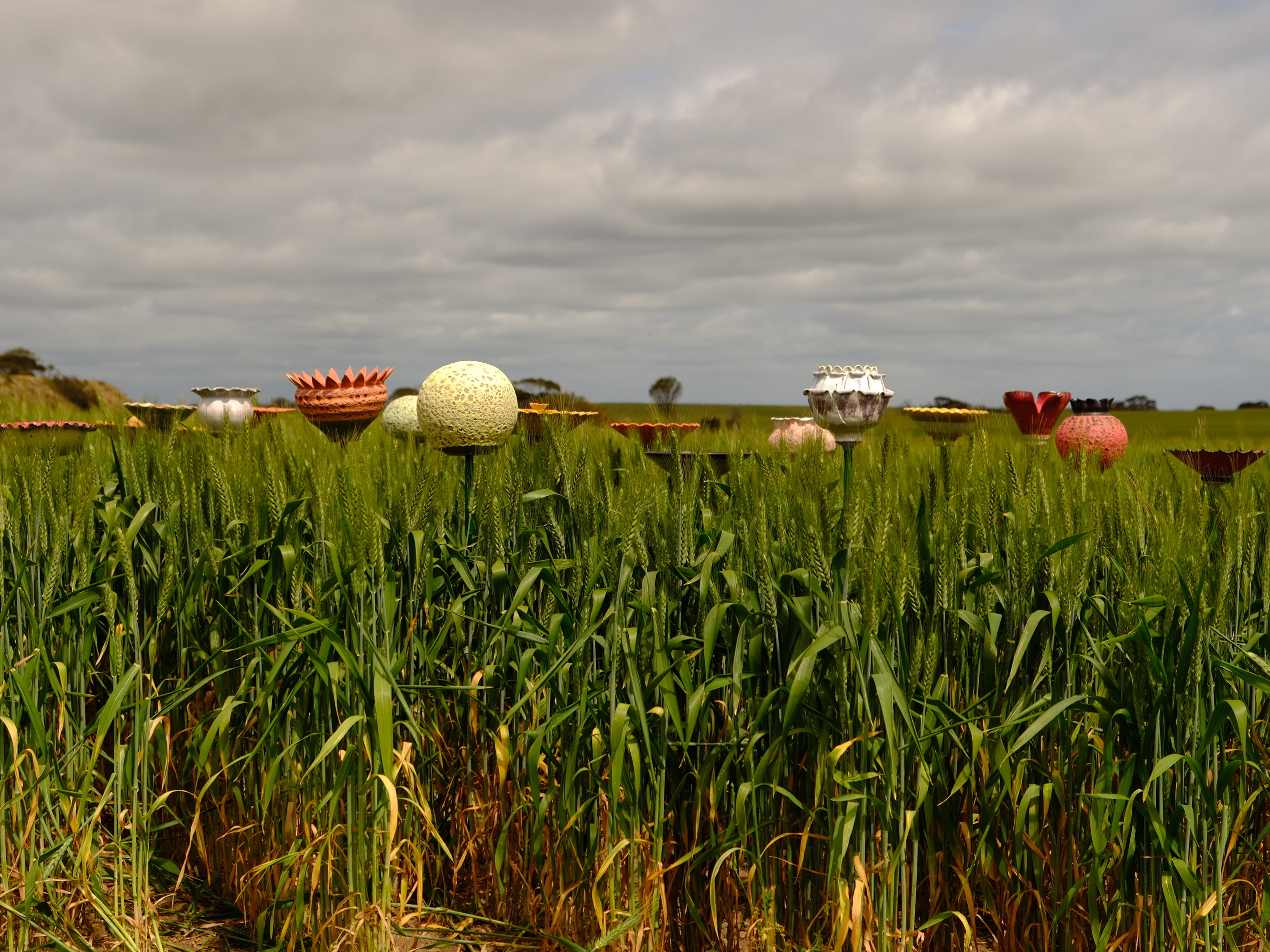
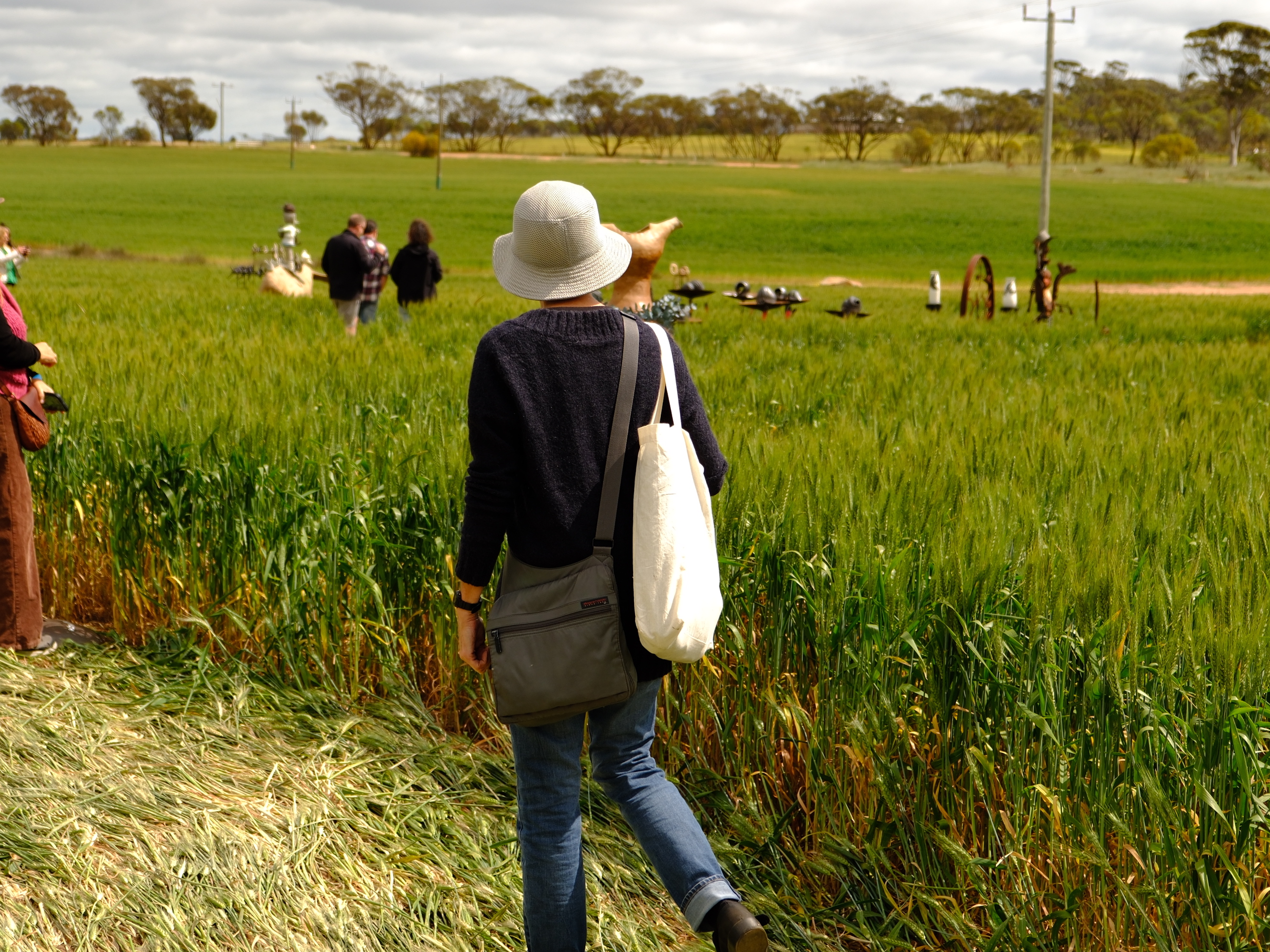
I set up camp and Elaine arrived via the Goomalling Op Shop with a trawl of treasures and set up her rooftop, then we set off to explore the town. Right next to the golf course was the wheat field ‘crop circle’ exhibition – literally a wheat field with cleared paths and some incredible sculptural art works, including Fleur Schell’s ‘Wheat Whale’. So we diverted into the field.
The sun was up and the wheat swayed in the soft breeze; quite magical. Next we wandered to the markets and the main oval to see where we could expect to be based for the next couple of days. The markets were a collection of local artists stalls. I made a few small purchases, including a cap printed by a young girl who had created a selection of t-shirts and hats with her designs.
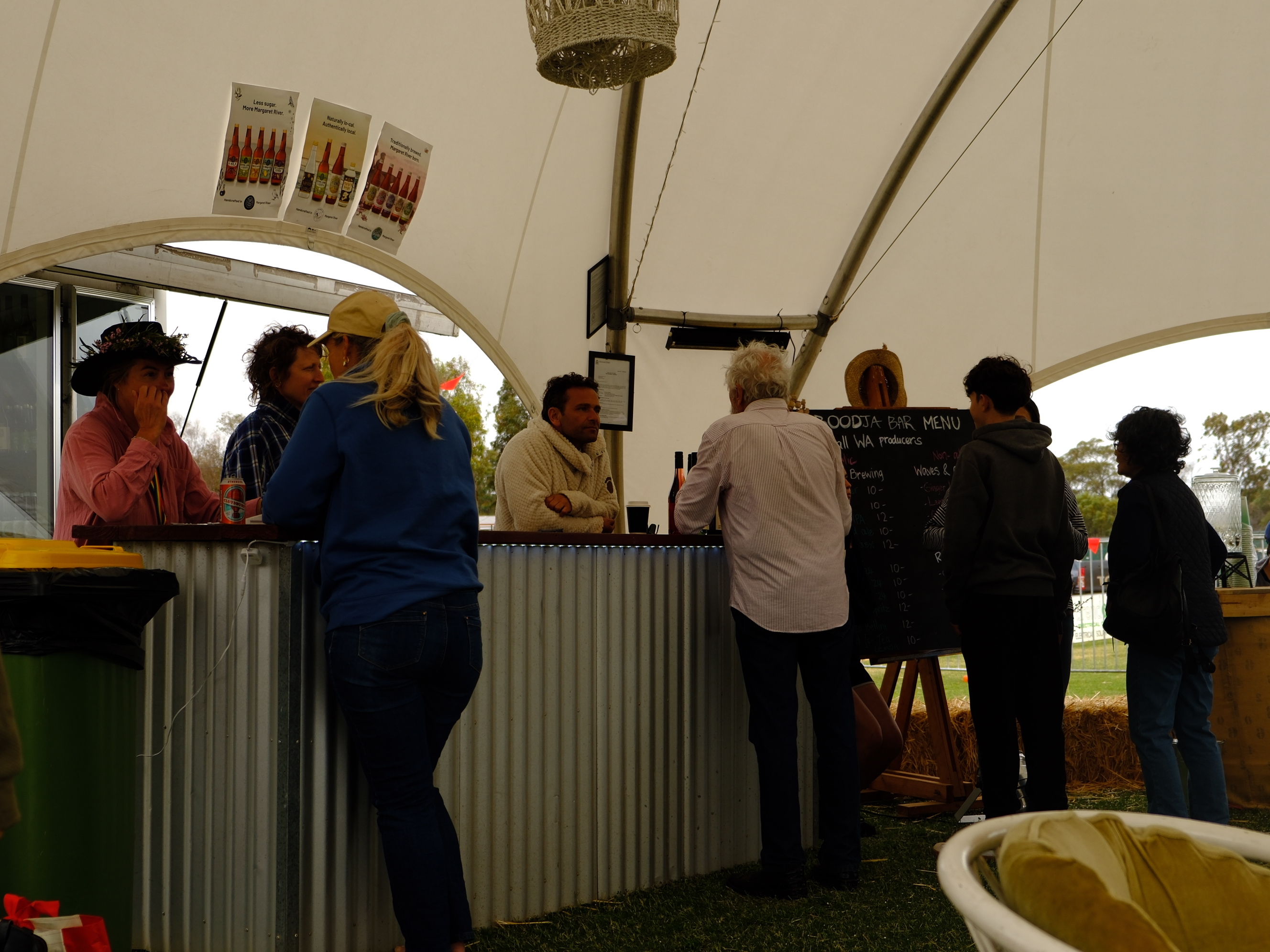
With eats never far from my mind I was happy to note a variety of food trucks and a couple of bars set up on the oval, and we soon found the stage which would be the centre of our weekend escapades, when we weren’t having a drink in the Boodja Bar or the bowls club. I was excited.
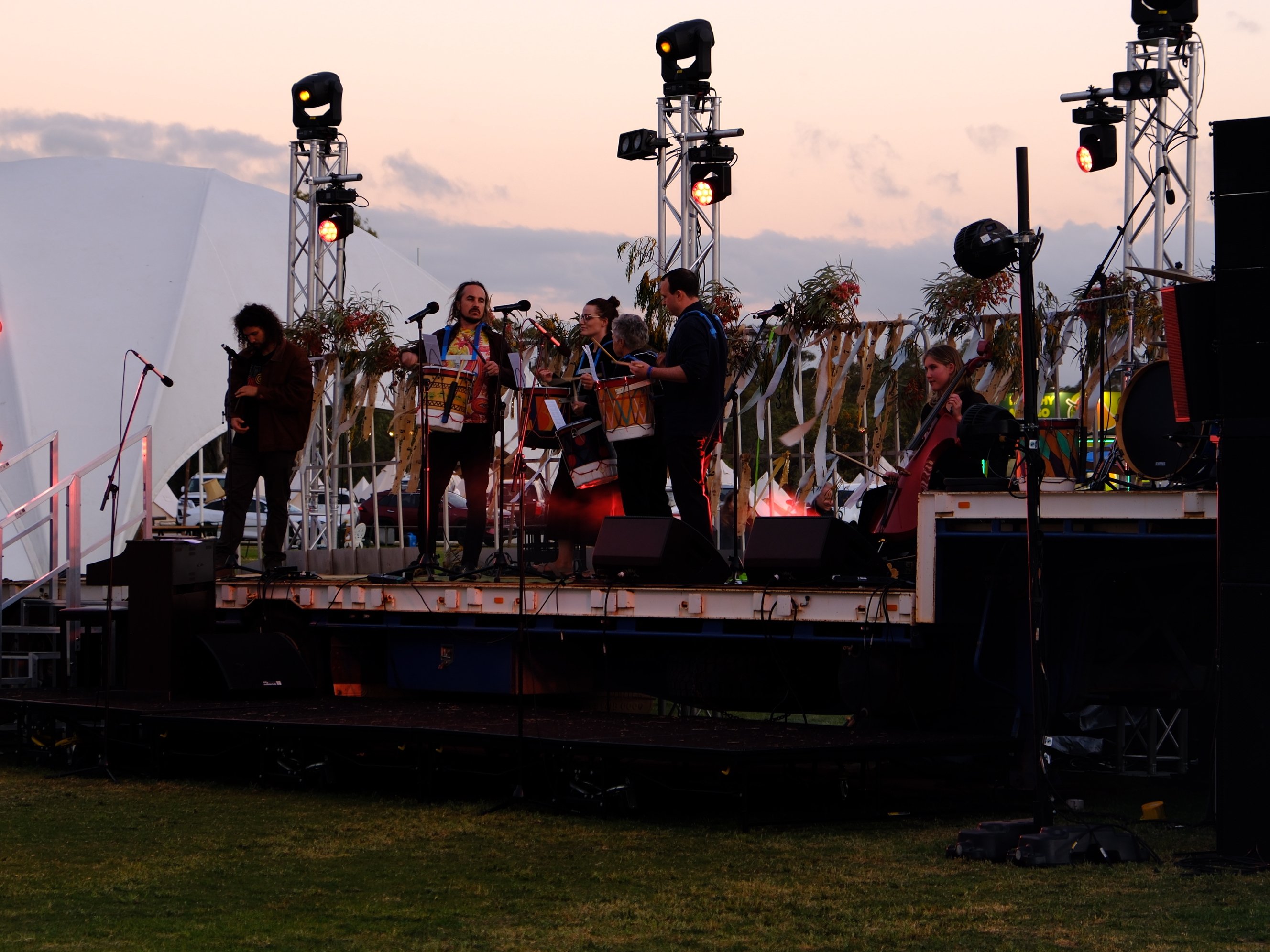
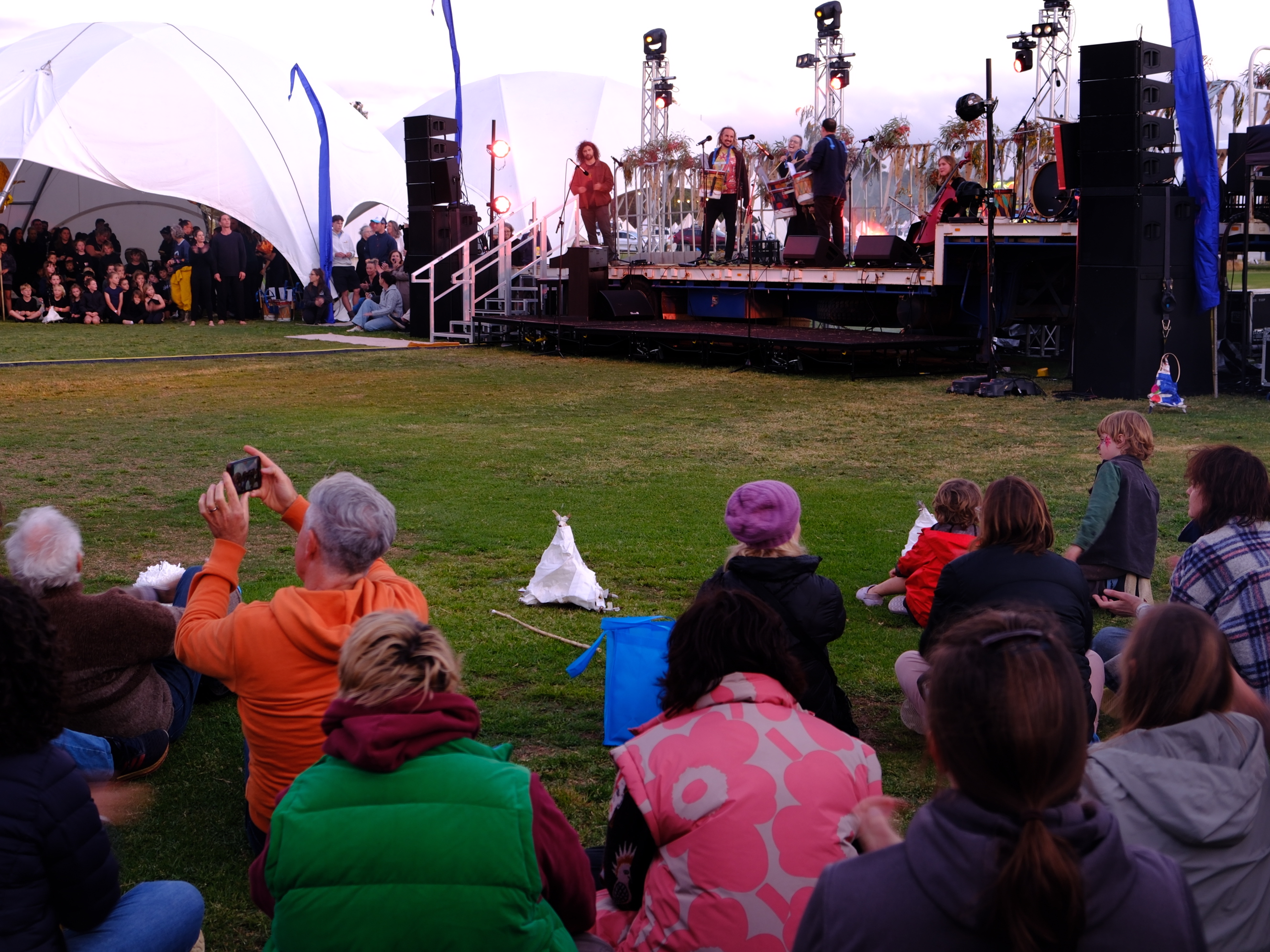
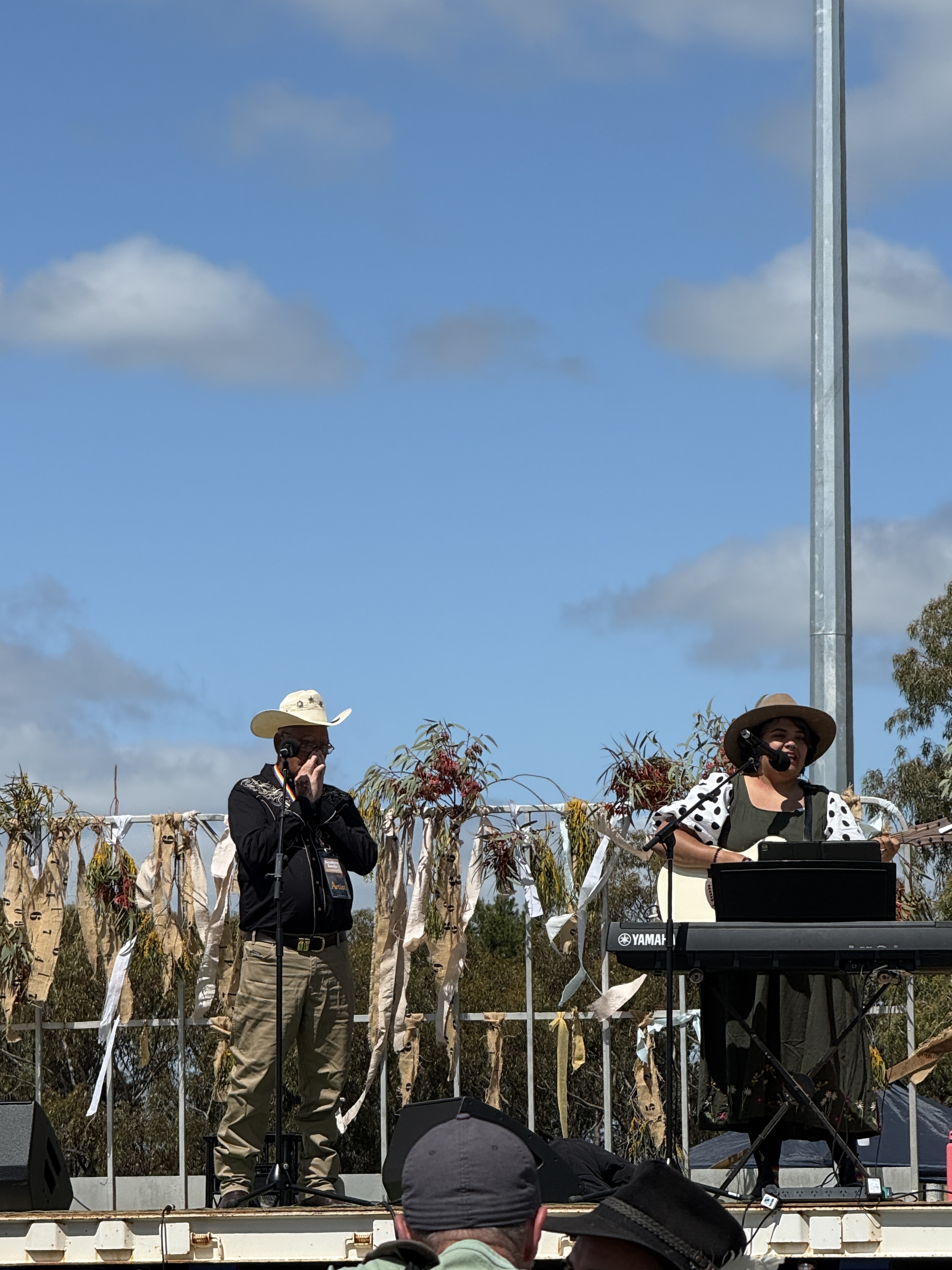
We settled in for Aunty Tracy’s Welcome to Country and a string of fabulous Western Australian bands including Lucy Peach and some incredible acts from the area.
The rest of the day was spent wandering about checking out the workshops all facilitated in huge white dome tents not unlike the wheat silos, and pausing for drinks from the comfortable Boodja Bar with Op Shop chairs and cushions, to the Goomalling Bowling Club bar. The rain came but it wasn’t the soaking type so we stayed mostly dry.
We decided a final visit to the town Op Shop was in order, seeing as I hadn’t been yet, and headed into the wide streets of Goomalling for another walk about. The Op Shop was on the main street, just past the hotel, the post office and Bendigo Bank, and it was heaving! Most of the good stuff had been bought up by the bargain-hungry visitors. The Op Shop manager was very happy with her day’s takings declaring it ‘the best day of takings she had ever had.’
I found nothing but enjoyed the browse before we went back to camp to prepare our clothing for the coming evening. Back for another drink or two at the Bowls Club before the children and festival goers began congregating for the puppet parade and song performance by the children.
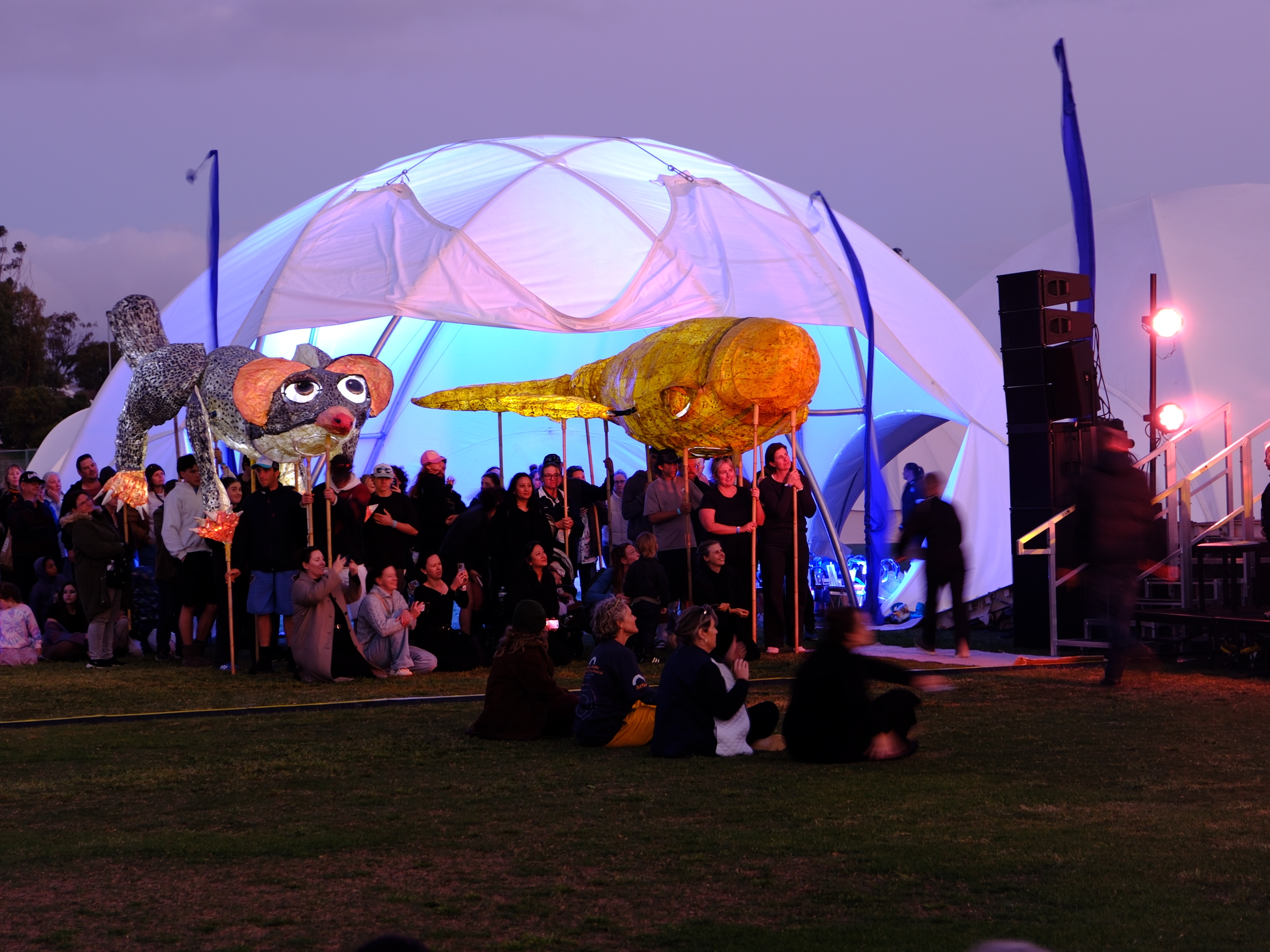
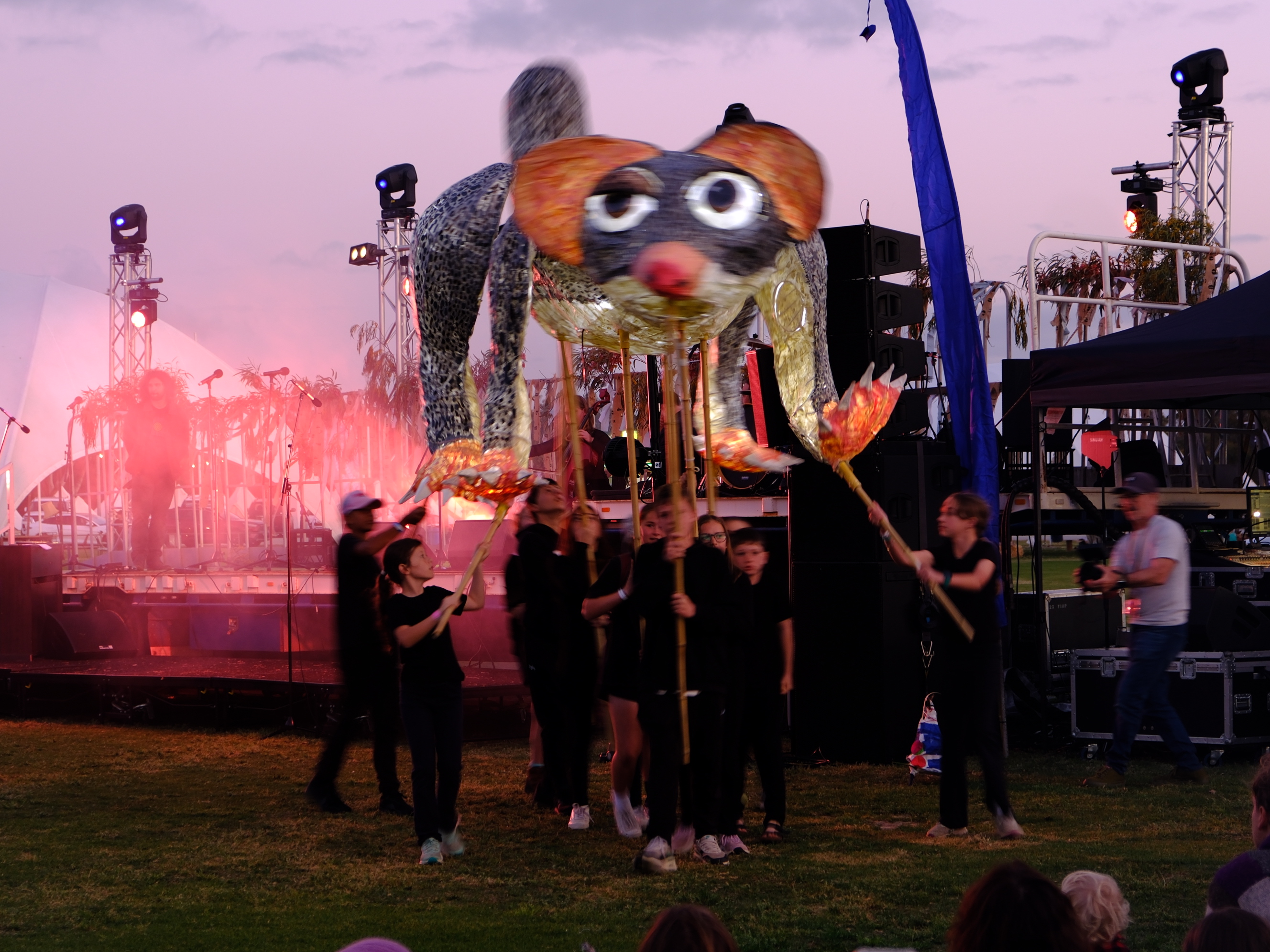
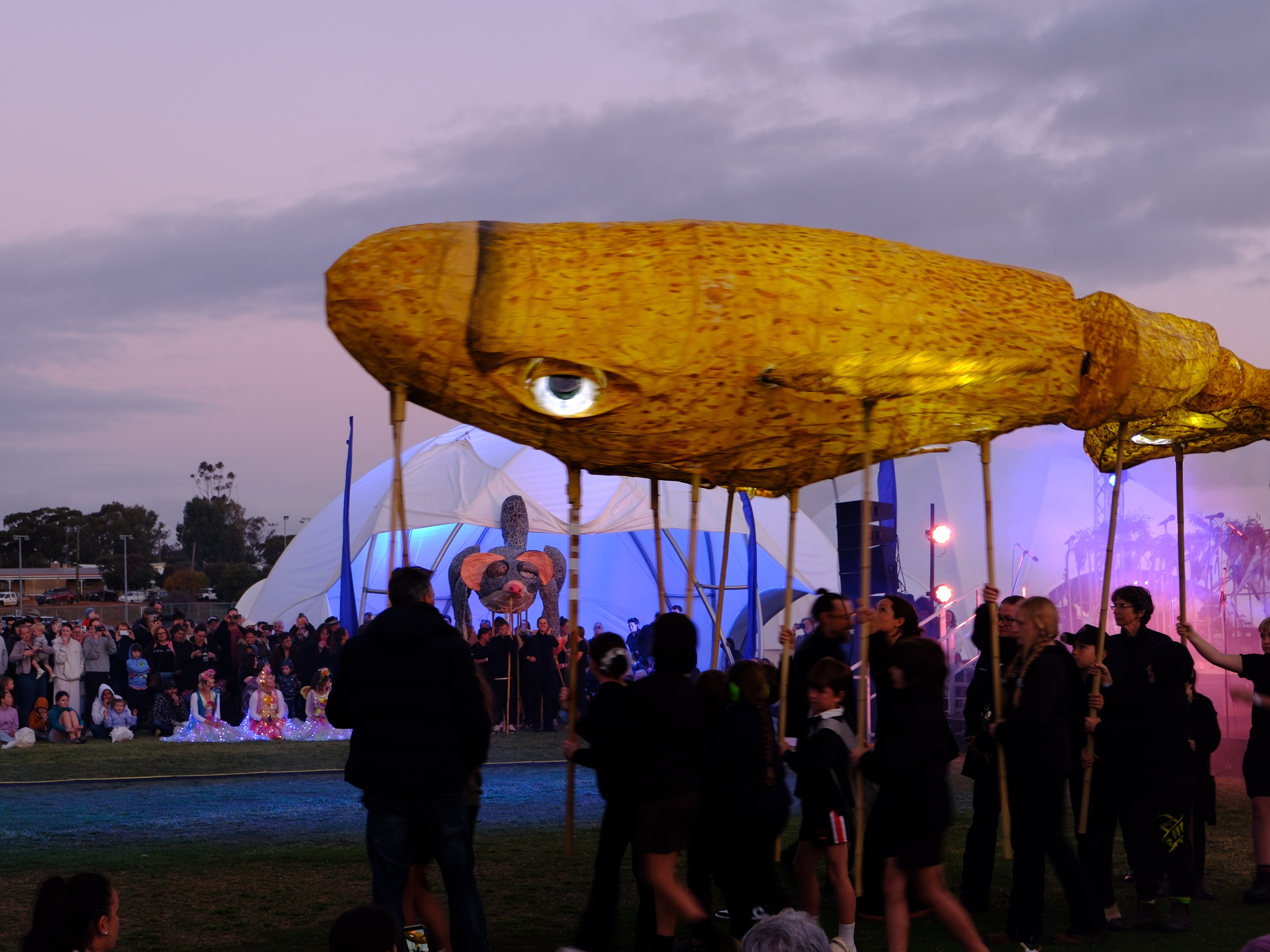
What followed brought me to tears! The giant paper mache whale and Koomal possum that we had seen sheltered in the tent earlier that day came to life with lights and a group of young people moving their parts as they circled the area in front of the stage accompanied by a drumming group. The children sang a song about the disappearance of the Koomal possum, written by Fleur and then we all set off towards the silos as the sun set and darkness fell.
There was a real sense of being part of something so unique and important as we all stopped in front of the silos and all the lights were extinguished. The Totem Story projected onto those crazy dinosaur eggs and narrated by Aunty Tracy and children was just incredible.
Totem Stories on Goomalling wheat silos
When it finished we all strolled slowly back into town feeling like we had been part of something beautiful. It was clear how much work had gone into every part of the weekend from the involvement of the local schools in the incredible art projects to the local businesses and volunteers who made it all possible.
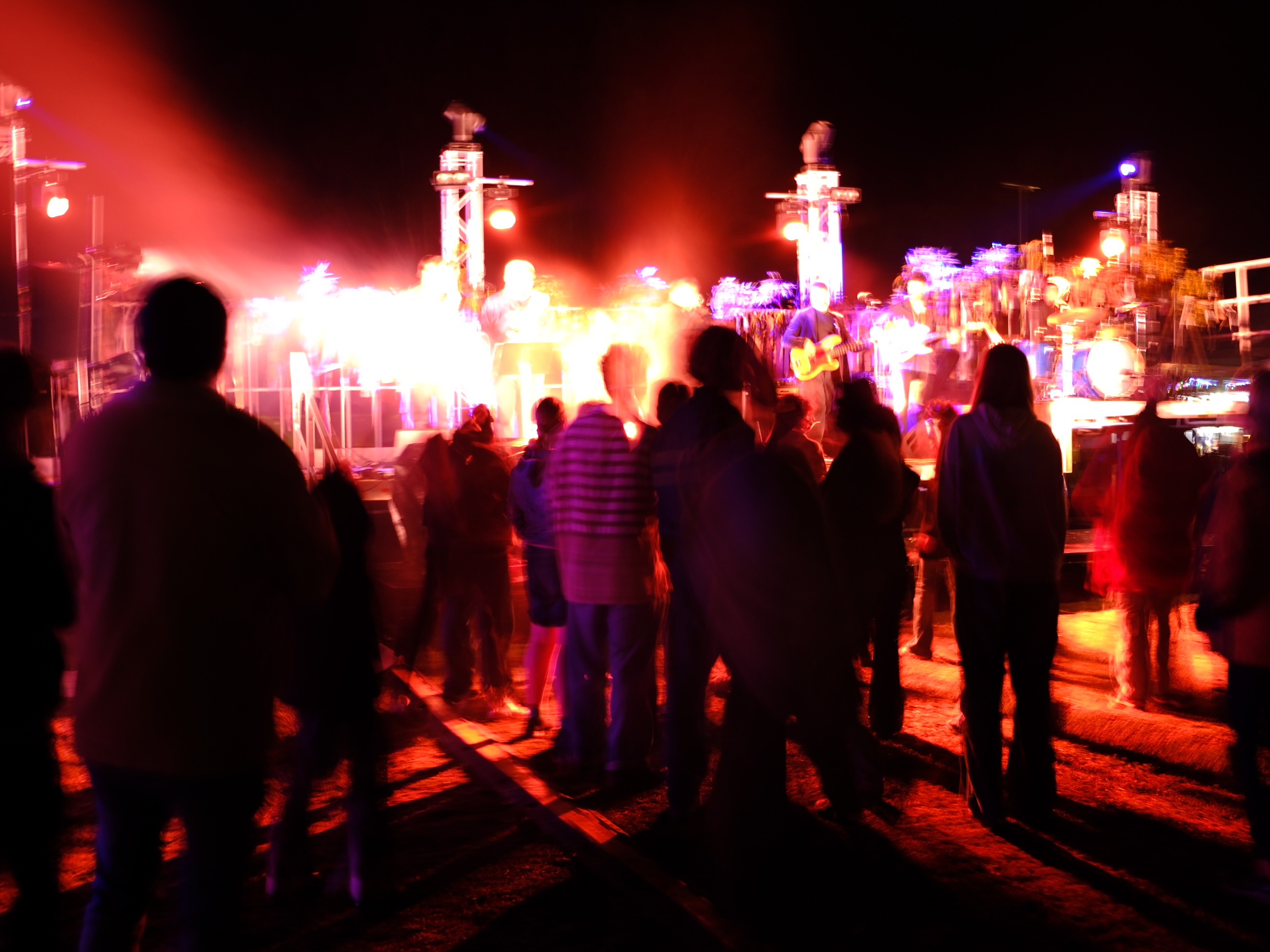
The remainder of the evening was spent having food and listening to the music by local and Western Australian acts; finishing on a funky note with a boogie to Odette Mercy and the Soul Atomics before we stumbled back to our golf course camp for sleep.
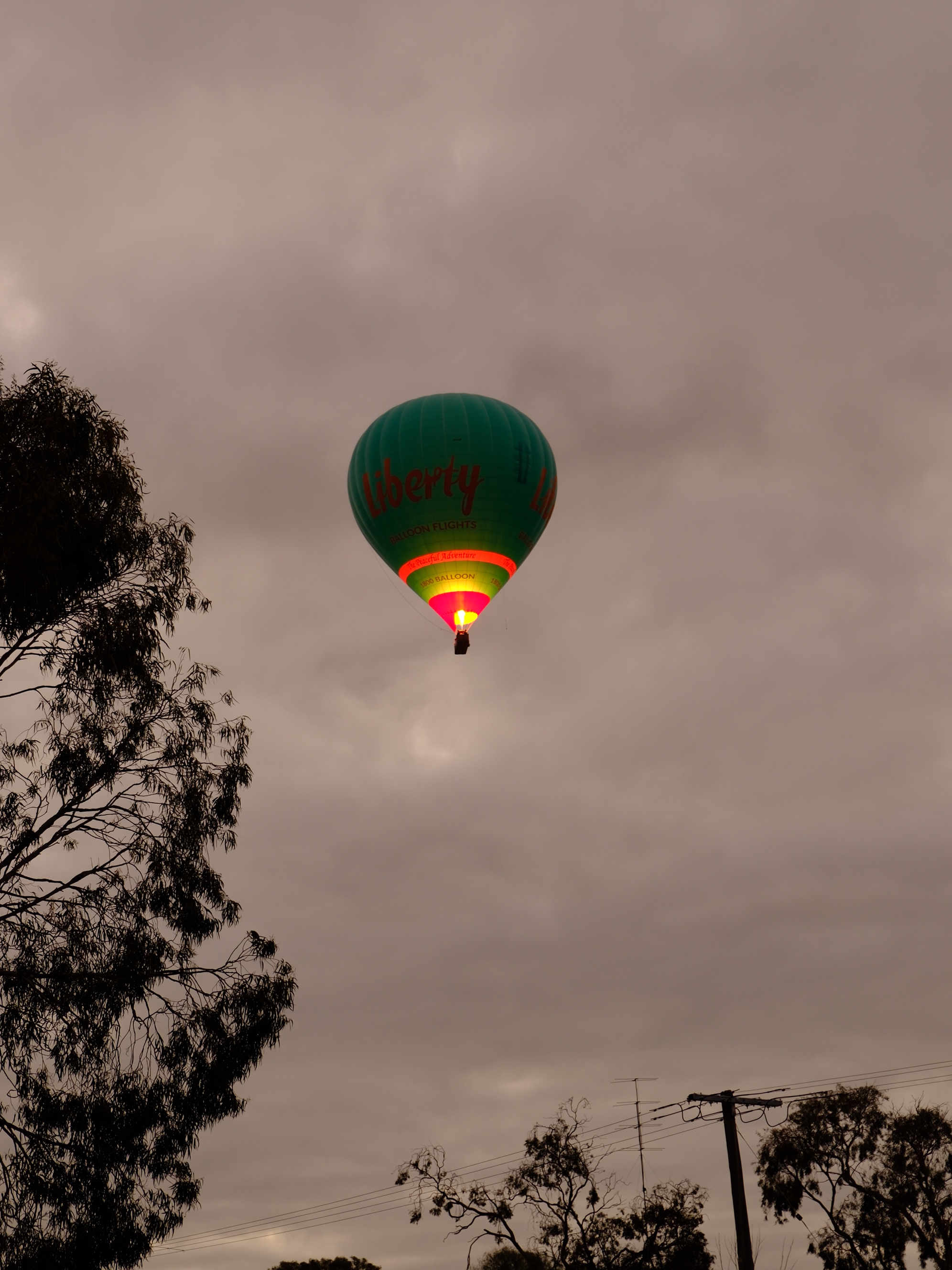
I was woken at 5:00 am by the sound of the hot air balloon that had been sitting on the oval the day before, being inflated on the oval for a sunrise flight; the steady hum of the generator and then the huge huffing sounds of the flame being shot into the full balloon. I just had to get a photo so I braved the mossies and got to the railway line as it lifted into the cloudy skies. I got my pics and climbed back into bed for another hour.
Day two started with a sausage sizzle right outside our tents as the local P & C cooked us up a meaty breakfast of sausages, onions and sauce (onions and sauce for the vegetarians). I scoffed down a sausage but Elaine passed on the onion in a bun. So we dressed and headed into town. It was pretty chill as we found coffee and a space on the grass for the remaining acts. The festival ended with the Rose Parker Trio and a whole lot of thank yous and congratulations.
As we walked back to our cars, the only two left on the golf course, we reflected on our experience and decided it was one of the best weekends we could have had. Thank you to everyone who made it happen.
On the beautiful Atlantic Ocean coast sits the small town of Faro; a town of contrasts and the best piri piri chicken in Algarve
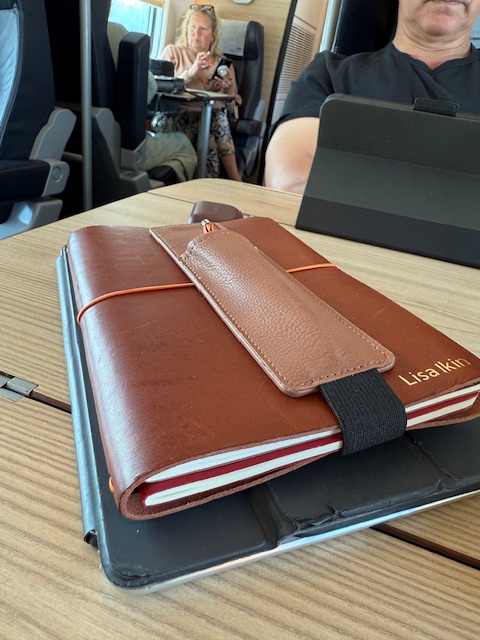
Where possible. I always prefer train travel when exploring Europe. I’ve done the hire car thing a few times but find it stressful; trying to park, paying for parking and the whole ‘driving on the wrong side of the road’ business. I love a slow-travel experience, the downtime for writing and reading, and just watching the landscape speed past. Olive trees, grape vines, and Tassie blue gums swishing past in a swirl of muted greens. Hay stacks, cows and sunshine! All while sipping a cold Estrella and gnawing on some jamon and kicking back. It’s the summer daydreams are made of.
Pastel de nata always on the menuTime for a bit of writing
On a recent trip to Spain and Portugal, I set the itinerary to the train timetable and chose stopovers according to their ease of access to train stations, connections, and points of interest. Being our first trip to Portugal, we planned to visit the major cities of Porto and Lisboa, but as I’m ever the bird nerd and nature-nut, I also wanted to hang with the birds and lose myself in wilderness.
Sunset on the first night in Faro – bloody stunning!
For the Algarve part of our trip, we chose Faro. Firstly because it was a single two-hour train journey from Lisboa. Two hours being the optimum time for train relaxation and people watching. Faro, or Cidade de Faro is the southern most city and capital of the district of Faro. It forms part of the Algarve region and from my research had some interesting historical points.
The area was known as Ossonoba in the 4th Century BC and it was the most important urban centre of southern Portugal; a commercial port for agricultural products, fish, and minerals. Later came the Romans, then the Byzantines, and then the Visigoths, before the area was conquered by the Arabic-speaking Muslims known as Moors in 713.
From the third century onwards and during the Visigothic period, it was the site of an Episcopal see, the Ancient Diocese of Ossonoba (306-688). The Byzantine built the towers of the city walls during the Byzantine period. Following 500 years of Moorish rule the Moors were defeated and expelled in 1249 by the forces of the Portuguese King Afonso III. The rest they say, is history and a very rich one it is!
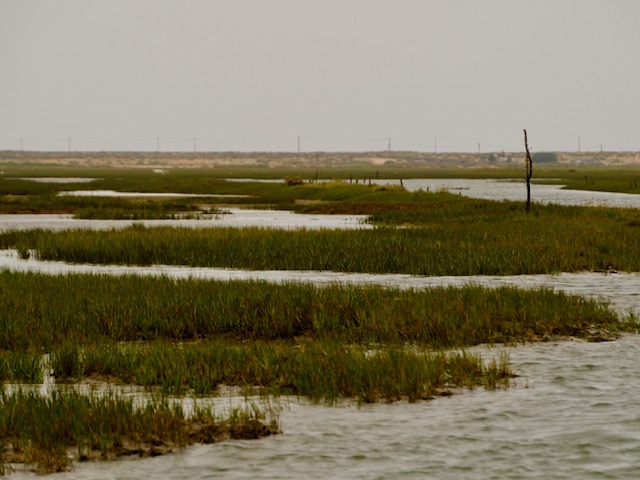
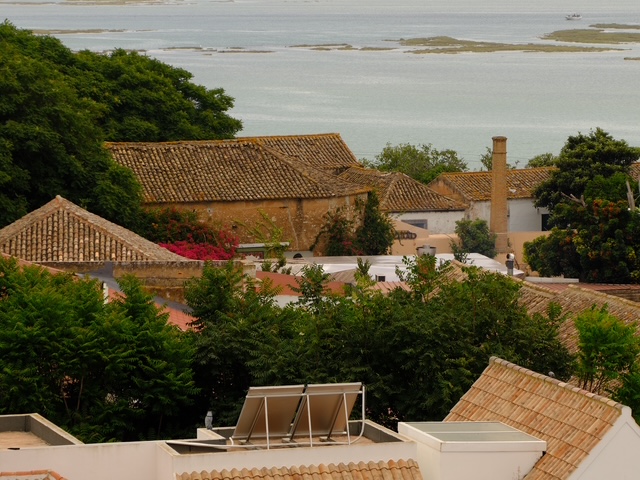
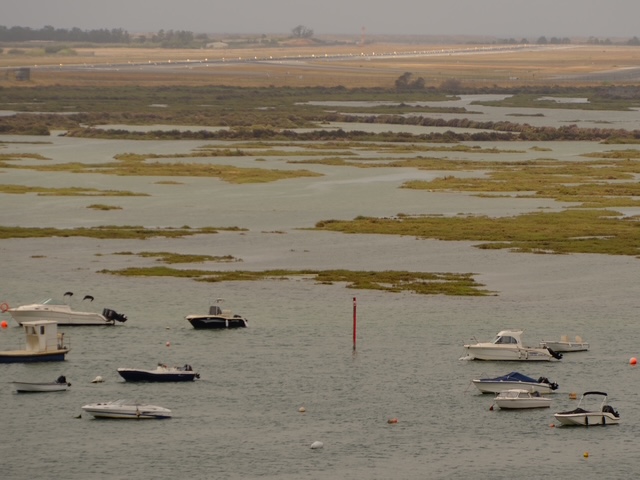
It’s also right on the shores of nature-lovers Parque Natural da Ria Formosa. The Ria Formosa (Beautiful Estuary) is an estuary park of natural canals, islands, marsh lands and sandy beaches. The park extends 60 km along the coast. It’s home to a diverse range of flora and fauna, including hundreds of species of birds, marine mammals and shellfish.
My first impression of Faro the town on the short taxi trip from the train station to our accommodation? I had an instant and overwhelming urge to get back on the train and continue to the more popular tourist destination of Lagos. I had my phone out searching for train fares to Lagos before I had even given Faro half a chance. Which is not like me at all to have such a visceral reaction to a place.
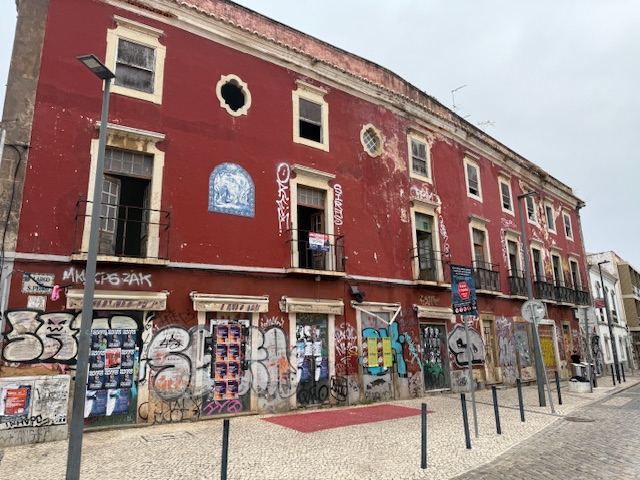
Abandoned buildings
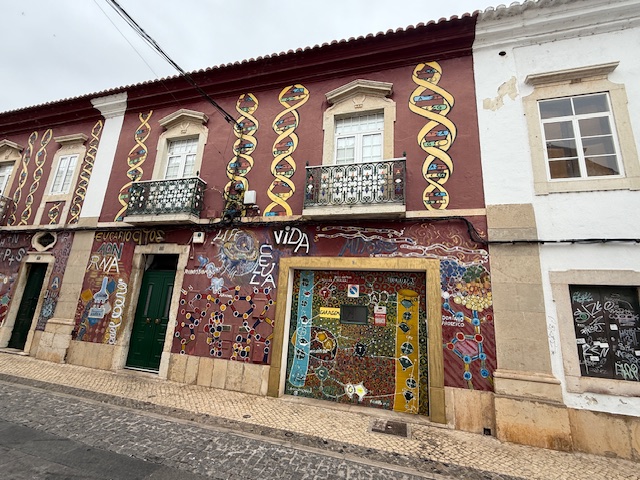
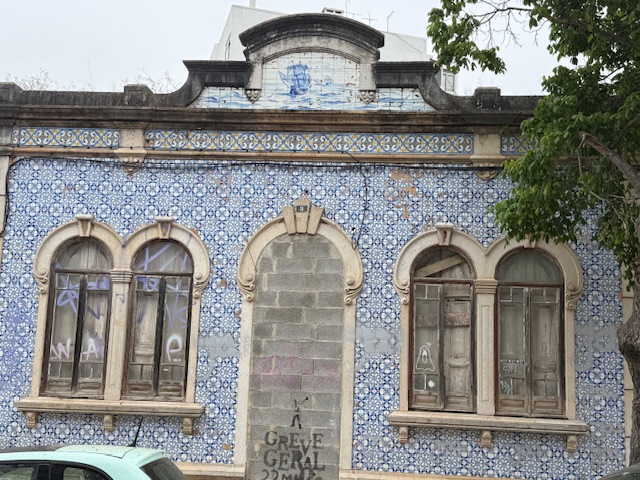
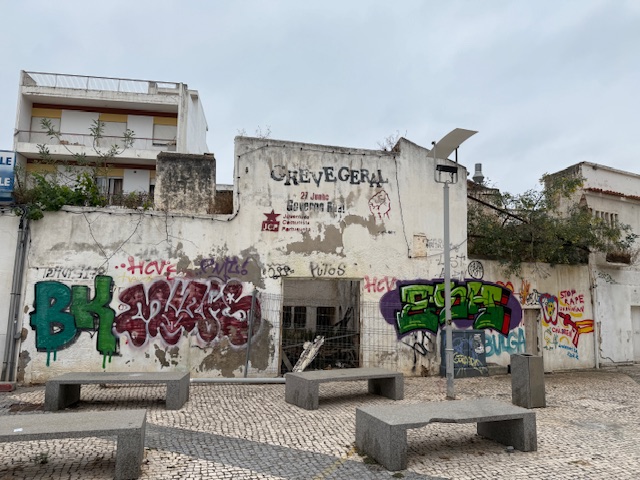
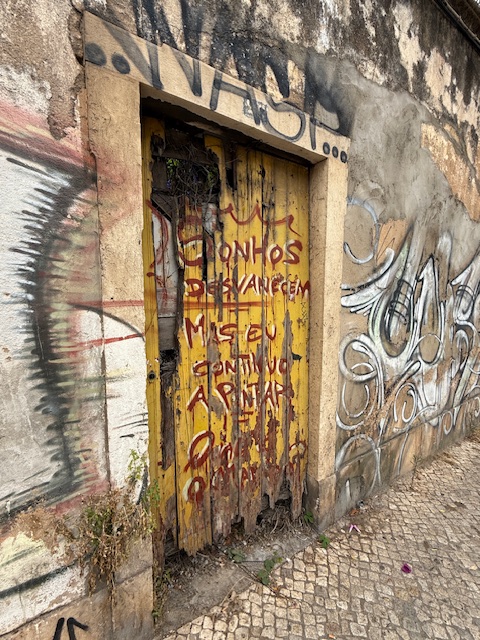
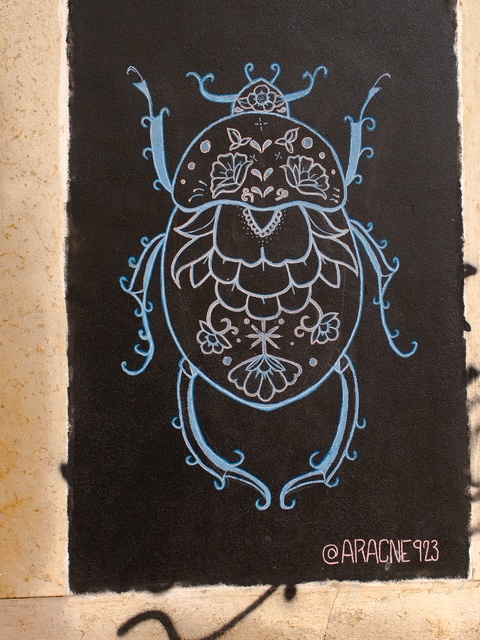
Like many towns and cities in Portugal old buildings in Faro are in a state of decay and because Faro is a small town/city it was shocking that such a large proportion were in ruins and not just one or two buildings in a street. Entire streets of buildings had been consumed by graffiti and were turning to rubble; centuries old and now irreparable. Quite beautiful in a warzone kind of way.
When I spoke to one of the locals about this later, he said despite there being an accommodation crisis in Portugal, houses fall into disrepair when the older generations pass, and their children and grandchildren don’t have the money or the will to restore or maintain the ancient buildings. Some of them are also owned by the state who also have no intention to restore them. Portugal has some grand architecture and it’s sad to see it so bereft.
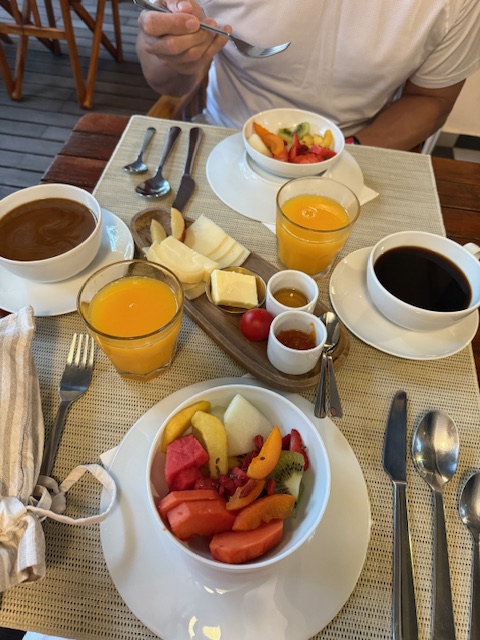
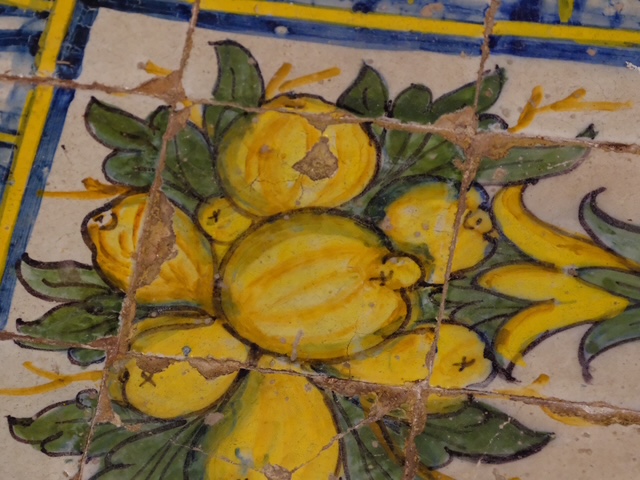
Lemon Tree StayBreakfast included
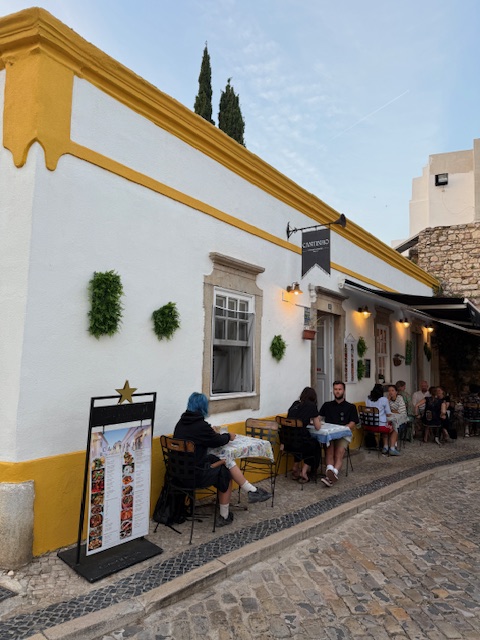
Once my partner and I settled into our gorgeous accommodation, Lemon Tree Stay, a cosy bed and breakfast surrounded by tumbling down structures on all sides, we went to explore. The old town is fortressed by the obligatory ancient stone fortress walls and paved with beautiful mosaics. The paved streets took us away from the decay of the abandoned buildings and I could see Faro had another side. A side where wealthy American and European tourists could dine out and shop at high-end shops. Such contrast.
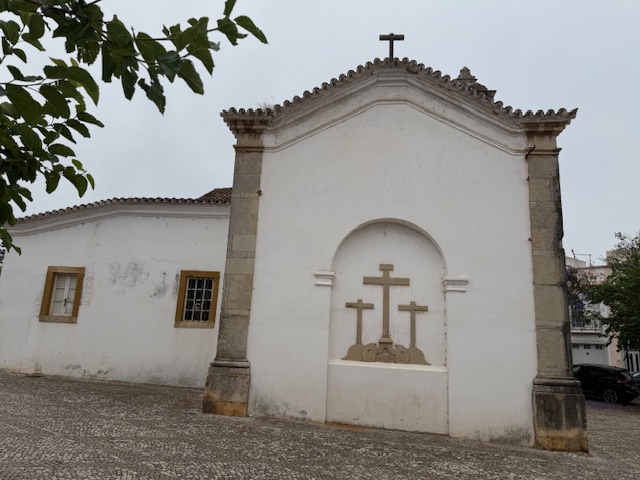
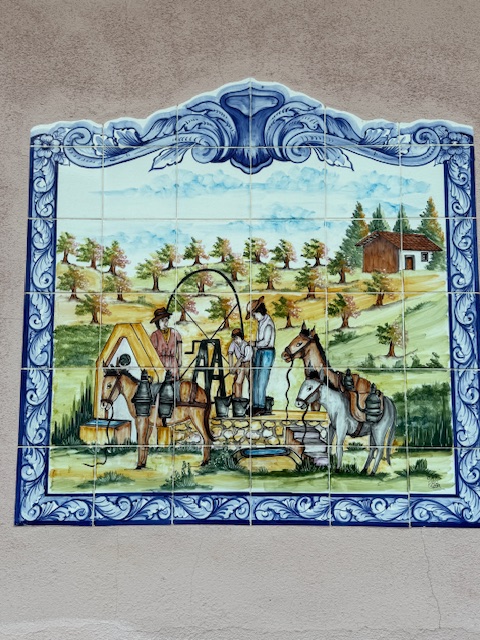
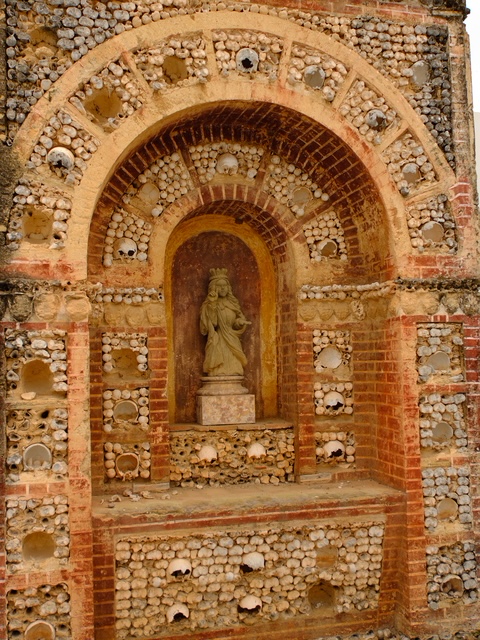
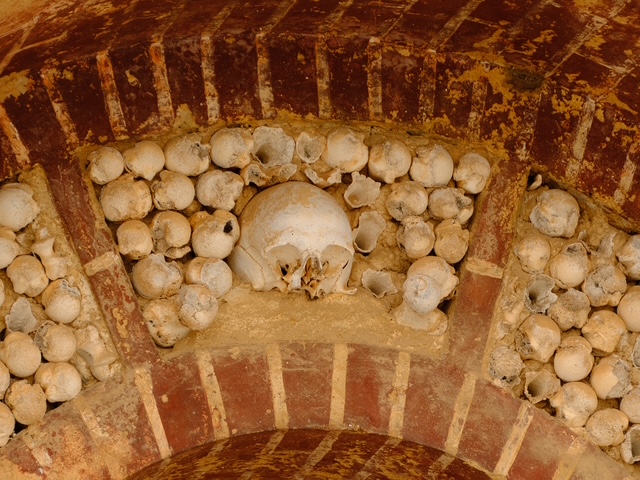
What we discovered over the days we spent in Faro was a town of beauty, history and contrasts catering to a range of tourism styles from the tourist seeking Michelin star restaurants and oysters by the sea, to the tourist seeking small bars and churrascarias (local grill restaurants) and a more authentic experience where locals hang out. It was in the back streets that we eventually discovered the most amazing piri piri chicken. The old buildings and churches including the macabre Capela dos Ossos (Bones Chapel) are worth a look. Most restaurants in this part of the town cater to seafood lovers.
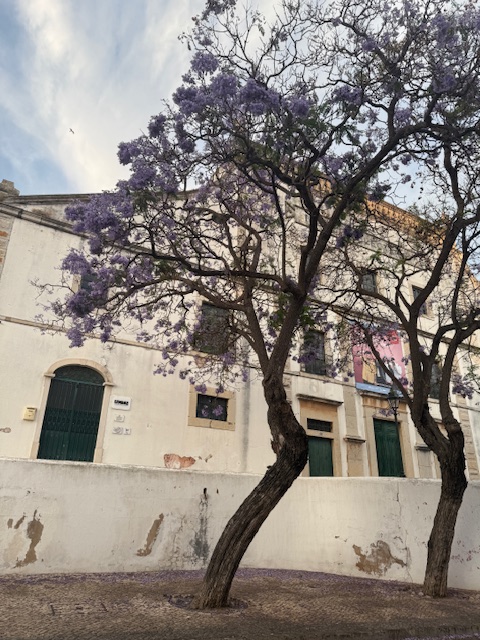
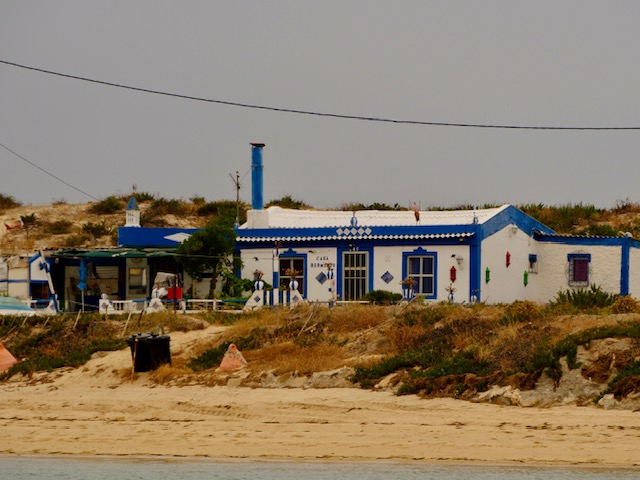
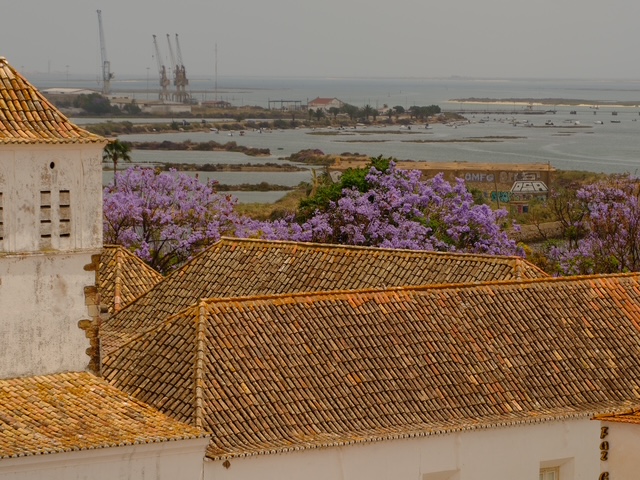
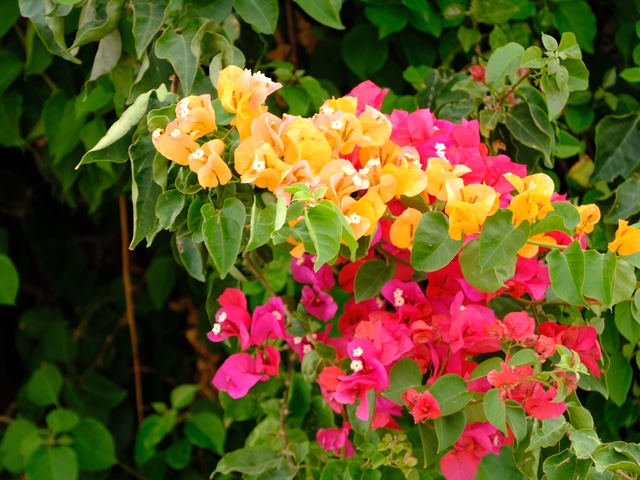
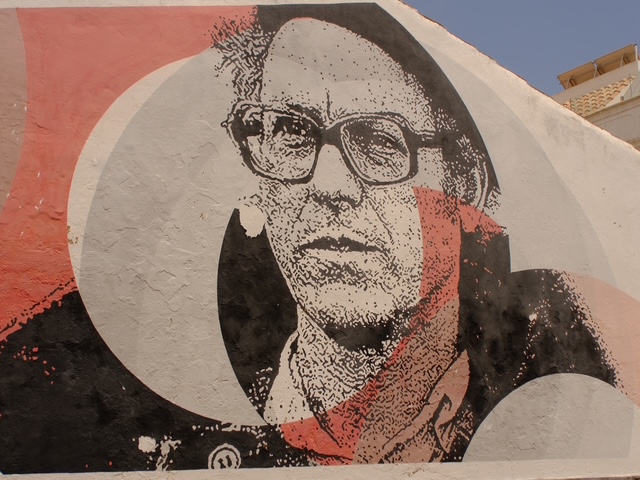
António Ramos Rosa – Faro poetPina Coladas Fishing shack on the beachJacarandas in full bloom
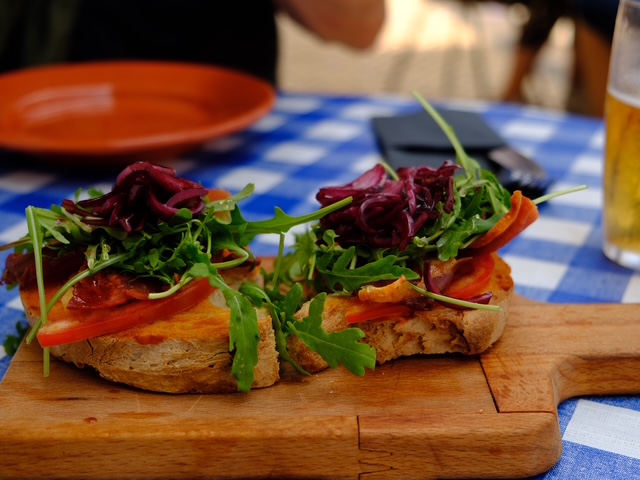
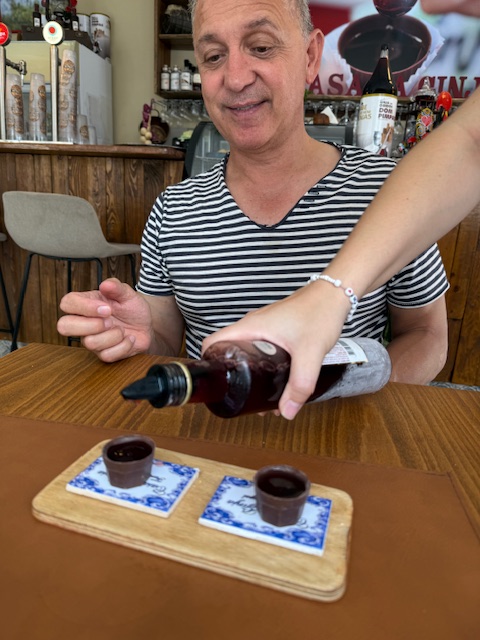
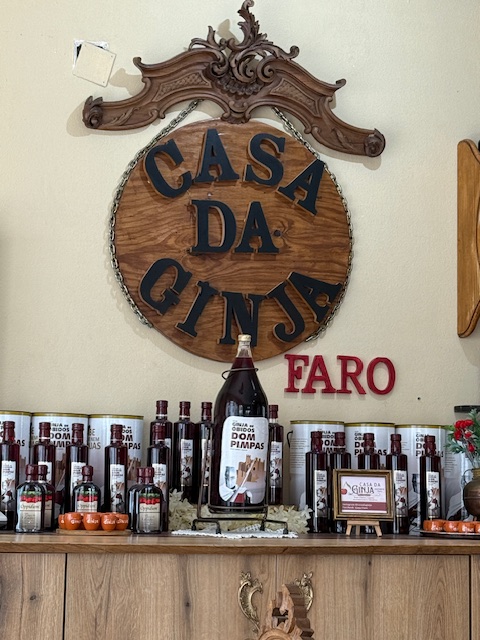
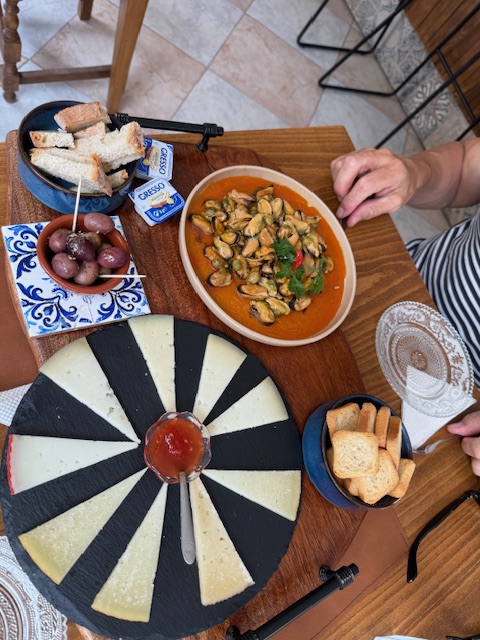
For our first meal, my partner and I found a local bar where we ordered a plate of mussels, cheese and olives. The Casa da Ginja Bar in Faro is the place to try the local cherry liquor, Ginja, a sweet drop served in a small dark chocolate cup to be eaten after you have drained it. So we decided it was mandatory to have one to start with and then one to finish. It certainly put a warm glow on my initial impression of the town.
Cas da Ginja
Following our feast and warmed by the Ginja I canceled the hastily booked train tickets to Lagos, and we decided to give the town a chance and explore as far and as wide as we could. We were not disappointed.
I knew the Ria Formosa Natural Park was right on our doorstop so I booked an eco-tour on a solar powered boat the next day to go birdwatching and get out to the beach which is not immediately accessible to Faro – there was some legwork and a boat ride required to get there. The morning of our boat trip we woke to drizzling rain, not ideal for birdwatching or beach combing, but I was excited to get into nature after spending the last eight days in the big cities of Porto and Lisbon. So, we packed some delicious tuna empanadas from the local supermarket, the obligatory tarts and some drinks for our four hour adventure.
Faro is the site of one of the largest international airports in Portugal so it was not absolutely peaceful out on the water with a constant stream of planes taking off and landing right overhead. I got the feeling our guide was not a fan of the airport traffic but he was being very diplomatic about it. Consequently we got some pretty crazy views of the big metal birds. A great spot for plane spotters!
We were lucky to be only two of three passengers on our eco boat. Us two and a lovely German tourist in Faro for a long weekend. Our knowledgeable guide, a lovely local man who had a passion for birds and the region, kitted us out in life jackets and gave us a set of binoculars before firing up the silent motor. We noted the cloud cover hadn’t cleared, but adventure was afoot and the weather waits for no one!
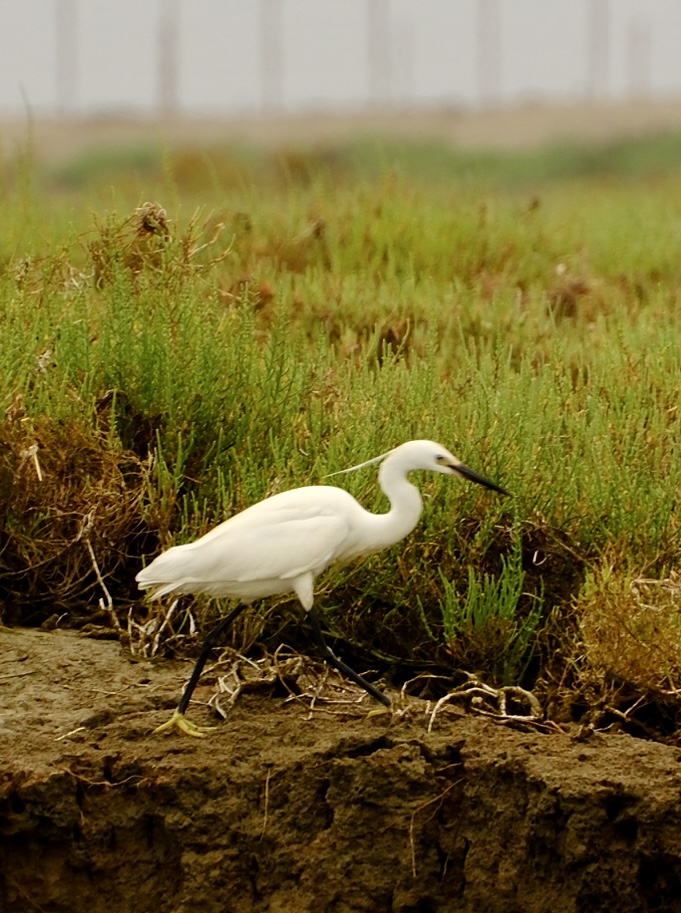
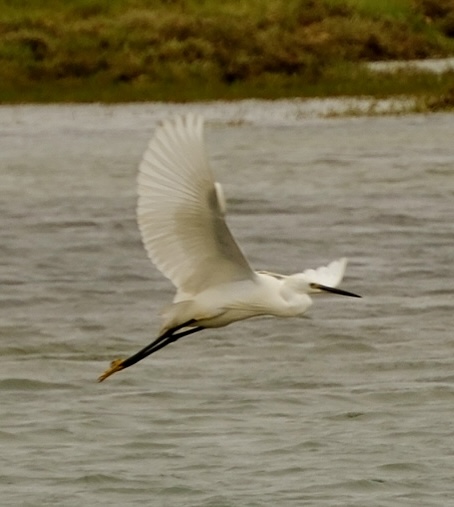
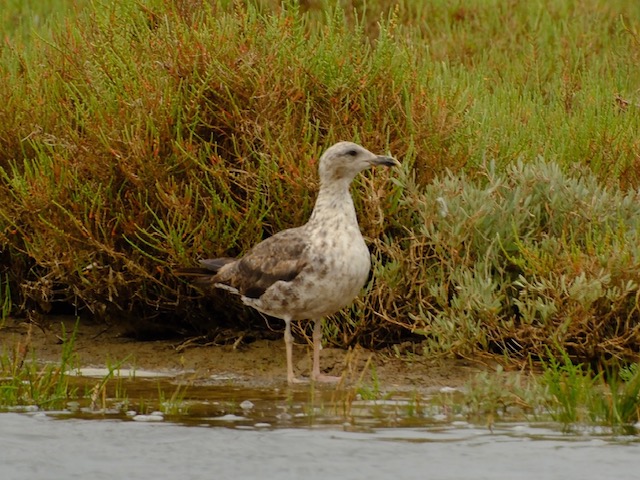
We didn’t have to glide too far before our guide pointed out our first bird, a white heron striding across the flats followed by a gull or two. We zoomed in close to the muddy islands where fiddler crabs waved their white claws at the boat almost like they expected to be rescued. Our guide informed us that locals harvest the claws from these crabs but not to worry because they regenerate! I wondered why the crabs haven’t learned to stop waving their tasty claws around. The Ria Formosa is a salt marsh affected by extreme tides. The hardy salt-tolerant Sarcocornia perennis disappears under water at high tide and emerges again into a soft island-like landscape.
Oyster buoys were scattered throughout the area, but our guide informed us that Portuguese don’t eat oysters as they can’t afford them and the ones we could see were grown by the French for French restaurants and general consumption. “And why are they grown in Portugal and not France?” He asked us. I jokingly replied “because Portuguese water is better” and he nodded his head sagely. But of course.
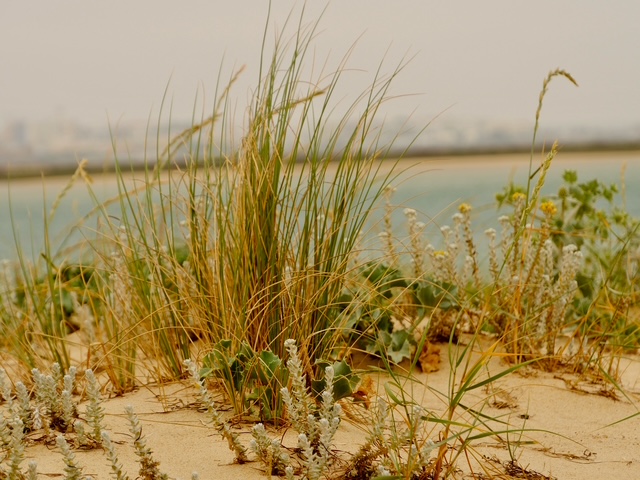
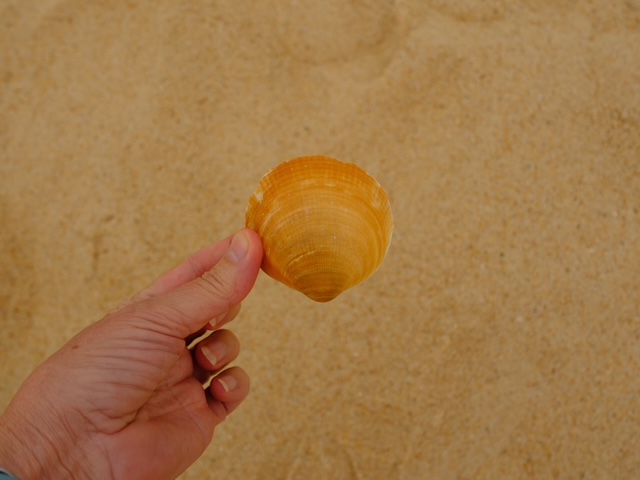
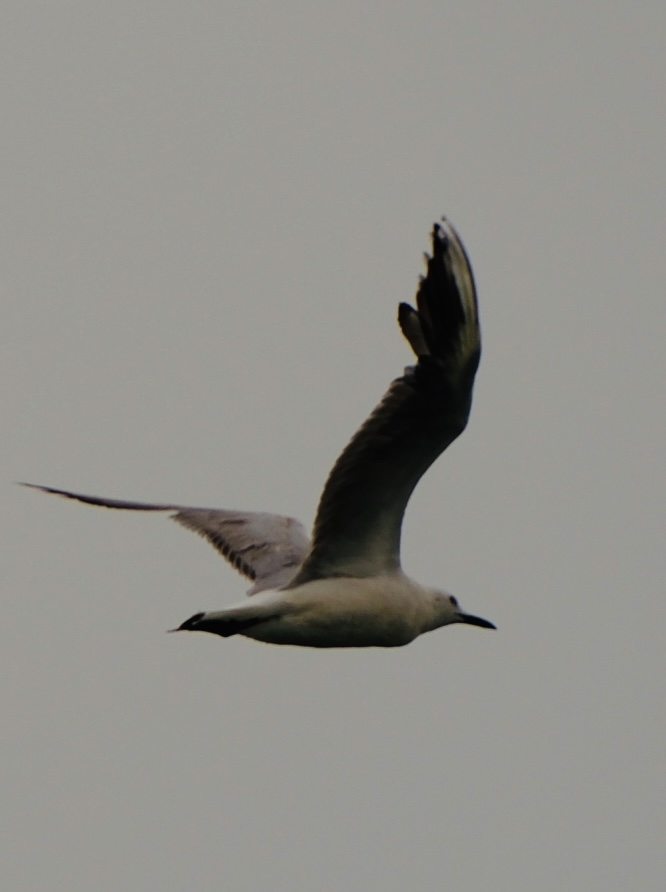
The birds appeared from all angles now. We saw a pair of Shell Ducks with 12 ducklings struggling against the swiftly turning tide; a black beaked gull (our guide was super excited about this one) and some swooping little terns catching fish. As we reached the quiet beach with golden sand and dunes covered in grasses and plants, our guide said he would leave us here for 50 minutes so we could explore and hopefully see nesting terns. He warned us to stay well back from nesting birds. The water was cold as we stepped off and despite my resolve to swim in the vast North Atlantic Ocean, I settled for cool toes and the soothing feel of course sand beneath my feet.
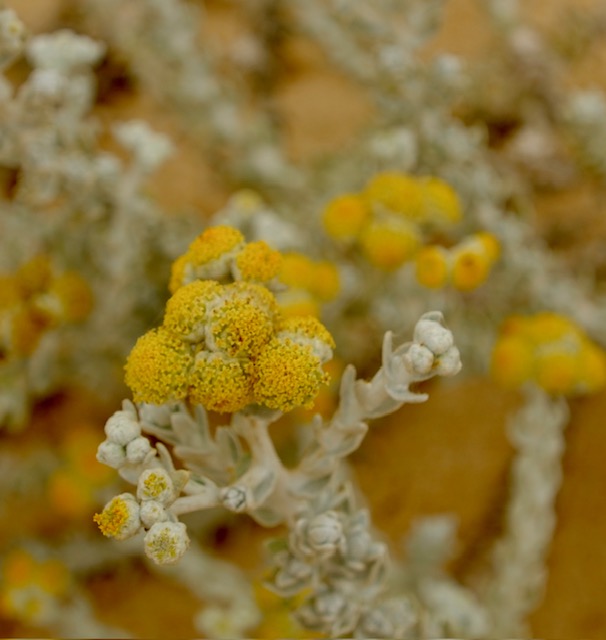
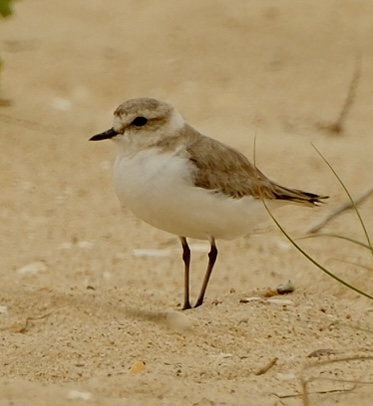
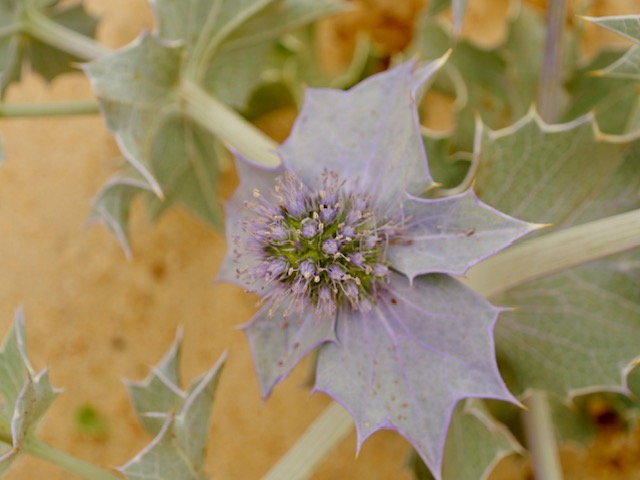
As a beach lover, this part of the trip really floated my boat. I am always happy with the wind in my hair and the sand underfoot. We found the nesting terns and viewed them from a distance as they wheeled and swooped. I stopped and took photos of the unusual dune plants before we turned to make our way back to the boat. Just before we got back to our craft, I sighted a small Kentish plover on the dunes and quickly snapped some shots. Our guide who had stayed back to have his lunch was impressed that we had found another species without his local knowledge.
The return trip was very different. By this stage, the tide had turned and all the green ‘islands’ we wove through on our way out had disappeared under water. So too the unsightly plastic oyster buoys. The current pulled us back to shore as our guide continued to point out species of birds. He informed us we wouldn’t be able to disembark in the same spot we boarded because the bridge we came under was now too low for our boat to pass. So we headed back to a jetty on the outside of the mariner.
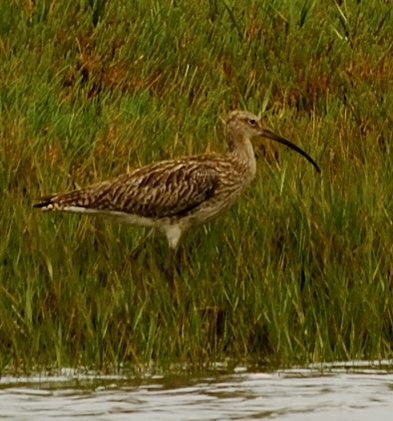
Before we disembarked, our guide informed us that despite the cloud cover, we had exceeded expectations and had a very good day of bird spotting with 16 species seen in all. I was happy with the morning’s bird sightings because as all birdwatchers know, sometimes you see many birds, sometimes you see none. My only regret was not seeing the flamingos that live a little further around the coast. It looks like I may just have to return.
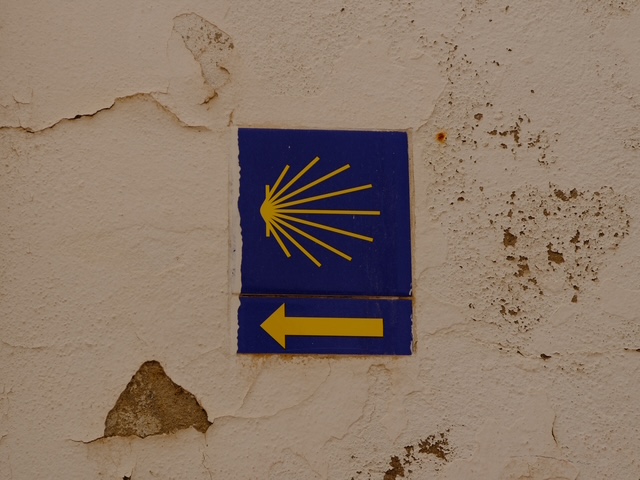
Camino signs are everywhere
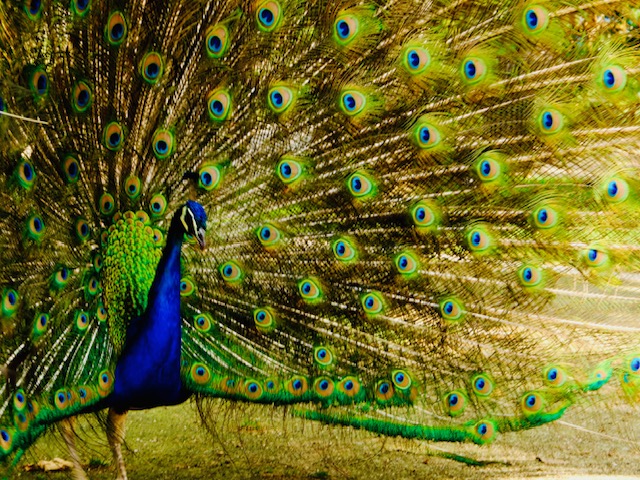
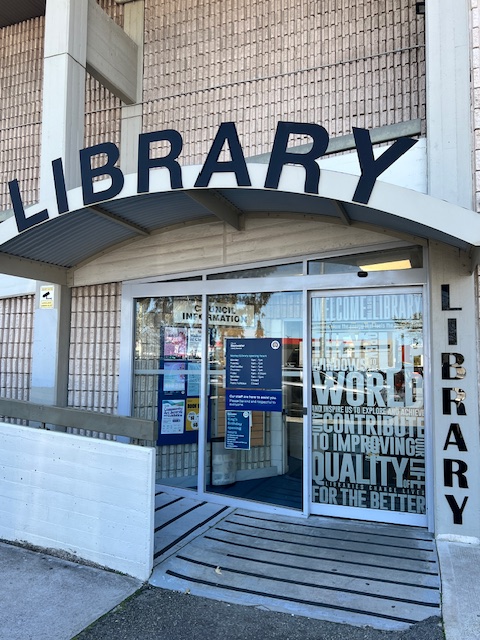
We spent the rest of the day exploring the parts of Faro we had not yet explored. We found a big park with some exhibitionist peacocks all vying for some disinterested female peahen’s attention. We were impressed though. We also visited the local library where famous Faro poet, António Ramos Rosa (1924 – 2013) is featured in a small exhibition of his works and a mural of his face. He was very much a revolutionary who was once arrested for his beliefs and the part he played in the forming of the movement Movimento de Unidade Democrática.
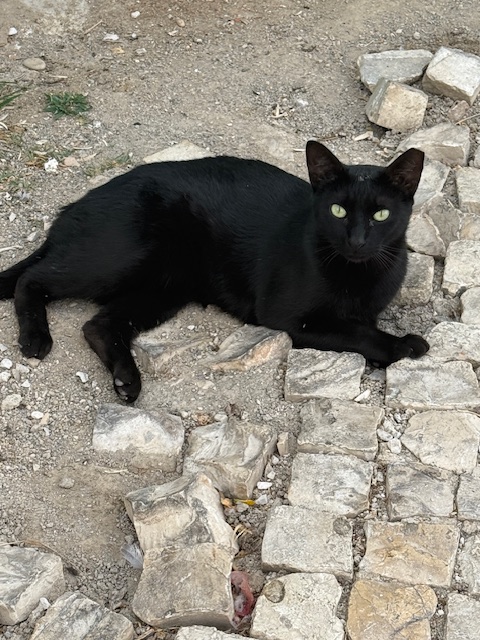
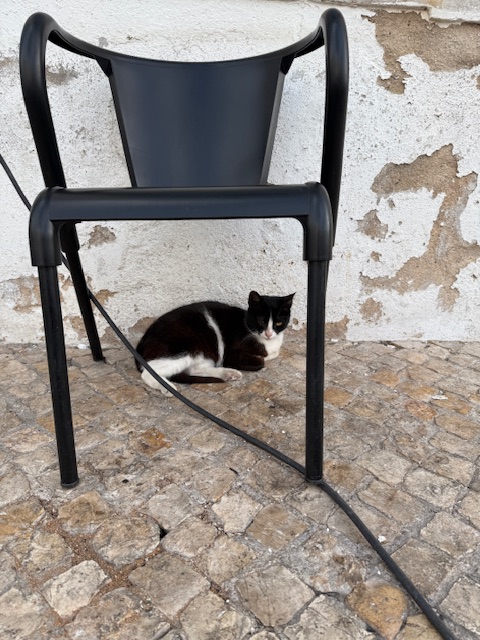
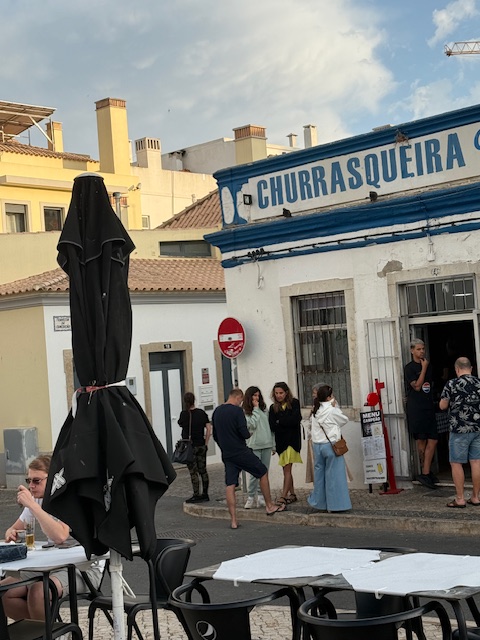
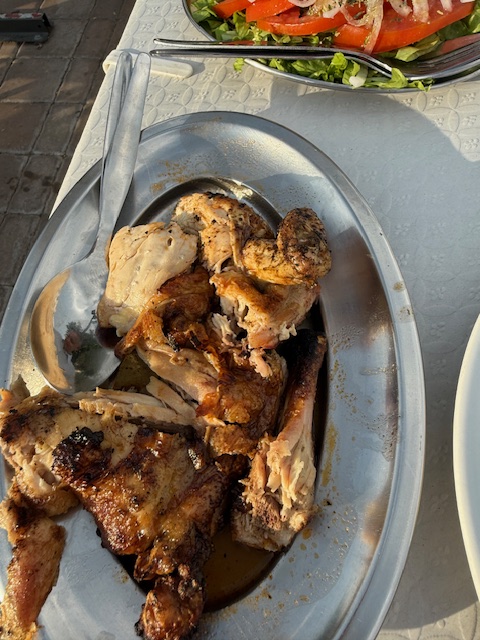
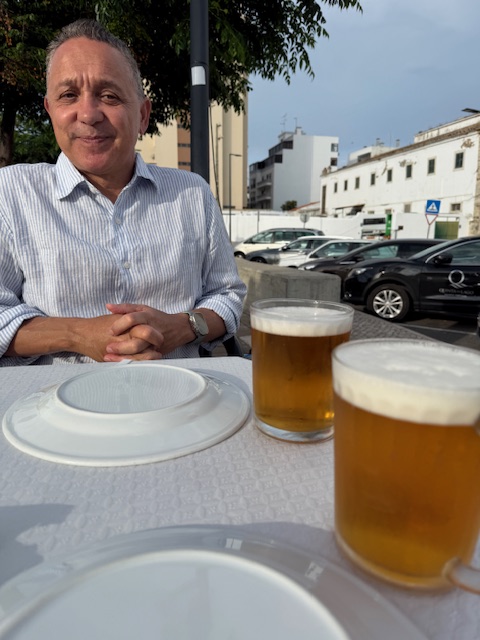
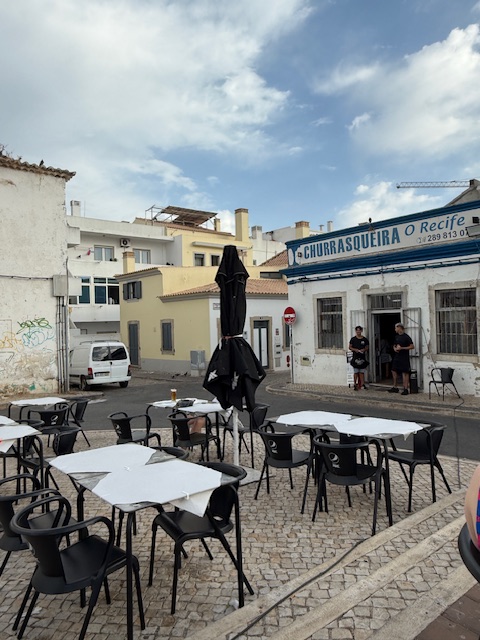
Later that evening we went off in search of piri piri chicken, a dish that tourism guides had informed us was a speciality in this region. We left the paved streets of the ‘old town’ and set forth into the back streets to find a grill restaurant. Turns out we didn’t have to stray far and our noses were correct in picking up the delicious smell of grilled chicken at the popular Churrasqueira O Recife. We had a meal like no other – two generous serves of spicy chicken with fresh salad and fries, all washed down with a huge mug of beer. The constant stream of people including the local cops who came to pick up takeaway and dine at the grill, along with the local cats and pigeons kept us entertained.
Piri piri chicken
When we left Faro the following morning to go Entroncamento via Lisbon, before we headed back over the border into Spain, we were sad to leave because despite first impressions this town had grown on us and I will ever remember it as Faro-dise!
Living on the lighthouses was sort of like that TV show, ‘Round the Twist’ in more ways than you think!
Forty South Tasmania
When I finished my 3-day Three Capes Track hiking experience earlier this year I realised after pitching to many publications that I probably needed to tell this story in the land it was set. So the lovely people at Forty South Magazine, a magazine I have long admired and read, took me up on my offer of tourism travel blog with a side of memoir. Enjoy 🙂
I haven’t visited Melbourne since before covid. Last week I spent three nights in Melbourne town. This is just one of those three days.
I woke to daylight at 6:48 am but realised it’s 3:48 Perth time and probably the usual time I wake and can’t get back to sleep anyway! Can’t sleep anymore but know from the gritty feeling behind my lids that I have a sleep deficit.
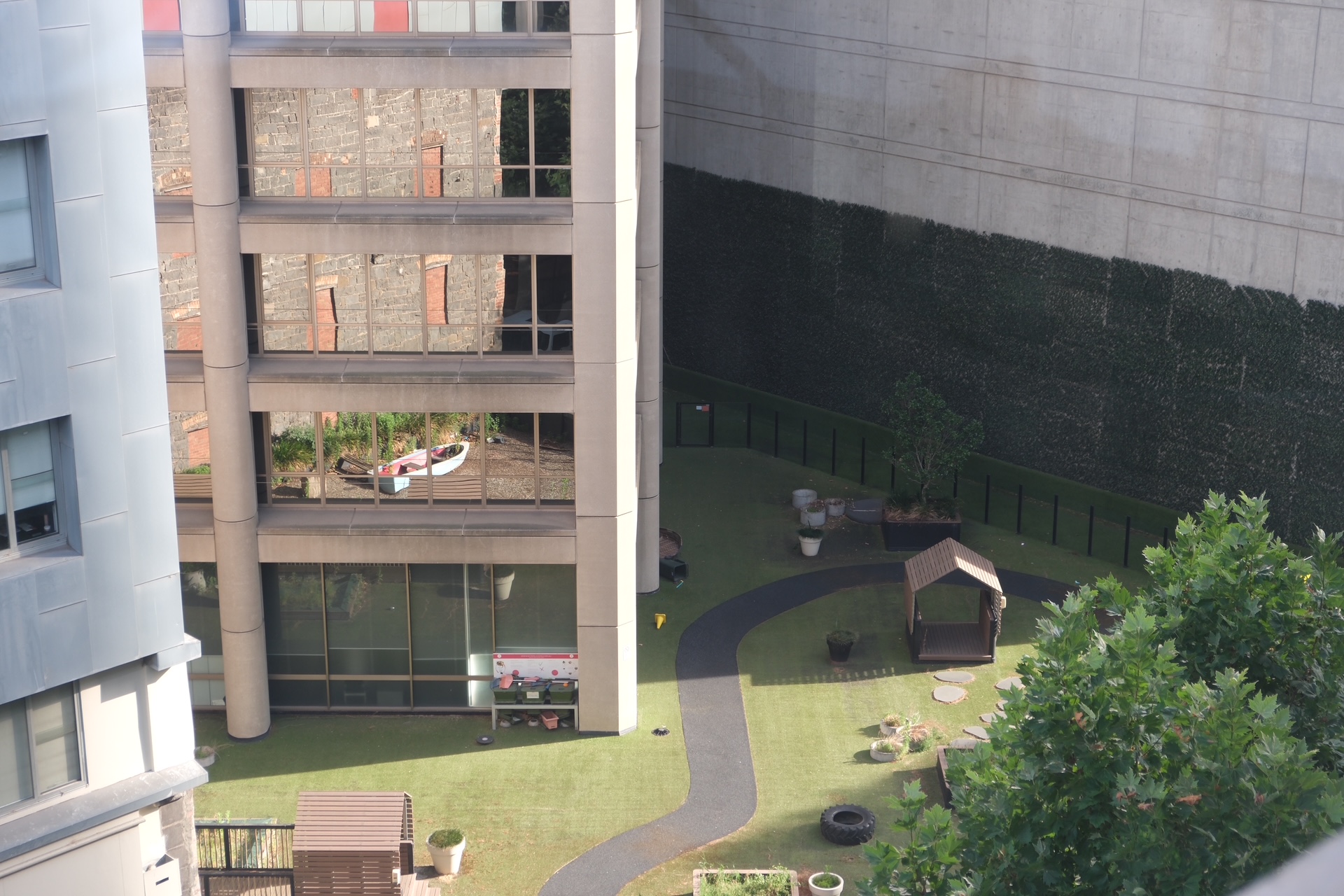
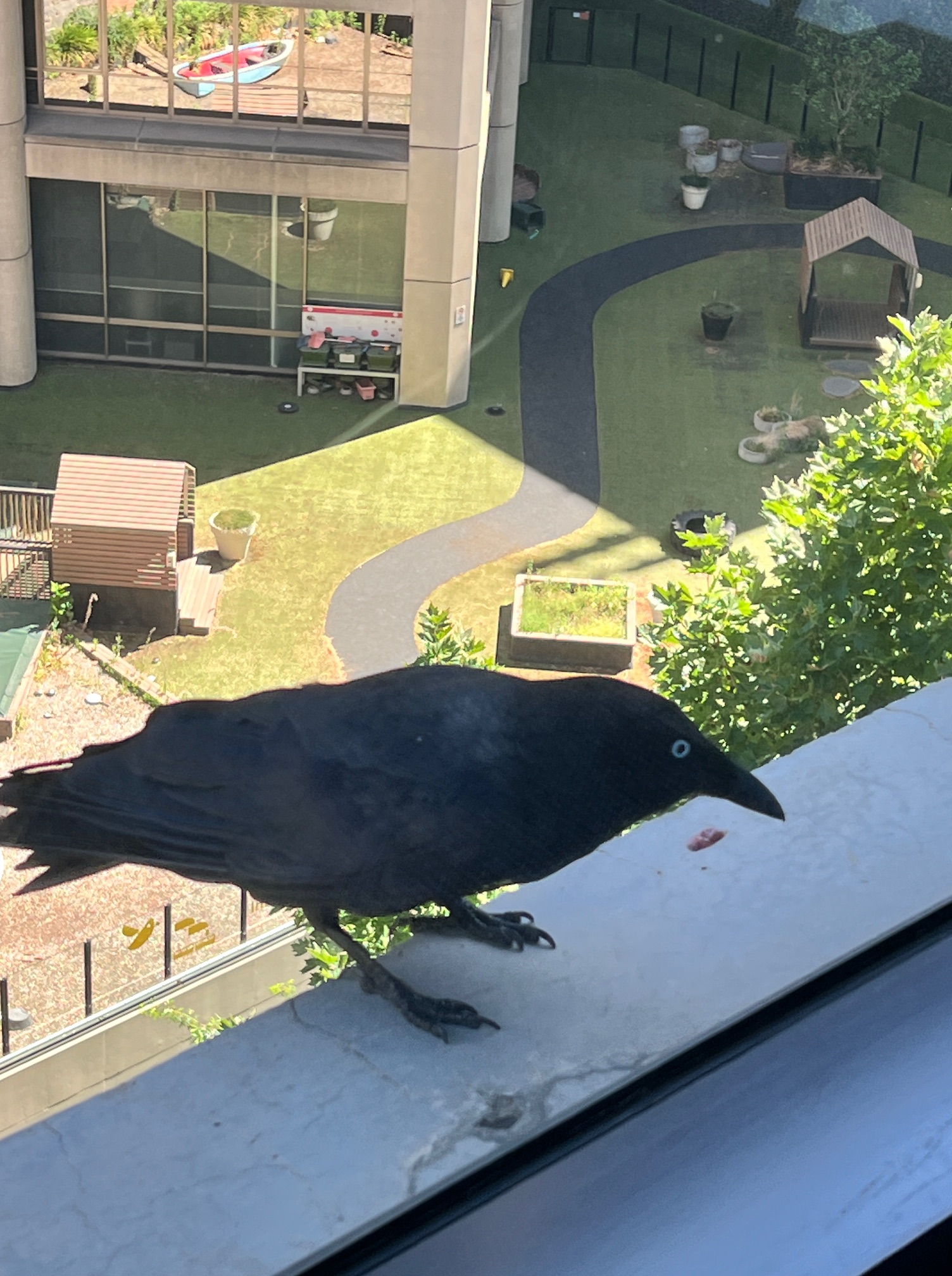
I raise the hotel room curtain to grey skies and unruly corvids prowling window ledges eight stories up. Below is a playground, but not far below – a childcare centre, a school? Five stories up – fake lawn, a sand pit and a bitumen bike track for toddlers. Rooftop recreation in the CBD.
People stir in the building adjacent – accommodation of some sort, old school box airconditioning jammed into window frames. A building that defies logic looms above – S Shaped glass construction. People on their way to work/breakfast stroll the street below.
We sit above the tops of London Plane Trees stretching to reach the light between narrow passages in this concrete jungle. The ubiquitous pigeons swoop and land, experts in city navigation and finding scraps.
I head out for a walk, leaving my partner softly snoring. A sign shouts ‘Best Steak Sandwich in Melbourne’ and workers in high-vis sip coffee from takeaway cups and scoff toasties chatting about Netflix and the night before.
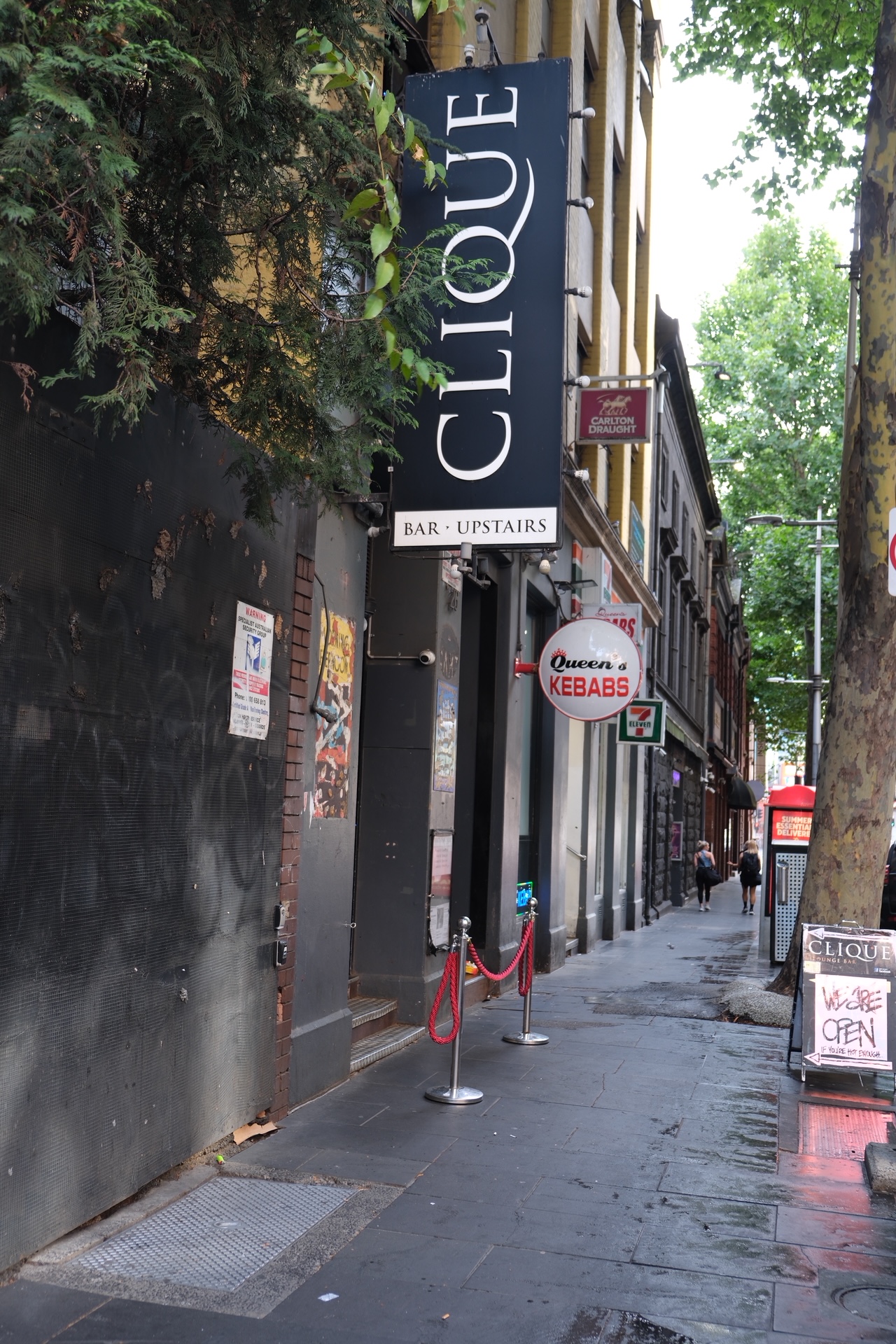
Clique nightclub is still open and it’s now 7:30 am. Punters tumble out into the bright light drunken and dazed.
The bouncer gives me a resigned look as he clips the red velvet rope back into place after searching someone who wants to enter. Concealed weapons? I love that a red velvet rope has so much power.
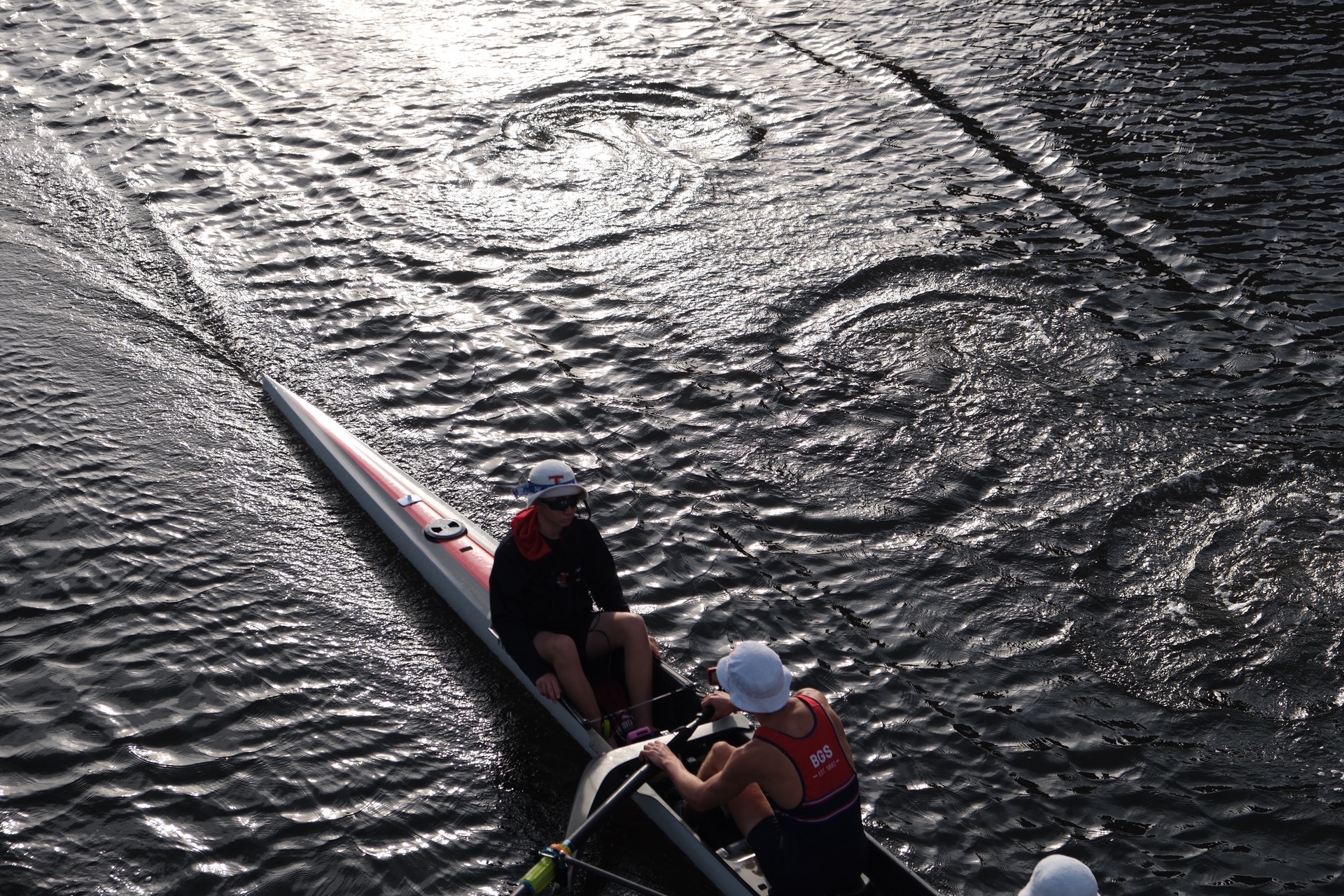
The streets are mostly empty but for some joggers and young families with early rising children. Rowers in an eight glide across the Yarra leaving swirls where their oars have swept through the water. Street sweepers sweep streets after last night’s Christmas crowd at the Crown. Rough sleepers still asleep on benches and the hard ground.
The 24/7 gym on the river front looks sleepy – no one working out this morning. Birds flit in and around urban parks and gardens seeking insects and croissant crumbs in equal measure. The sun catches windows and highlights street signs as the city wakes. Has it even been to sleep?
Later…
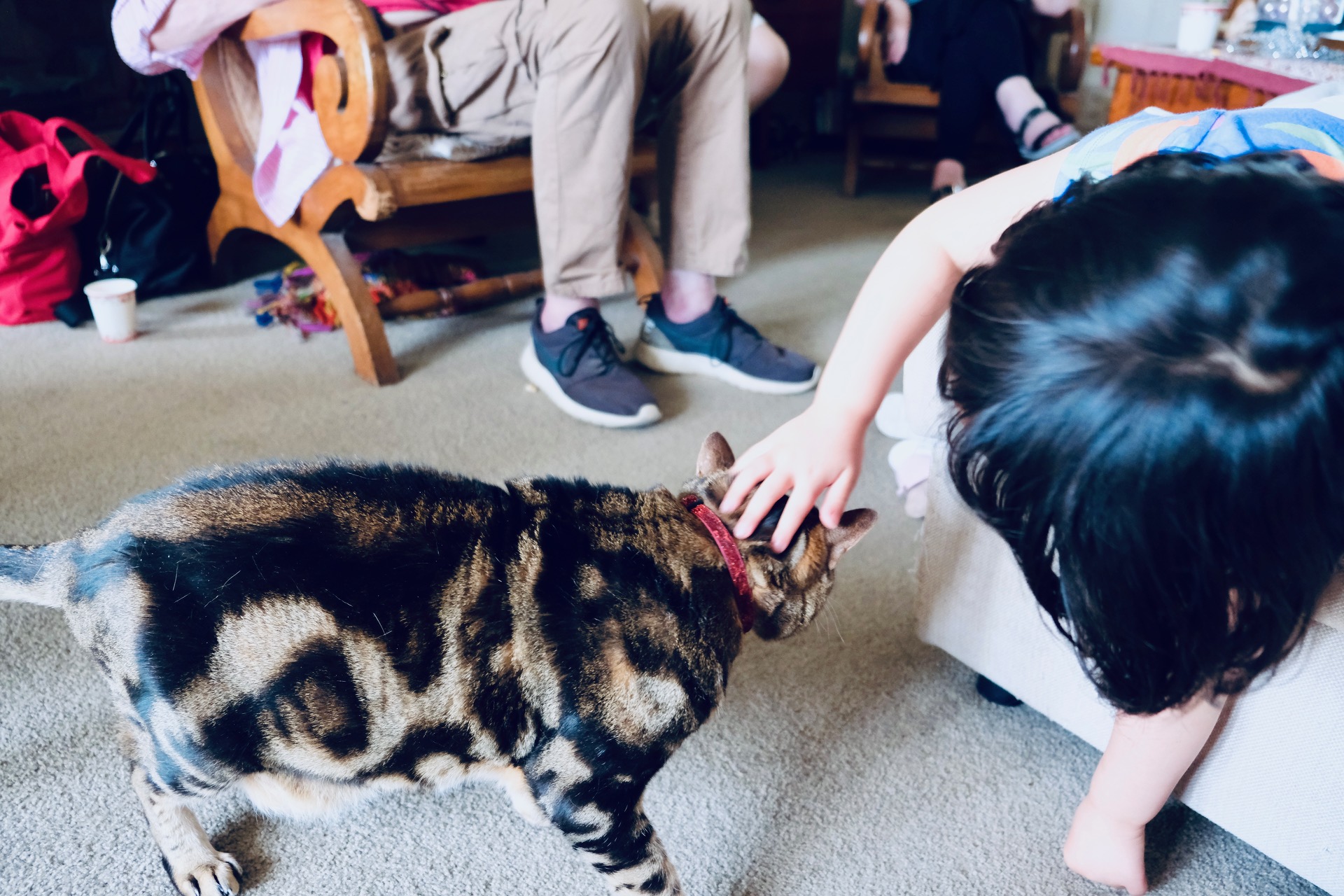
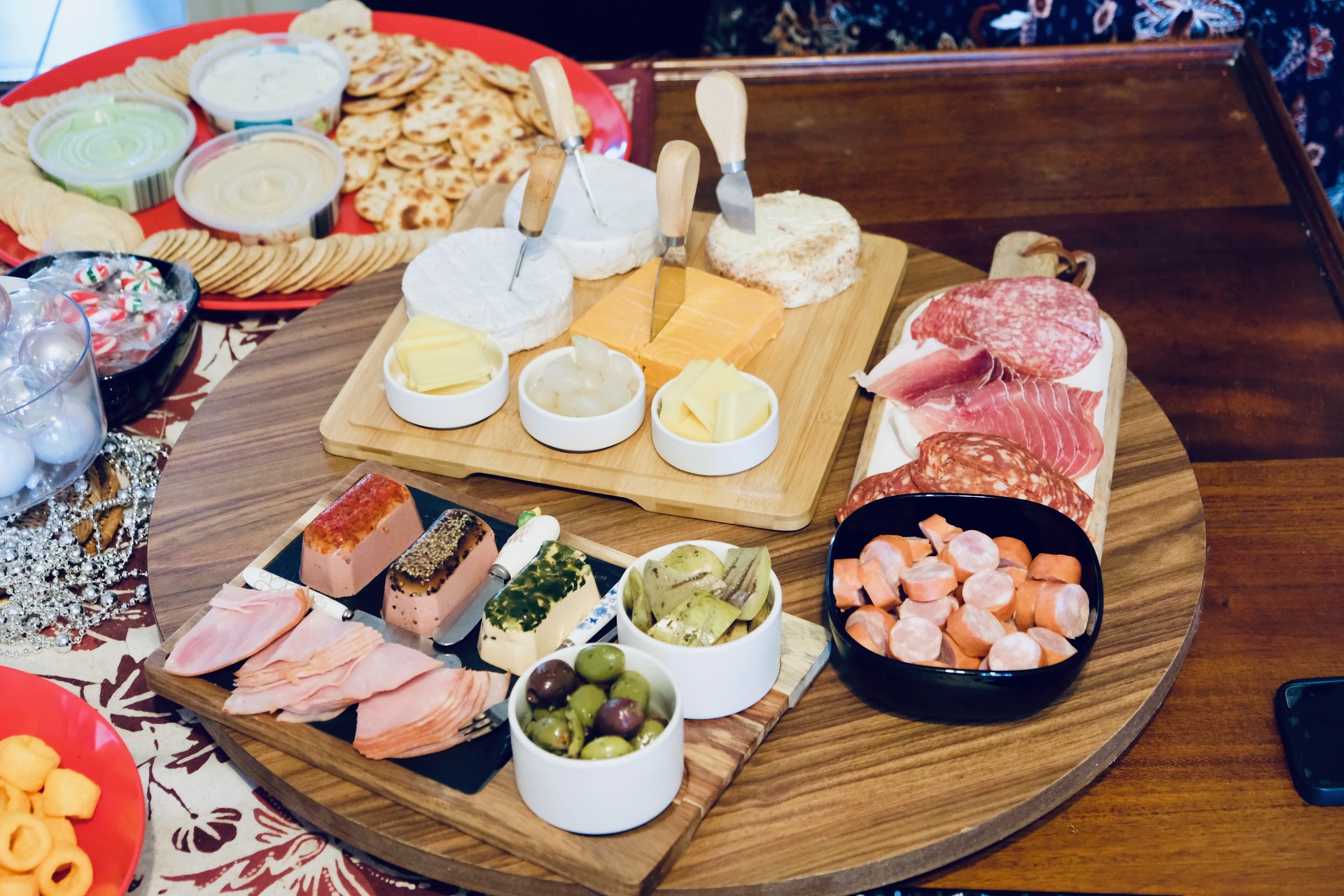
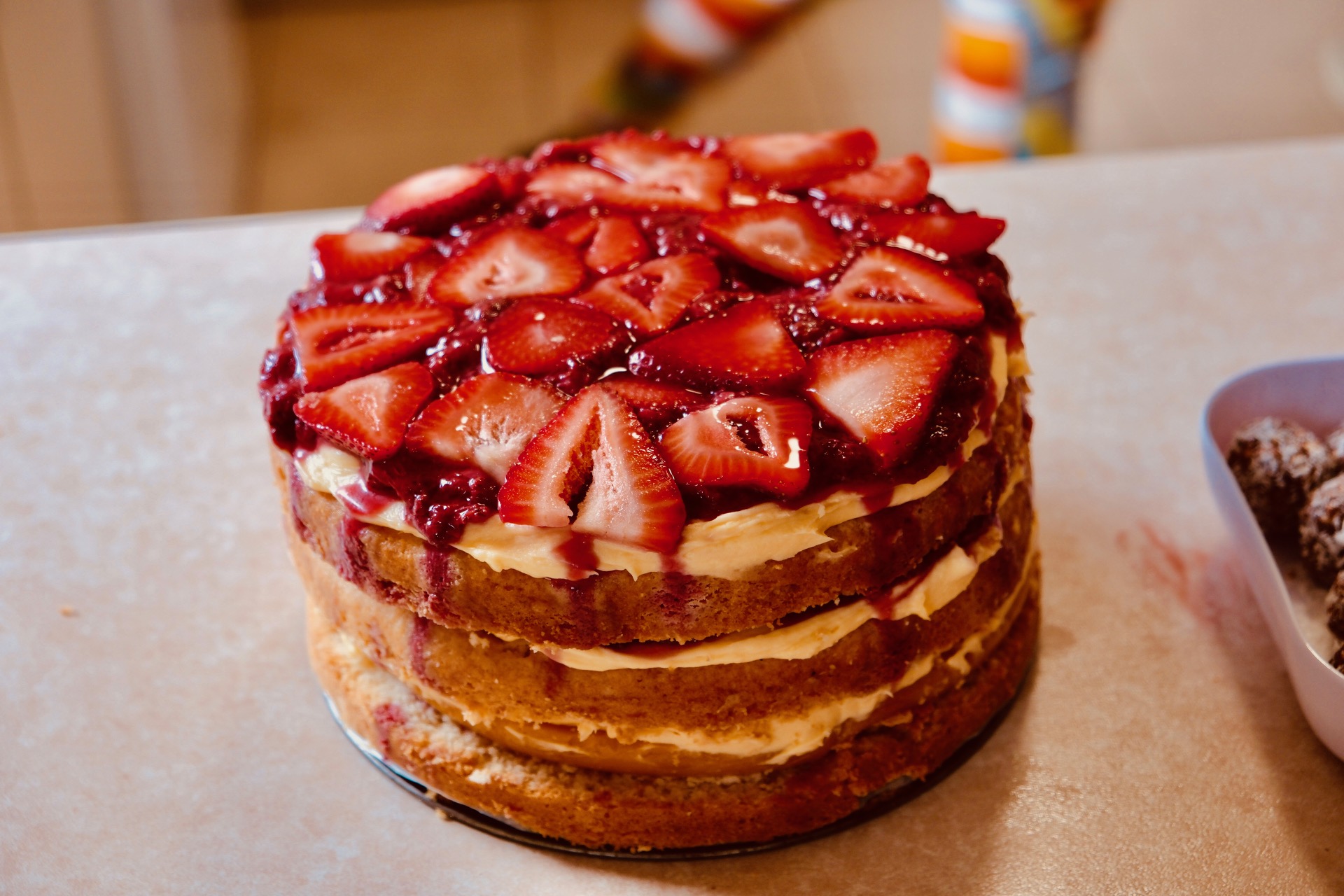
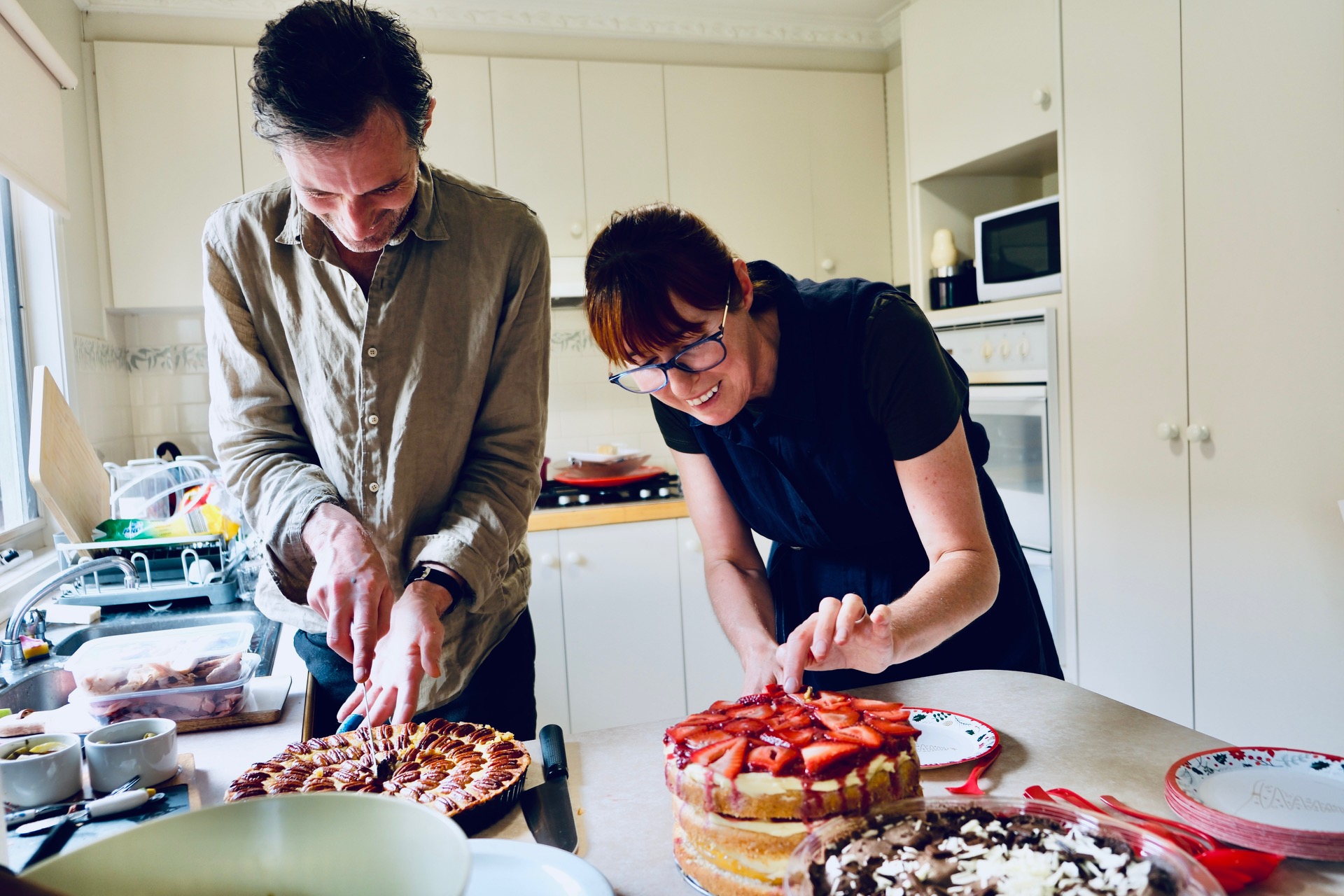
Family get together – early Christmas lunch/birthday celebrations. A Christmas spread washed down with prosecco and homemade cakes. Eat fit to bursting and relax on recliners catching up with my expanded family, while the Bengal cat darts between furnishings avoiding the sticky hands of a 4 year old.
Later still…
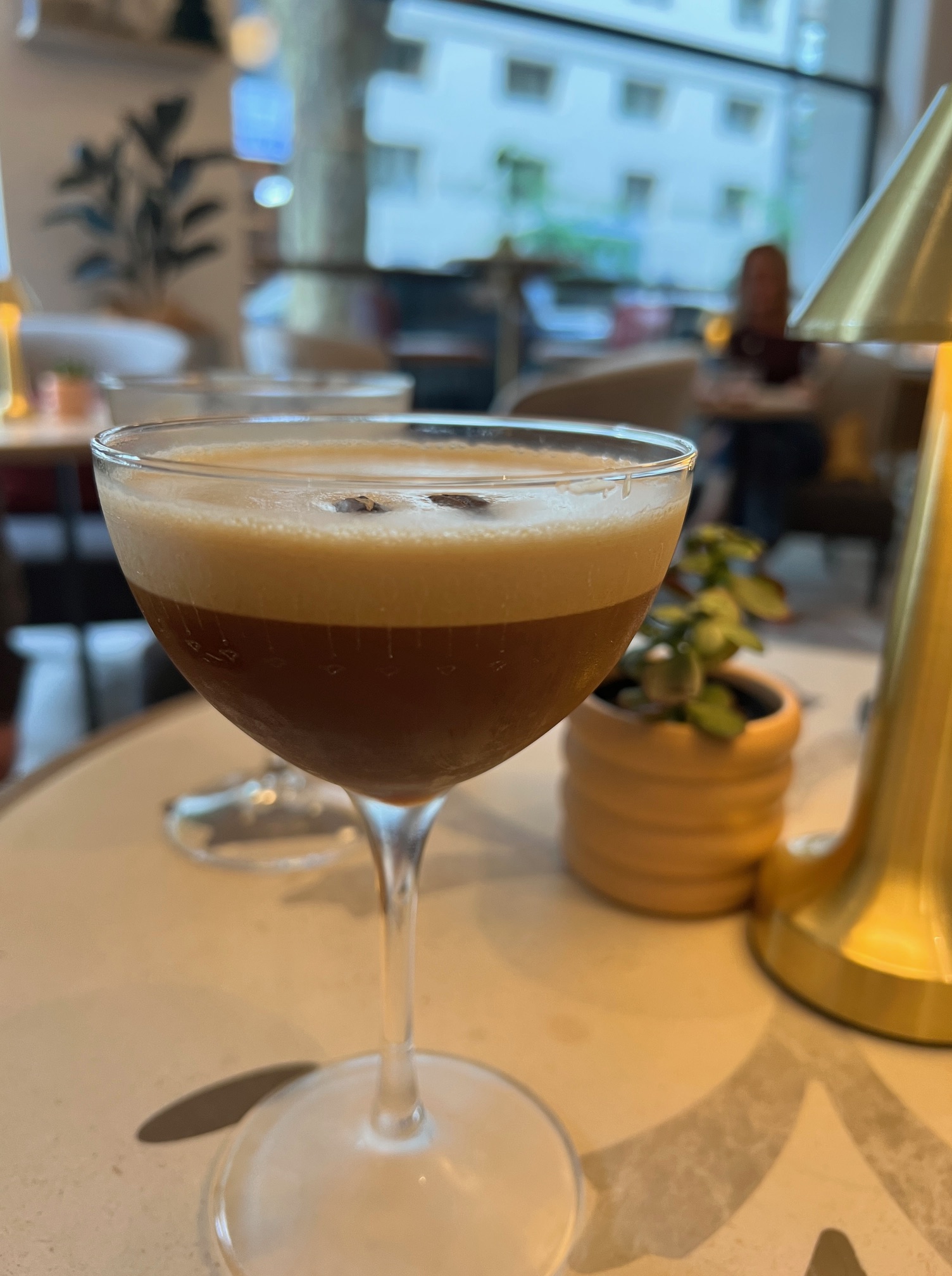
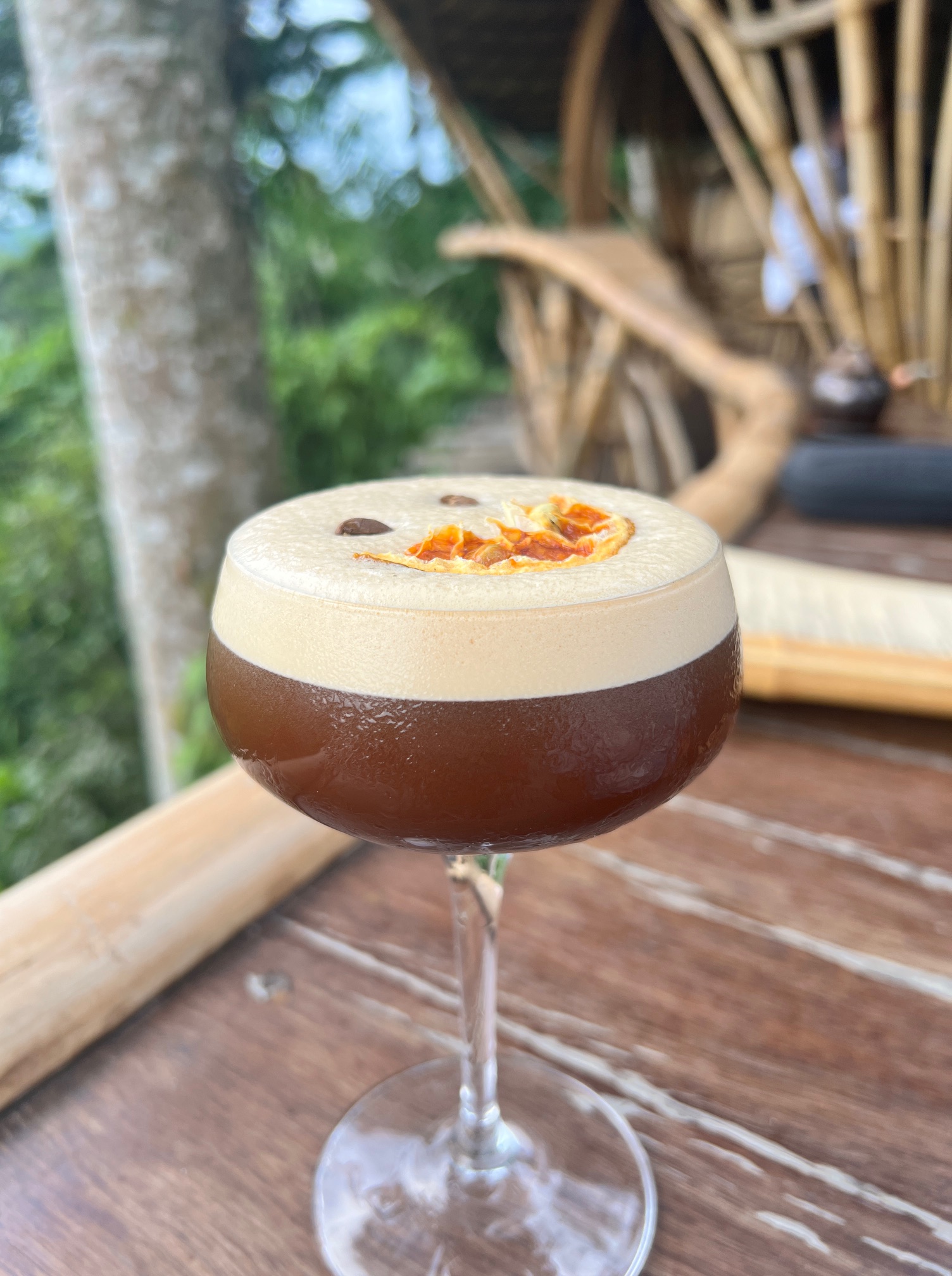
Plans to head into the night and find some music. Live music, beers and dancing is on the agenda. An espresso martini is agreed upon as a necessary plan of action to combat the food coma.
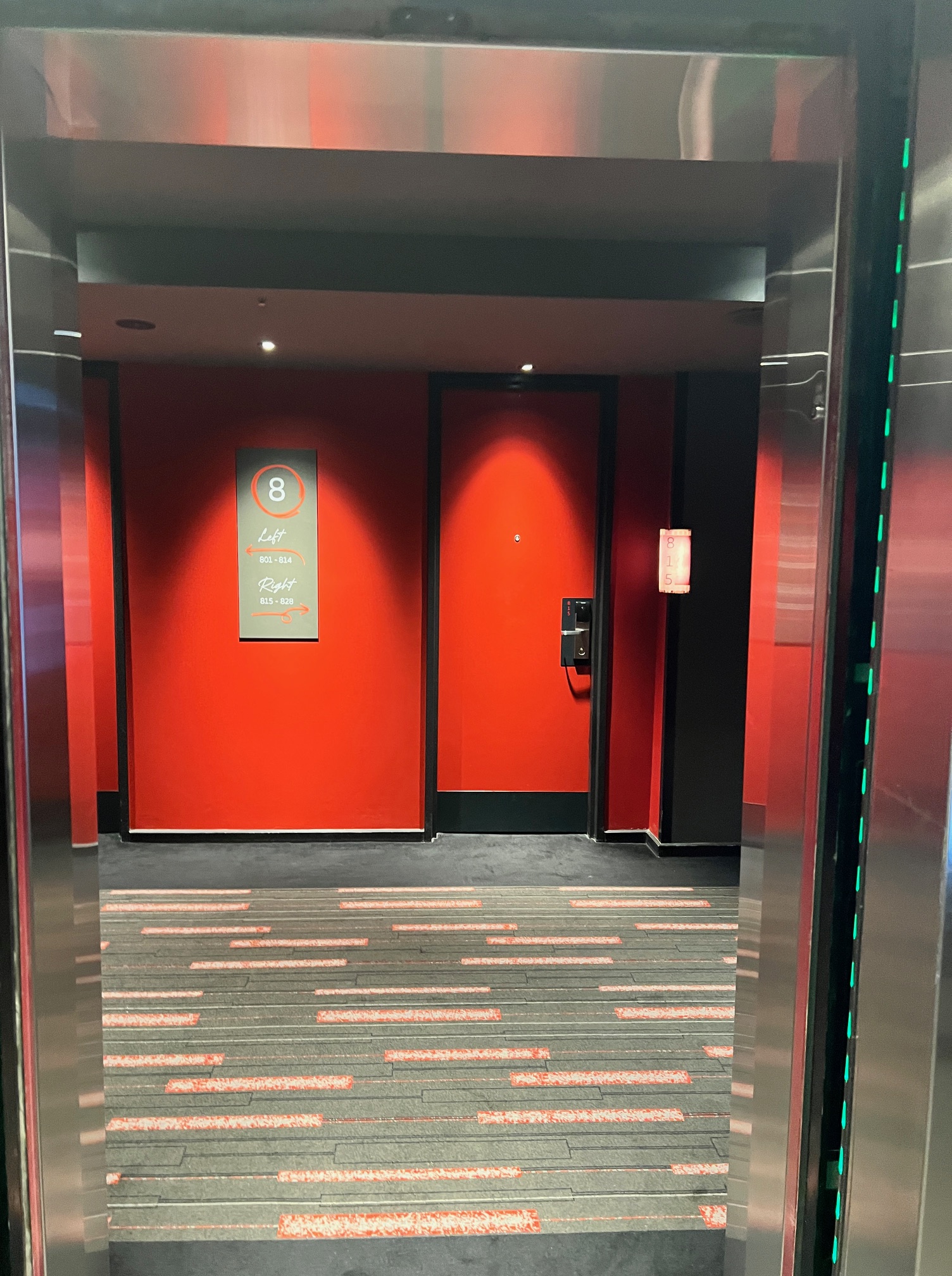
A long tram ride through affluent Melbourne suburbia into the city for a quick change in our Stanley Kubrick inspired hotel – red corridors and doors seemingly streaked with blood. On closer examination I think it is supposed to be theatre curtains – badly drawn in both senses of the word.
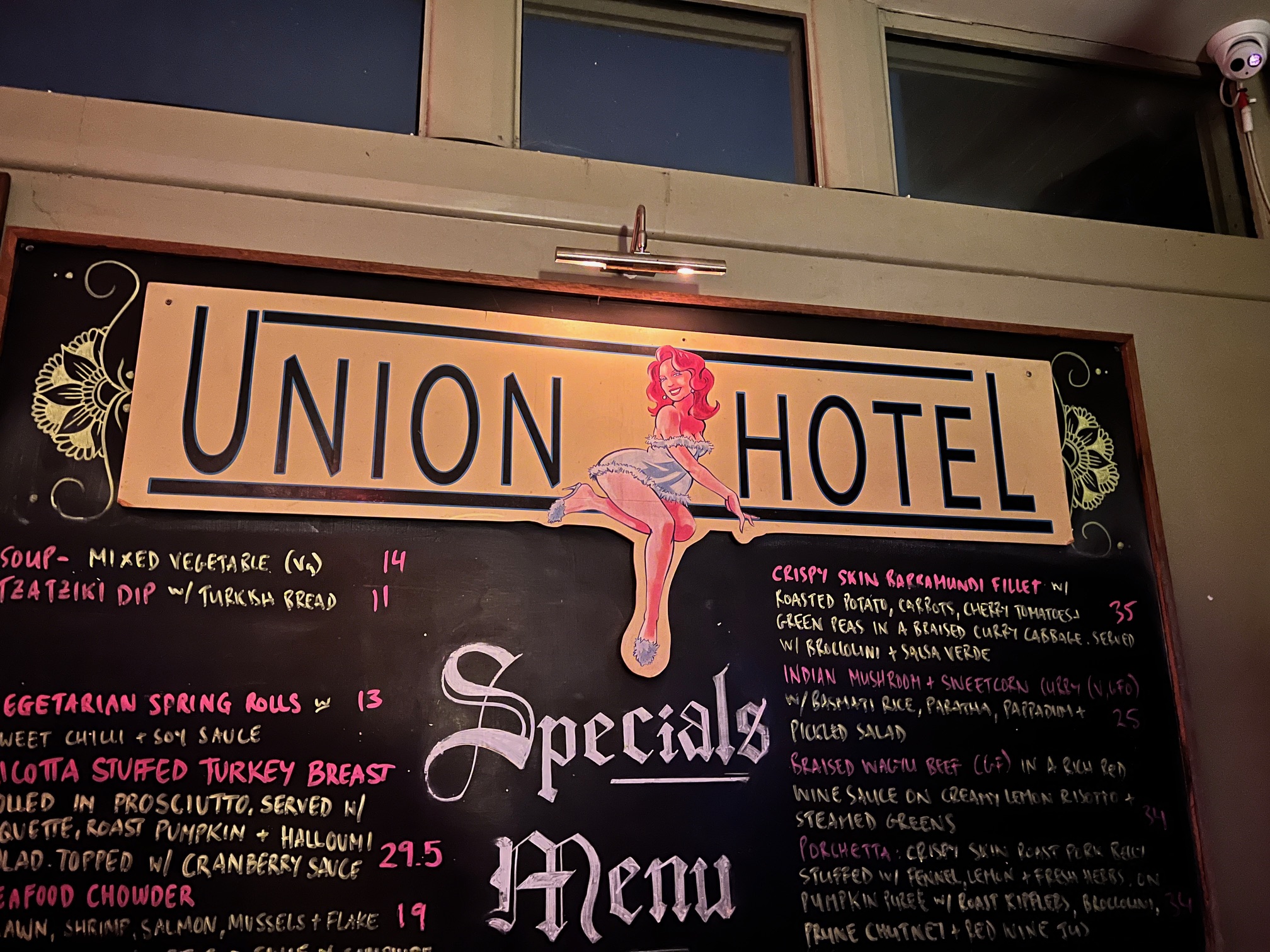
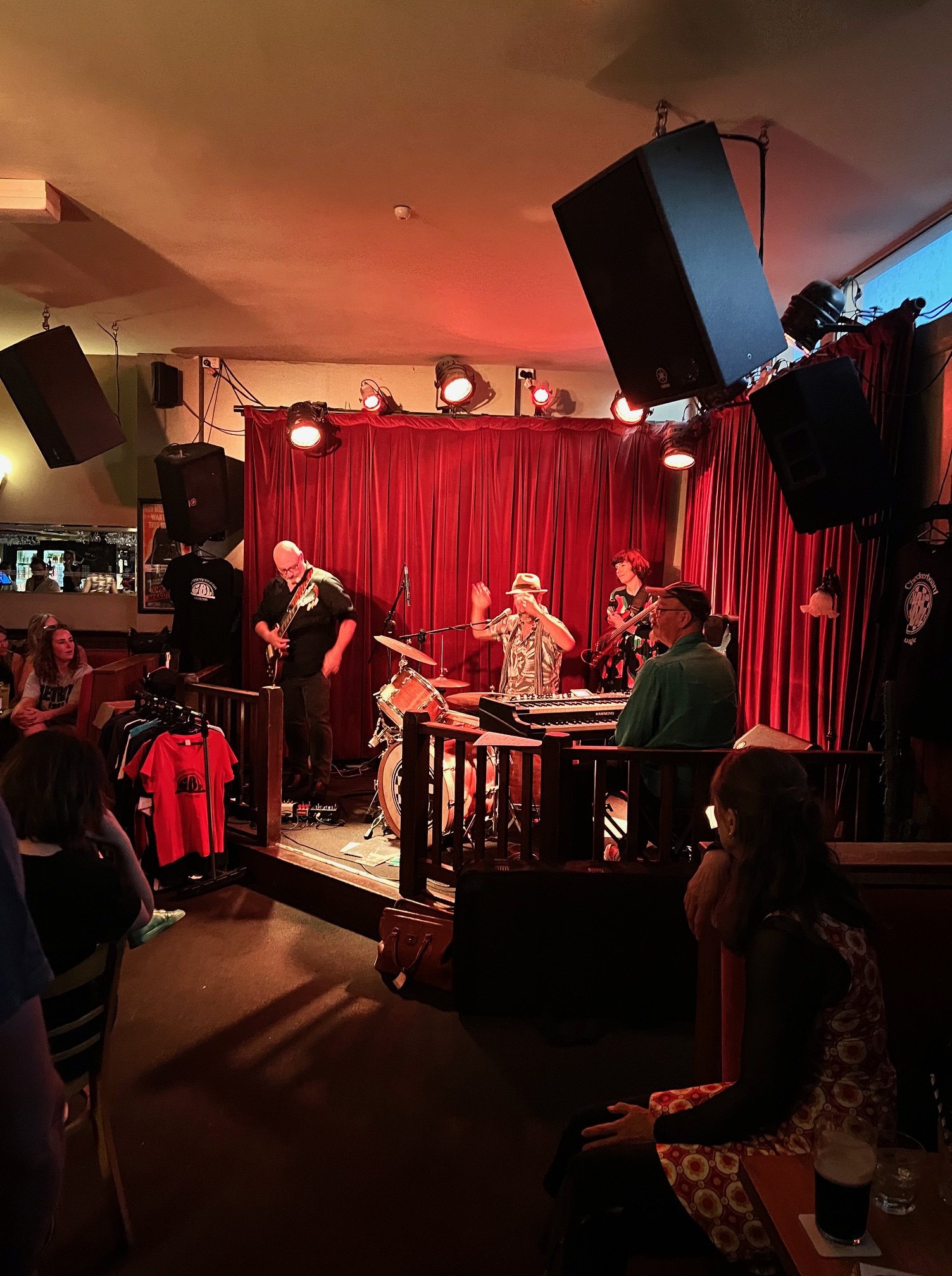
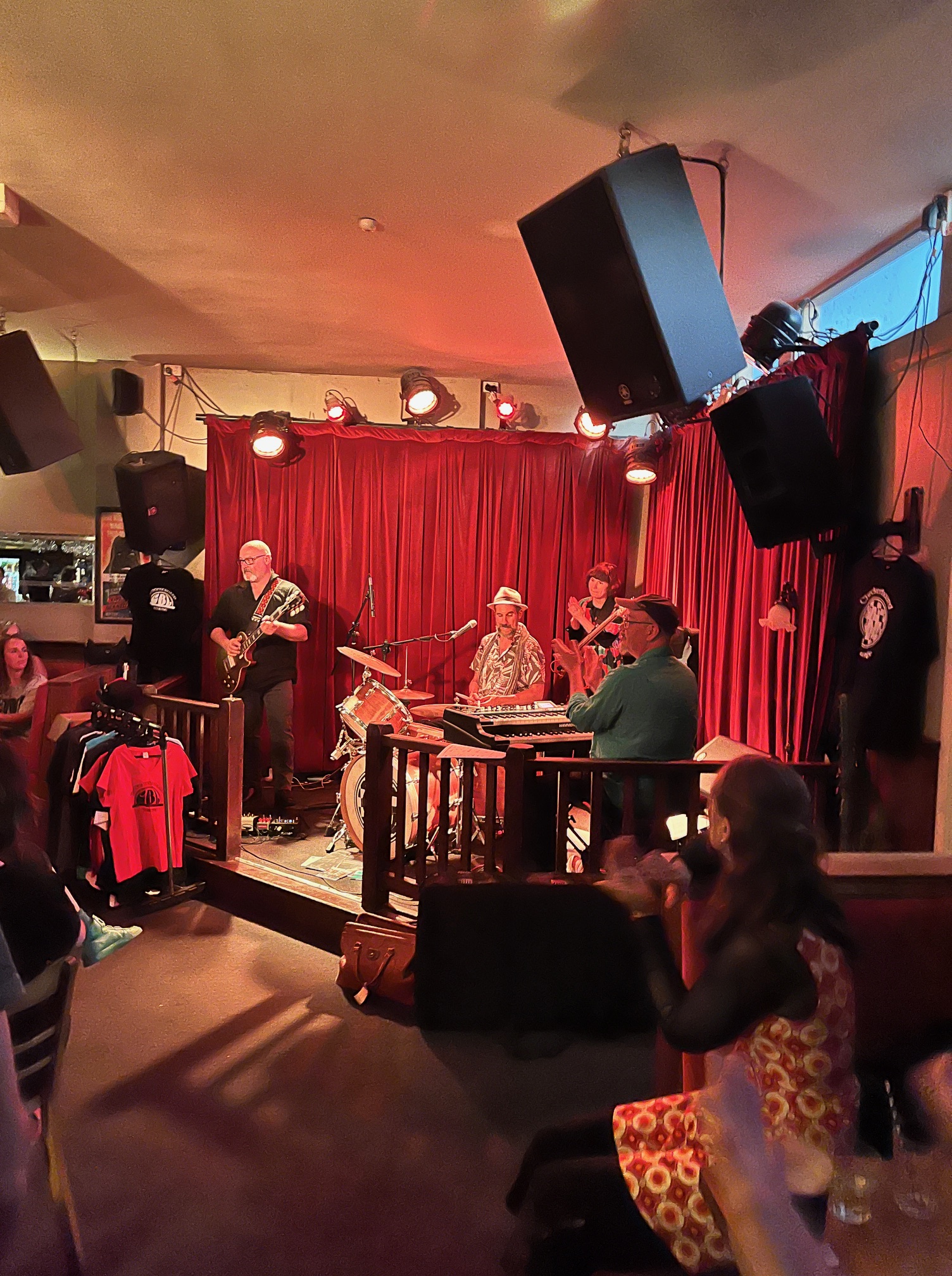
Train to Brunswick following hasty espresso martini in the hotel lobby. The Union Hotel is an old-school inner city pub that still has live music – free entry. People spill onto the street and the waft of beer and hot chips escapes from the door. Dark inside even though it’s still daylight (saving) outside. We find a large square table in the lounge.
Checkerboard Lounge is setting up on the small stage, drum kit, Hammond Organ and steel guitar. Bass is yet to arrive. We order our first round of pots of beer, cold and frothy. A bowl of chips and zucchini fritters – though god knows we don’t need food!
The band sound checks, clattering drums and guitar riffs, silencing the 80s soundtrack playing in the background. ‘Twang’ – take that Hall and Oats, ‘Thump thump crash!’ no more Abba and sickly sweet nostalgia.
The chips arrive and despite a full stomach I can’t resist a taste – just the right salty oily taste.
My sister declares them the BEST she’s ever had, but maybe it’s like that declaration I heard a long time ago about live music, that at any given time any band can be the best band in the world?
Checkerboard Lounge start their set, our toes tap under the table until one of us (my sister) breaks away. “I’m going in” she declares as she grabs her beer and disappears into the lounge. We all follow. Dancing is necessary with the drummer who doubles as the singer whips the crowd into a frenzy. The espresso martini kicks in and three beers later they are playing their last song.
It’s only 10:30. Are we up for more adventure? Yes, why not? There’s a bar up Sydney Road, Bar Oussou that plays world music. We jump in the car and our trusty skipper gets us right outside. It’s impossible to enter the bar without dancing – a nine piece band is crowded onto the narrow stage elbow to elbow.
They thump and whoop the crowd into some body shaking moves. Before we know it it’s almost midnight and the band says they have two songs left. With each song lasting 15 minutes that’s another 30 minutes of booty shaking and our feet are feeling the pinch. Sweat pools and punters spill out onto the footpath where they continue their moves under the street lights. A couple rumba cheek to cheek while others smoke cigarettes.
The music stops and starts and then stops and we stumble to the car with ears ringing and smiles from ear to ear. Back at the Stanley Kubrick Hotel we fall into bed for our last night of sleep in Melbourne town.
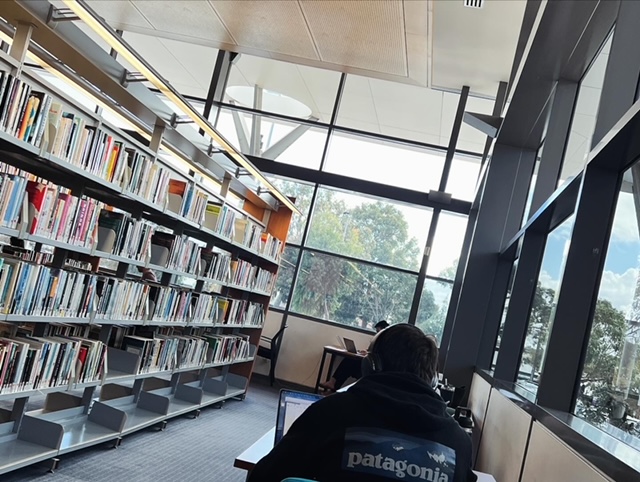
As I continue my great library crawl I visit suburban libraries in vastly different places – from Morley to Peppermint Grove. I even find the library in Parliament House, and one named after one of WA’s fave rocker’s mothers!
Library #5 to #8 in my Great Library Crawl begins in Peppermint Grove.
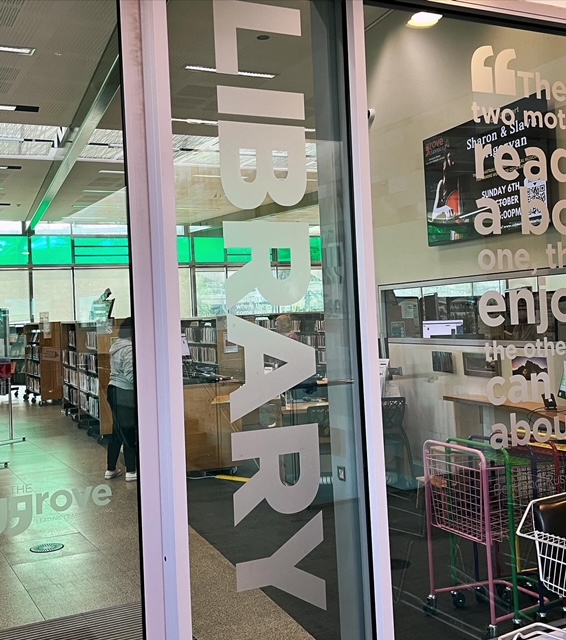
Peppermint Grove Library
Peppermint Grove, where no one has to put out their bins (so I am told) is one of Perth’s well-to-do suburbs. Even well-to-do suburbs have libraries and anyone can visit them. Does this make libraries the great equalisers?
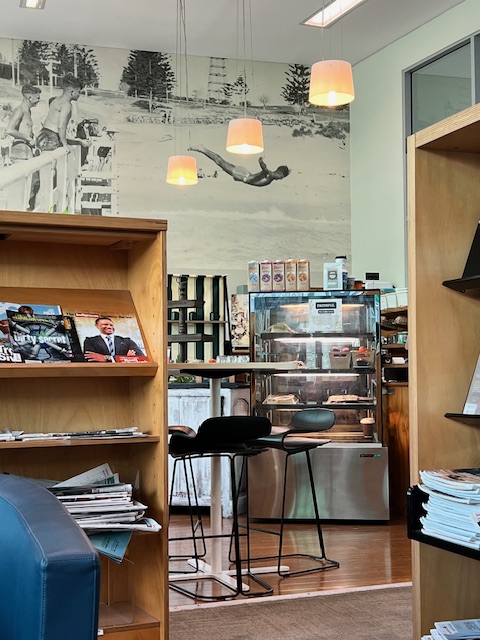
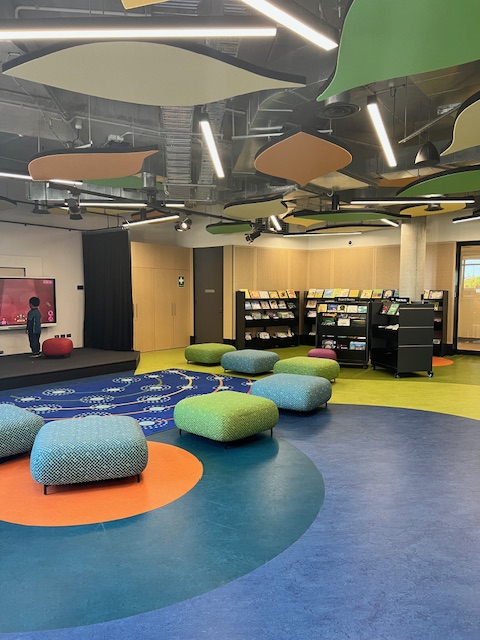
Anyway, the Peppermint Grove Library, or ‘The Grove’ was very much like any library and had everything a library visitor could wish for – spacious and welcoming with a bustling kids zone and a brilliant collection of travel mags for me to browse through and come up with another pitch.
The cafe wafted caffeine my way but I was already sated so I didn’t try their wares. A library cafe is such a great addition to a library – Book cafe on steriods!
I do have a memory of Peppermint Grove Library from my teaching years. I attended an award presentation when one of my students was presented with a literary award.
Morley Public Library
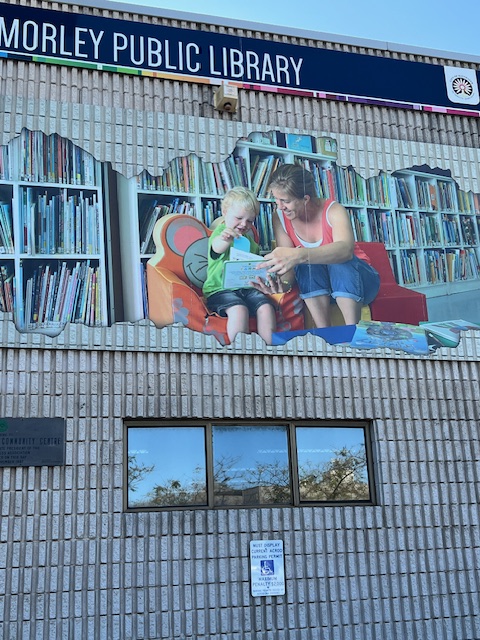
A trip to one of my least favourite places, the indoor shopping centre at Morley Galleria (fondly renamed ‘gonorrhea’ by my teens) had me fleeing for a haven of peace and quiet. In a nondescript building within walking distance of Galleria is the Morley Public Library.
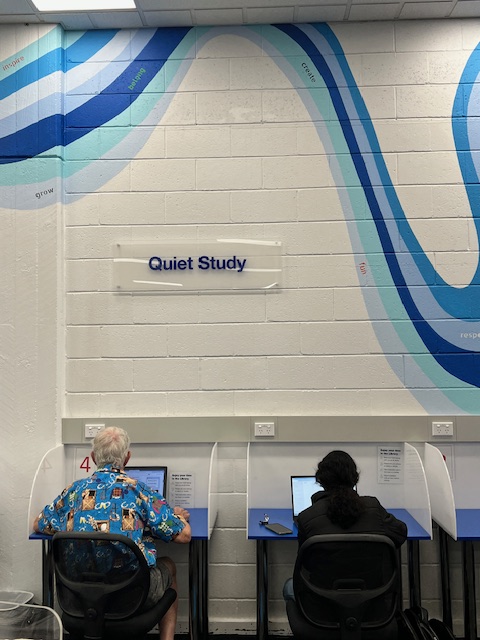
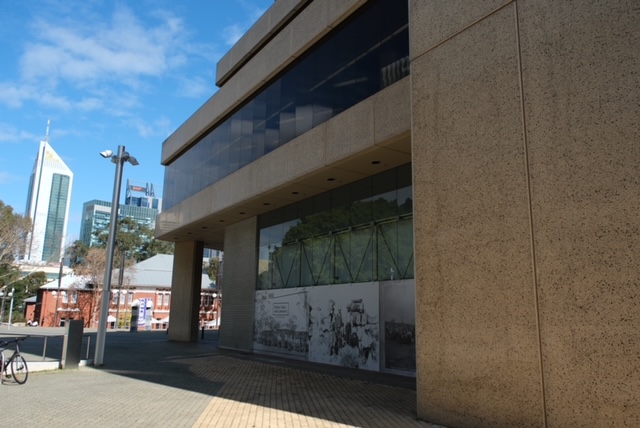
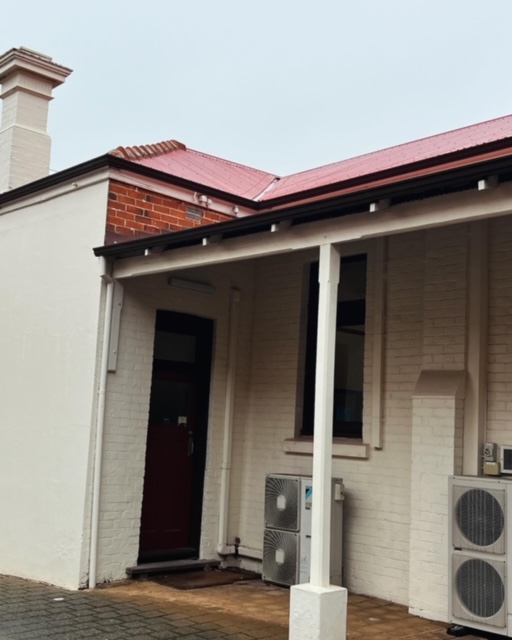
A brilliant mural makes this 80s brick bunker with no windows, somewhat funky. The library delivered, with many quiet nooks and computer spaces and of course a great collection of books!
Ruth Faulkner Library & Museum – Belmont
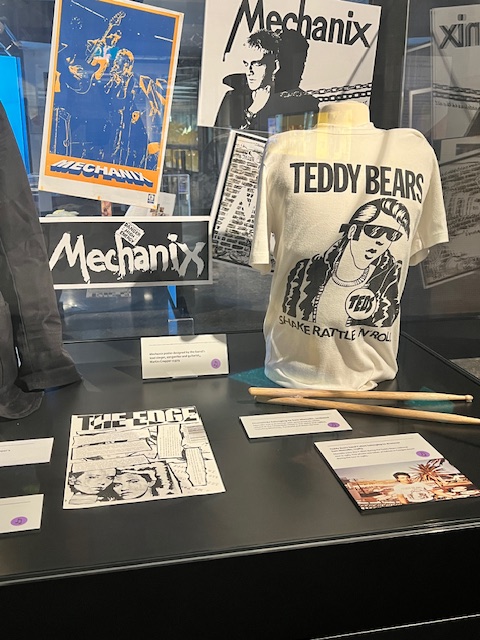
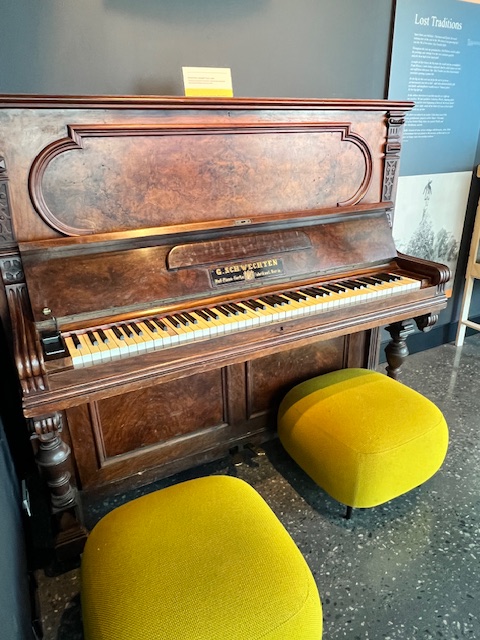
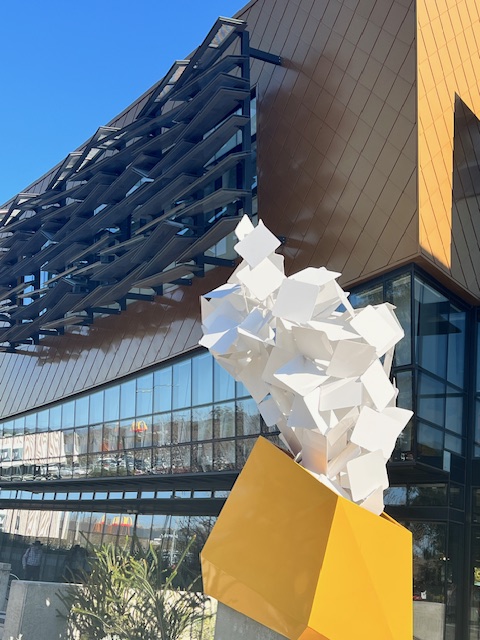
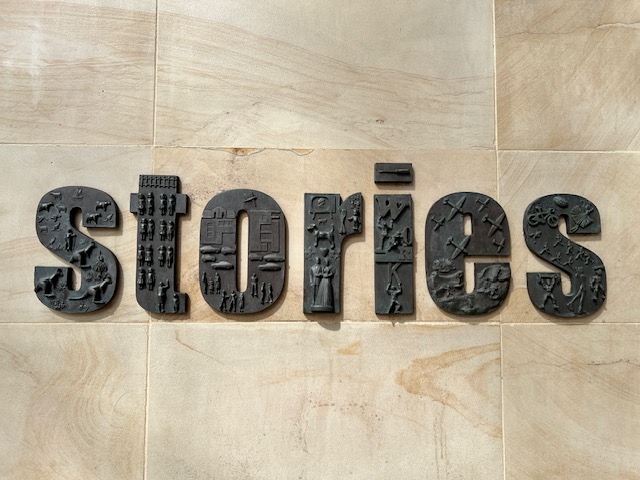
Ok so this library is pretty specky! Ruth Faulkner is Dave Faulkner’s (of Hoodoo Guru fame) mother and the museum has some of Perth’s best rock n roll memorabilia. Of course there’s Hoodoo Gurus displays along with other well known (to Perth locals) band merch. An upright piano sits invitingly asking to be played and music snippets take you back to the good ol’ days of live music in P Town.
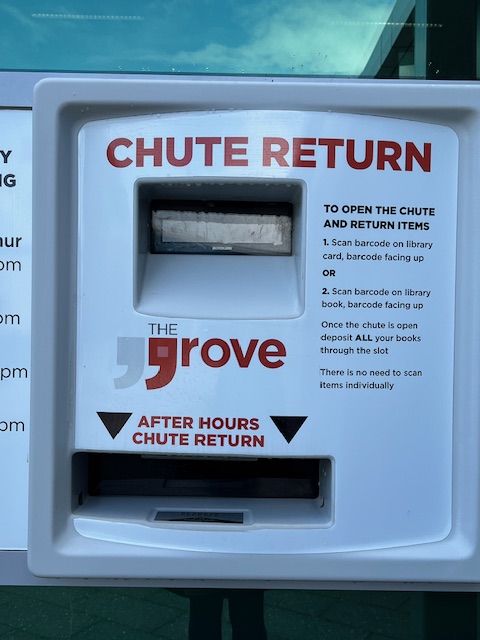
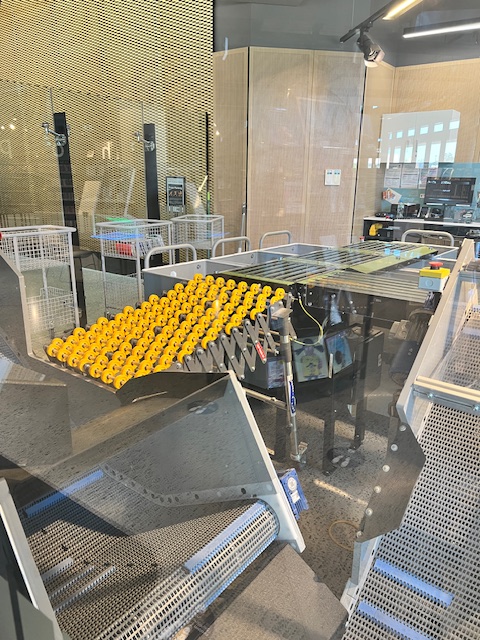
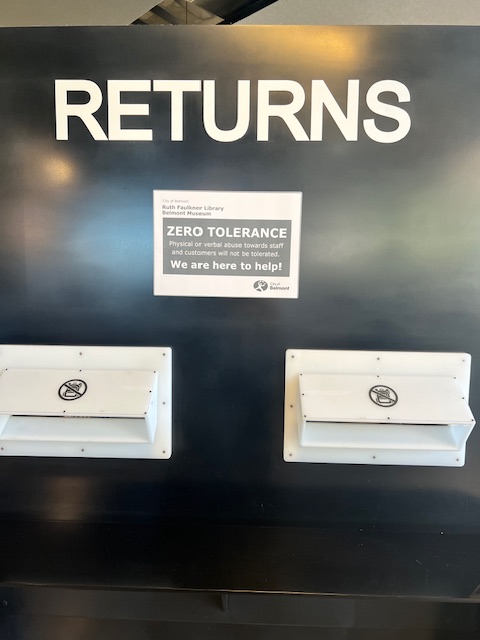
Ruth Falkner Library itself has this state of the art book return system that looks like it has been designed by Rube Goldberg . Talk about machines taking over the world!
And yes, it has books and mags and even a section where you can purchase items. Ticks all the boxes.
Parliament House Library – Perth
My great library crawl has taken me places I wouldn’t normally go to seek peace and quiet. The Parliament House Library, or ‘The Parliamentary Library’ was not on my list but when I chanced upon it following a work lunch in the Parliament House dining room (yes, I know!) I had to make mention.
I was not allowed to take pics but let me tell you it was very grand. All the books neatly lined up with matching covers and the most comprehensive collection of newspapers I have ever come across.
We also met and chatted with some Hansard reporters who were inbetween jobs. They were wandering around with a notepad counting swans! Yes, you heard right! The WA symbol, the black swan, is everywhere once you start looking. I am unsure of the final result, but I counted at least 30 on my way out. When you know you know!
To be continued…
I have slowed down somewhat on my library crawl because I now have my home restored – but there are still some beauties to come, a country town library and one of Perth’s jewels in the crown. Fear not, the crawl will continue albeit in a slower fashion.
When family came to stay libraries were my friend. So begins my Great Library Crawl!
The beginning – Libraries No. 1 to No. 4
You don’t fully appreciate what it’s like to know peace and have a quiet place to be until you don’t (for an extended time). I only have time to document this now because I have come out the other end and my sanctuary is restored!
What was this time of disturbance you ask?Recently my family (son, daughter-in-law and two littlies) arrived home to find the Niagra Falls inside their rental. Well, it was me who discovered the horror when I dropped by to deliver groceries before driving to pick them up from the airport. And there’s nothing harder than telling a travel-weary family their home is uninhabitable at 2:00 am. Lucky for them, we had room at the inn!
Guess what? As I have now discovered and been informed burst pipes under your bathroom sink are more common then you think. TURN OFF YOUR MAINS BEFORE GOING AWAY PEOPLE!
Anyway, I digress because what does this have to do with libraries?
There’s nothing like a full house and no room to escape to start me looking out for quiet and somewhere to breathe! Don’t get me wrong I love my family very much. But libraries have been my saviour this past several months.
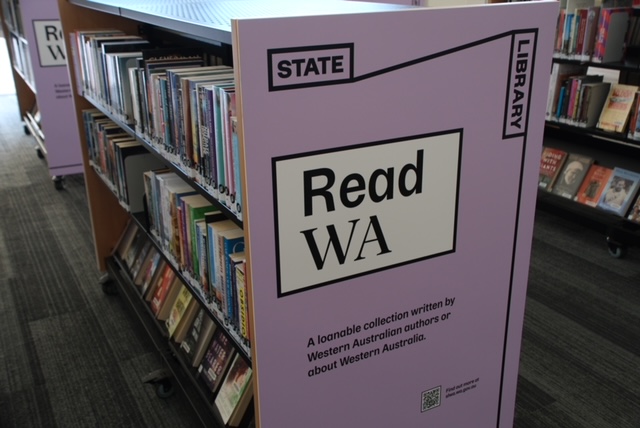
The State Library of Western Australia
I started with the ‘mother ship’ – The State Library of Western Australia – the font of all historic records and local history exhibits, the Disrupted Festival hub and the place to go for some peace and quiet.
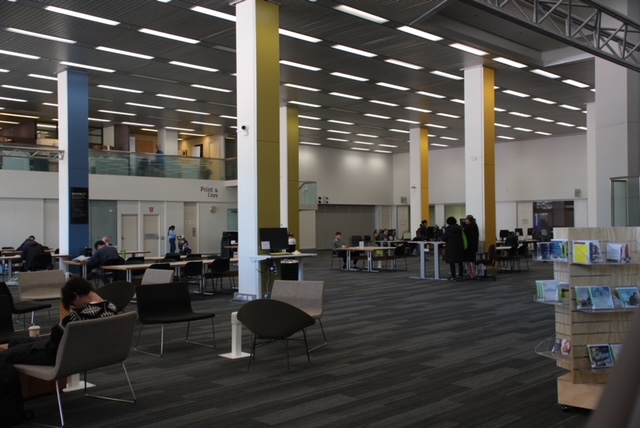
The State Library is capacious and she really is the true ‘mother ship’ of Western Australian libraries. Like a mother swan she encompasses all libraries beneath her Western Australian wings!
She lets you in and shelters you under her high ceilings while impressing you with her multitude of floors. And how about that glass elevator!
City of Fremantle Library
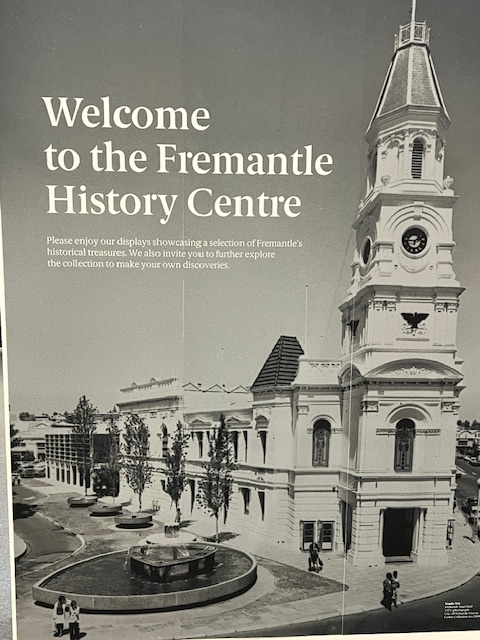
From one major library to the next – I found myself in Fremantle with some time to kill before a lunch meeting with some freelance writers so I did the writerly thing and went to hang at the library!
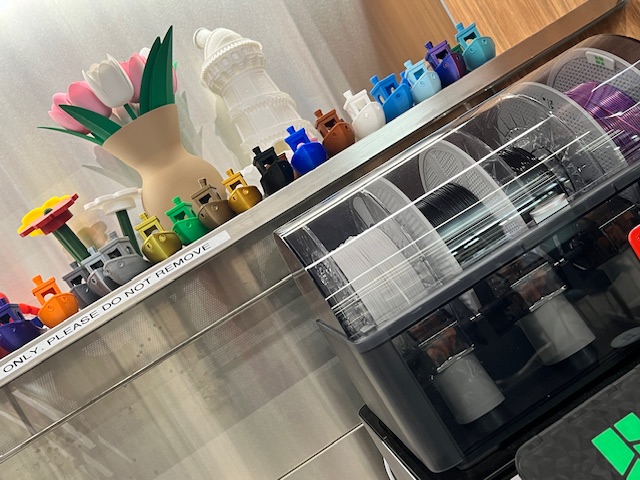
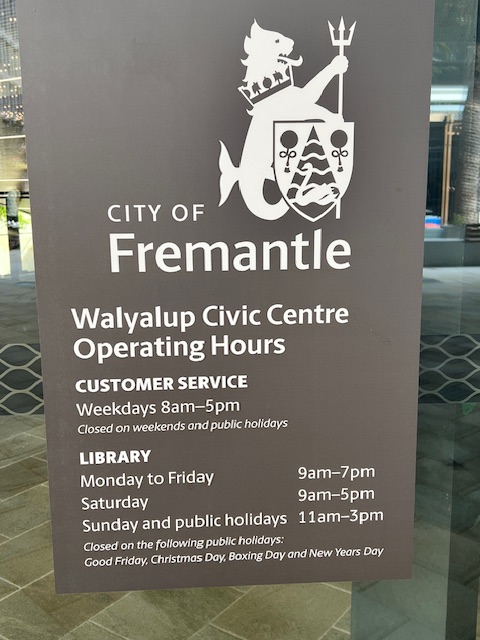
The Fremantle Library is a thing of beauty and I have attended workshops here in the past – the meeting rooms are comfortable and versatile. The great thing about this library is that it is open on a Sunday. The library has a ‘maker space’ for 3D printing and making stuff – seems to be a feature of most libraries now.
I love that this library is right in the busy hub of Fremantle. While I am there football is playing in the bar next door and waves of cheering can be heard when the glass doors open and close. Local history meets local flavour.
Guildford Library
Next up, is the tiny Guildford Library – which I discovered on my way home from a stand up paddle boarding venture. Not wishing to go straight home I decided to prolongue the peace for a further hour.
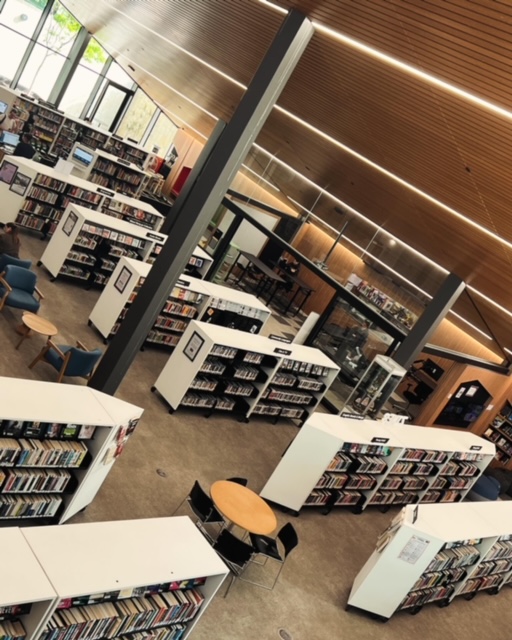
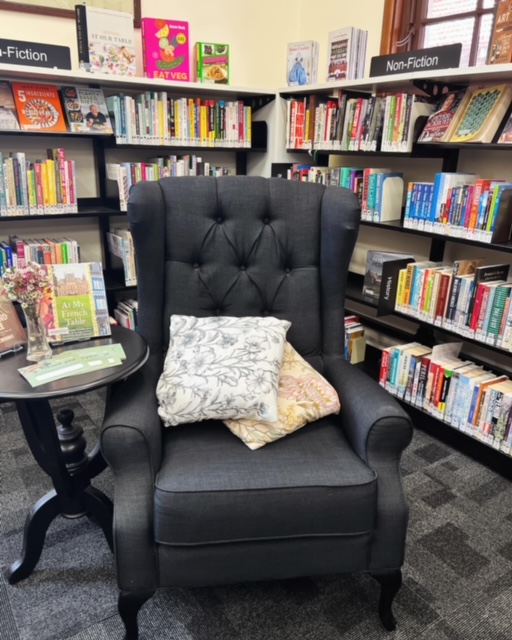
Small in stature but still managed to pack in a 3D Printing space and a buzzing children’s library. I have driven past this libary many times and this is the first time I have stopped. Well worth it! The story chair was pretty cool.
Town of Vincent Library
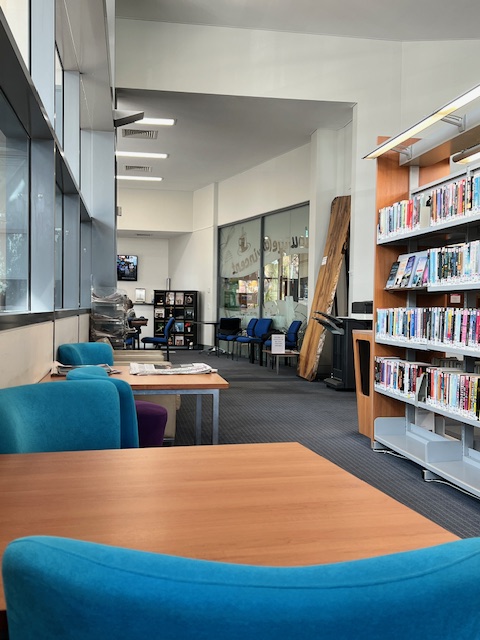
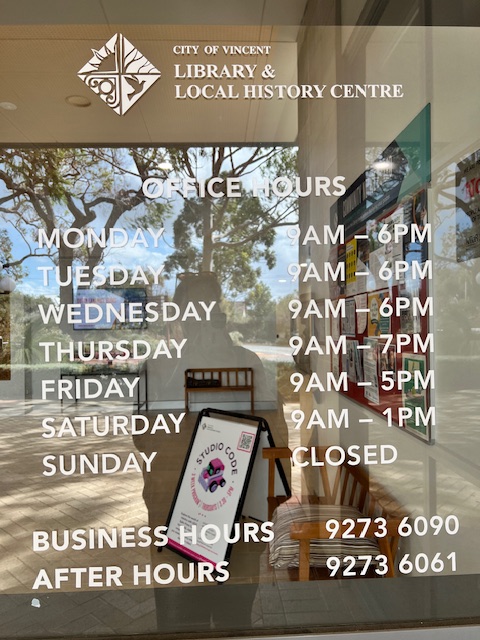
My local library – the Town of Vincent Library is an old haunt for me. When my kids were little we lived there – not in the current location but in the same building. Spacious and welcoming at the same time. Desks for sitting and nooks for tucking yourself into a corner. Women played Mahjong in the community room their tiles click clacking away.
As I continue my library crawl I find myself in country libraries while adventuring in the southwest and libraries near shopping centres I wouldn’t normally consider. There is even a sneaky visit to a library of high importance! Stay tuned for another library crawl installment – coming soon!
Mt Cooke Summit Hike WA – an out and back hike in winter to enjoy the Western Australian bush at it’s finest.
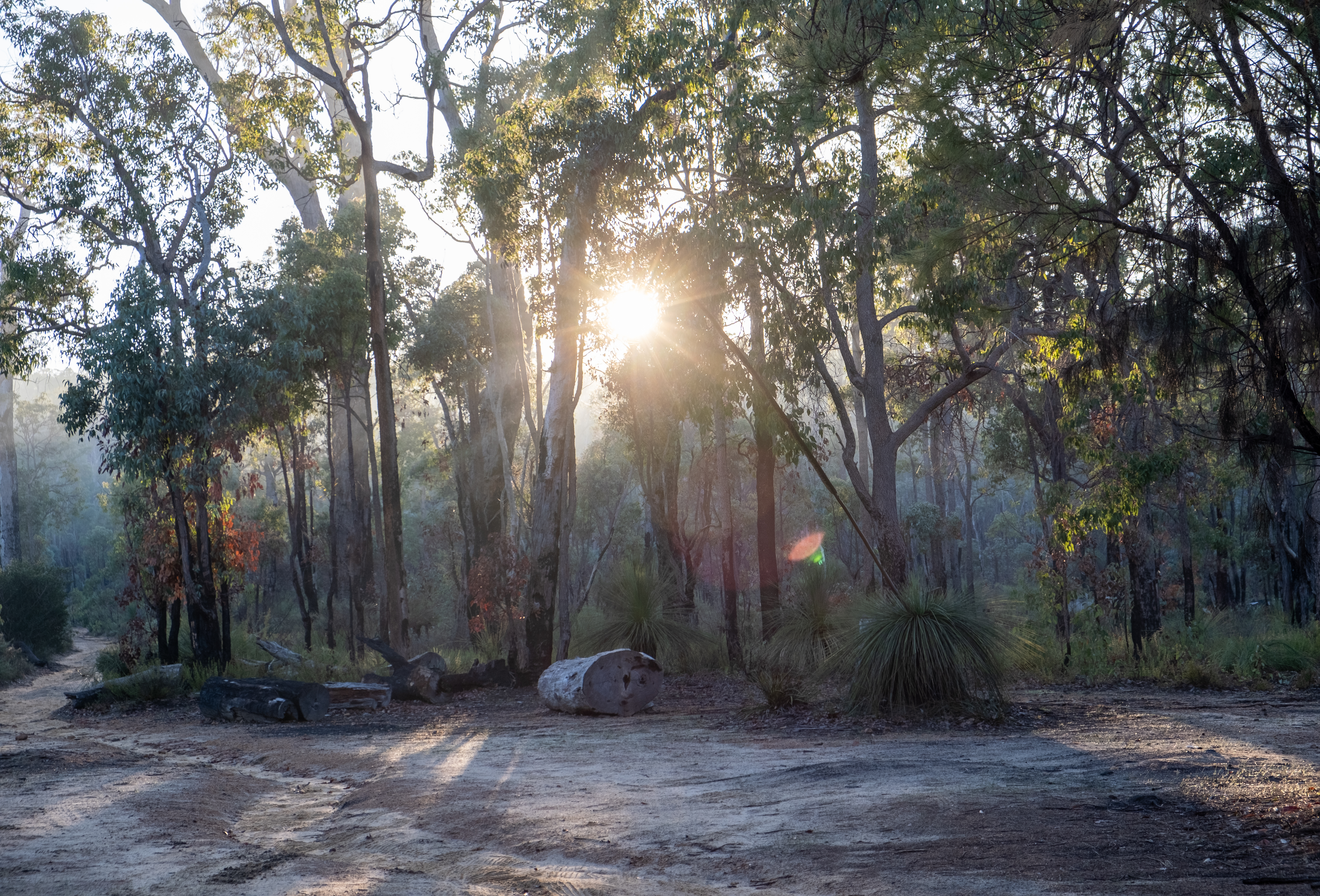
A Sunday morning in June, we woke before daylight to the intrusion of an ugent alarm. Setting off as dawn showed her sleepy face. The roads were quiet and mist lay low over the highway – parting as we approached. Currowongs littered the road side foraging for early morning roadside snacks – I have never seen so many before.
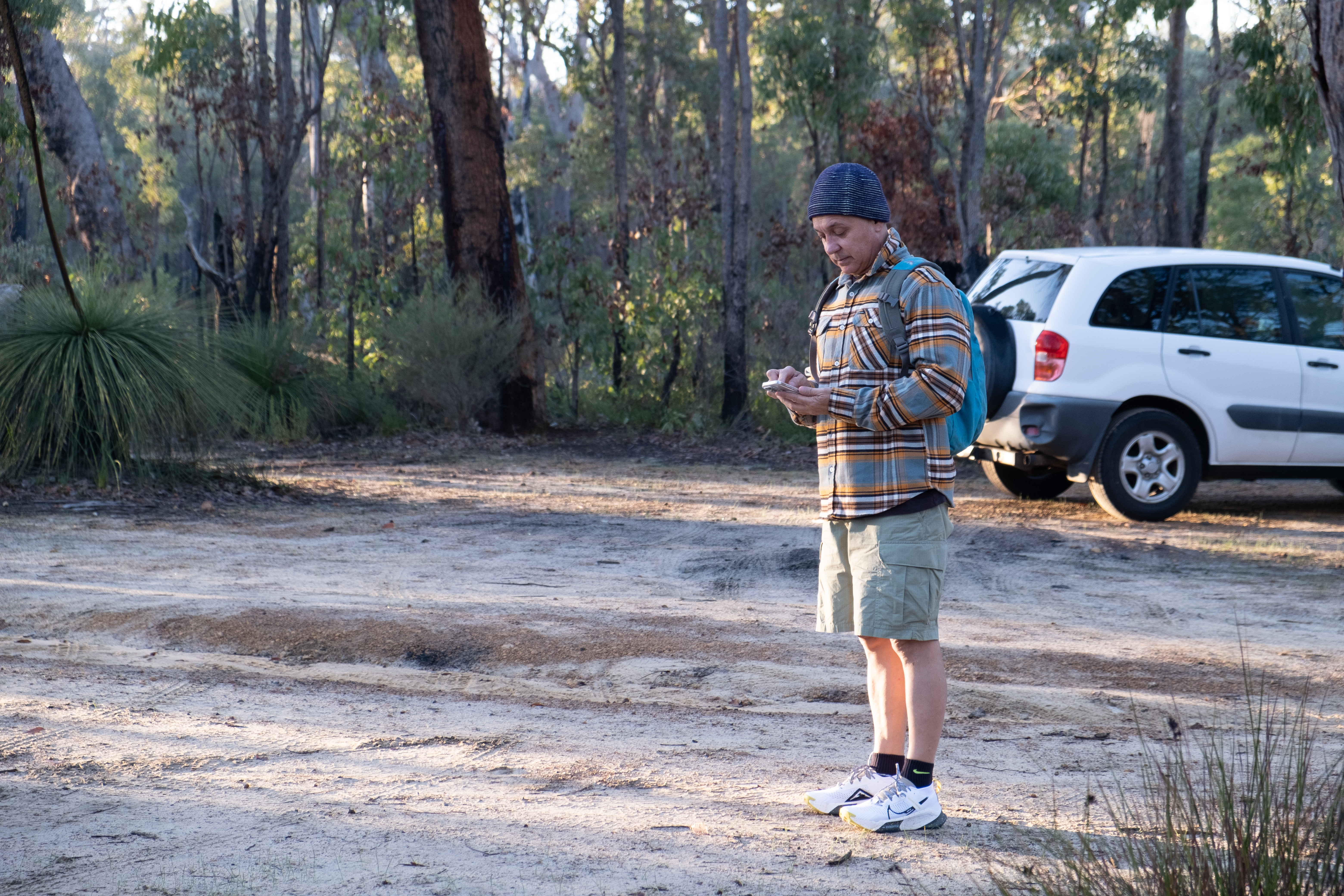
We needed maps to find the entrance to the hike off the Albany Highway about 50 minutes from Perth. No sign posts, just a sandy track through plantation pines and scrubland.
Cars in a row marked the beginning of the hike. A quick check of the AllTrails app confirmed we were indeed in the right spot. The sun peeked through the trees and I knew we were in for a treat!
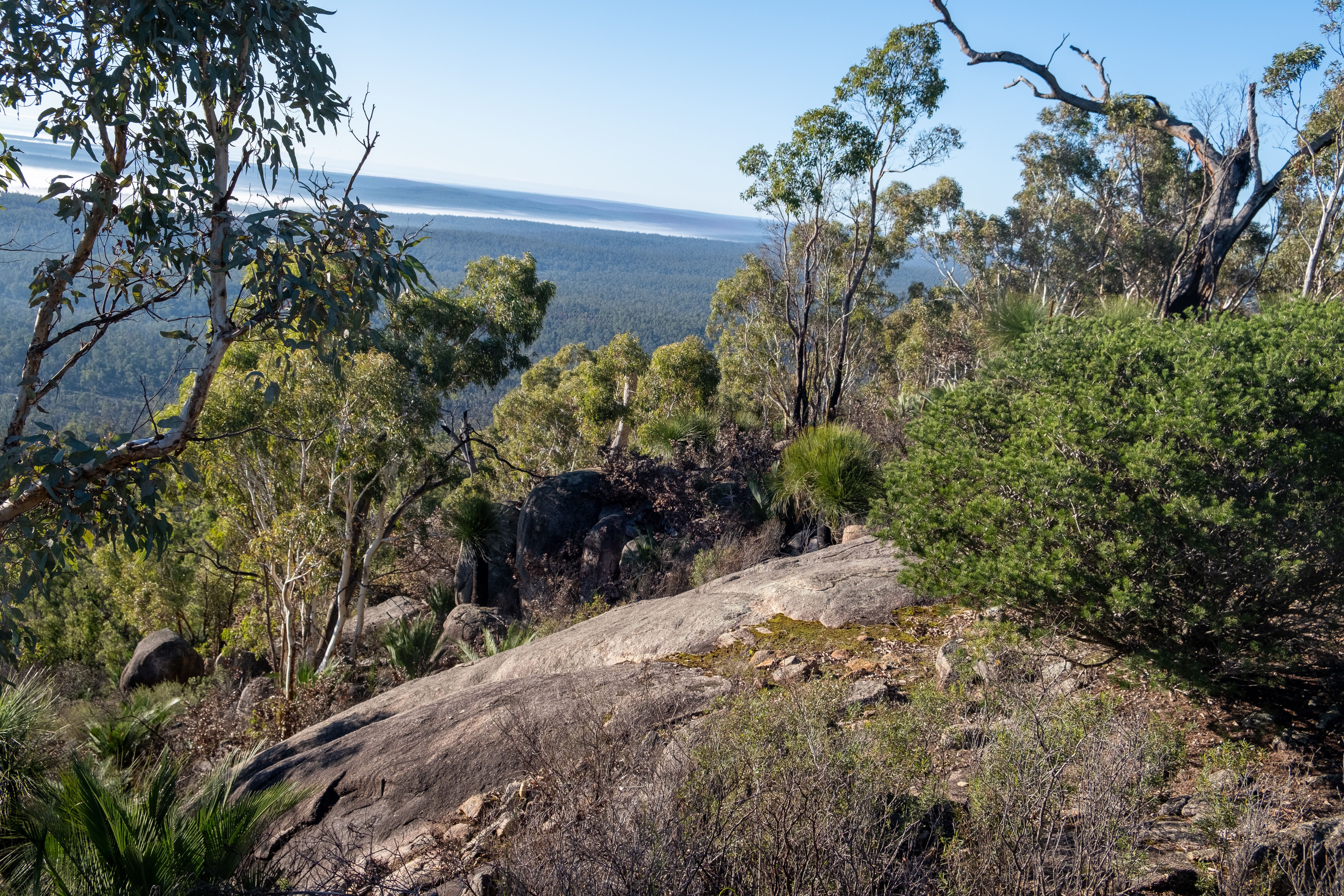
The hike started gently with a narrow trail, damp with last night’s dew and covered in boot prints meandering through grass trees, jarrah and rocky outcrops. The climb to the ridge was steep and sometimes slippery. Rocks glistened in the morning sun with water and sodden moss – green and lush.
The bush in this part of the scarp seems to have suffered less from the recent drought than bushland in Kalamunda. Some sapling had died back in the understory but the mature plants appear unscathed.
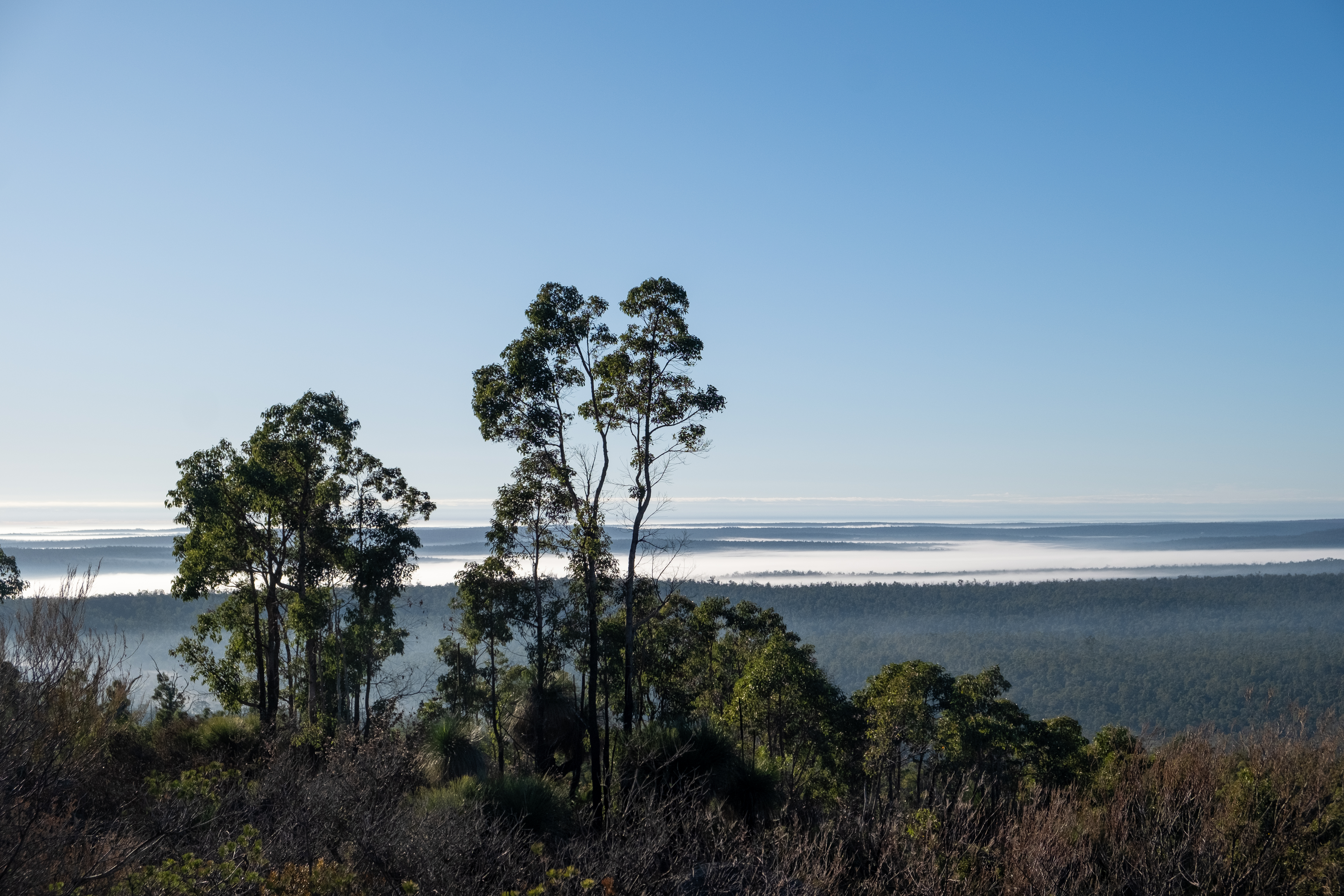
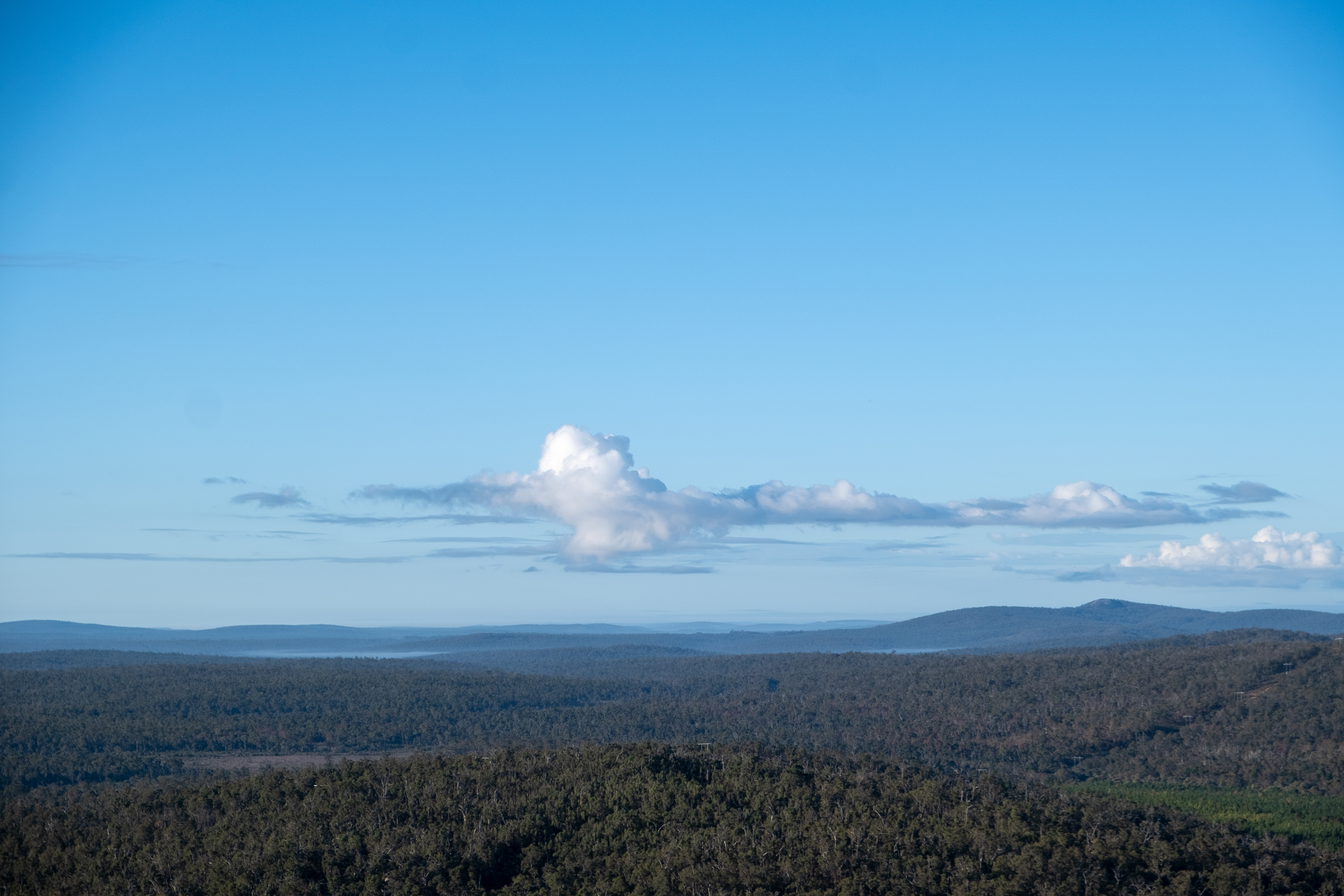
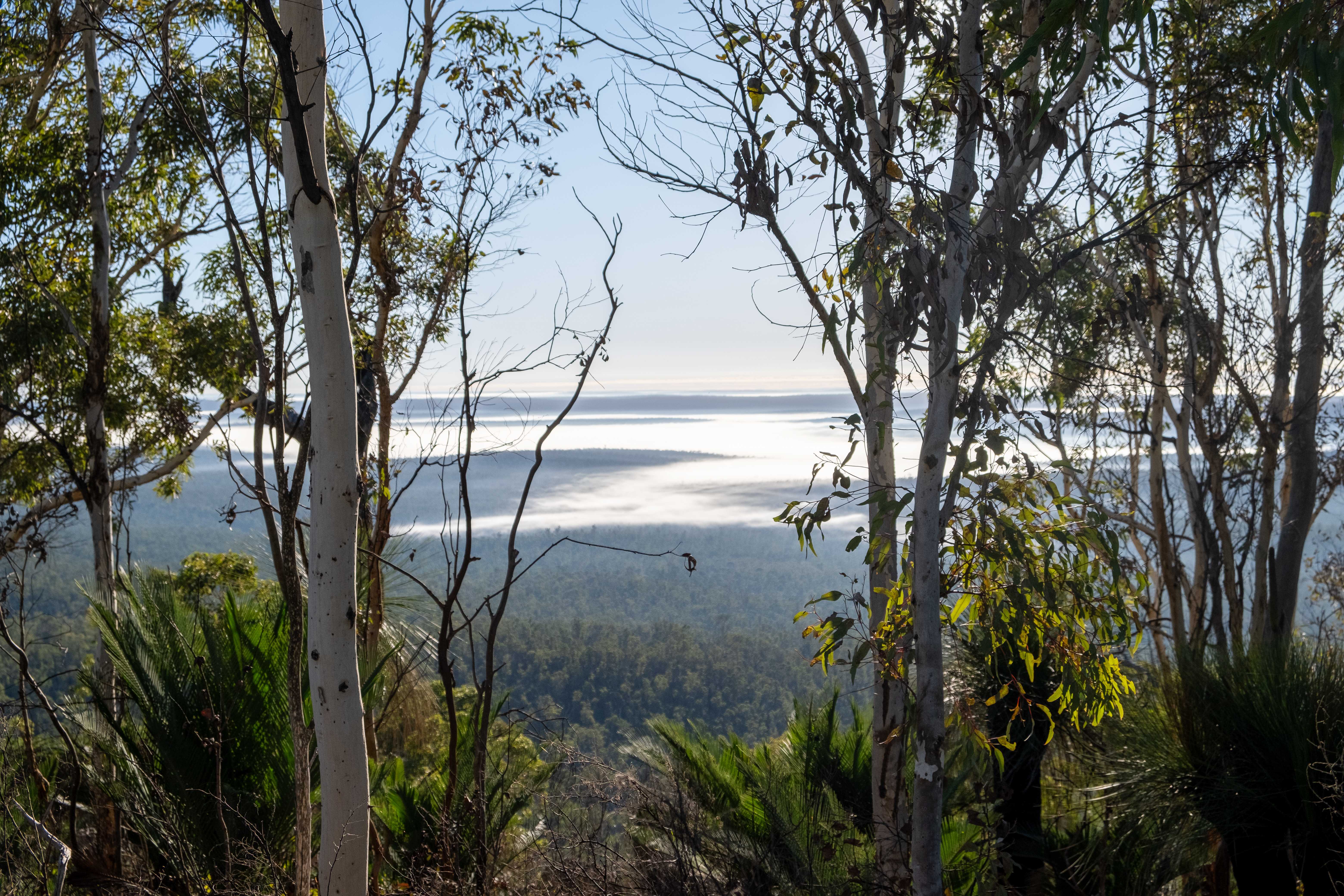
The trail led across the ridge where 360 degree views of the forest and surrounding lands took our breaths away. When we reached the summit a low mist was still hanging over treetops – we felt like we in the clouds.
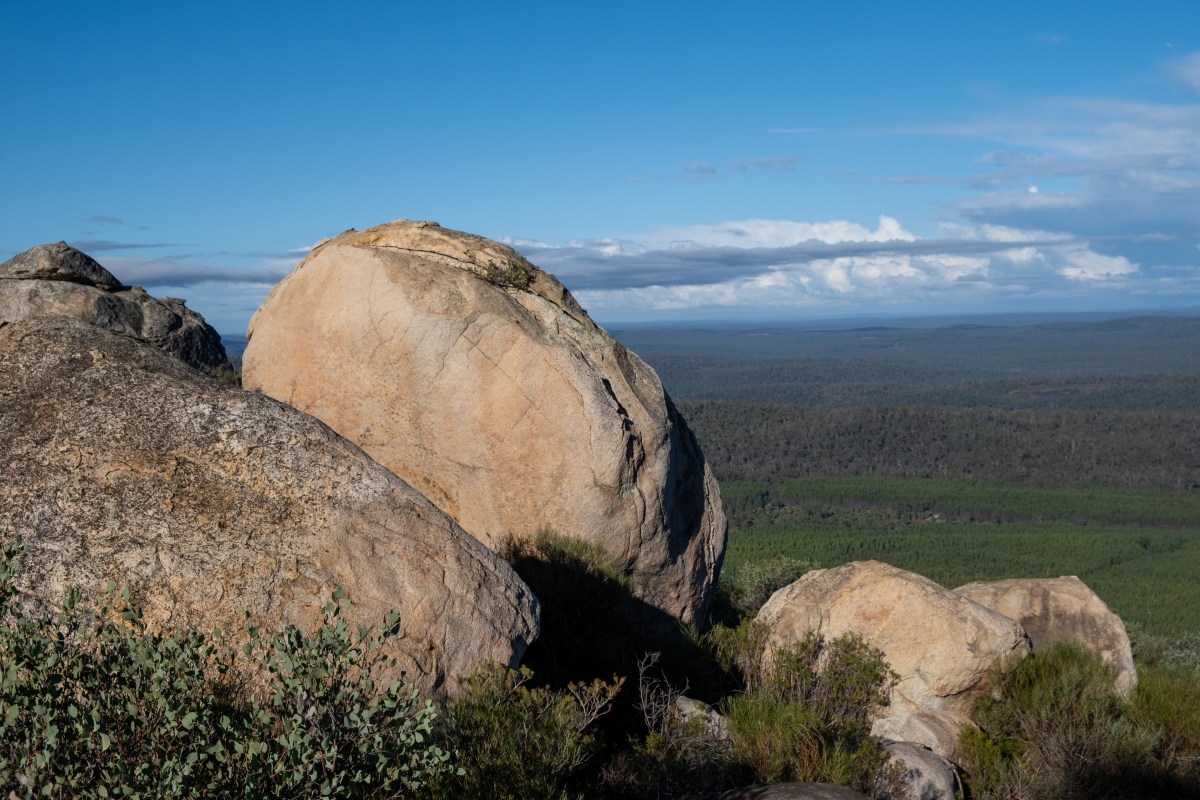
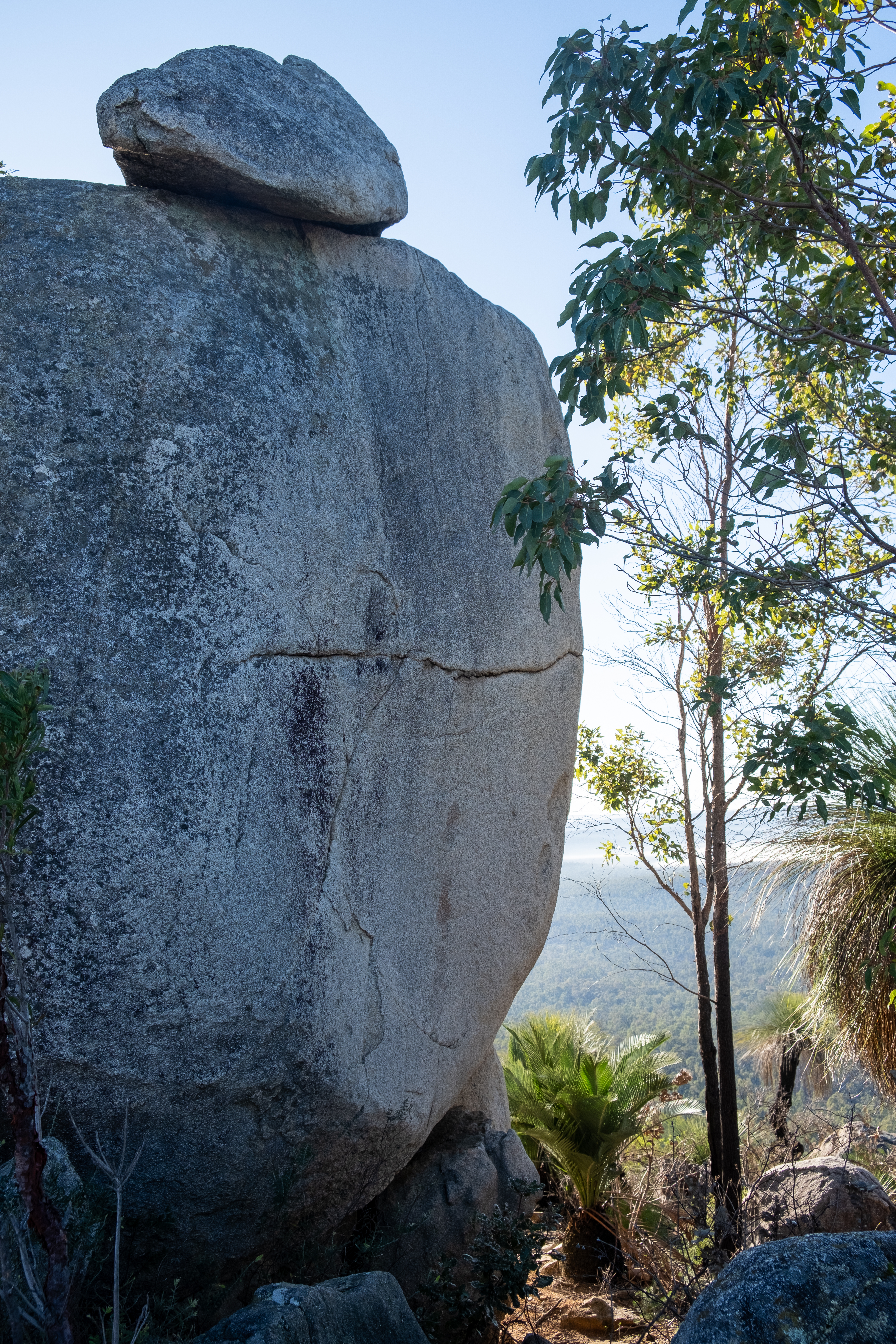
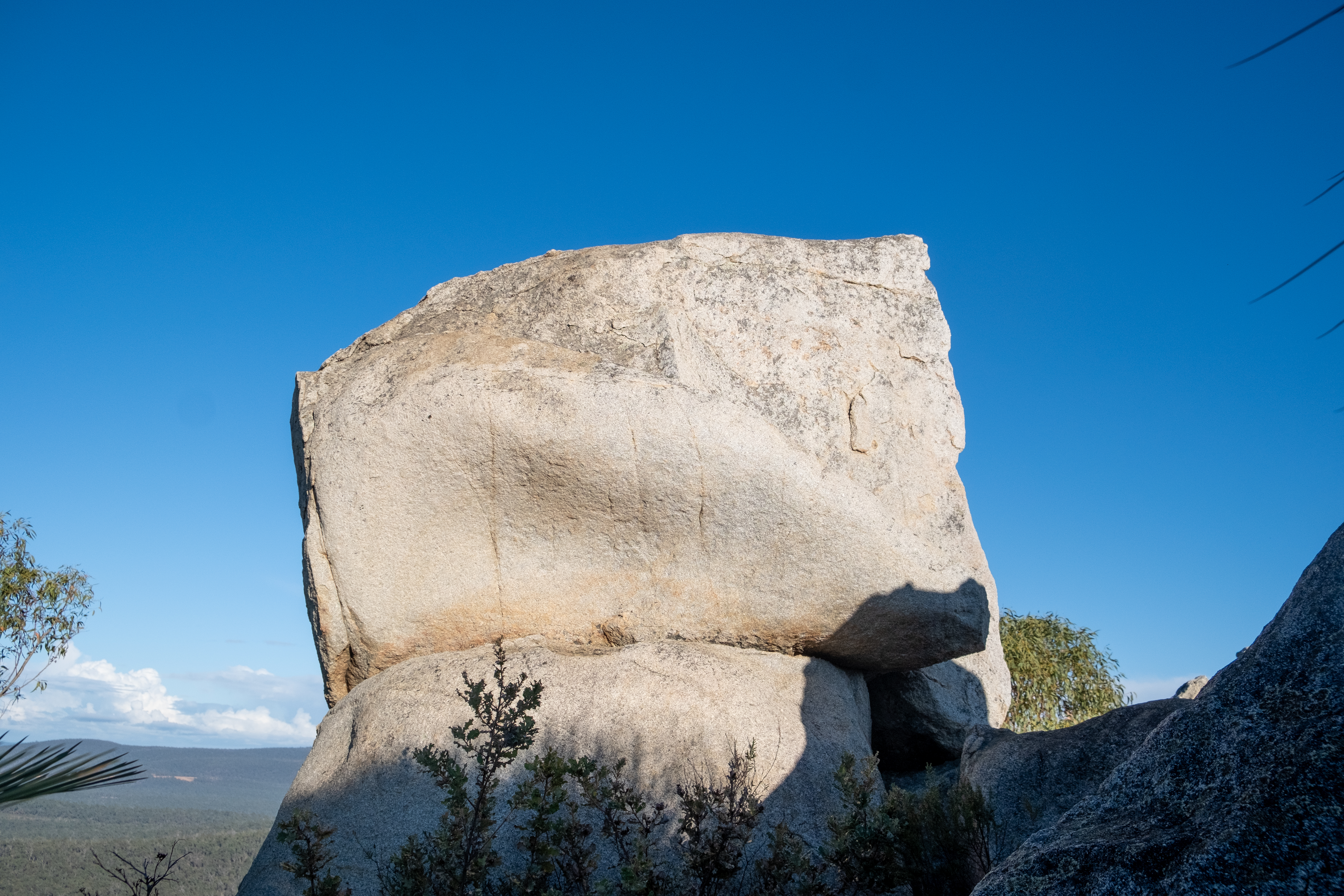
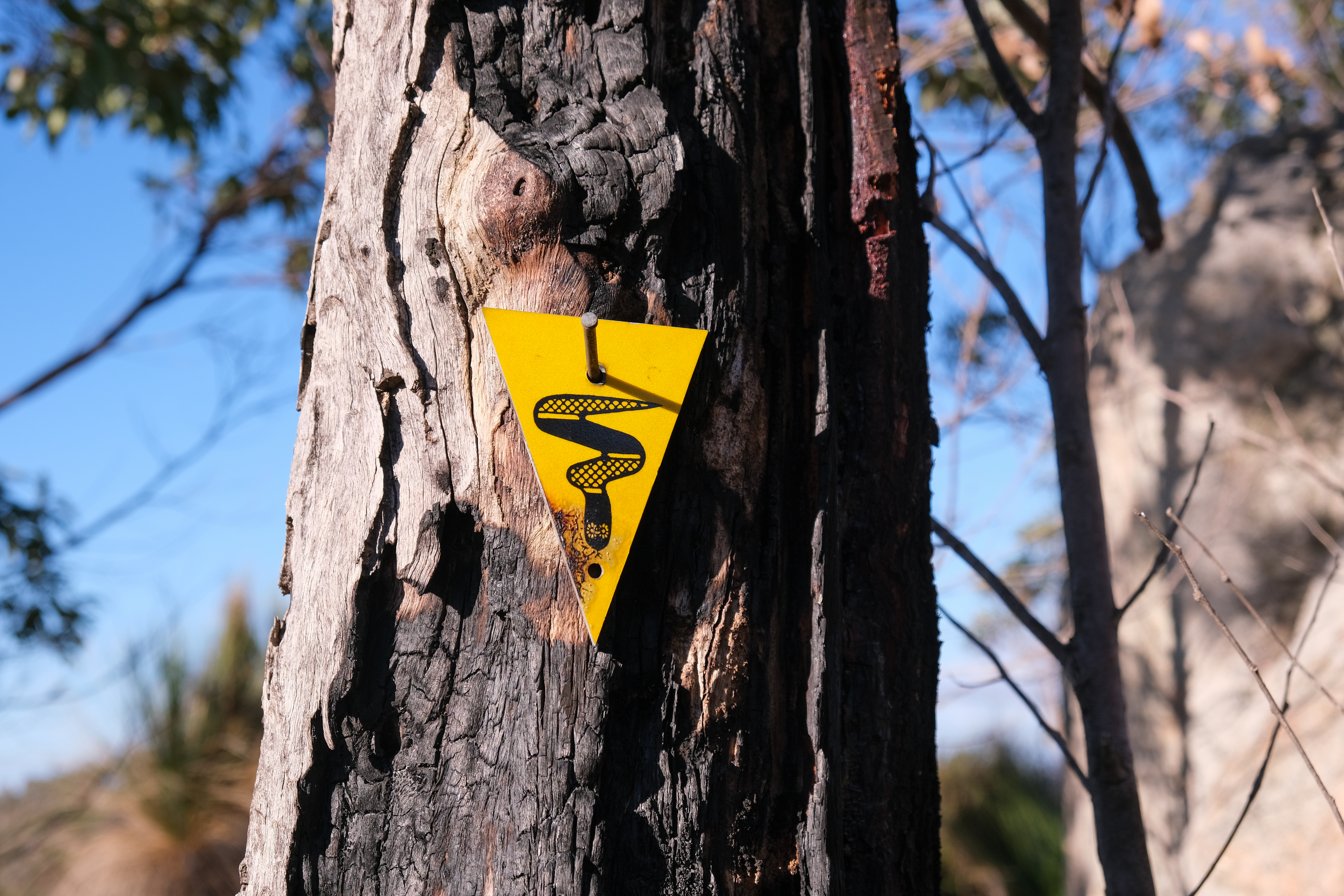
The summit to Mt Cooke, the highest point on the Darling Scarp, is marked by a pile of rocks. A skull shaped boulder greeted us as we turned the corner. 582 metres above sea level. We continued on for another 5oo metres finding a clearing for a rest and a drink.
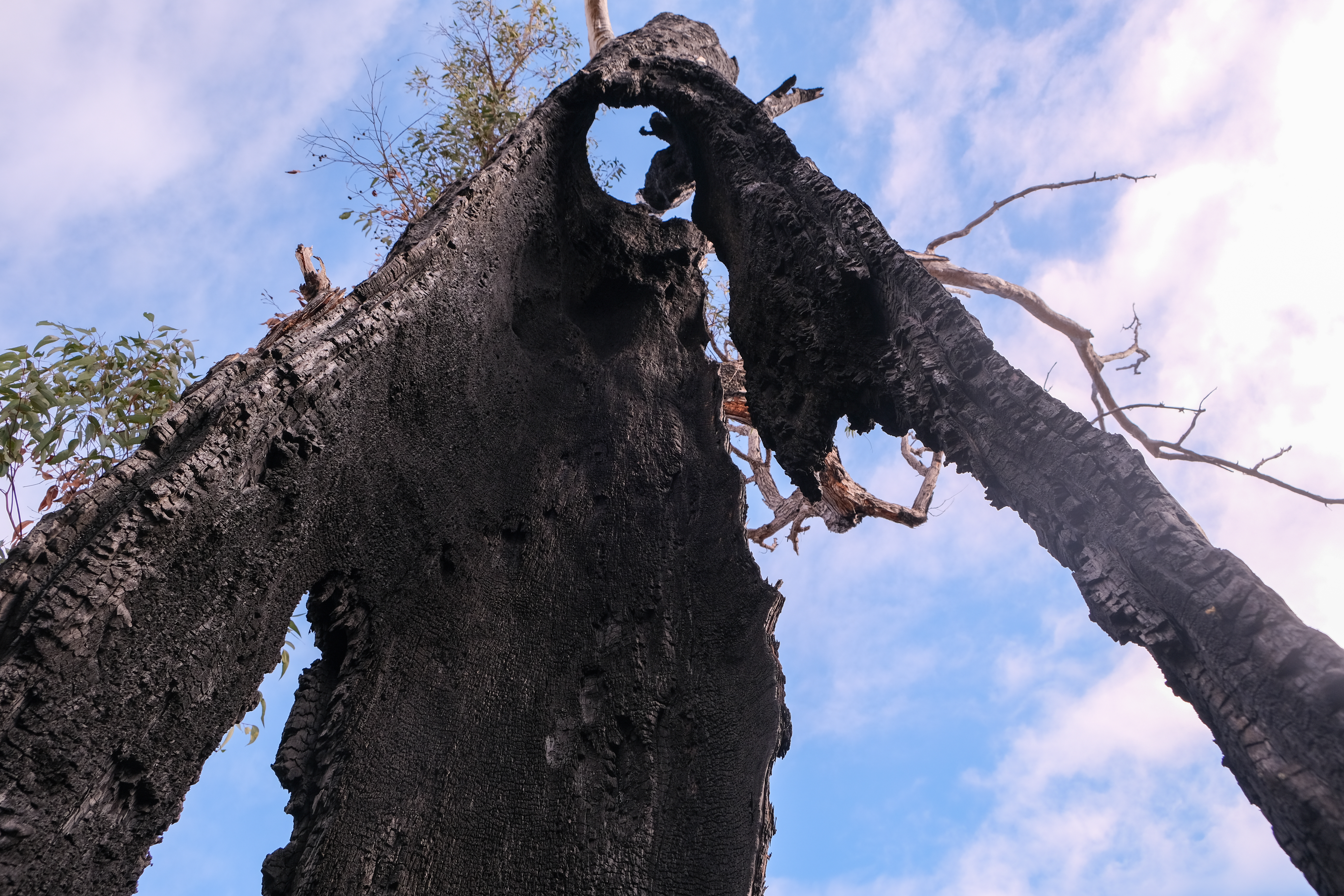
Some of the biggest Xanthorrhoea grass trees I have ever seen, towered over us. Their trunks blackened by a recent fire. The river beds were dry aside from some small pools of shallow water from recent rain. Enough to keep wild life sated.
The sun warmed us as the clouds and mist lifted slowly revealing the lands and trees below. We really had chosen the perfect time of day and weather for this 2 hour hike. Fellow hikers were few and far between despite several cars at the base.
A short rest and some snacks at the top before we turned back the way we had come. The way down was a bit treachourous and slippery, but we reached the car quickly while enjoying the views all over again on the way down.
An extremely beautiful and moderate hike! I will definitely be back to travel further and to complete an overnight hike in the area in the future.
What’s the skinny?
The Mt Cooke Summit hike is a 80km drive from Perth on the Albany Highway
Three and half hours gets you to Bali from Perth. Why not go for a weekend?
Day One
As we wind through narrow streets and torrential Bali rain, we dodge scooter drivers with no rear lights, helmets or shits given. Water covers the narrow treelined roads, almost jumping out to catch our car. Our intrepid driver grips the wheel as he honks the horn gently at each corner to warn of our approach.
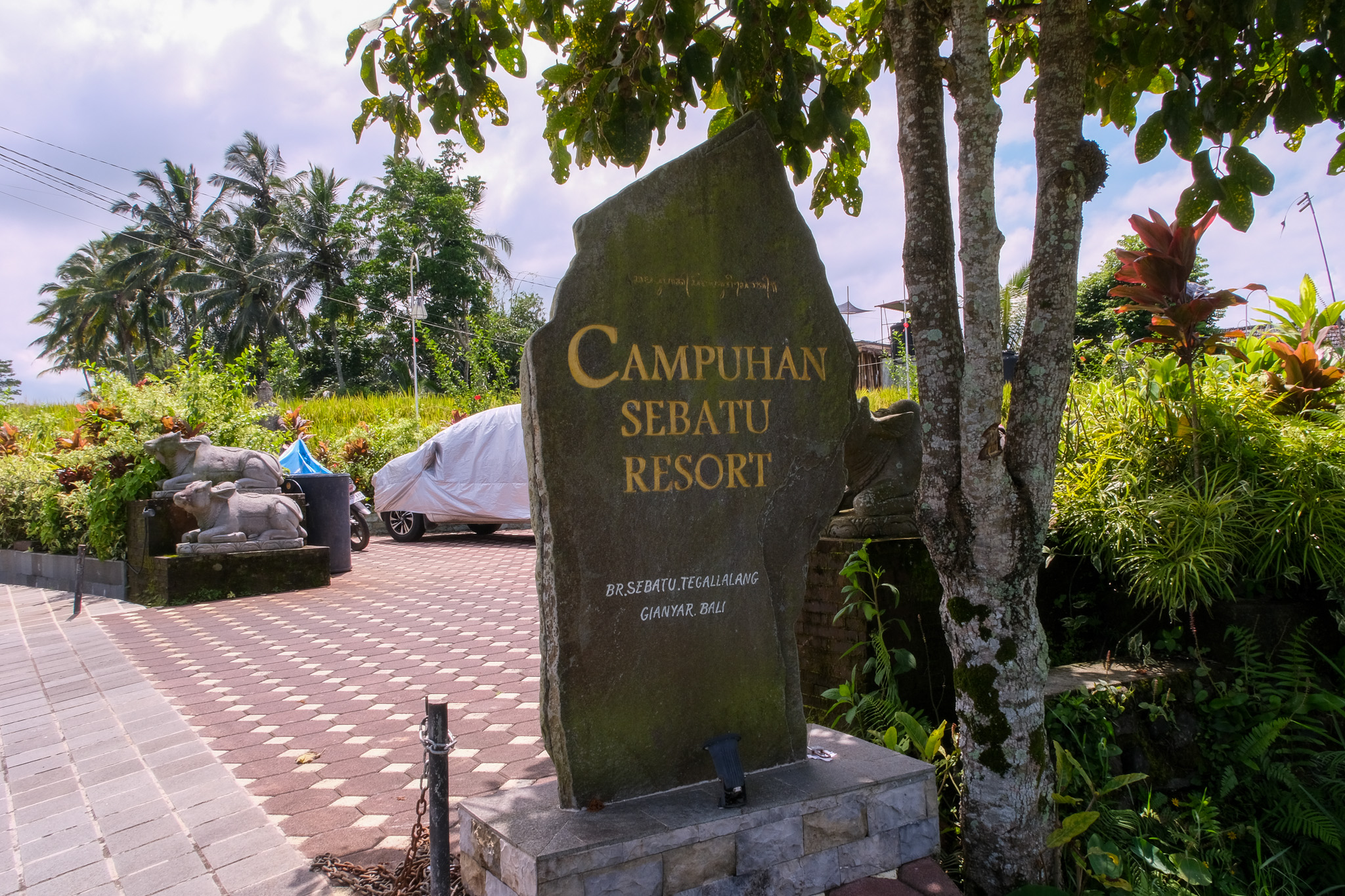
An hour and a half from the craziness of Bali and the International Airport we arrive at our destination, Campuhan Sebatu Resort and our Balinese host who has waited up for our arrival. I hand our relieved driver an extra 100000 Rupiah knowing he still has to drive back!
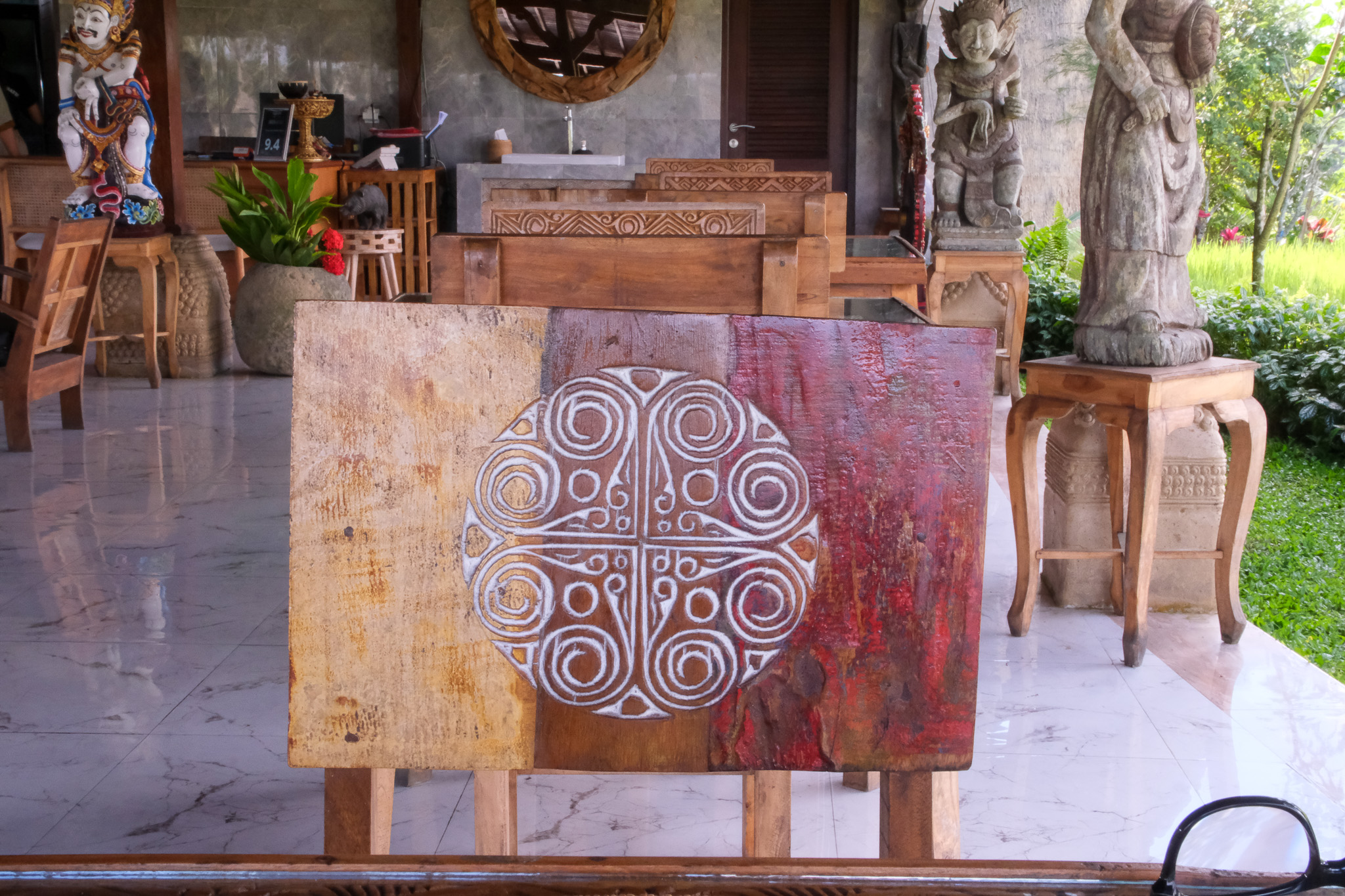
Our accomodation is lush and I slip immediately into our private plunge pool before drying off and climbing into crisp white sheets beneath the shroud of a white muslin mosquito net and the whirring sounds of the forest.
Day two
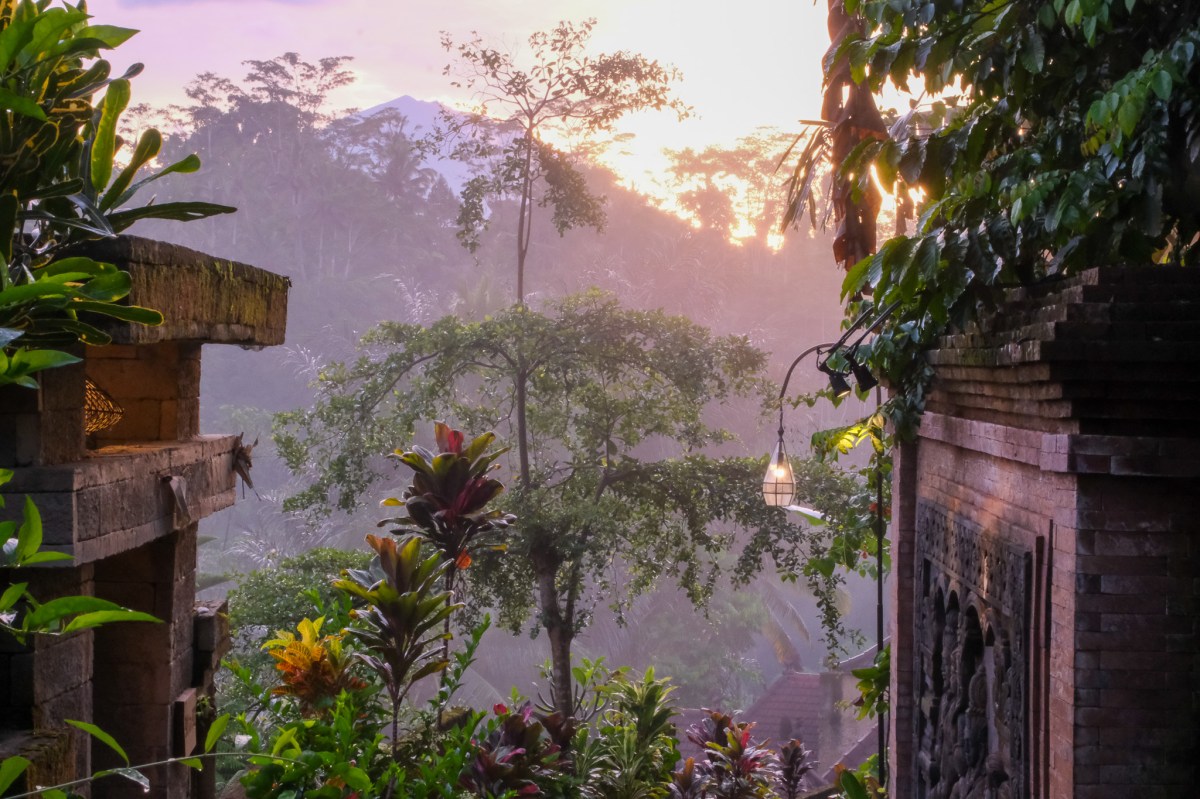
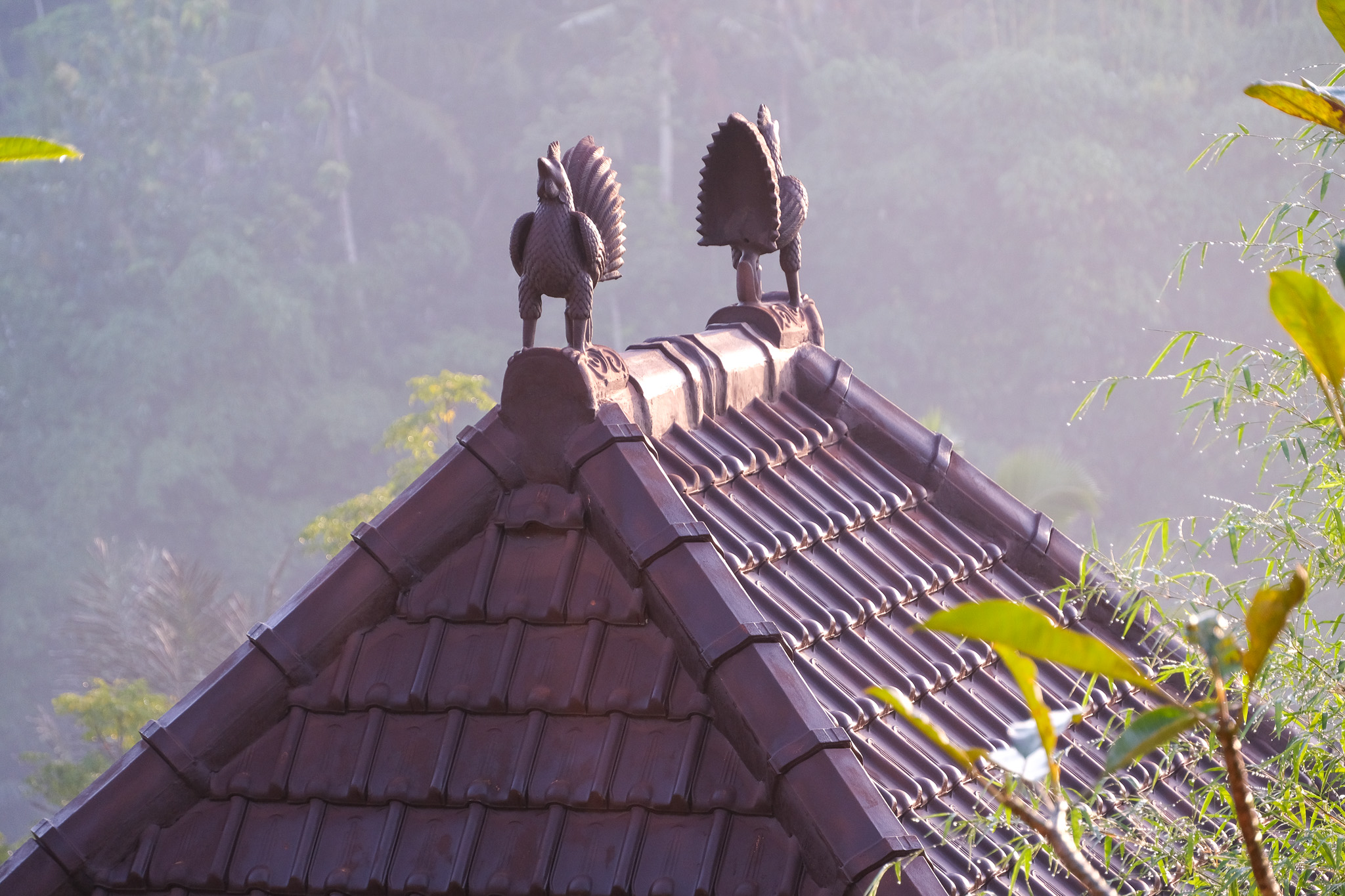
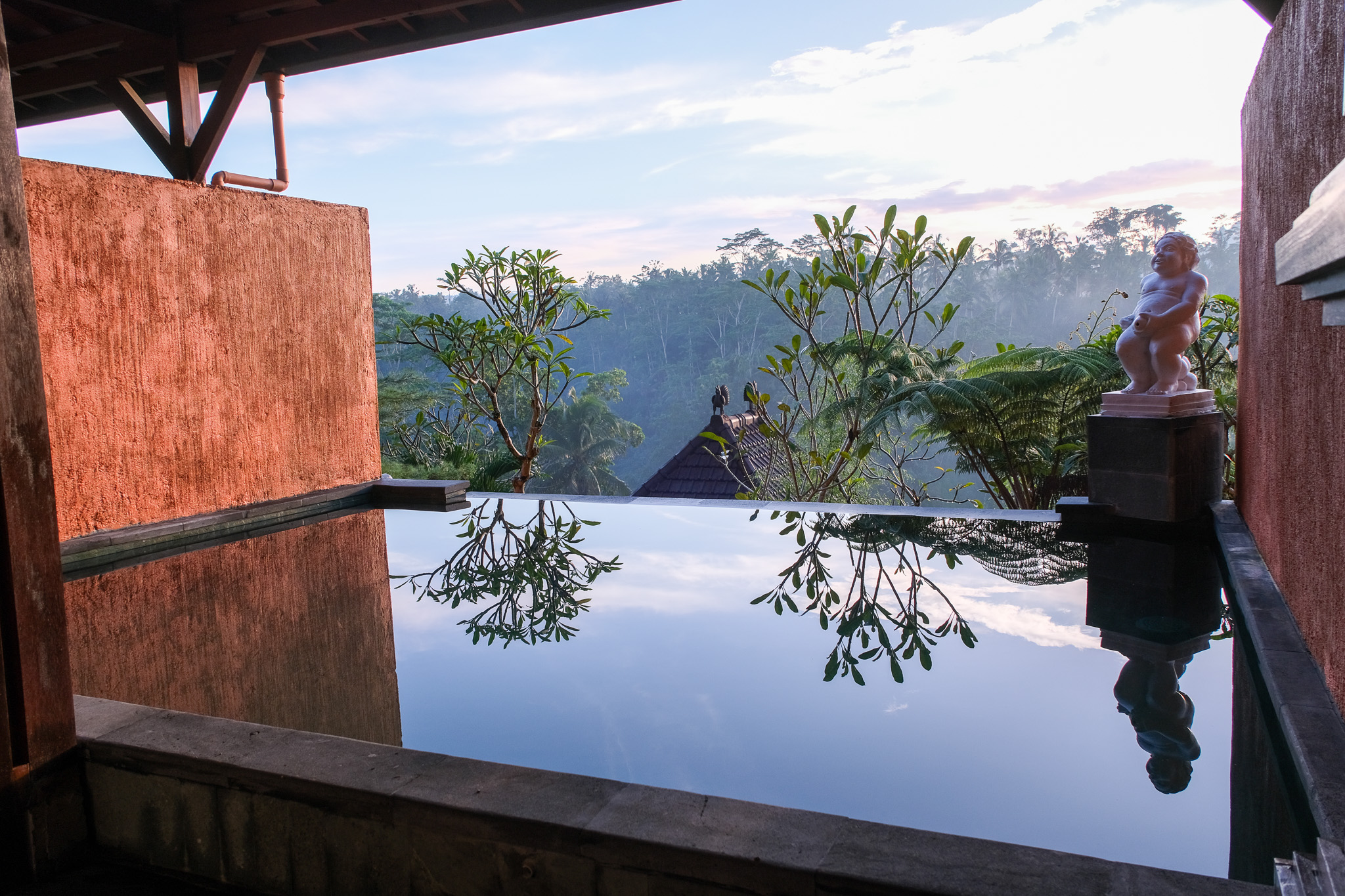
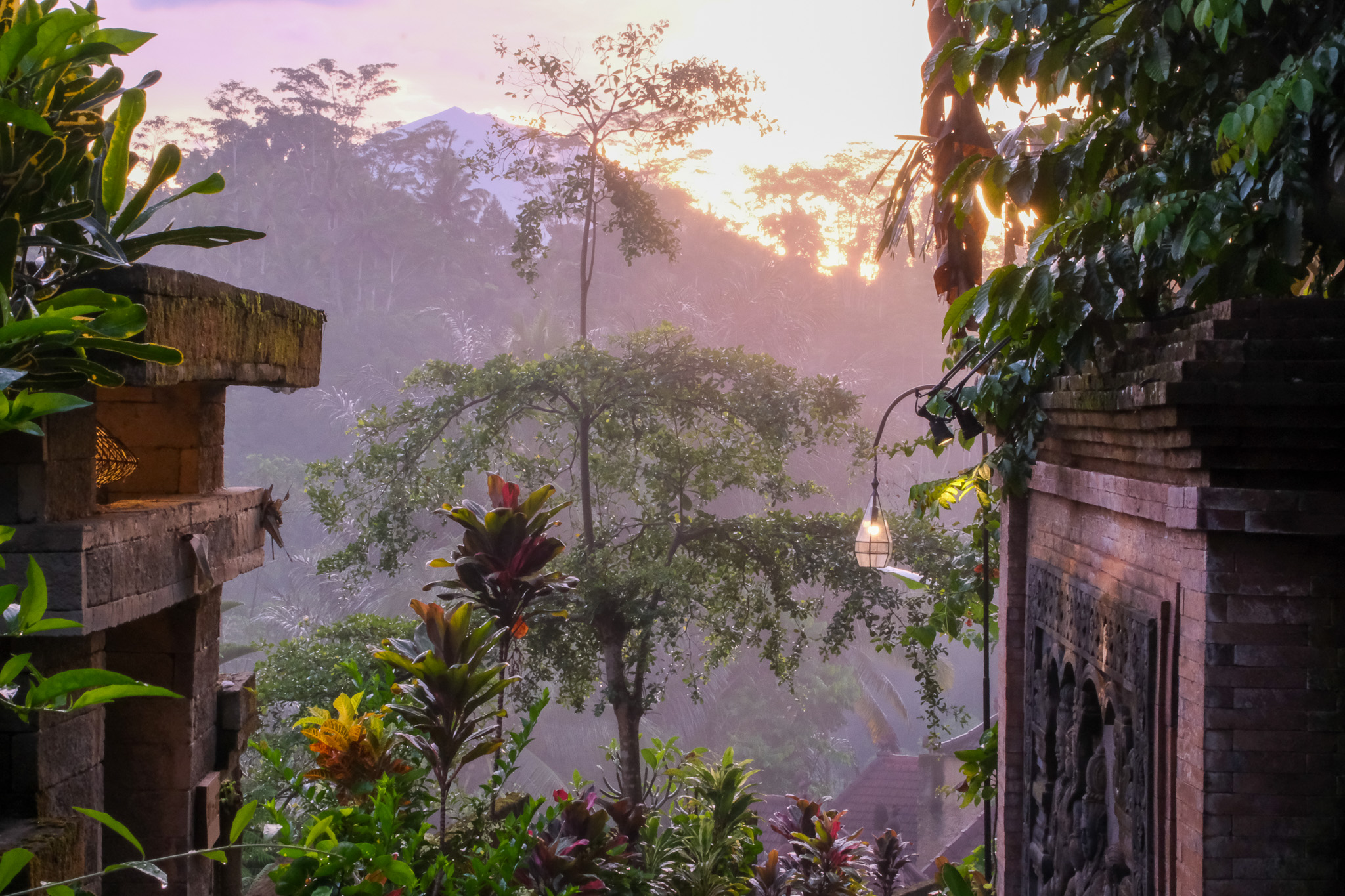
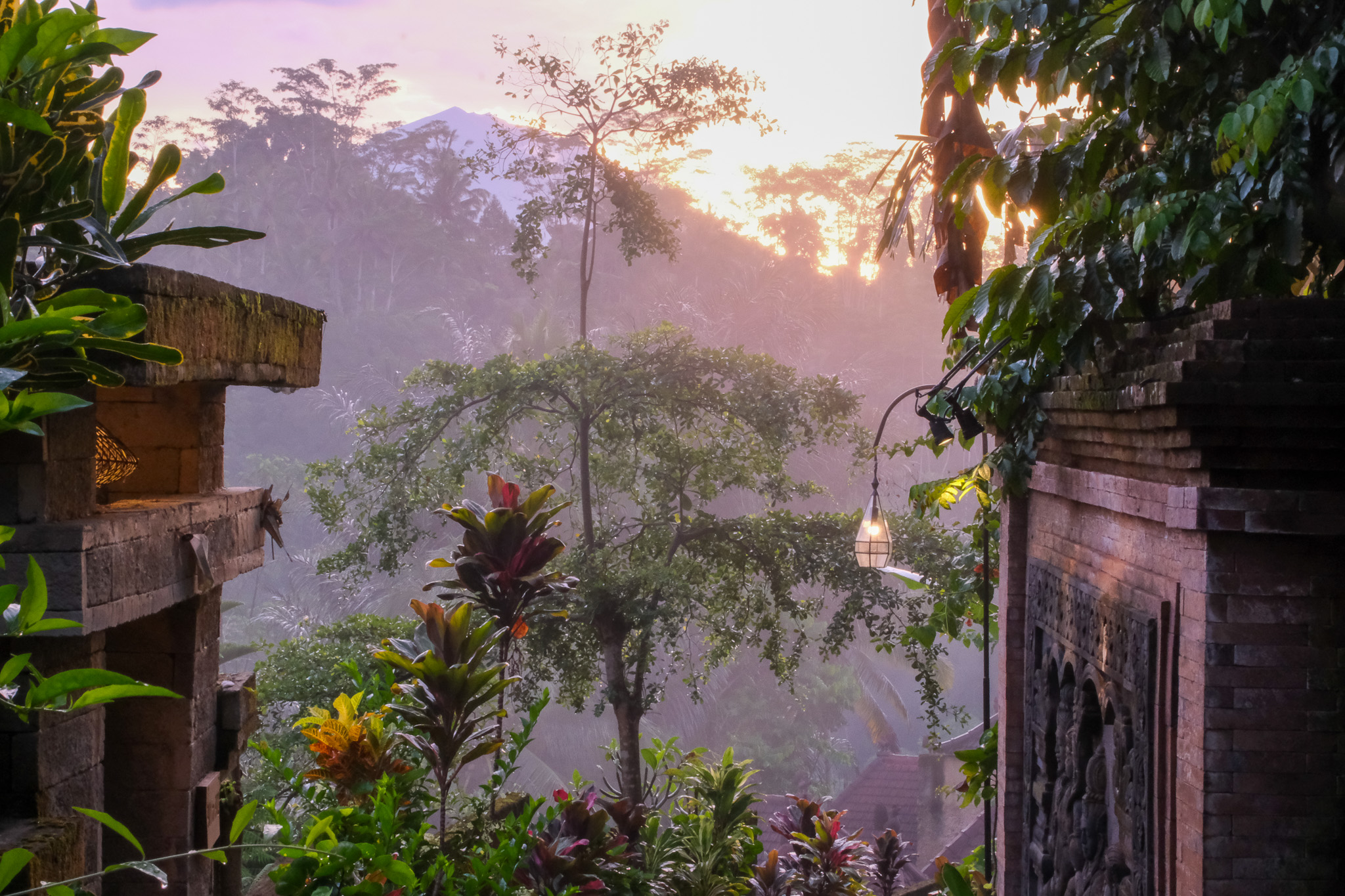
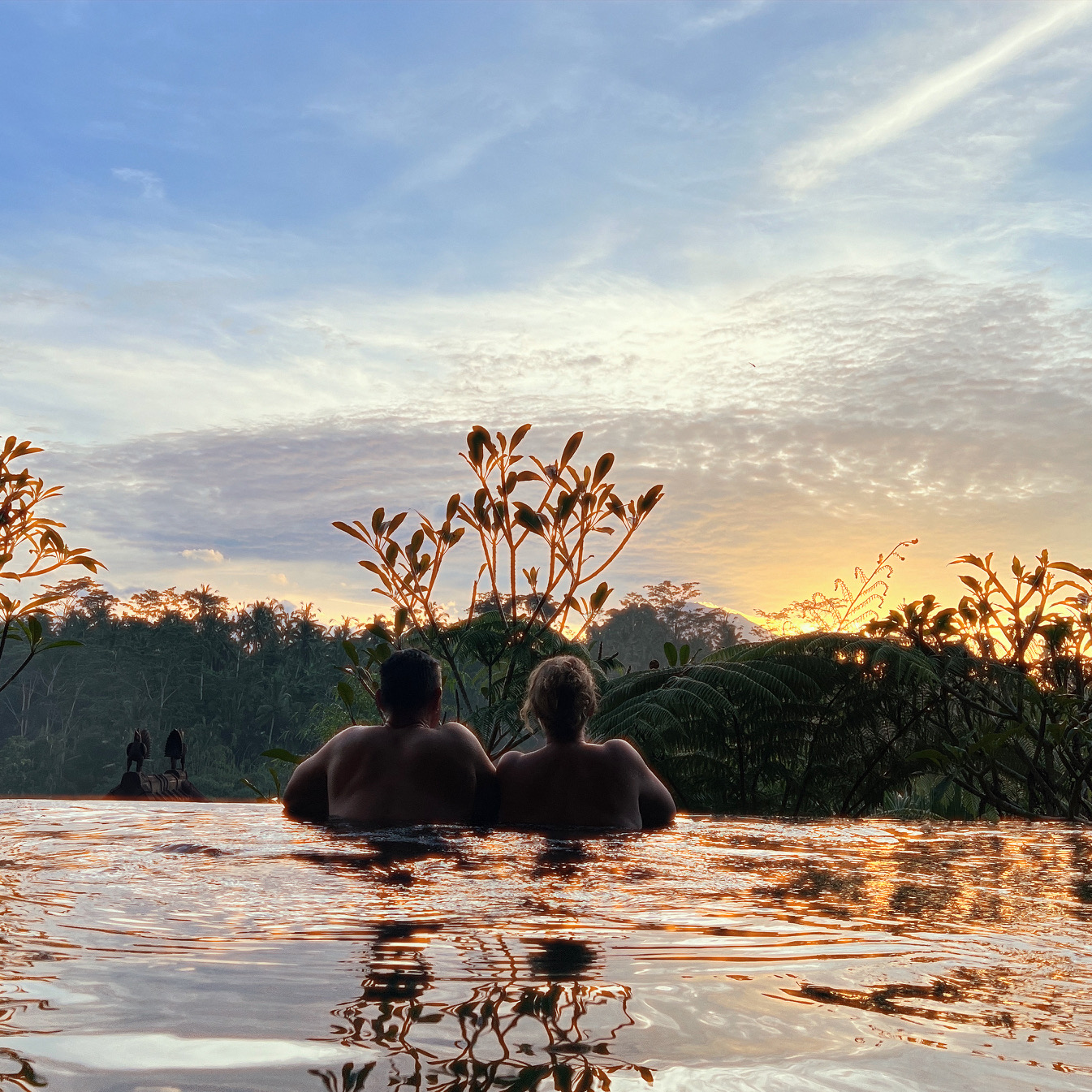
Roosters, birds and forest sounds awaken me and I know that no matter how sleep deprived I might be, the view needs to be viewed and damn I am not wrong! Soft light reveals jungle as far as the eye can see (which is not super far with my bleary eyes!) The roof of the building in front of ours has a proud statue of a rooster and the pool reflects frangipanni trees so clearly it’s hard to distinguish reflection and reality.
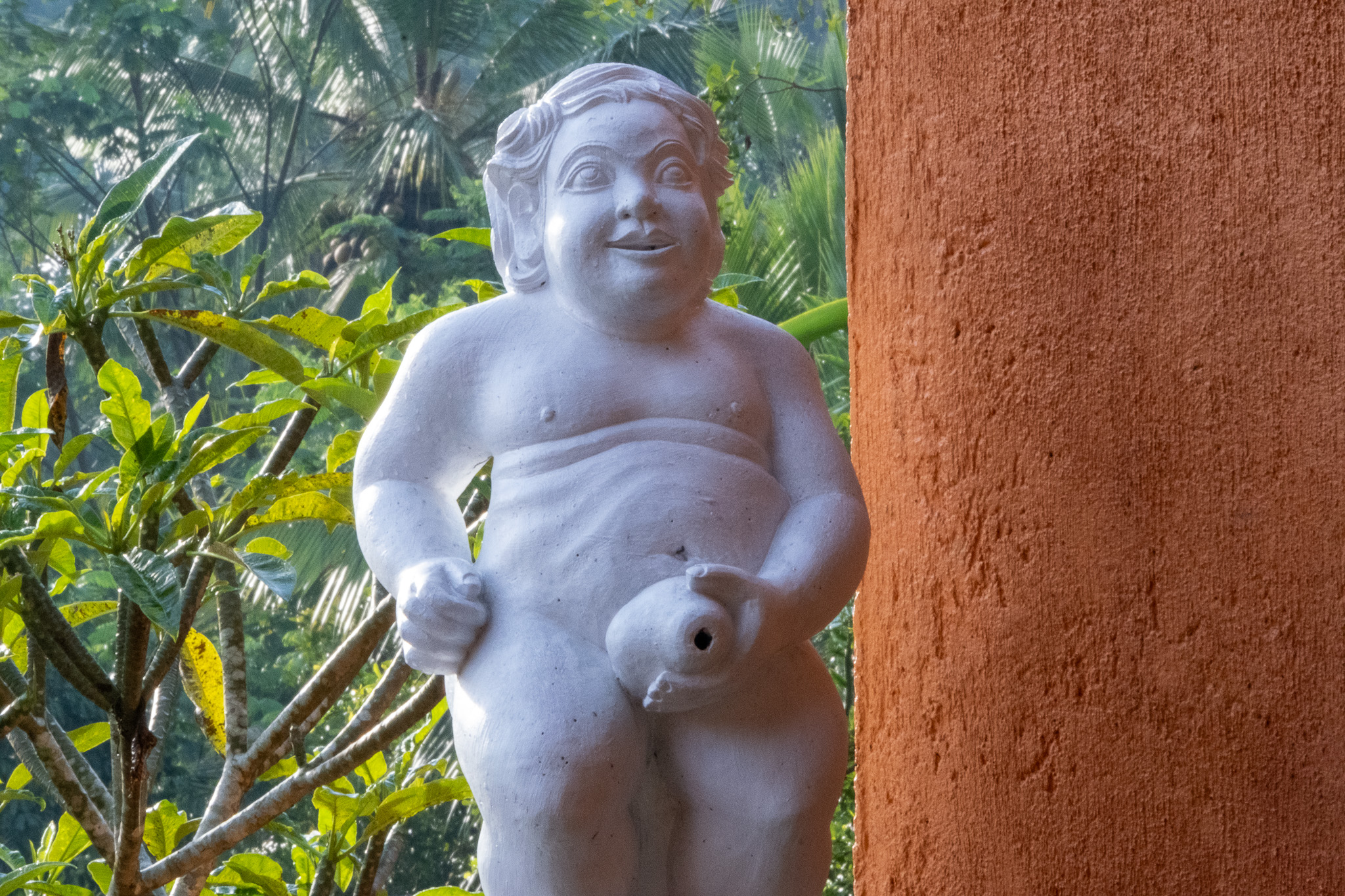
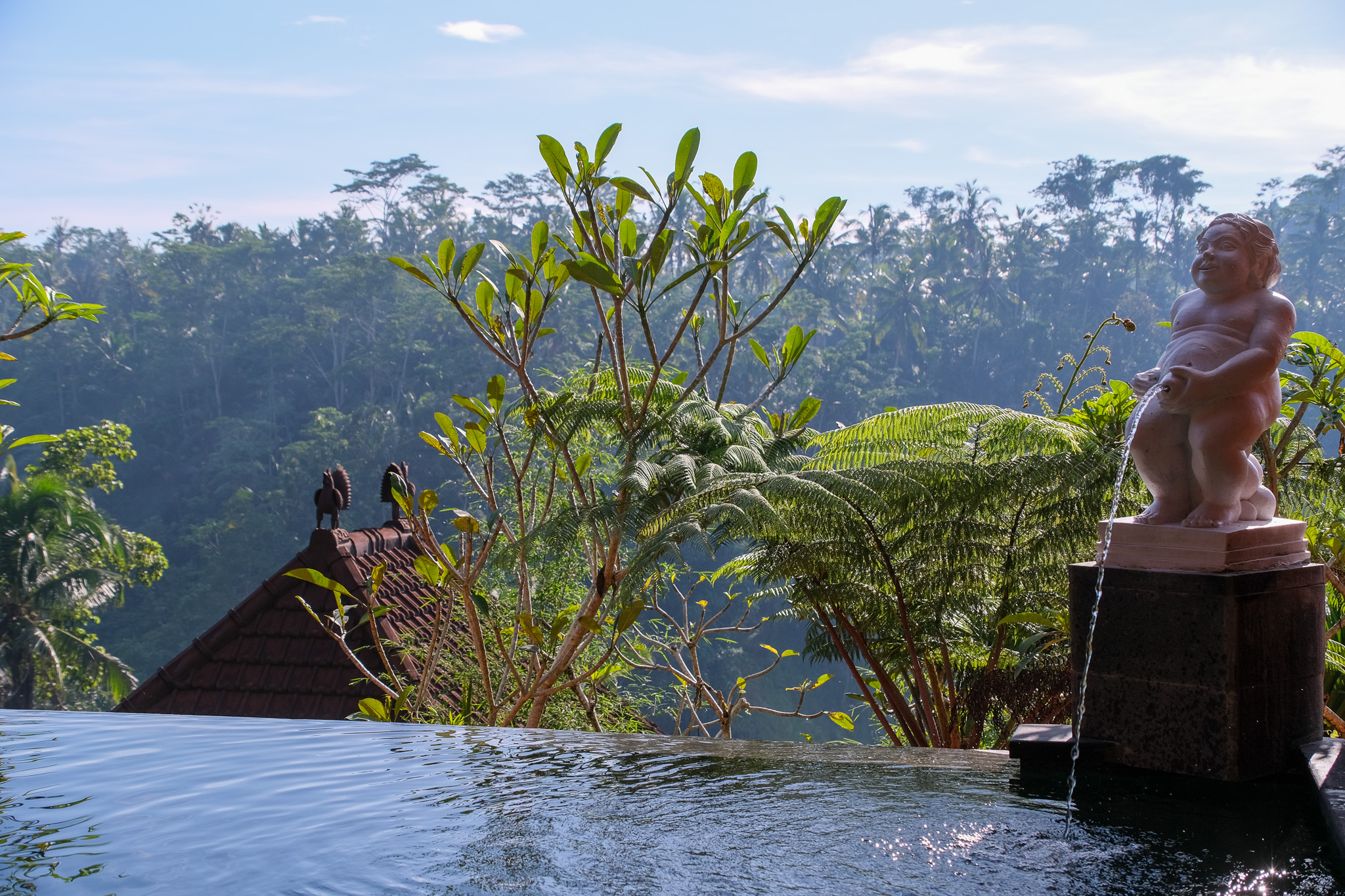
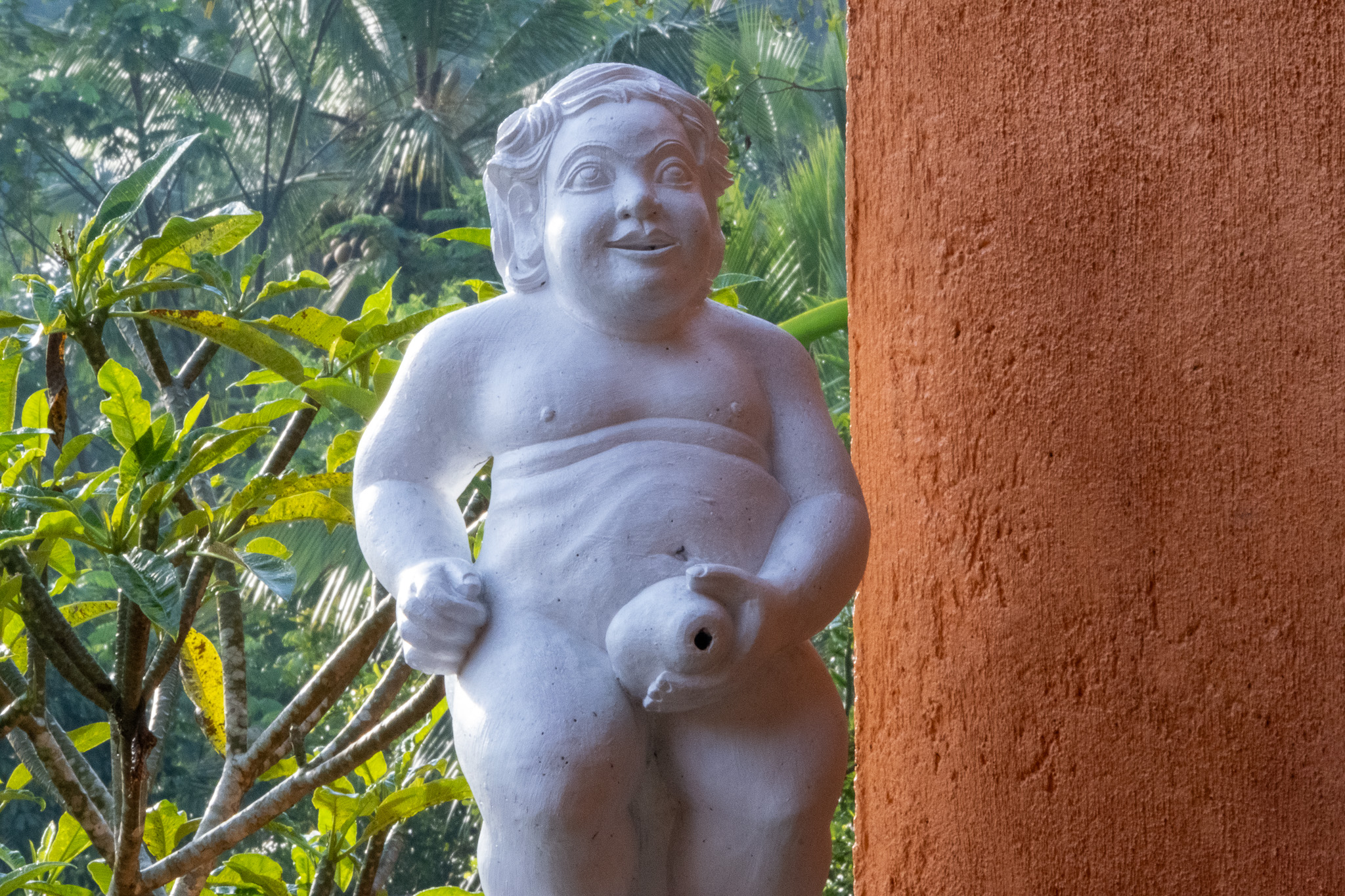
The water in our pool is a cool green and we have the obligatory pissing boy on the corner, waiting for the fountain to be switched on so he can piss into our pool. The sounds are times ten louder outside the room – roosters, cicadas, frogs and birds loud and encompassing. I have indeed landed in paradise!
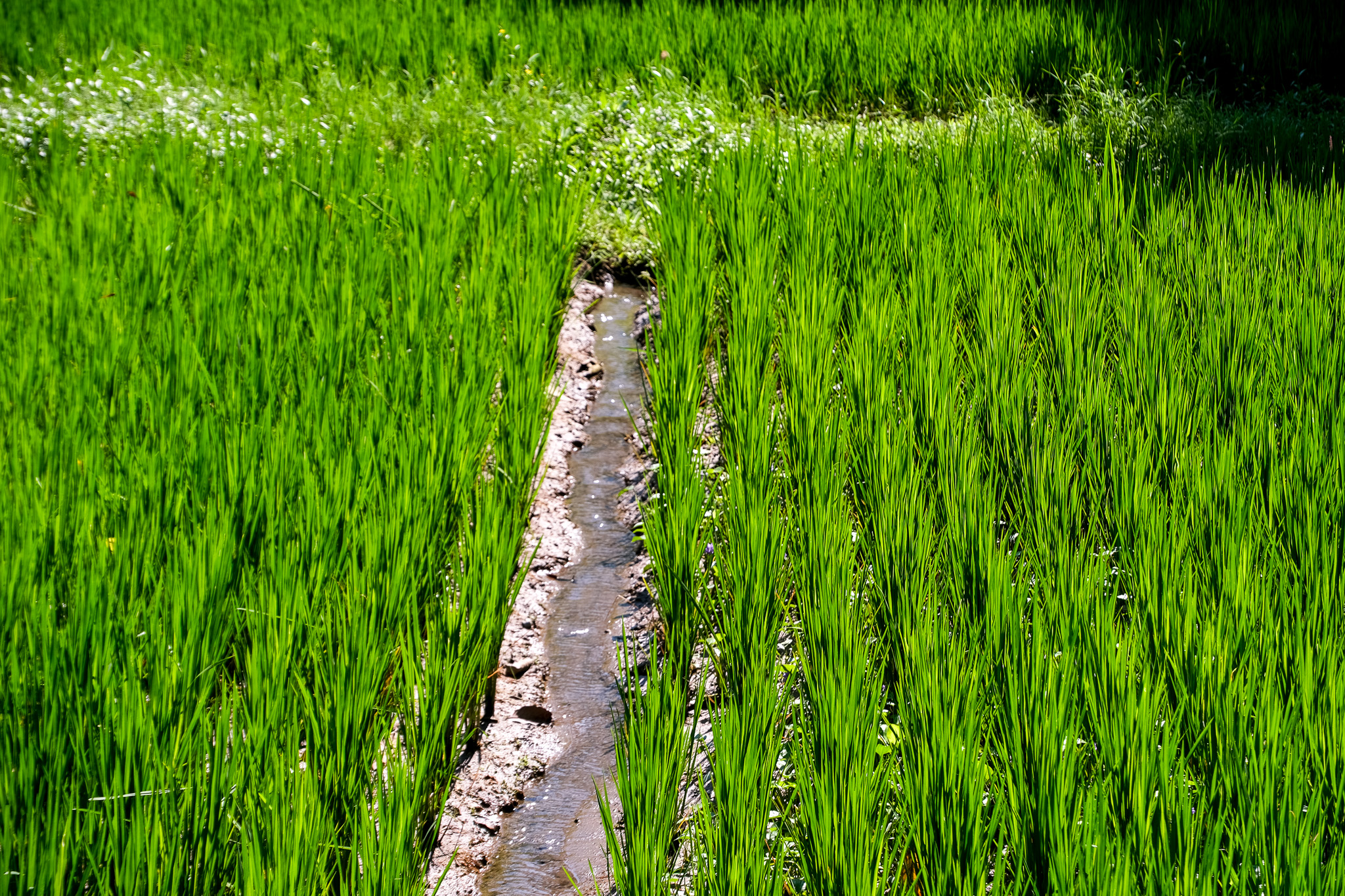
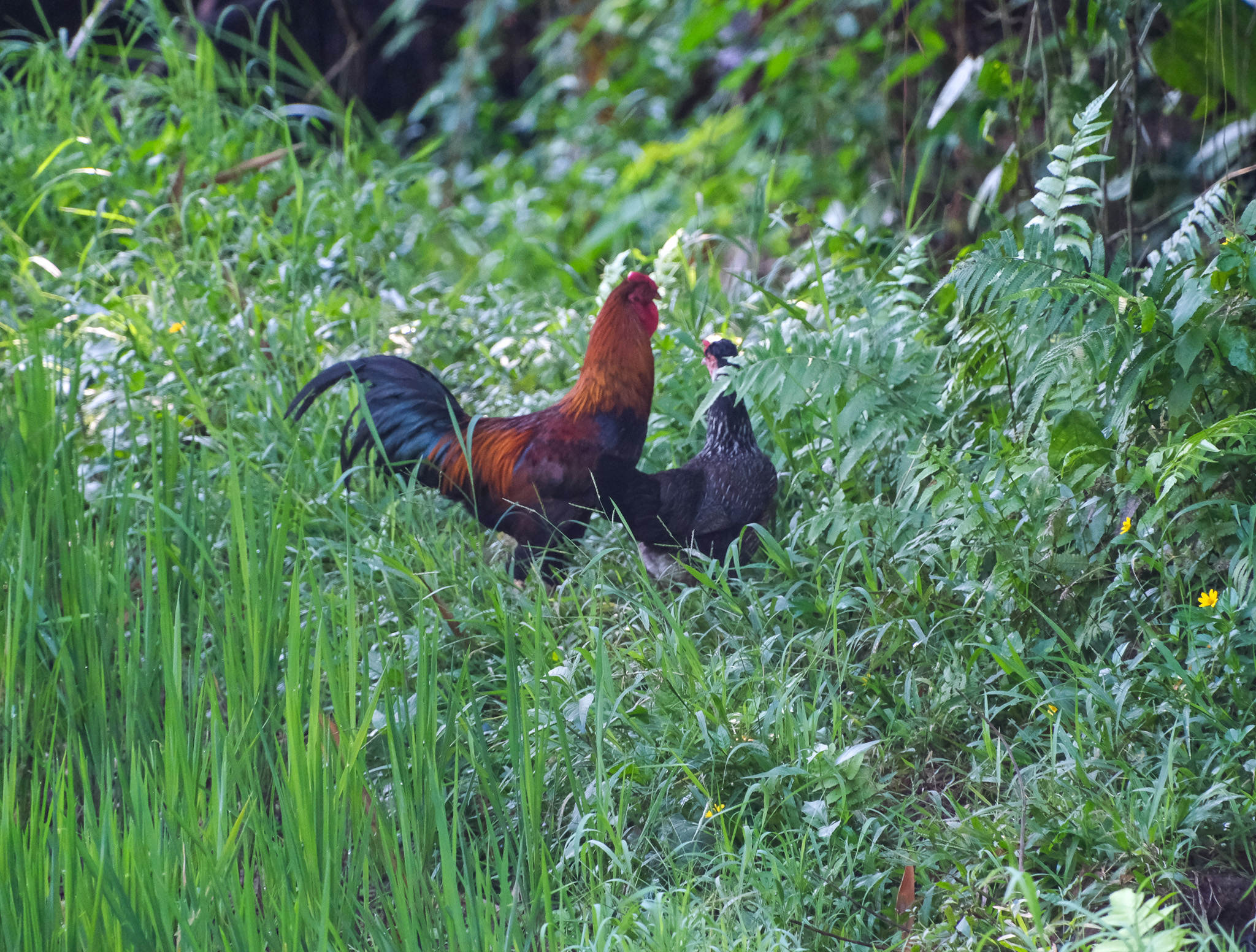
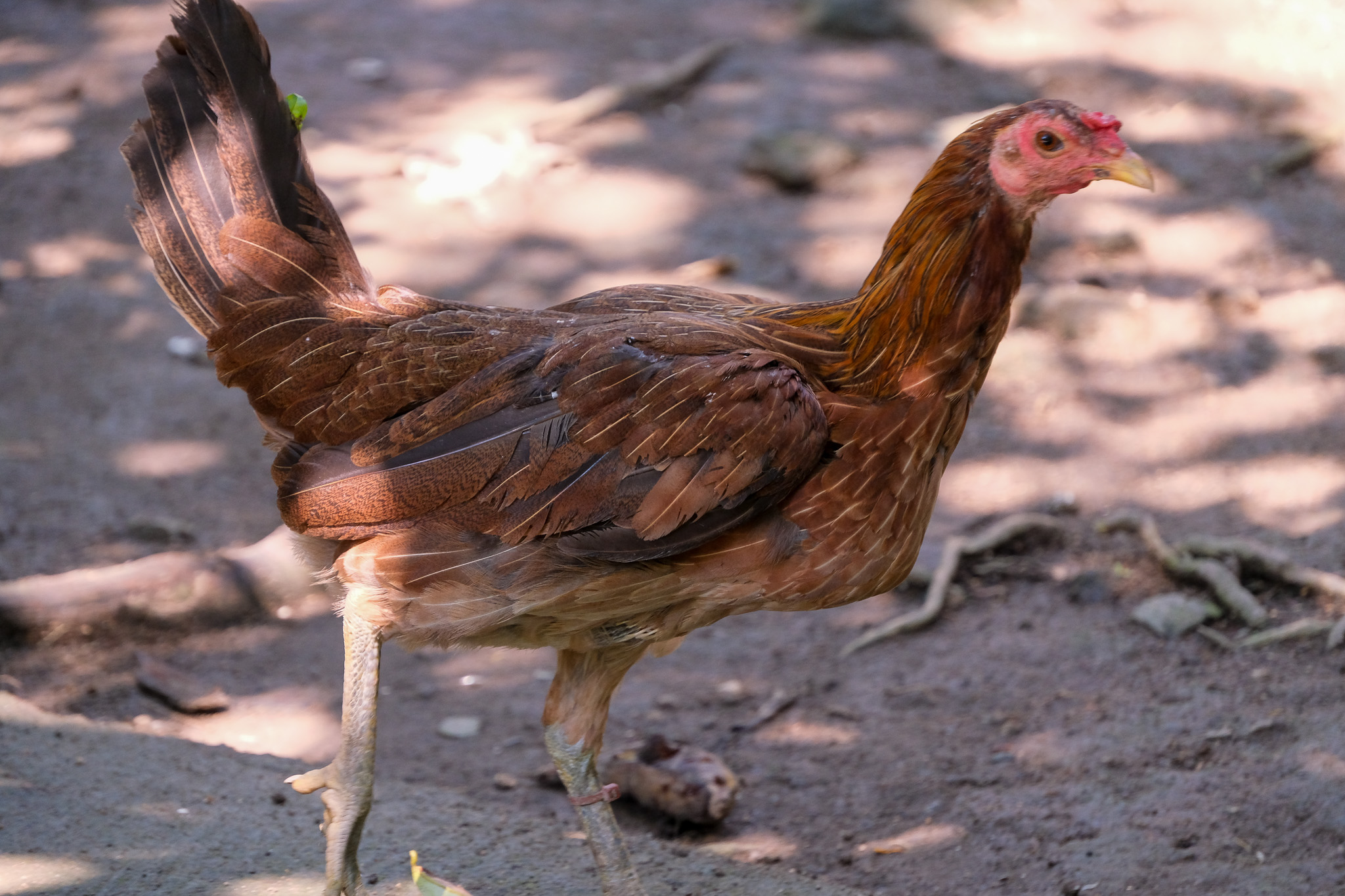
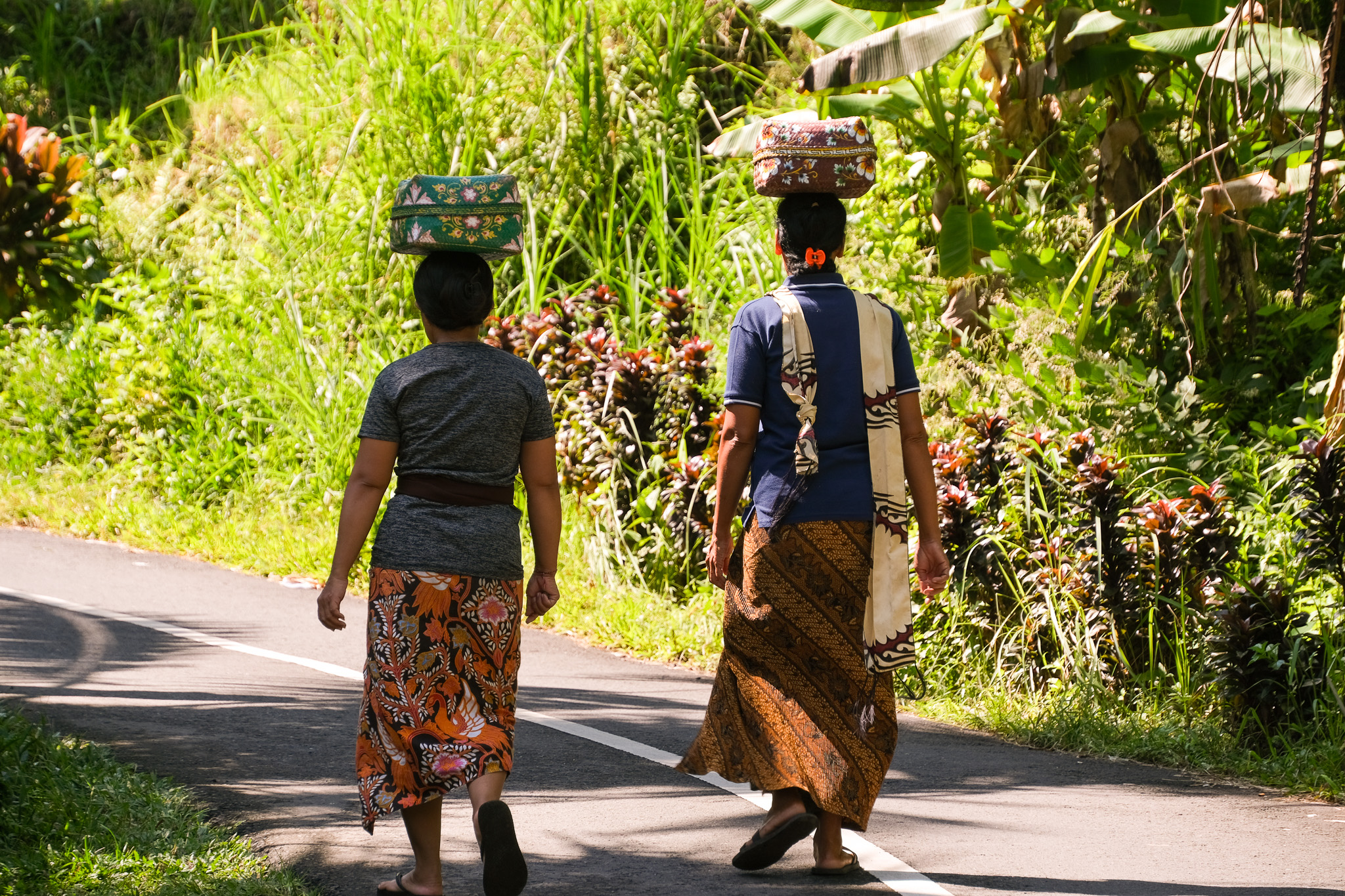
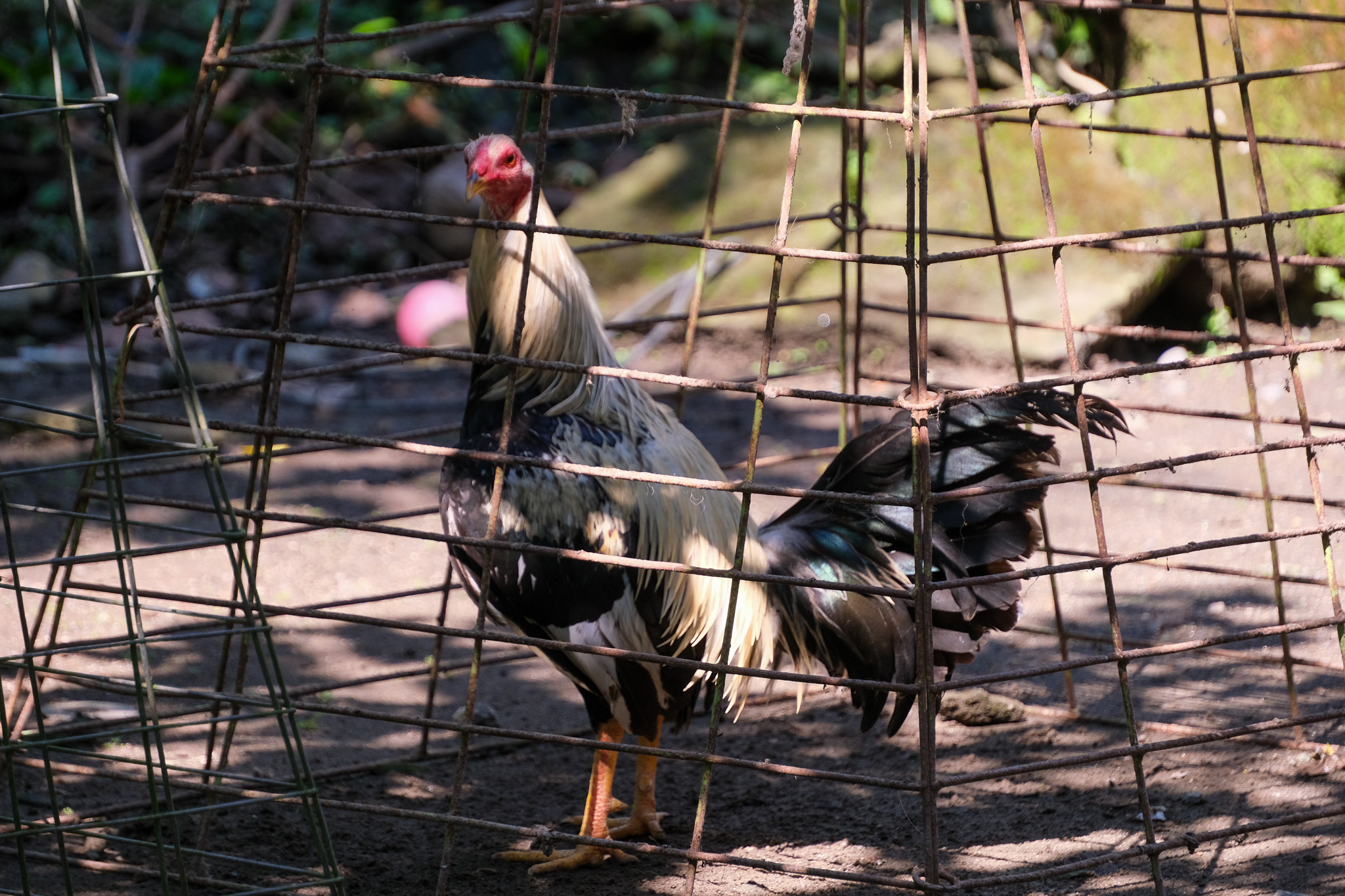
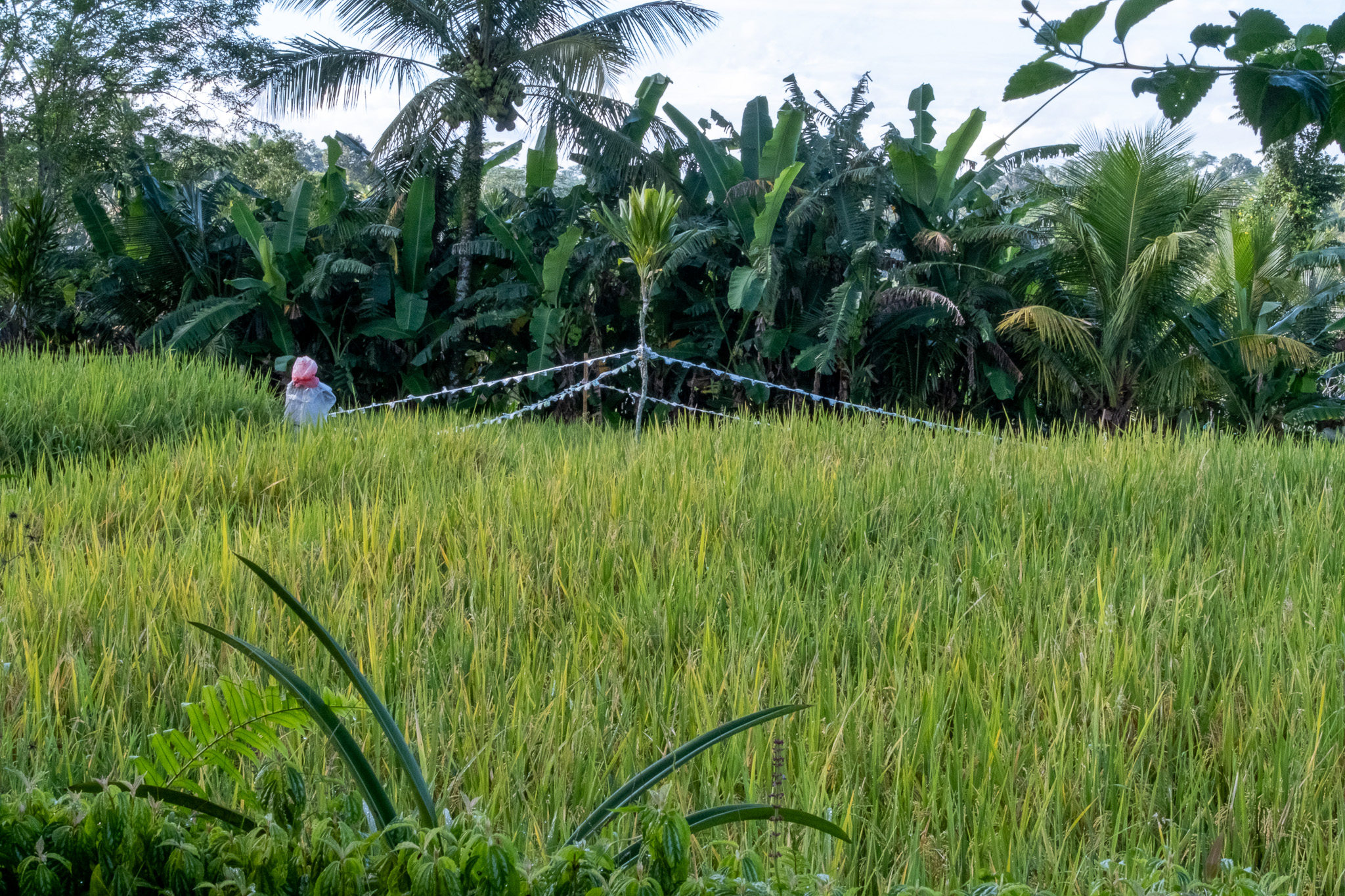
We have a day of wandering to water falls down narrow country roads flanked by rice fields and jungle. Two Balinese with woven carry baskets balanced on their heads stroll effortlessly before us, their low murmurs floating back to us. Chickens, athletic looking Balinese chickens, with long legs and no fluff forage roadside. A proud cockeral is locked in a small wire enclosure declaring his distaste for being locked up. A fighting cock perhaps?
Bali dogs never restrained and incredibly streetwise trot around with tails in the air. They don’t care for people. Two dogs see us off as we pass their property and check out two perfectly restored split-screen combis. I walk without looking back, unleashed dogs freak me out – twice bitten, always shy!
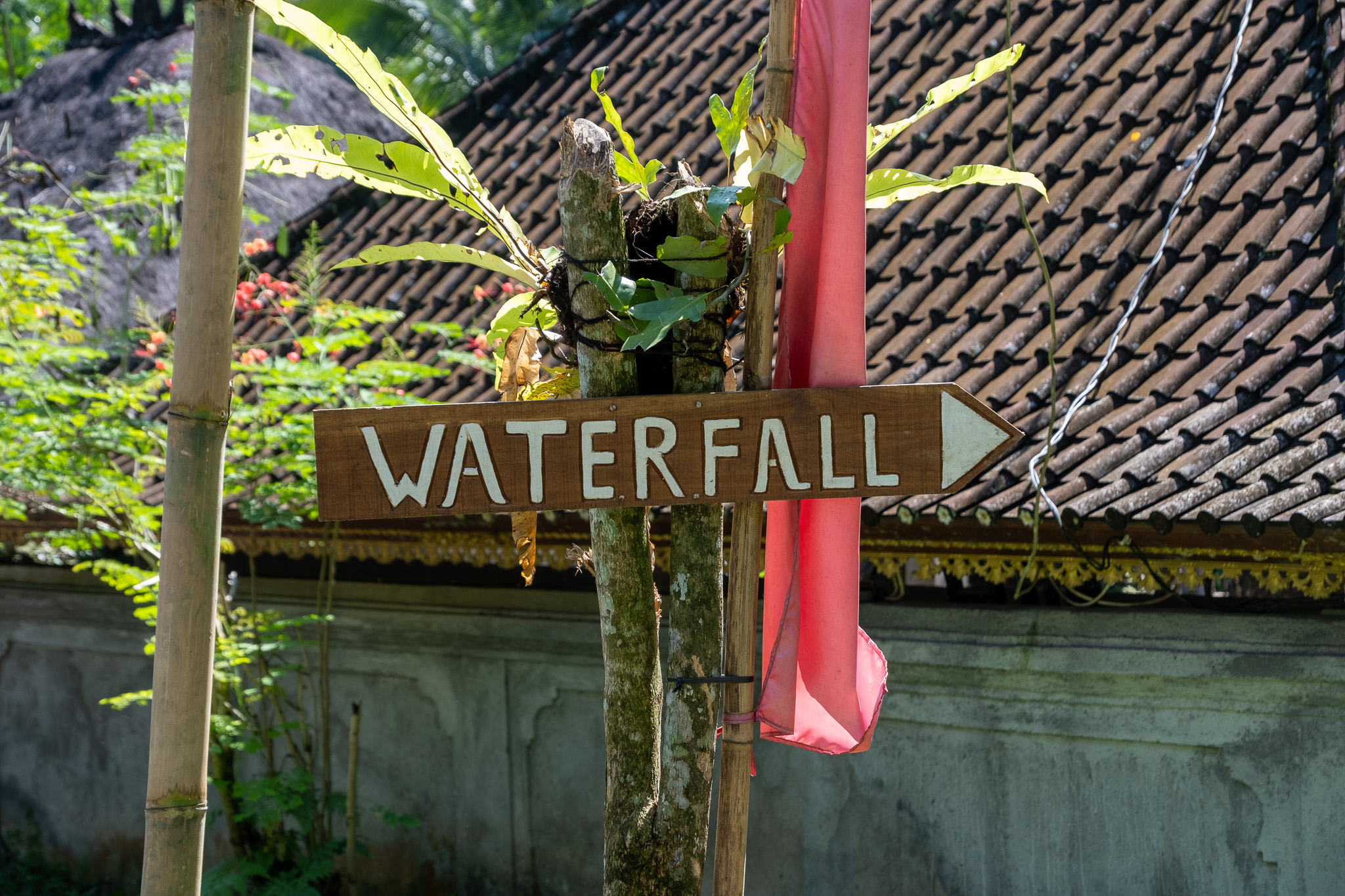
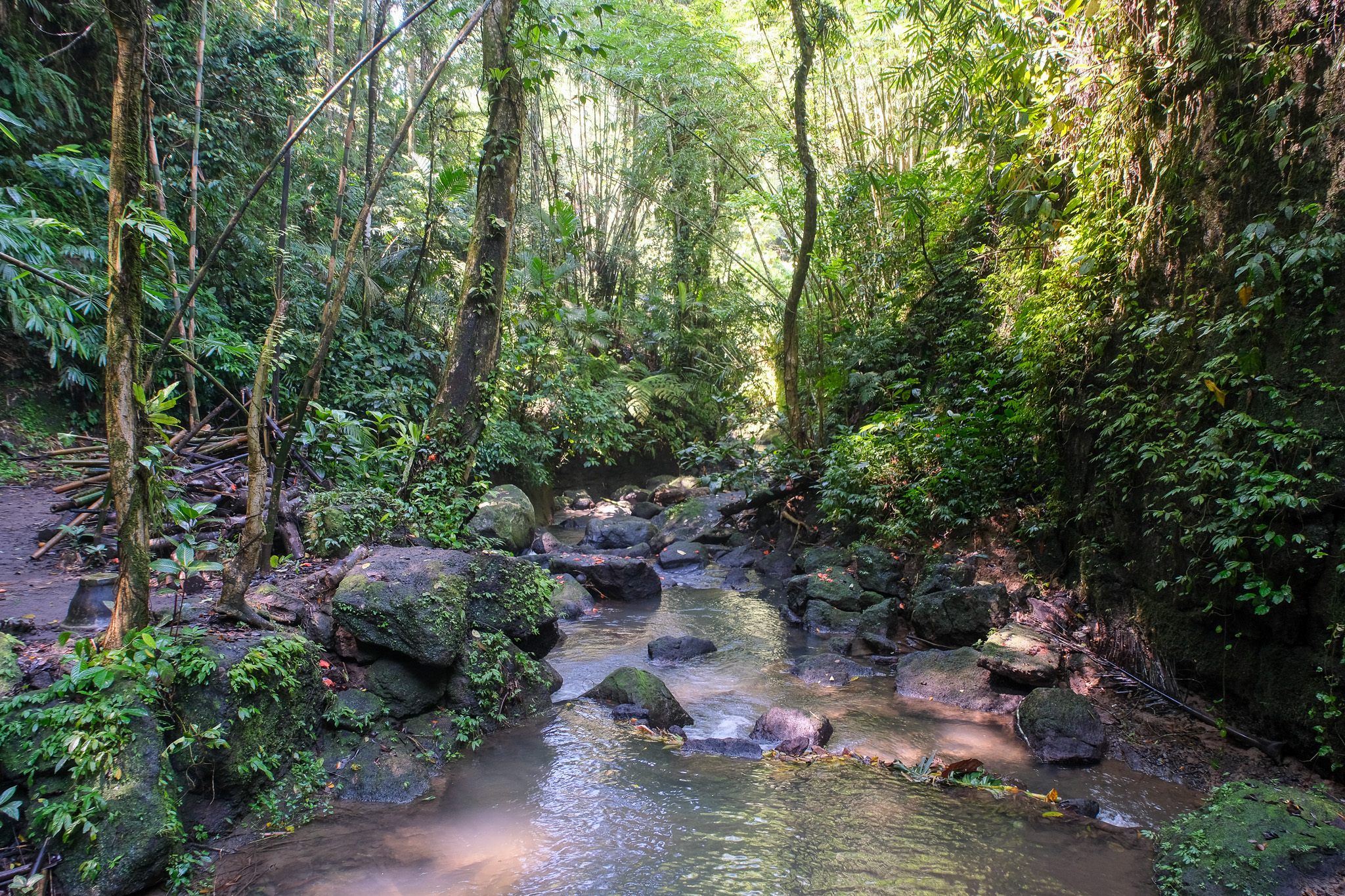
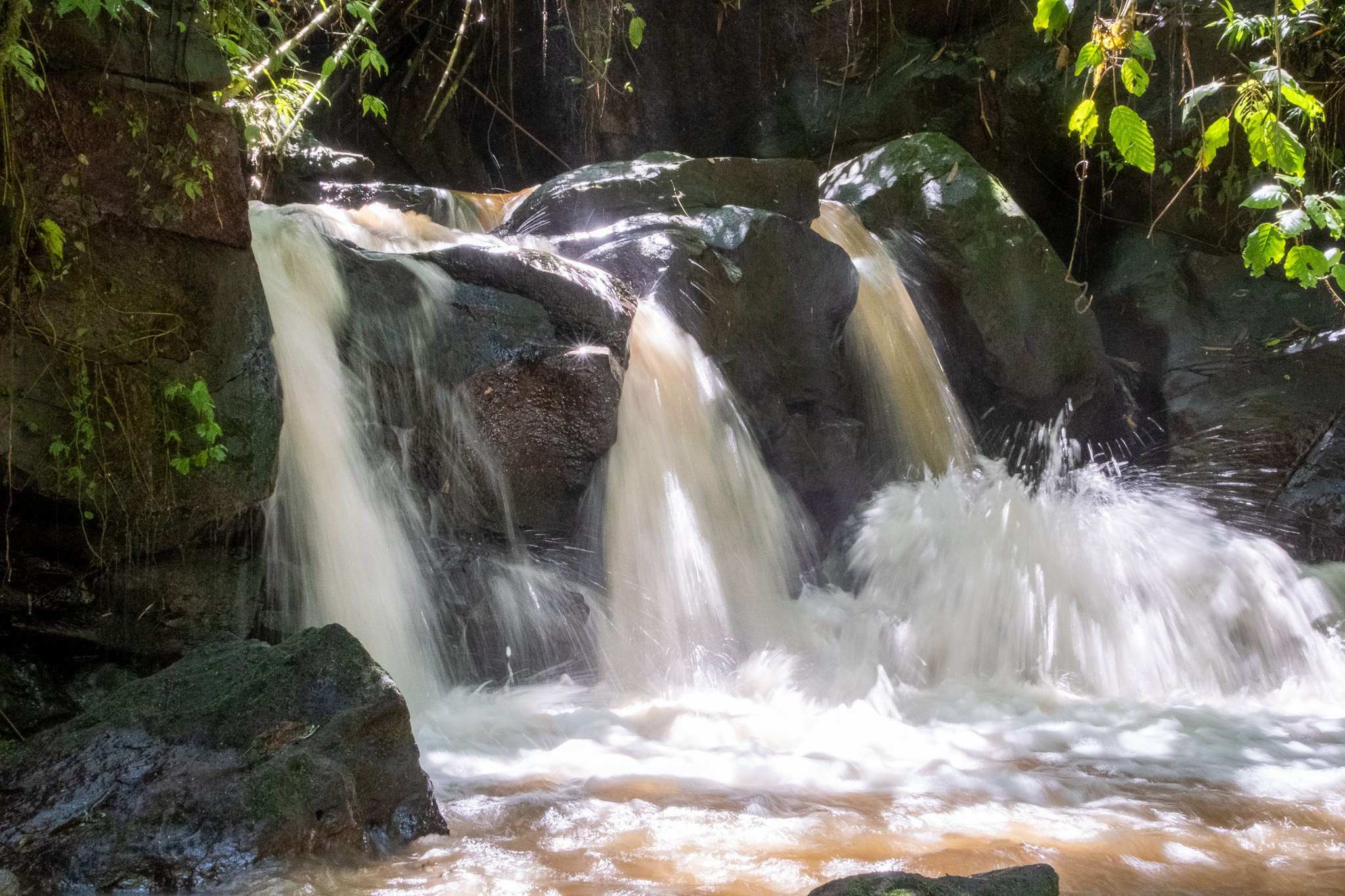
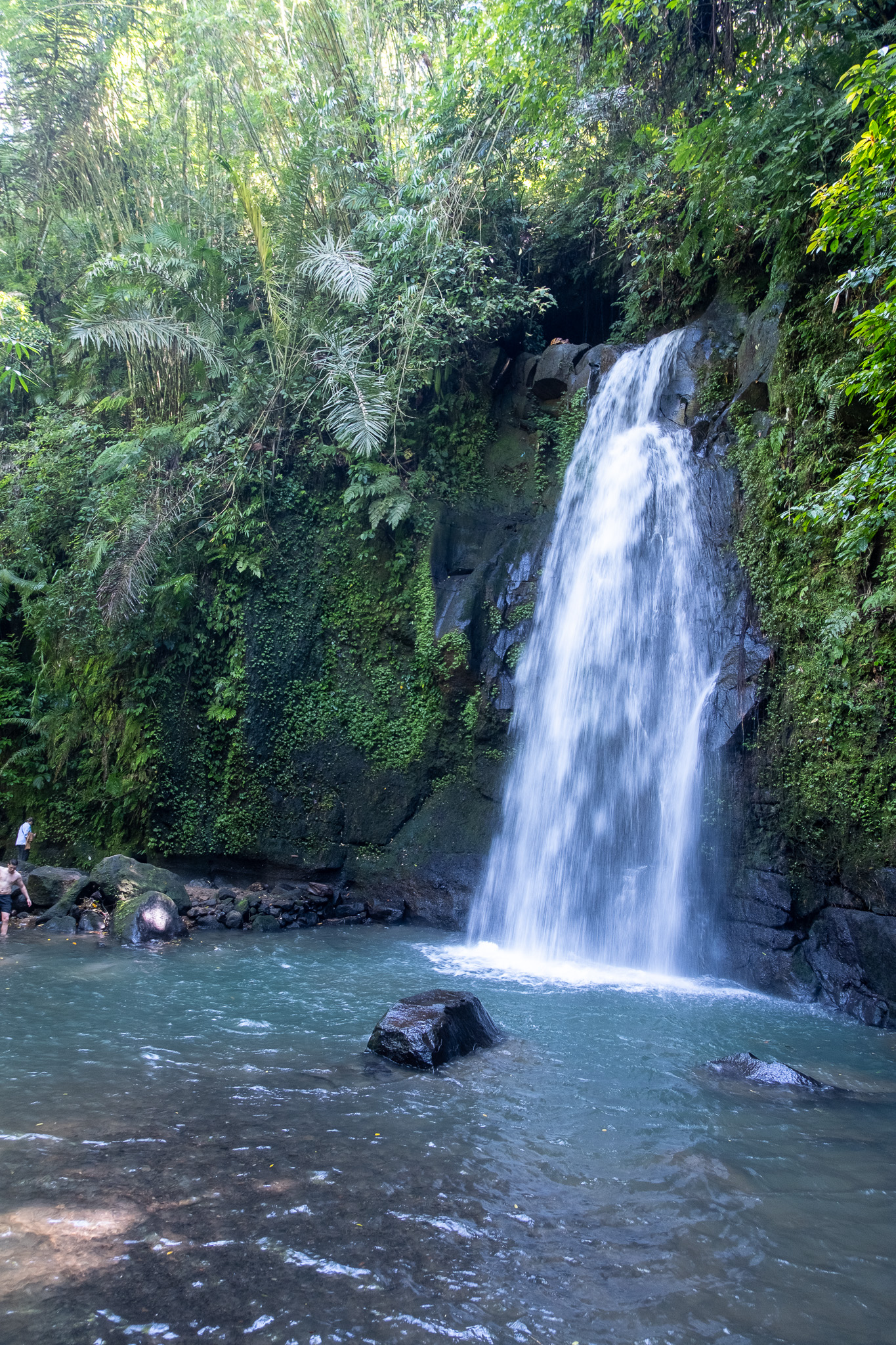
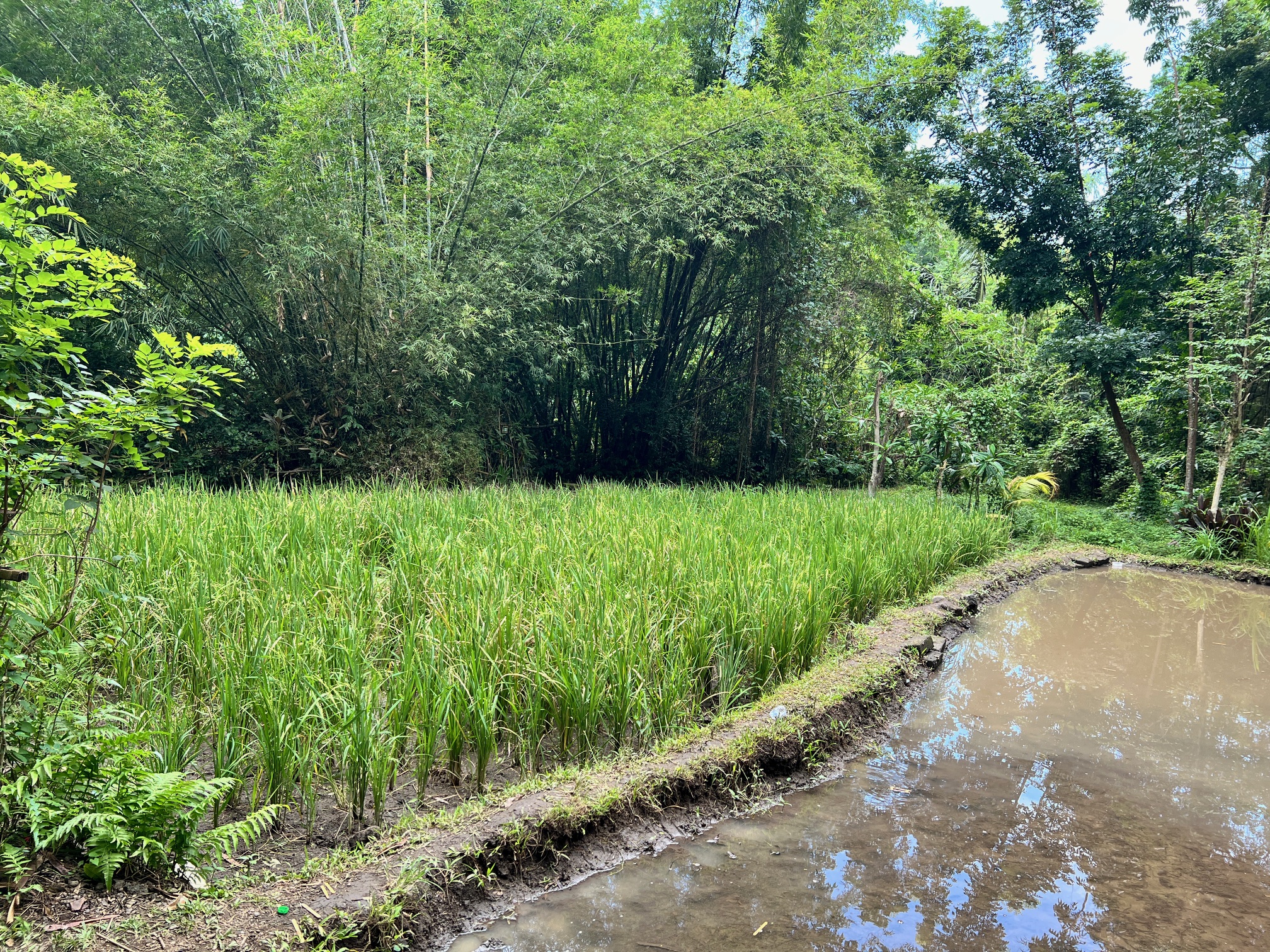
The waterfalls are not far down the steep road. 60000 Rupiah to enter Ulu Petanu. We can hear the water thundering from the road. Below the falls are hundreds of colourful carp swimming lazily with mouths agape and tails swishing. The ground is muddy and mud squeezes through our toes and hiking sandles.
The main waterfall is where everyone stops and strips down to their swimmers for Instagram pics – most don’t venture any further up the jungle path. We leave them all behind to find ourselves alone at the next small fall where we hold onto a rope and cross the river to see if we can find the cave that is apparently close by. No luck.
When we get back to the main fall the crowds have increased and the queue to get your insta pic is long. There are entire tours with the title ‘Instagram Tours of Bali’ it really is quite amusing.
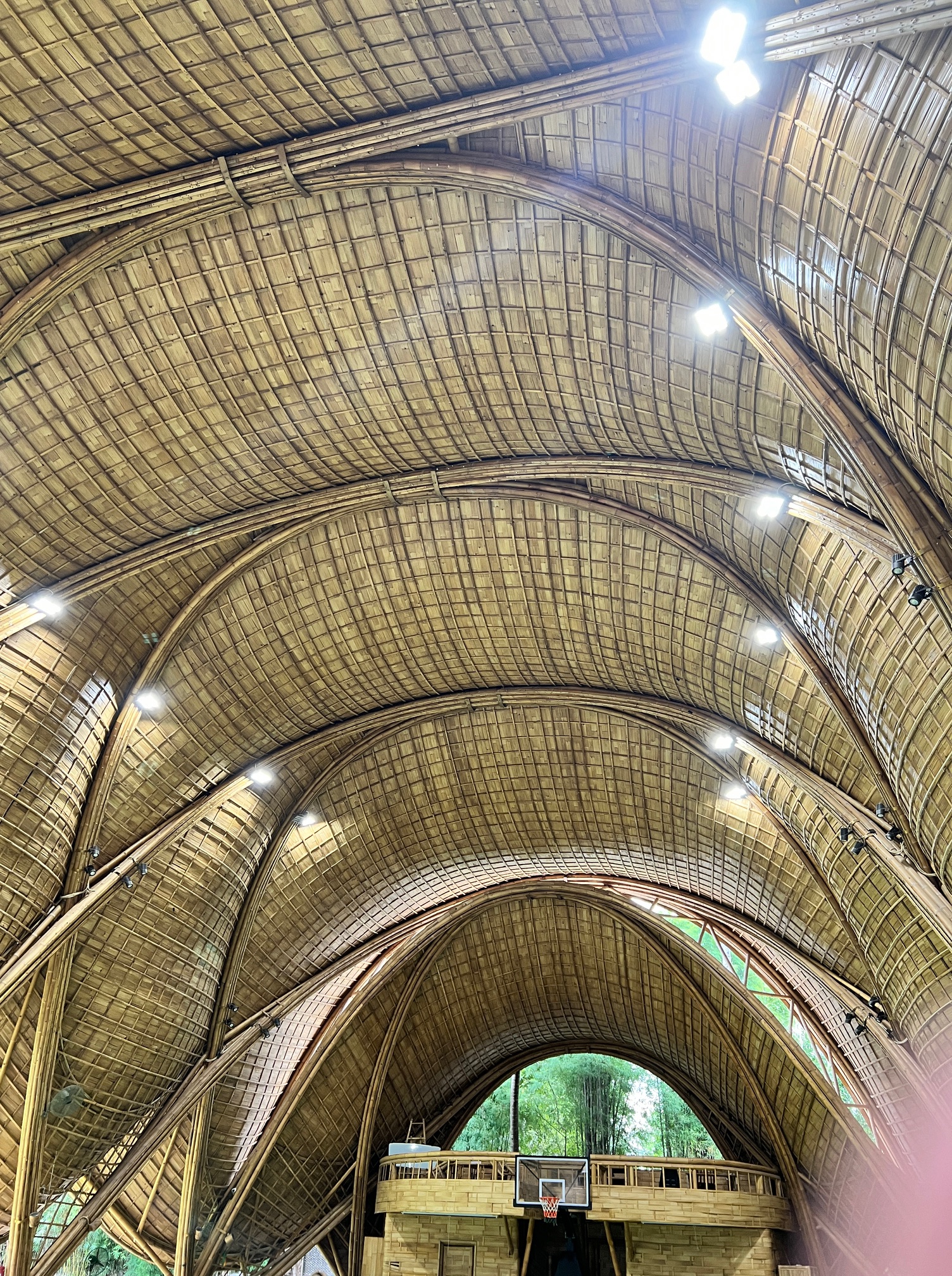
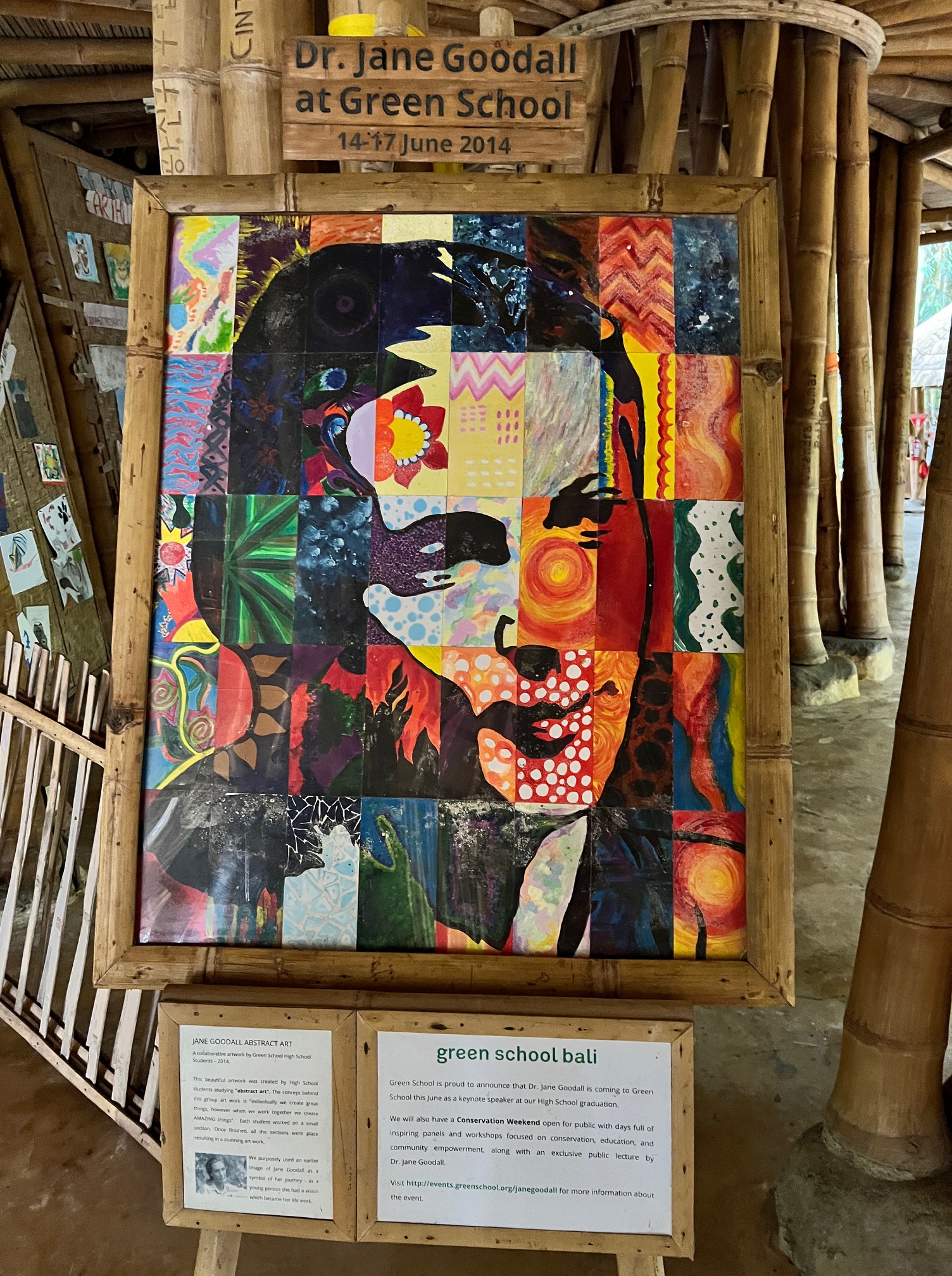
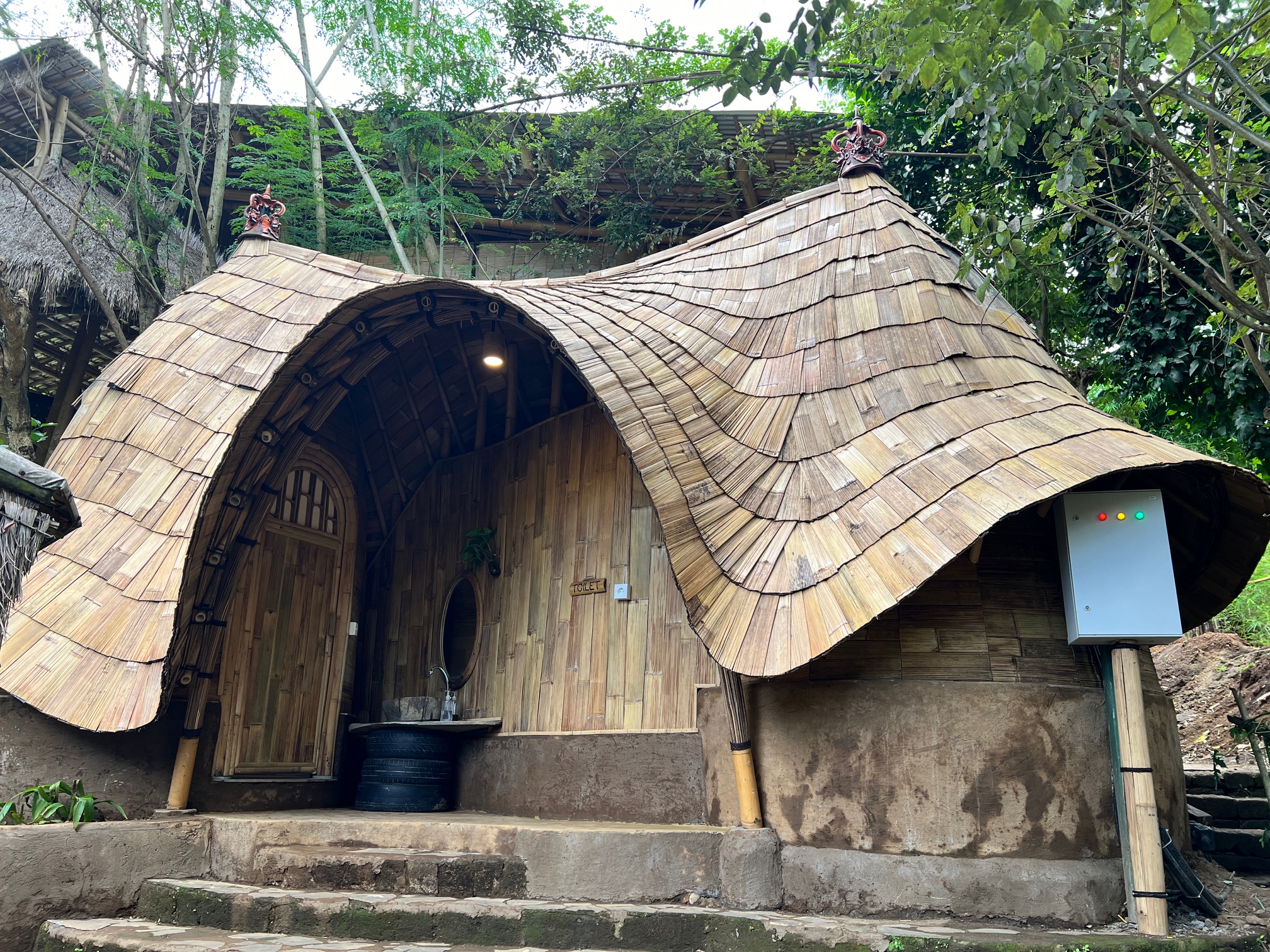
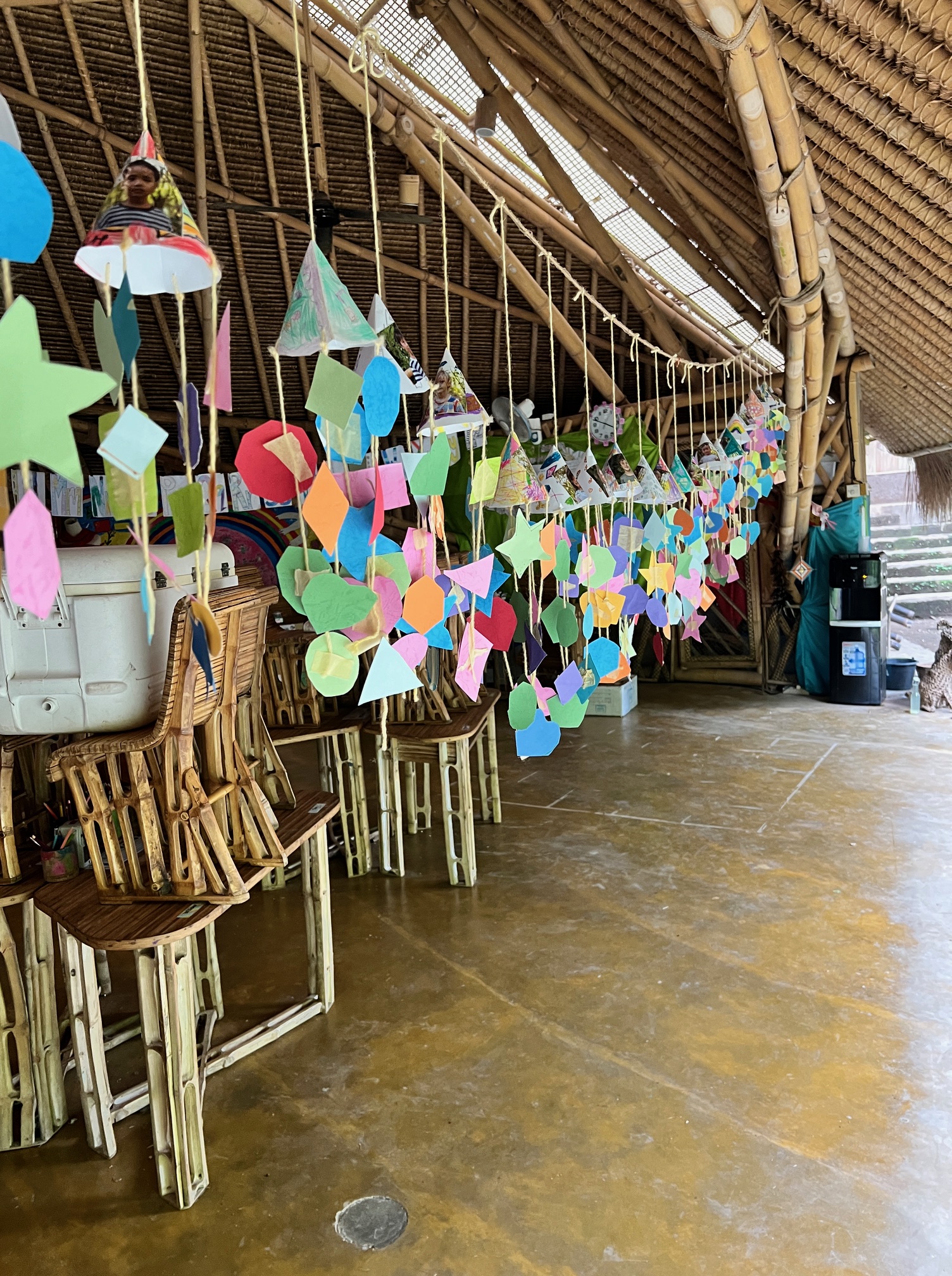
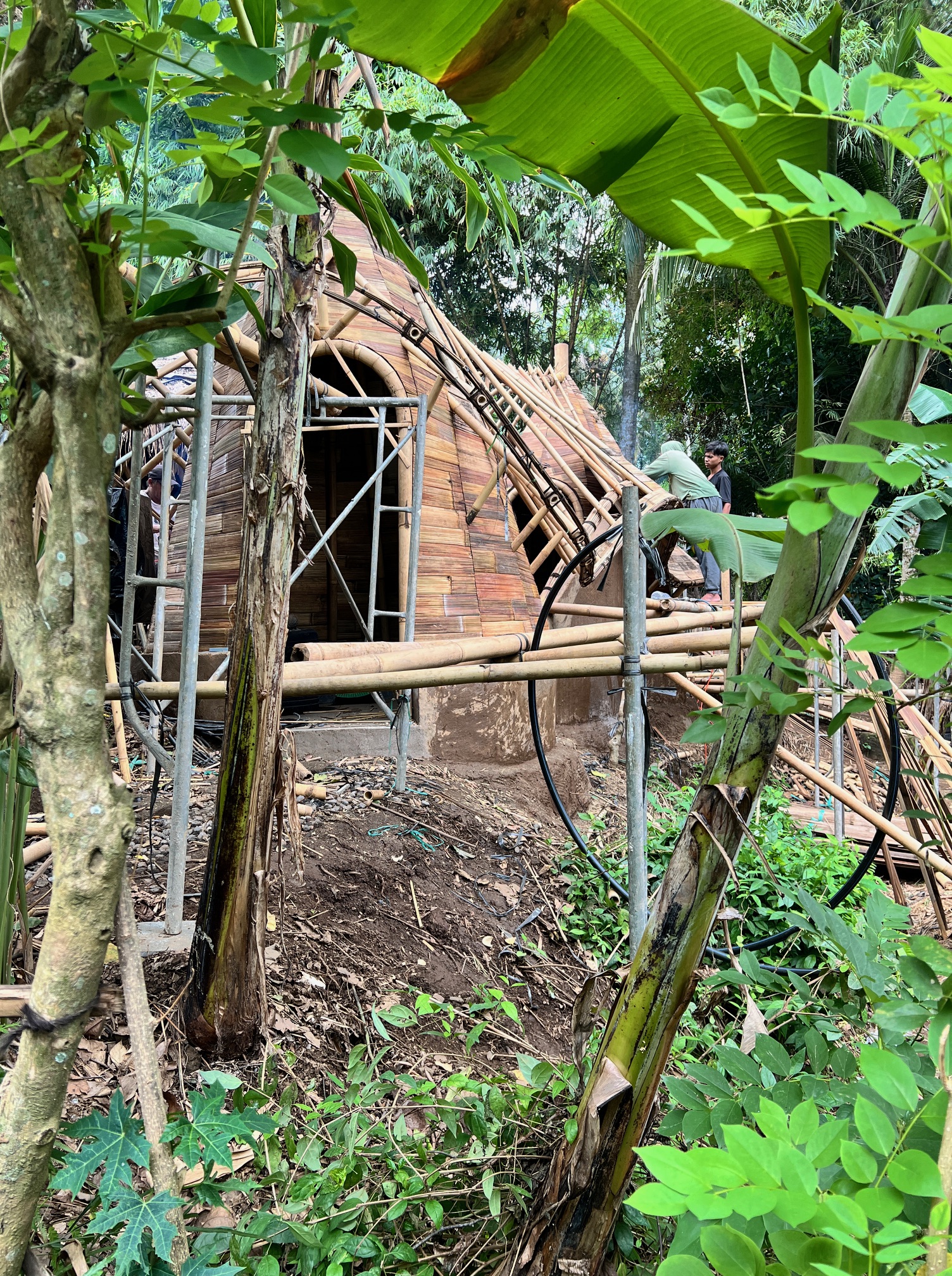
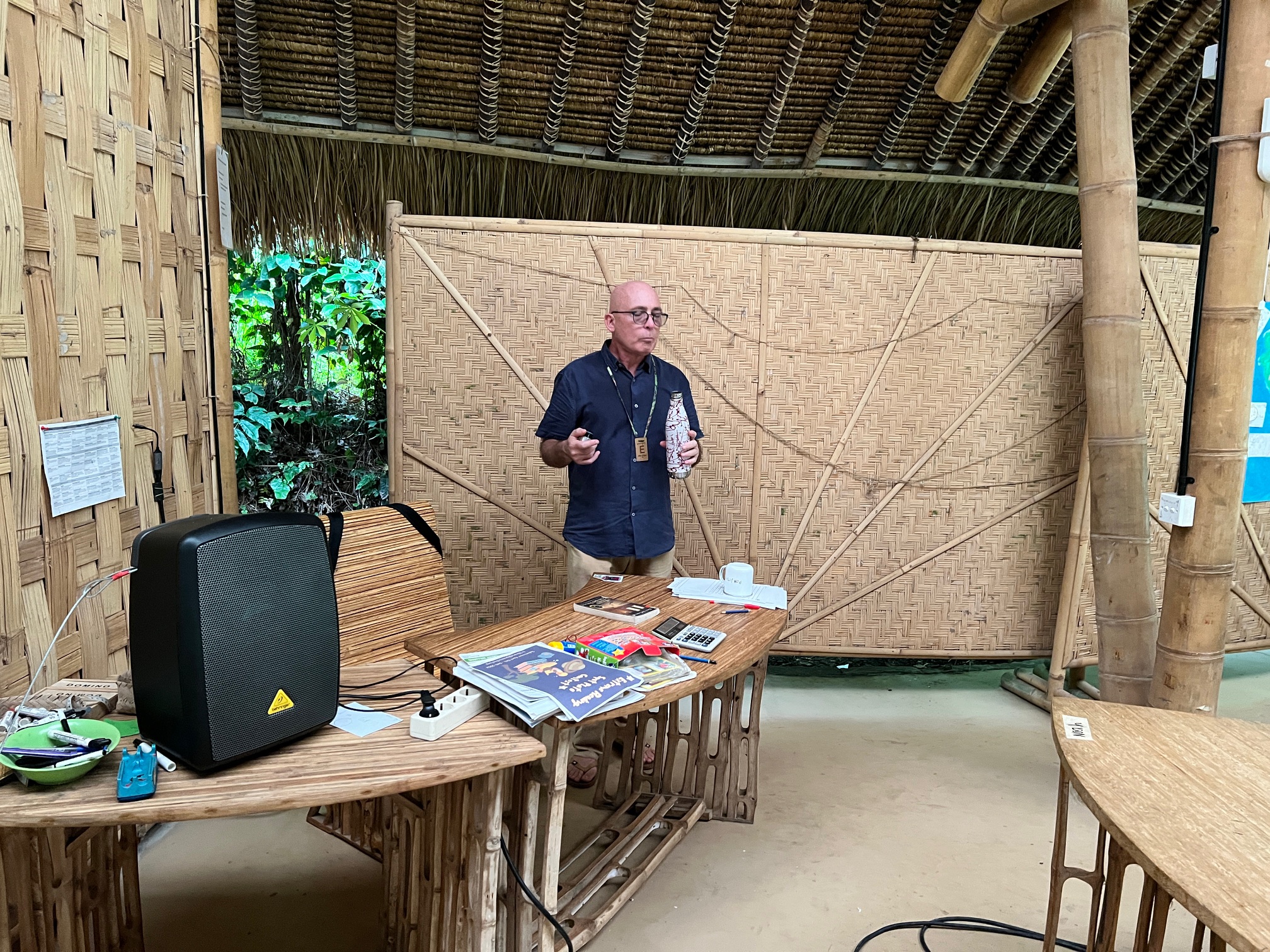
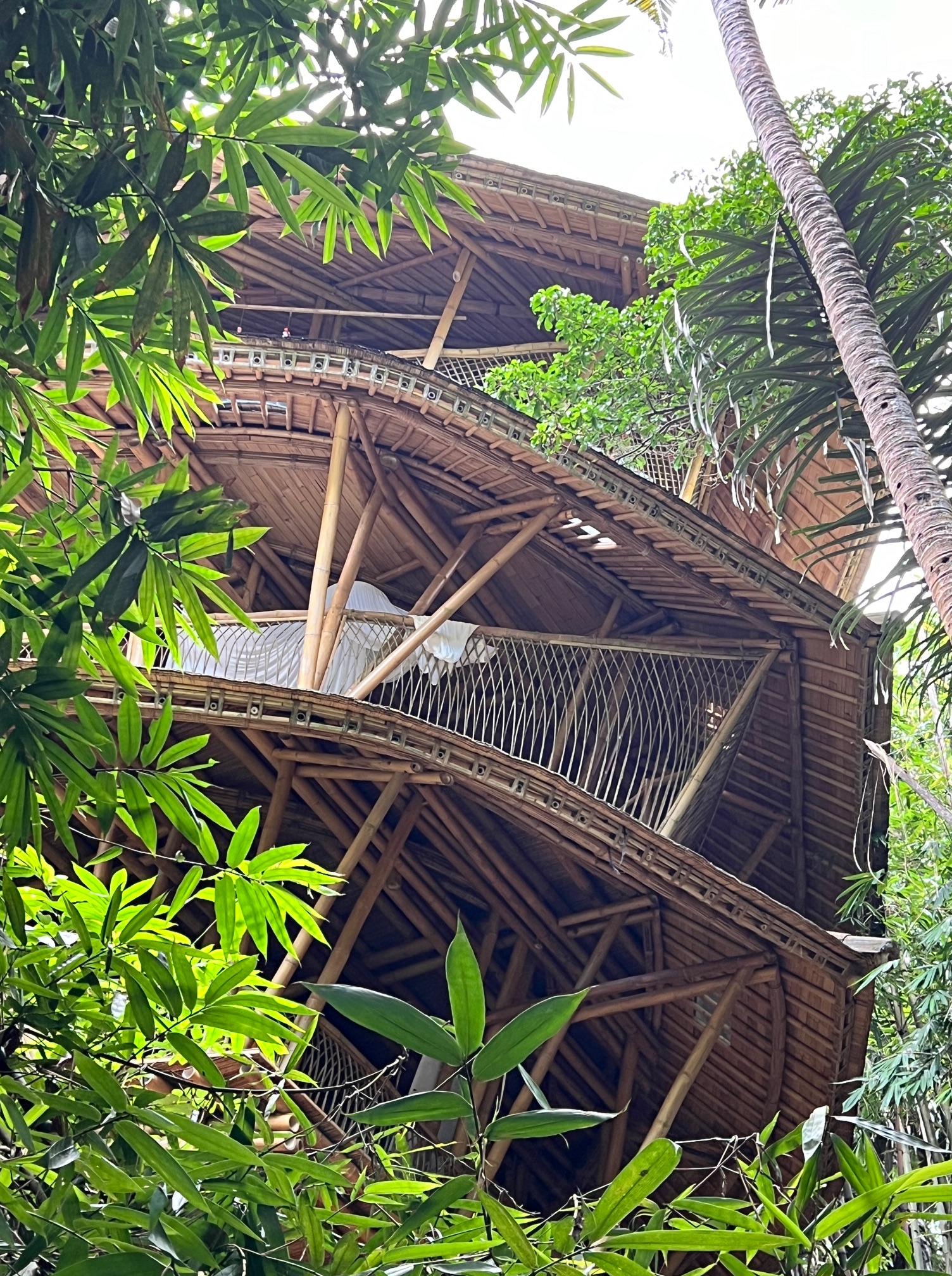
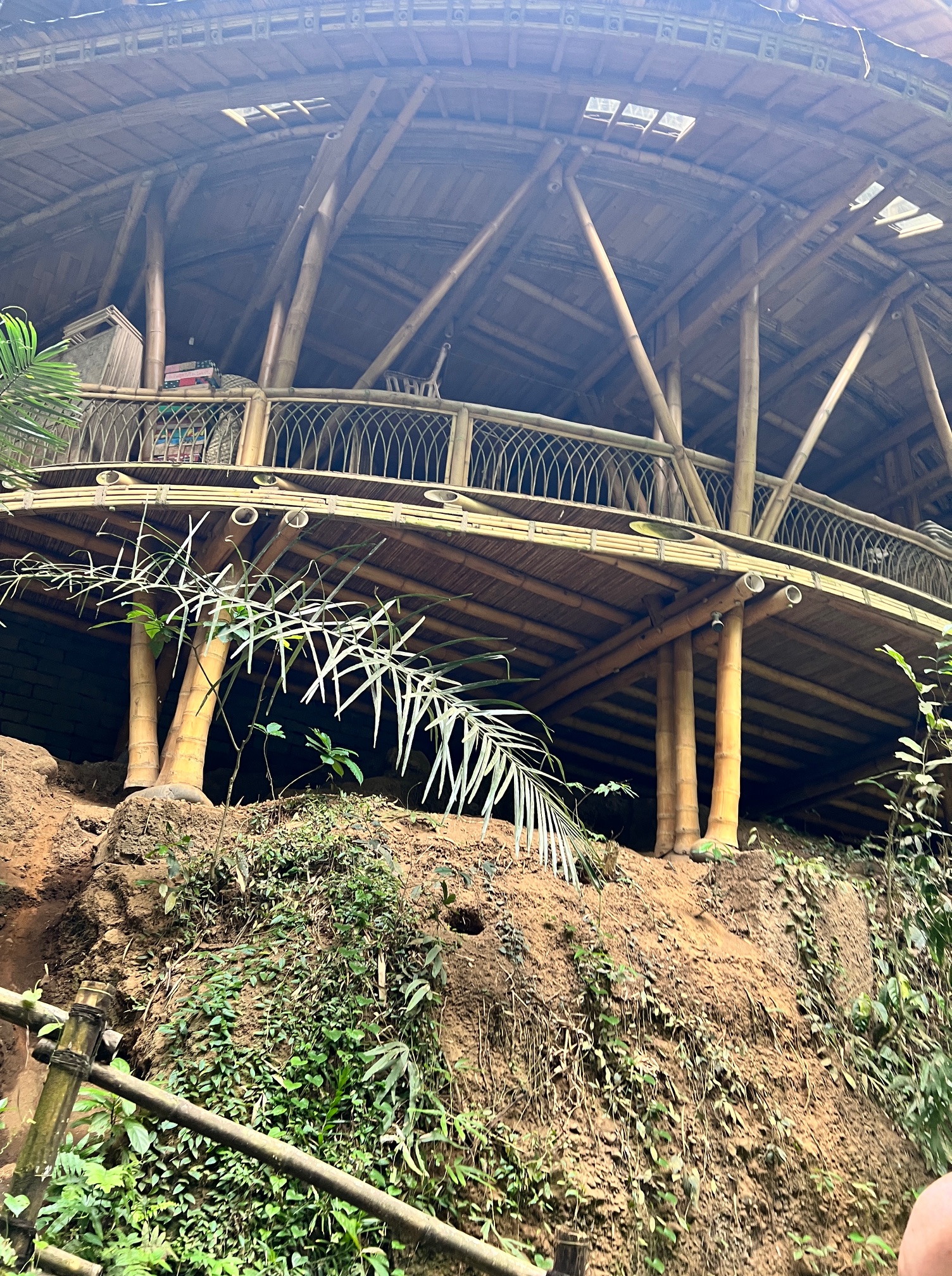
We decide to head back to paradise. Wait, what – I think we are already there! Later that afternoon we meet up with my great friend and ex-teaching partner in crime, Jim, at the Bali Green School. Our trip back down the mountain now revealed in daylight what we couldn’t see the night before. We got the grand tour. Incredible bamboo structures, classrooms with no walls (hello open planning!) No airconditioning aside from fans and the jungle.
Animals with a chance of snakes including a mini herd of cows, pigs, rabbits, a pack of Bali dogs and a jungle playground with no restrictions, where the children run wild with no shoes! Every teachers ‘duty of care’ nightmare! They even have their own ambulance (I wonder why?)
Snakes are frequently spotted and removed during the school day. At the very bottom of the grounds is a mud pit where the kids play and learn. That afternoon’s lesson had been testing floating craft and the class went home covered in mud.
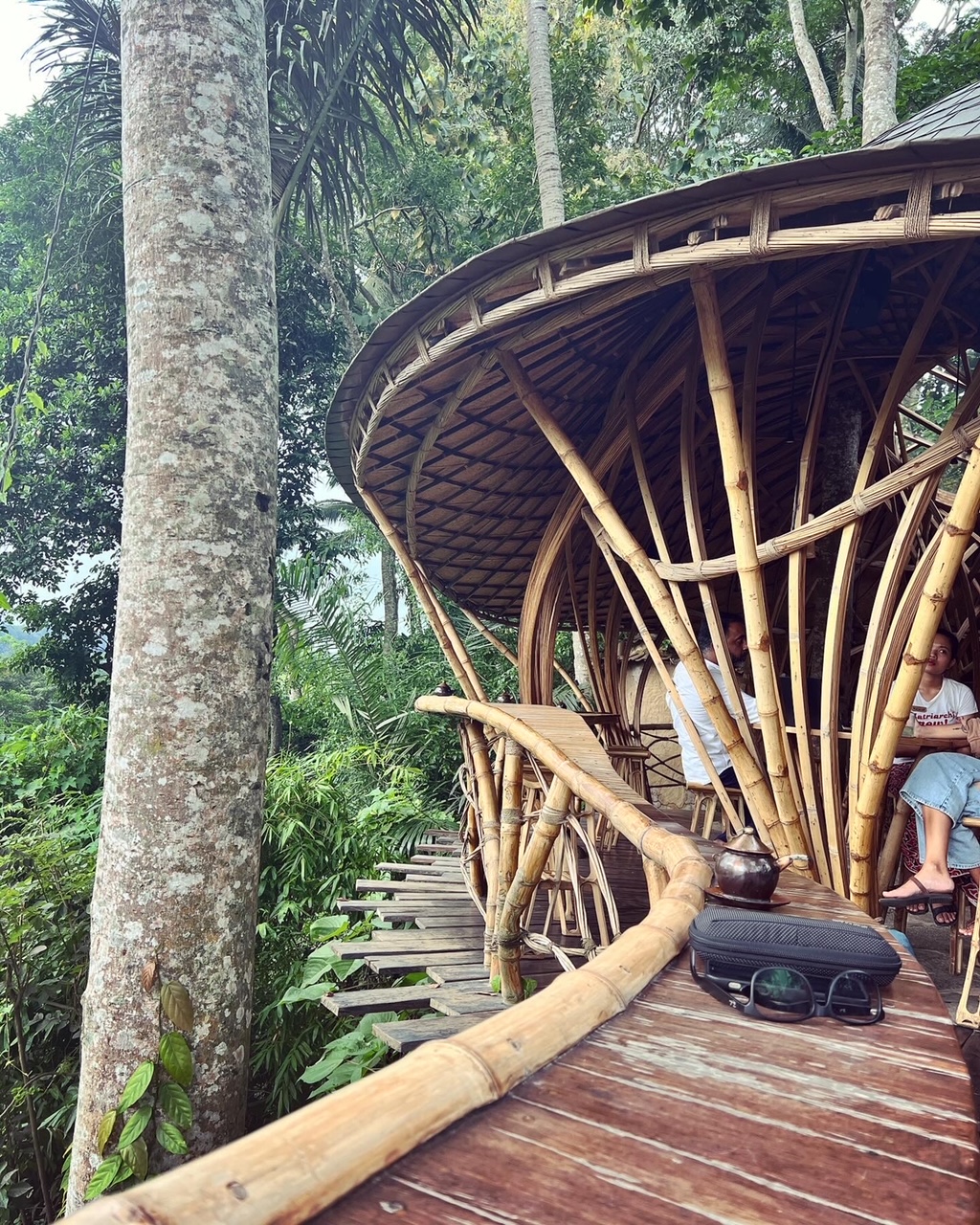
The tour over, we hand back our bamboo passes and wander across the road to a cocktail bar frequented by teachers enjoying Friday drinks. The cocktails are flowing and live music pumping. Two margaritas and some loose arrangements to meet up at Bambu Indah in Ubud later, we grab a Gojek driver and head back up the mountains. Bambu Indah is designed by the same people who designed the Green School so we were expecting loads of Bamboo!
So we get to the entrance of Bambu Indah which is sort of nondescript but we had googled the property beforehand so knew what to expect. The entrance, once we had signed a waiver (yes, a waiver) was this long stone tunnel so we headed for the light! Our host simply pointed us down the tunnel and disappeared so when we arrive at the crossroads it was a ‘choose your own adventure’ type experience.
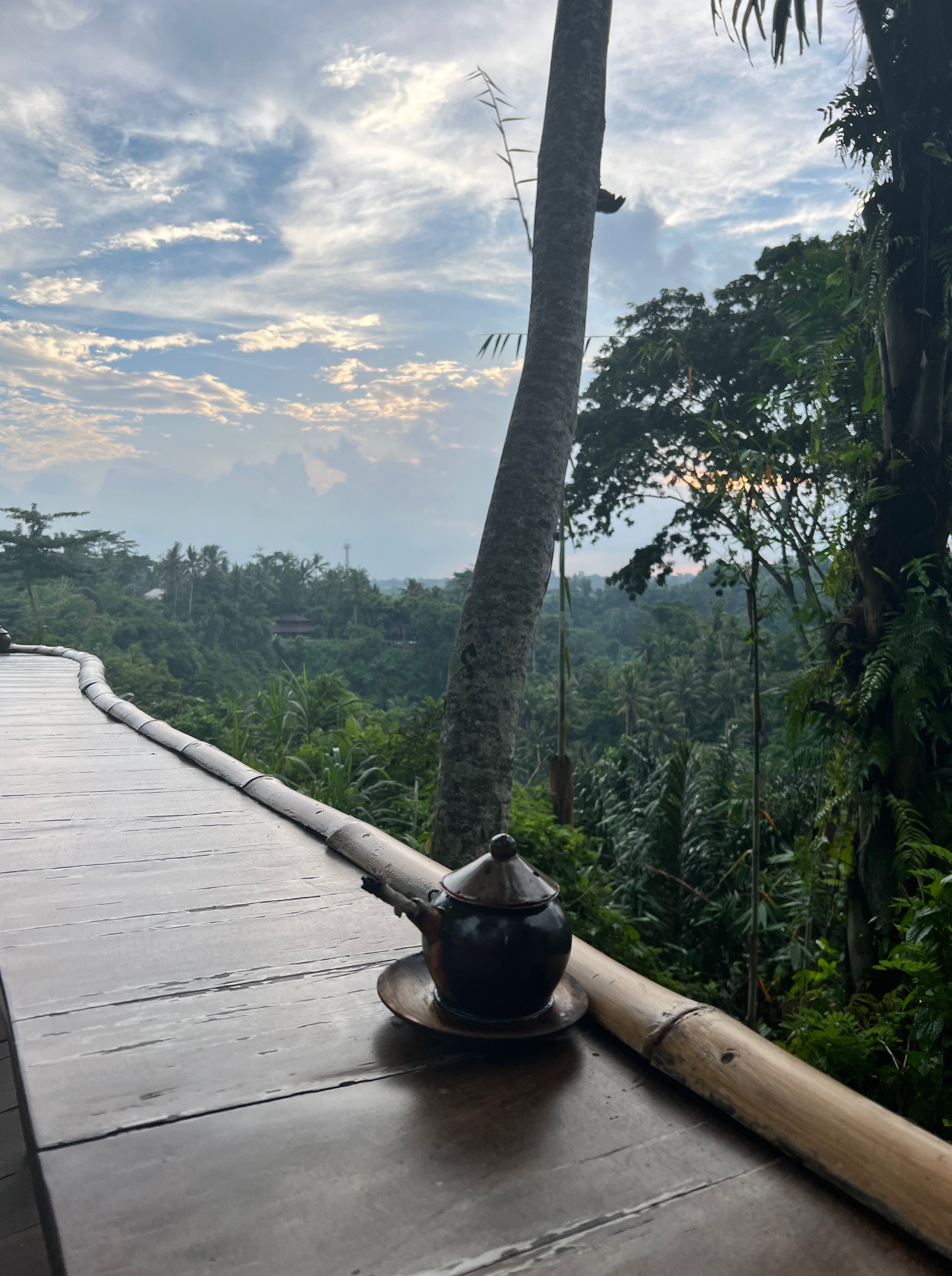
We chose a fork and ended up in this amazing bar high above the rice fields and palm tree tops. We informed the waiter we were headed for the restaurant but she ushered us to some stools and took drink orders, trying to ply us with satays. We once again said ‘no, it’s ok we are going to the restaurant but we will wait for our friend’ (Jim)
Half an hour later we noted that some people were being ushered into a bamboo lift and disappearing down below. So we wondered if we were in the right spot. We took matters into our hands and asked if we could go down in the lift. ‘yes of course!’ Oh, OK we just had to ask? We had been sitting watching the sun go down (which was incredible!) while waiting patiently to be invited!
Down we go in this rickety bamboo structure carved into the cliff only to emerge into another tunnel. It soon becomes apparent why we signed a waiver! Once again we were pointed in a general direction until we reached a fork in the path. A swinging bamboo bridge or a rocky climb? We chose the swinging bridge. We continued to select our own turns and passing very close to a rushing river before stumbling (literally) into the restaurant!
It was dark by this time and we laughed about being on a Lara Croft type adventure to get to dinner. When we arrive we are told we need a reservation and that they have no tables but we were given a spot on some steps with a pillow or two and a low table. Jim arrived about 20 minutes later after taking a wrong turn!
Had we arrived at the restaurant in the light we would have seen the beautiful fresh water pools and swinging cane chairs – It’s ok I had googled it so I knew exactly what I was supposed to be seeing!
The amusing thing was the whole time we were there a table set for three was untouched – I’m sure it was ours! Anyway, we ate from a buffet type menu where all the items on the menu were grown and foraged from the property – delicious but way more expensive that any meals we had during our stay.
Day three
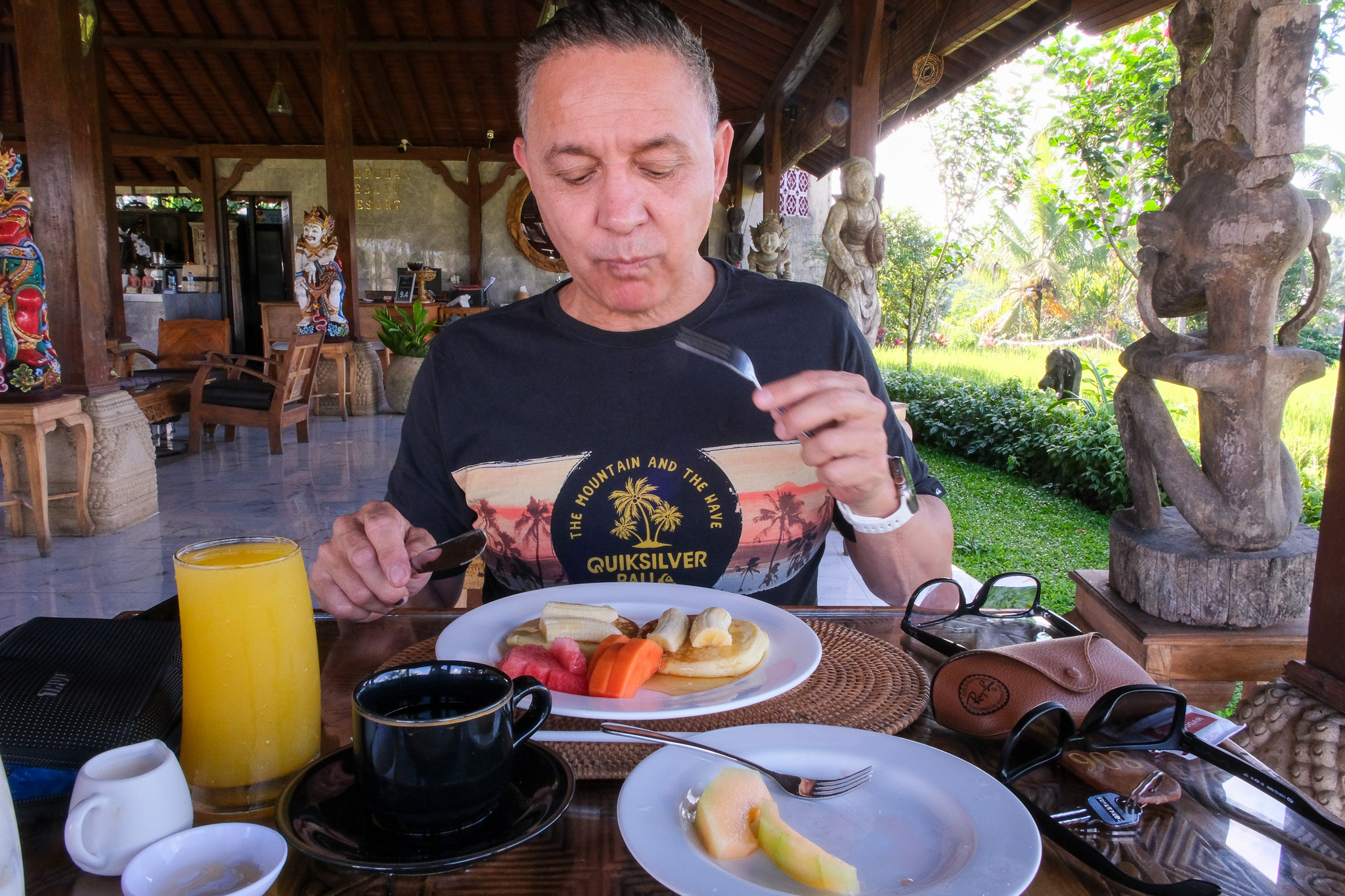
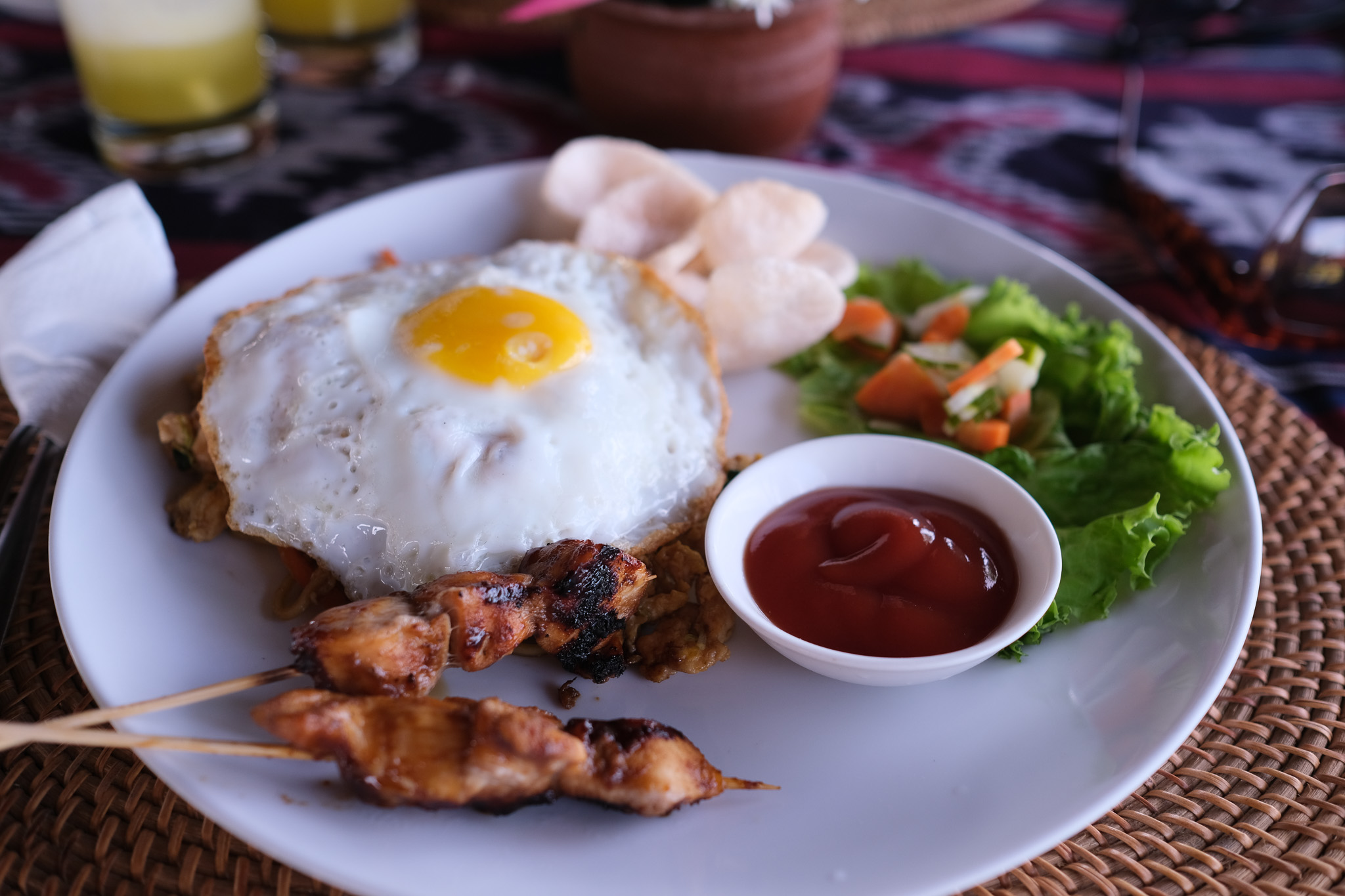
A delicious Nasi Goreng breakfast on the terrace at our resort washed down with fresh pineapple juice and Balinese coffee is followed by another swim before calling up a Gojek driver for an excursion into Ubud.
We have massage and day spa on our mind so following a wander through the town we settle on a small massage spa up a very steep stairway. Shoes off before we head up to be pummeled and scrubbed to within an inch of our lives! Two hours later and still wiping the petals off from our flower bath we decide to go to lunch.
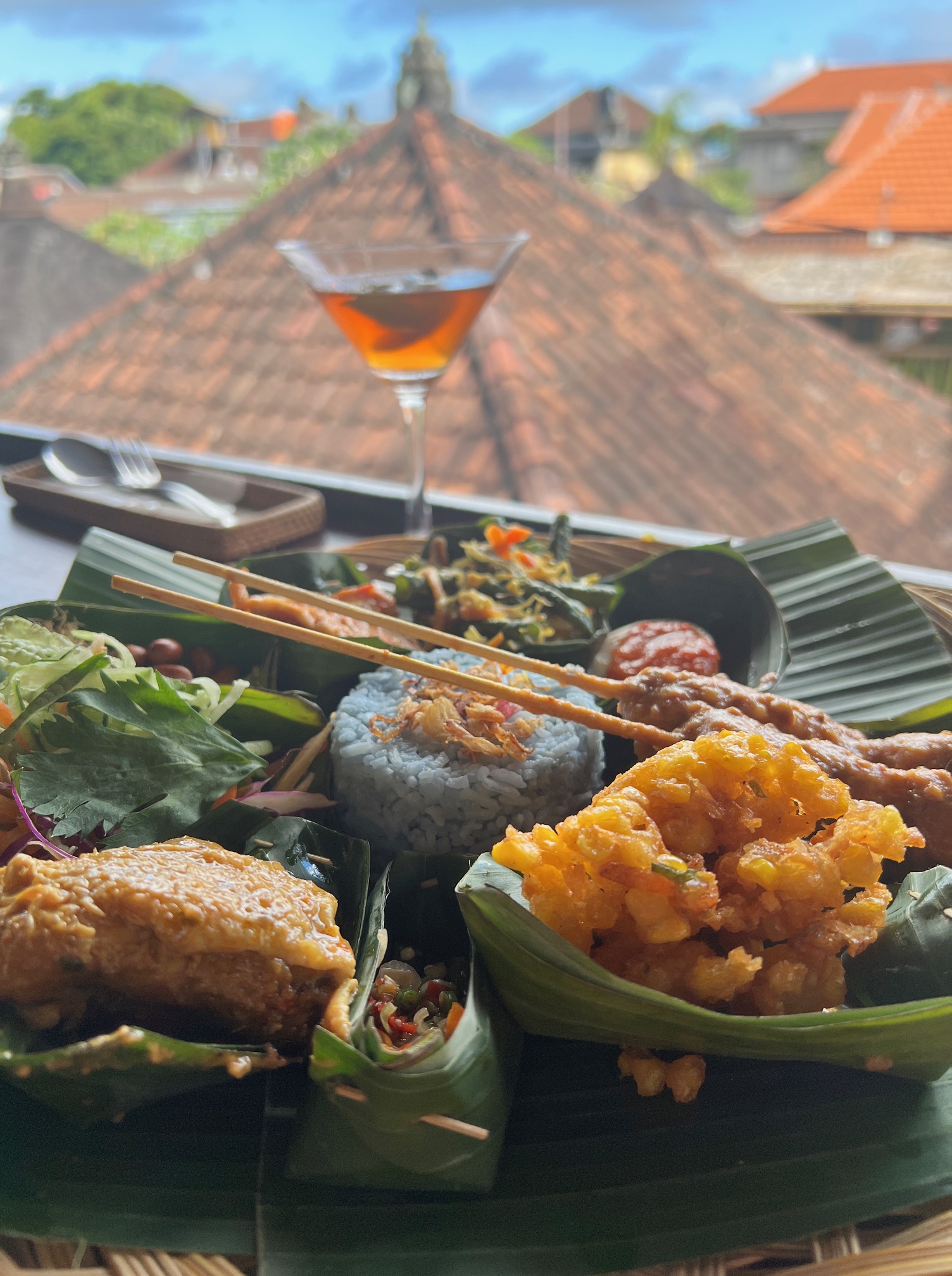
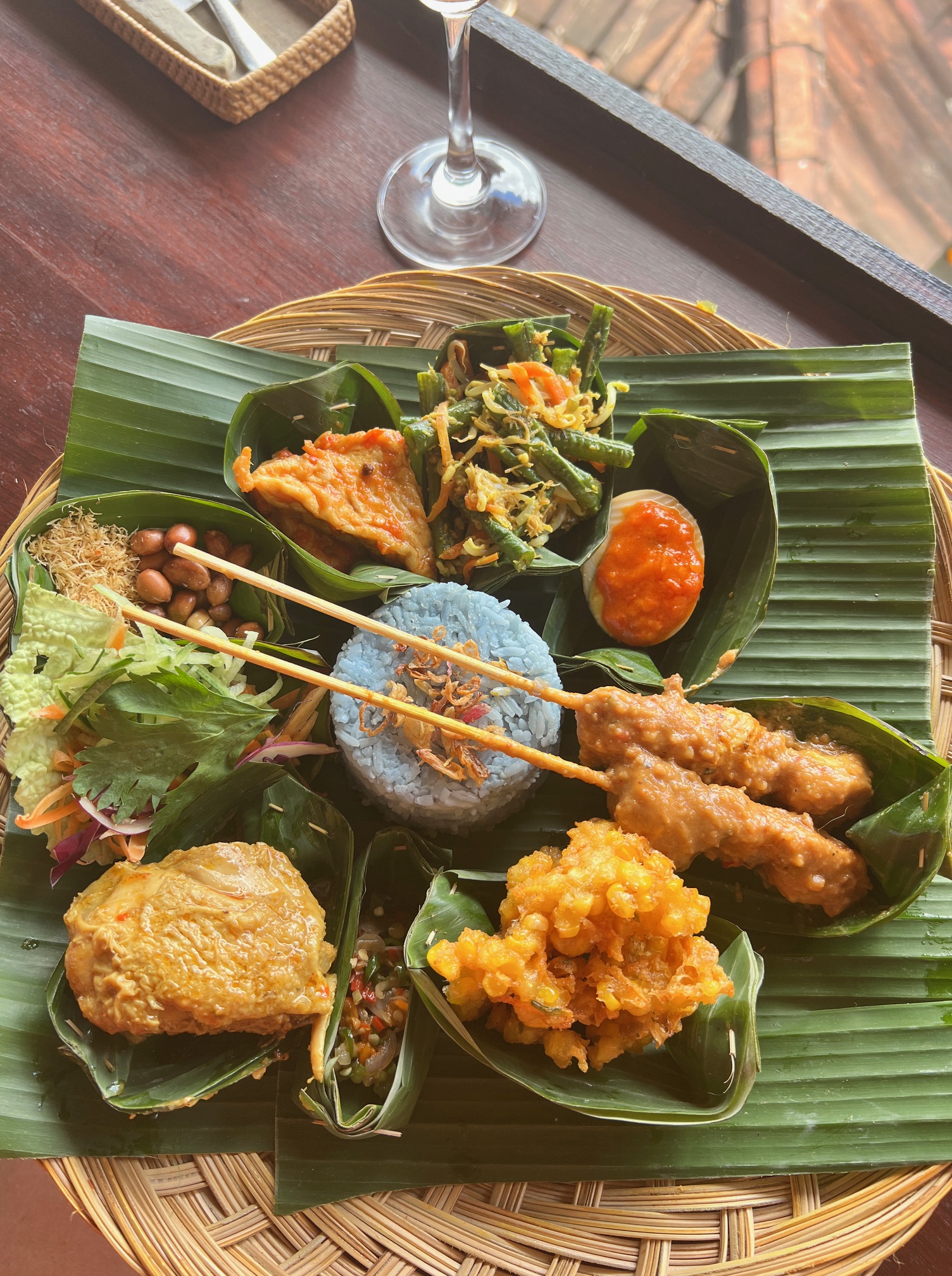
Sun Sun Warung had been recommended as the place to go for eats so we found a lovely spot overlooking the rooftops and ordered the blue rice Nasi Goreng and an Arak cocktail. All food was served in banana leaf containers and it was so delicious, spicy and aromatic, I will have dreams about it for a very long time!
A Balinese painter balances in front of us on a bamboo scaffold wearing jeans and a hoody with bare feet. We are sweating in our shorts! On top of this he is within falling distance of a tangled mass of powerlines. I can’t watch!
We head back for a quiet night with some snacks and plans to relax by and in our pool. Bliss.
Day four
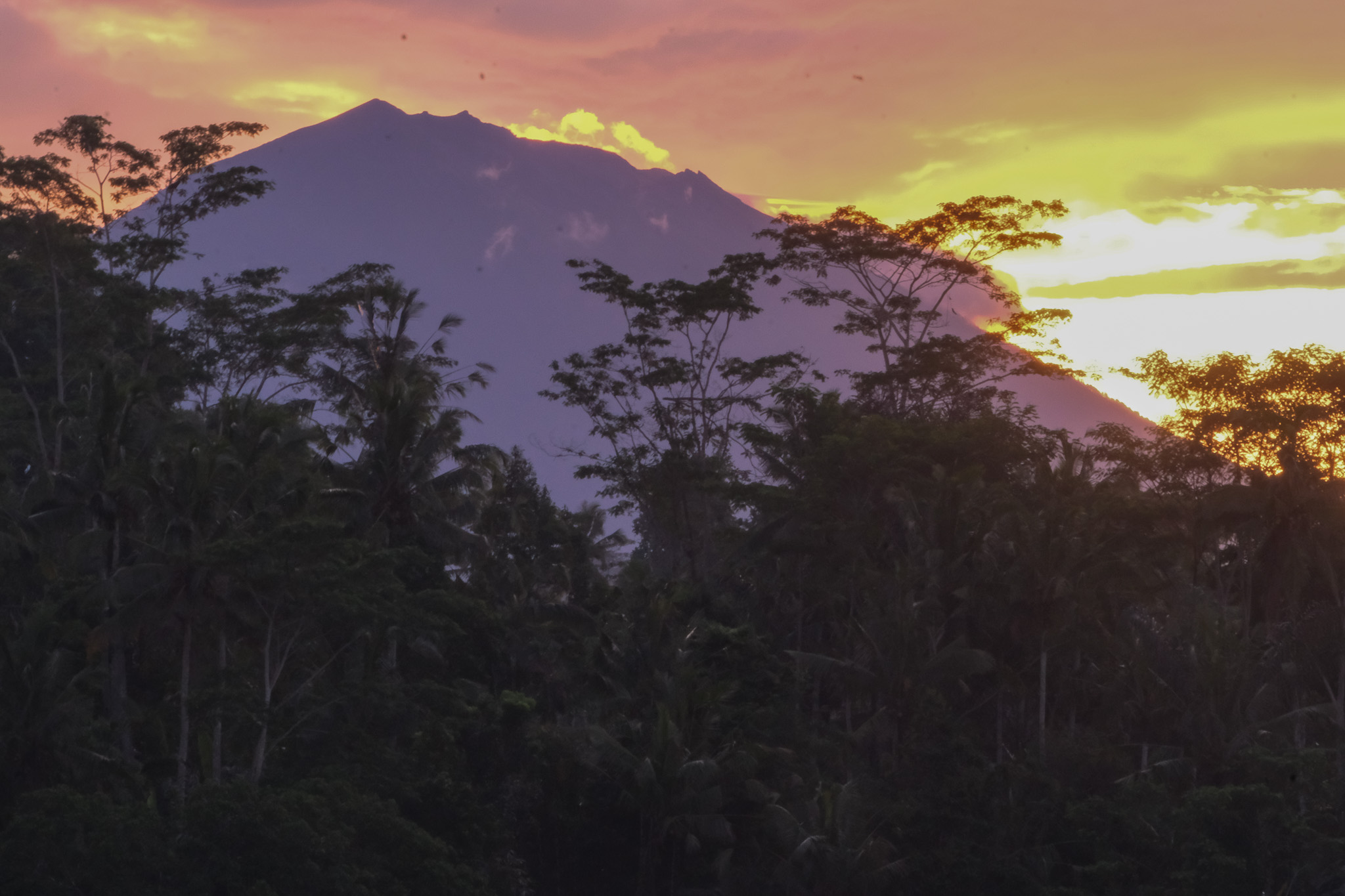
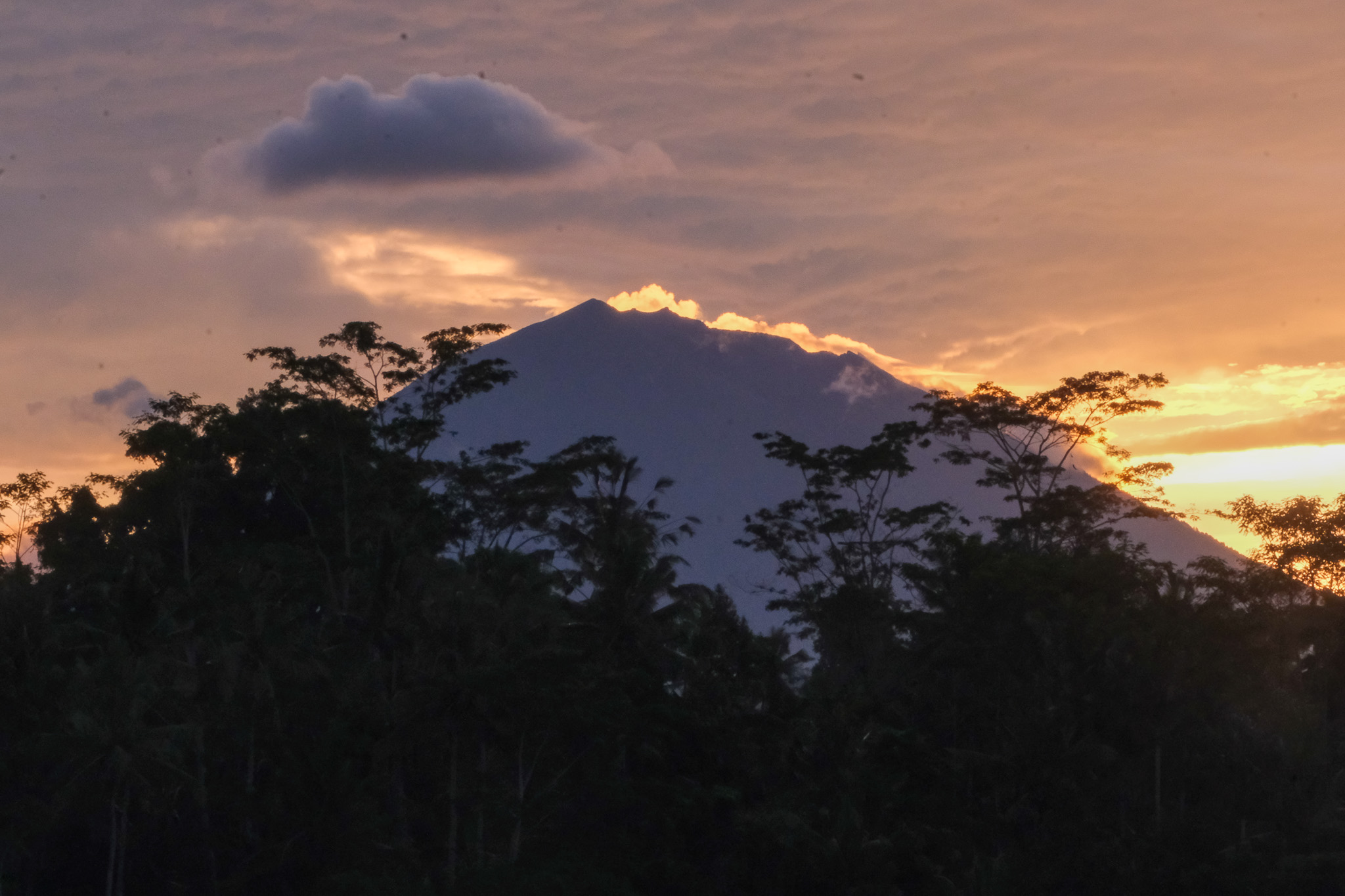
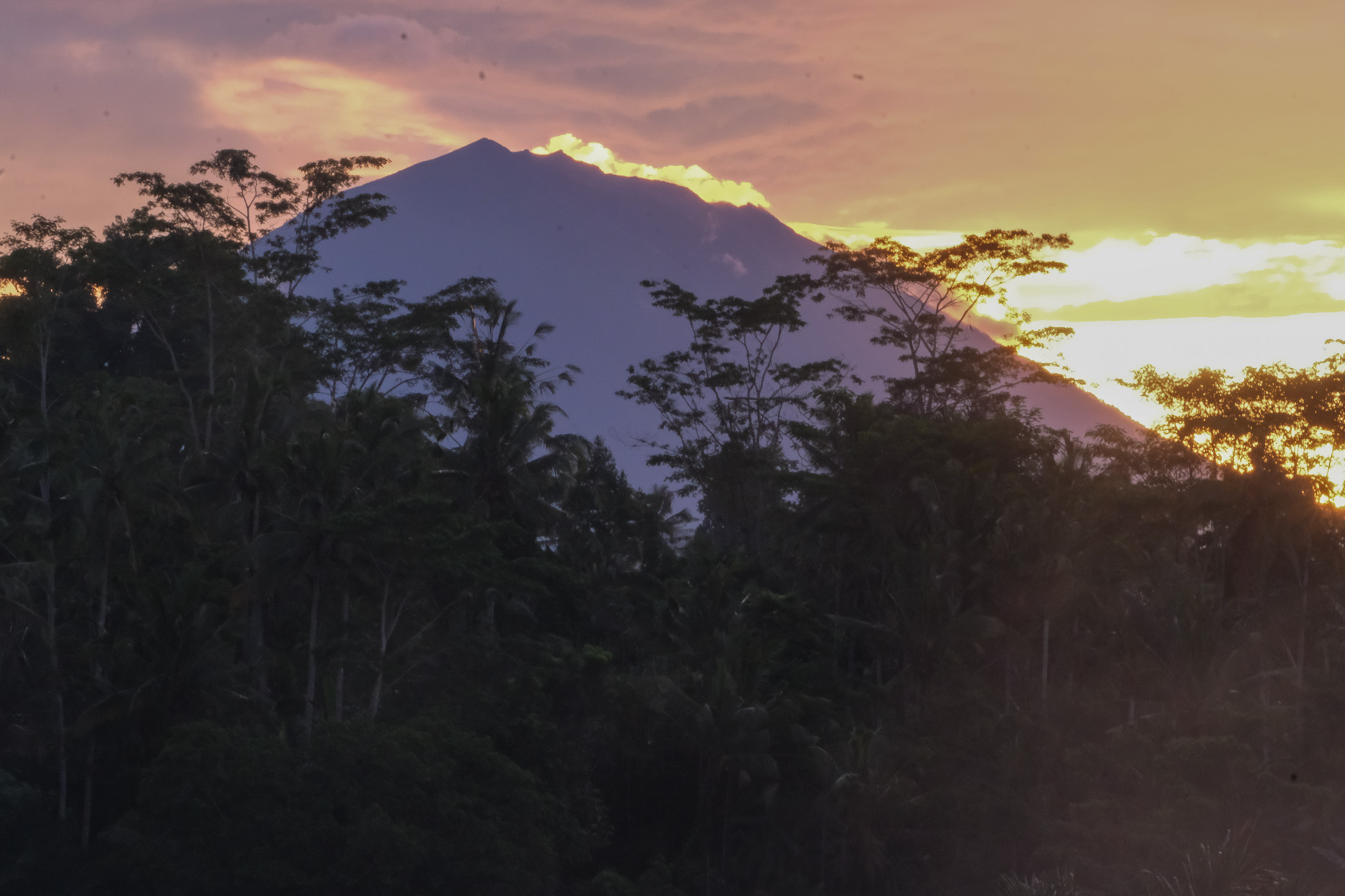
I woke up before the sun and crept out to capture the sunrise over Mount Agung, Bali’s highest mountain and still active volcano – last erupting in 2019. Sunrise did not disappoint!
Our flight that day was at 2:00 pm but knowing how long it takes to get from one end of Bali to the other we booked Made, our lovely driver, for 9:30 am. A swim or two while packing followed by Me Goreng and fresh juice for breakfast is a lovely way to spend our last morning. I even slip in a couple more swims after breakfast and make sure I absorb the view completely!
Bali in a weekend! We certainly packed a lot in and it truely was worth such a short trip, after all everyday can be an adventure!
What’s the skinny?
A few airlines service the Perth Bali run – we flew Air Asia which is budget but got us there and back o time with no issue. 3.5 hours from Perth
Our accomodation was pretty cheap as we went out of school holidays – Campuh Sebatu Resort is stunning and off the beaten track. Breakfast was included – delicious!
Transport around Bali is pretty easy to come by – we used Gojek (Bali Uber) and our drivers were all very accomodating. We actually hooked up with a local driver and he became our go-to for transport.
Tasmanian artist Robert Ikin 83, is my Dad. As the child of an artist, my siblings and I spent countless evenings huddled beside or under the cheese and biscuit table at art galleries, scoffing squares of cheddar and stale crackers. Around us, the adults sipped box red wine, smoked cigarettes, and talked about art and mundanities.
The scent of an art gallery is still fresh in my mind. I recall smells of paint, wood varnish, cigarette smoke and seagrass matting, the floor covering of choice in the 70’s. I would count red stickers when they appeared on pieces of work hung on white-washed walls and excitedly tug on Dad’s sleeve to relay the news of a sale. He would stop talking and smile at me with raised eyebrows and then return to his conversation and his wine.
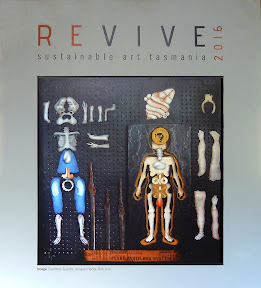
Robert last exhibited work in a gallery setting in 2016 at the Queen Victoria Museum, Inveresk, Launceston. The Revive Exhibition—curated by Ralf Haertel, featured work by individual artists and community groups with recycling and sustainability at it’s core. Robert’s pieces were created from mixed media and found objects.
History
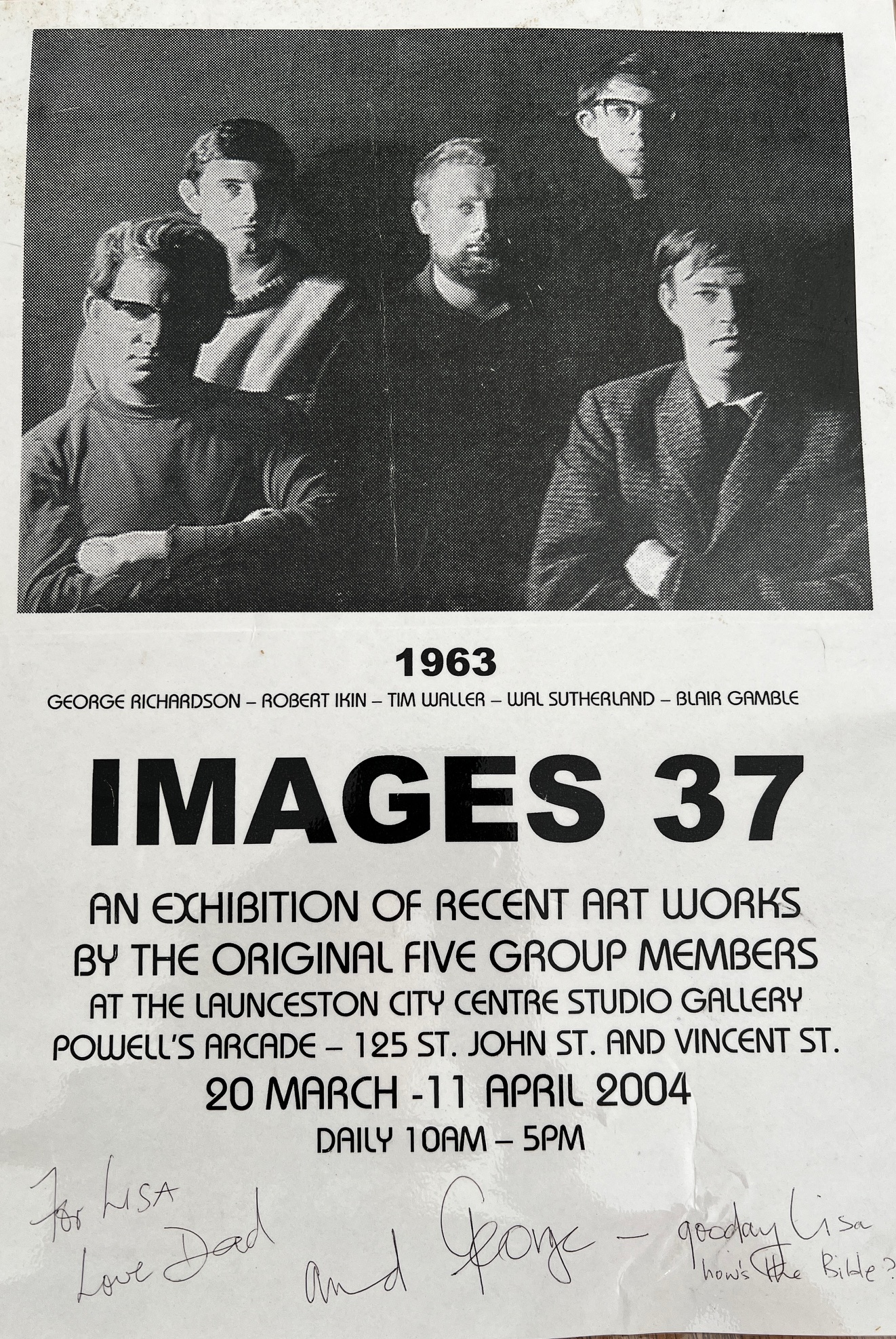
Robery Ikin’s resume spans decades, countries, and mediums. As a young painter in 1963 Robert was part of a group of Launceston Art School Graduates who named themselves ‘Images’ – Robert Ikin, George Richardson, Tim Waller, Wal Sutherland and Blair Gamble were the original five group members. The group reunited in 2004 for a show in the Launceston City Centre Studio Gallery. Sadly, George , Tim and Blair have since passed.
The original members were the inspiration for another group of aspiring artists who called themselves ‘Images of Tasmania’.
The reunion of The Images in 2004
George Richardson, an incredible abstract artist and art educator, was my godfather. He would always playfully ask me “are you reading your bible Lisa?” I have vague memories of Tim Waller, a fine painter and also art educator and memories of weekends at Blair’s beautiful home in Hobart, as a child. Dad and Wally still regularly catch up and make music CDs together.
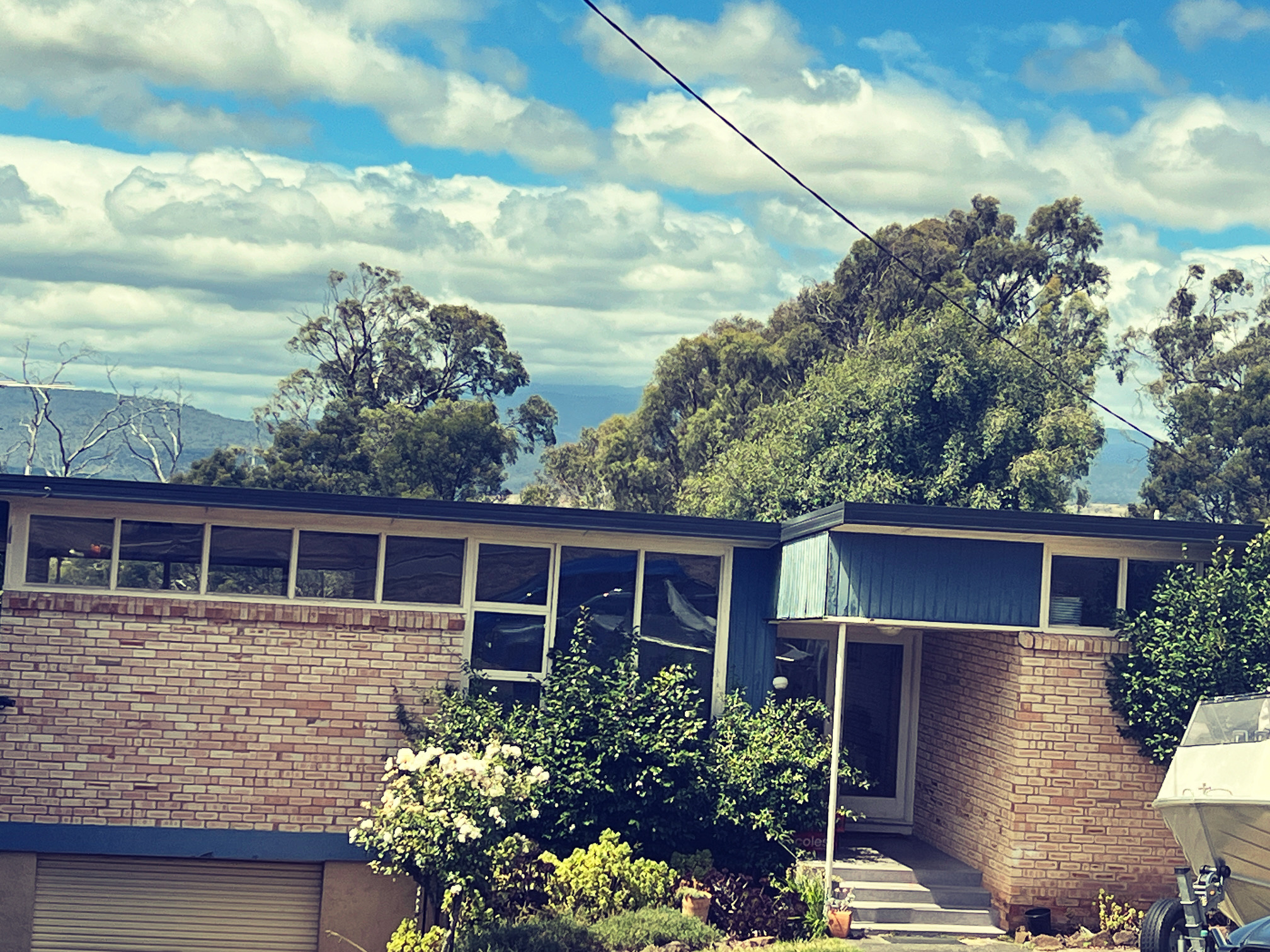
Around this time, 1964, I was born in Launceston at Queen Victoria Hospital. We lived in a modern home in West Launceston, a stone’s throw from the Cataract Gorge. We moved to live in Adelaide at some point, where Dad continued to paint but also worked a day job. For as long as I could remember, he was a travelling salesman by day. We lived in a terrace house on Rundle Street. In my mind the sun was always shining. My sister was born there in 1967.
My first home in Launceston – a modern home for the time.
The sudden death of my mother when I was five brought significant change and trauma. We moved back to Tasmania, living with my grandmother for a time before dad remarried. For a number of years, Dad was a lighthouse keeper, and we lived an isolated life with correspondence schooling on some of the most wild and remote islands in Tasmania and Australia. Eventually with new siblings (a sister and brother) and a need for me to attend high school, we moved back to the Tasmanian mainland when I was 12 years old.
In 1979, Robert completed a postgraduate qualification in ceramics at the School of Art, Tasmanian State Institute of Technology, Launceston, followed by his first exhibition at the Design Centre of Tasmania in Launceston.
He was studying and practising art for most of my high school years.We lived out of town and on the last school bus stop for country town, Scottsdale. After living in isolation for so long it didn’t feel unusual to still be on the fringes.
I finished Year 10 at Scottsdale High in 1980 and inearly 1981, there was a move to Darwin, where Dad took a job in a Darwin Art School. I went to year 11 in Darwin, met a boy and left home. I ended up living there for four years before fleeing the boy and the humidity to live in Perth.Dad only stayed a year in Darwin, returning to Tasmania with new partner, Gardie and plans to settle down.
Public Collections
Robert has exhibited widely throughout Tasmania and is represented in many public collections, including the Queen Victoria Museum and Art Gallery, Devonport Regional Gallery, University of Tas Collection, Hobart and the Tasmanian Government’s Art for Public Buildings Scheme.
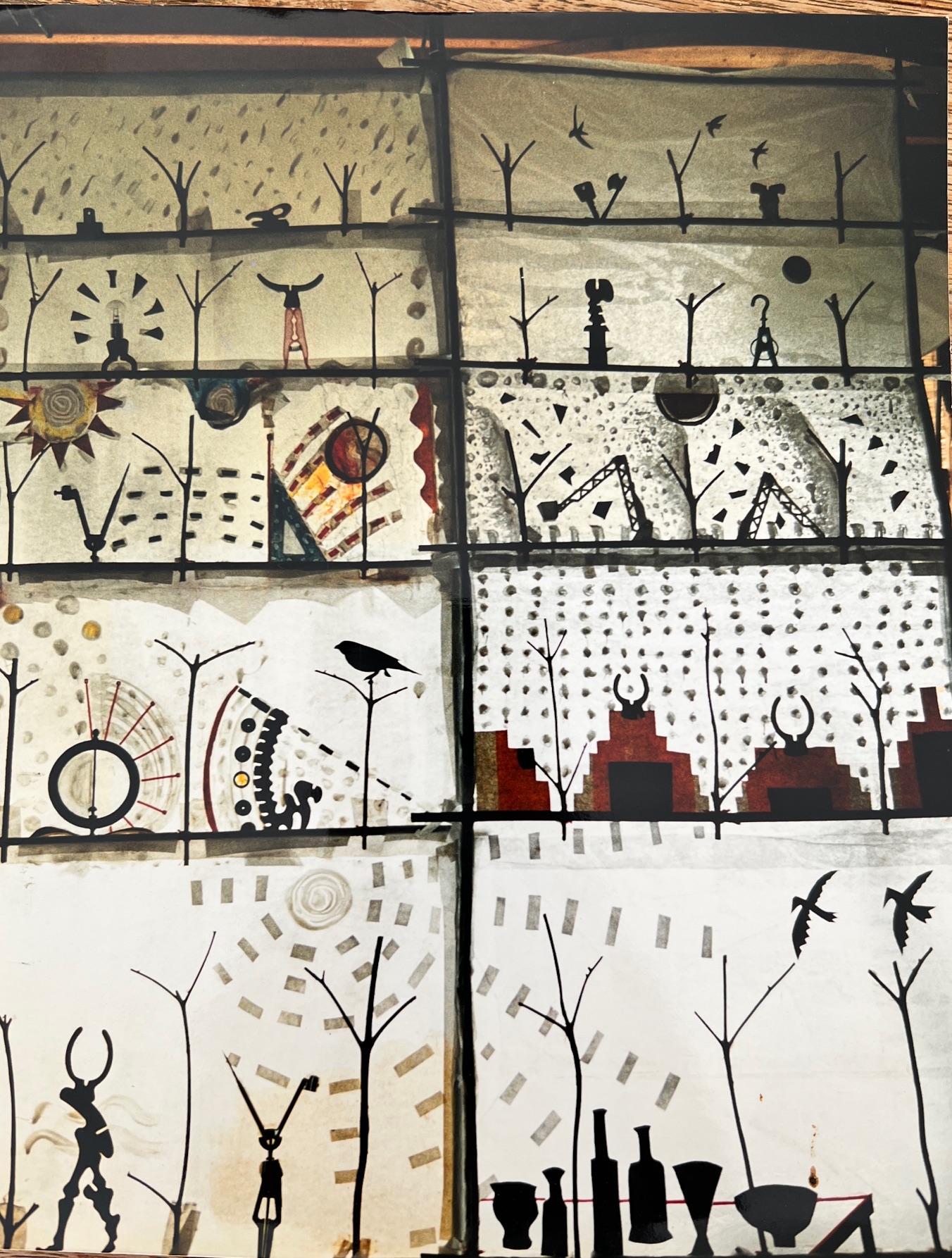
Another Short History of the World (detail) light box. Robert Ikin 2004 – QVMAG, Launceston Tasmania
Snakepit Gallery
In 1992, Rob and fellow artists Bea Maddock and Gardenia Palmer formed the Launceston Art Cooperative. The cooperative’s headquarters was a small disused warehouse in Launceston, which they named ‘Snakepit’ due to rumours that a snake trainer used to train snakes in the building!
The space existed for local Launceston artists and craftspeople to exhibit freely as part of a cooperative membership. The gallery was a huge success and hosted over 100 fortnightly shows until 1996 when the cooperative dissolved due to fewer artists using the space.
By this stage, I was living on the other side of Australia, and had birthed my first child, but I remember visiting the Snakepit when I was in Launceston. My grandmother was still alive as I have a photo sitting on the steps of the Snakepit with her. I’m sure seagrass matting was a feature.
No Poetry
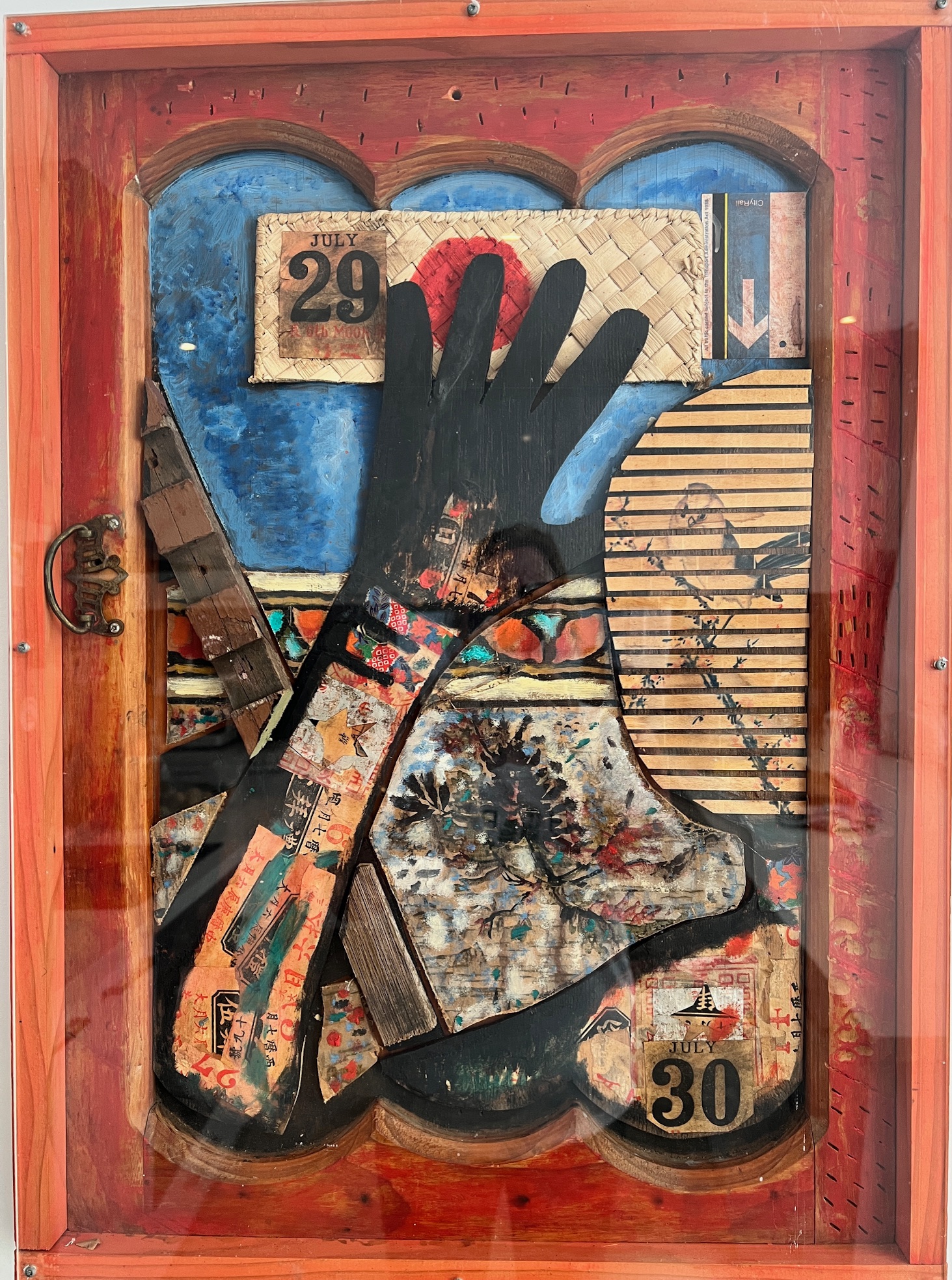
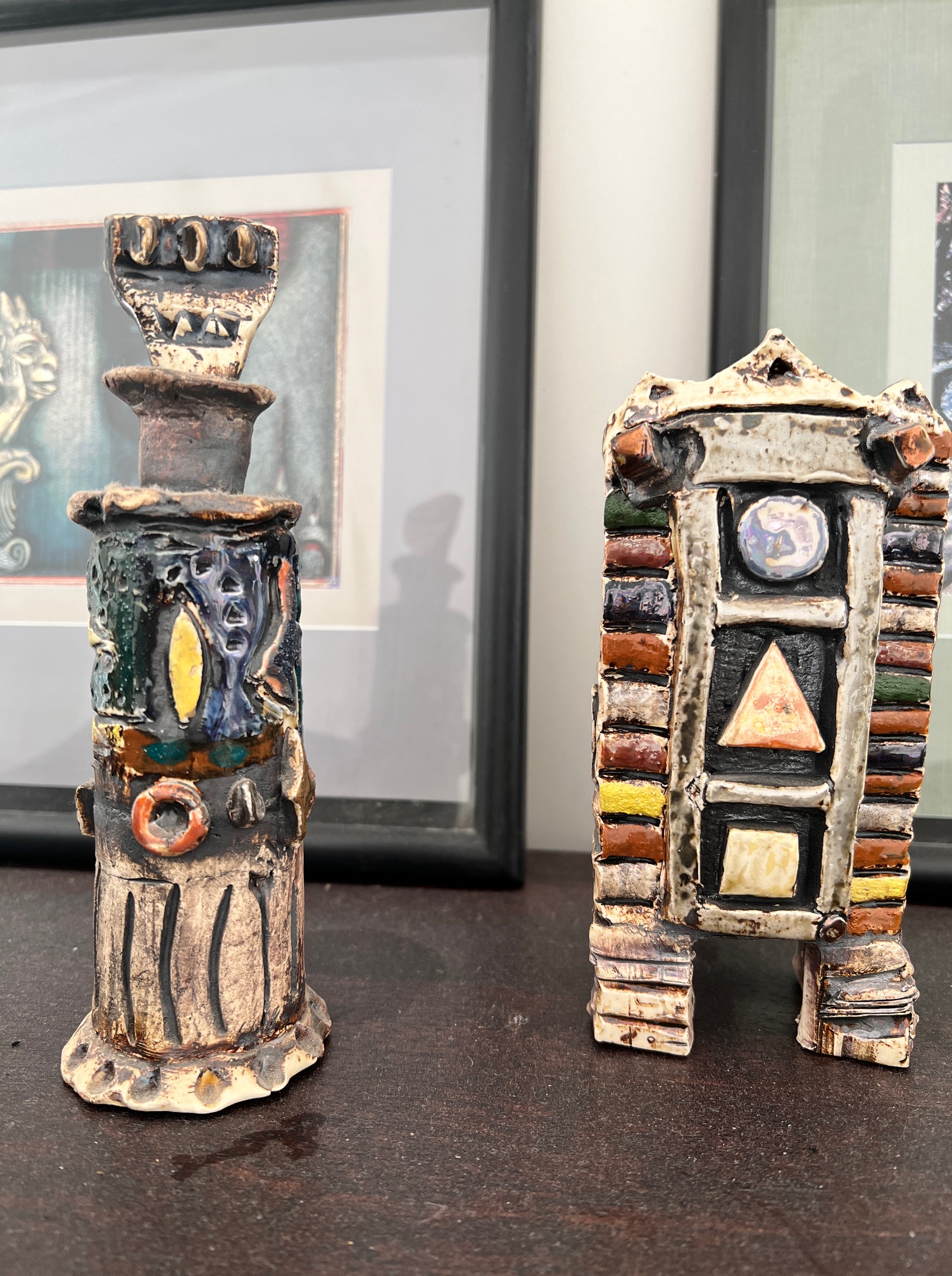
One of Robert’s major works, ‘No Poetry,’ a mixed-media work using mainly found objects, was exhibited at the Tasmanian Museum and Art Gallery in Hobart and The Queen Victoria Museum in Launceston. Representing the eight months from January 1 to August 6, the finished work was presented on the anniversary of Hiroshima Day 1995. He recreated the work in 2001 and subsequently in 2013 as a moving sound and image piece.
I have one piece from the No Poetry show, an exhibition I attended while visiting with family.My second baby was born in 1994 and I was still living in Perth.
Public Art
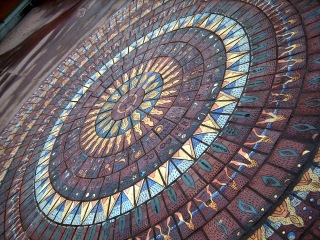
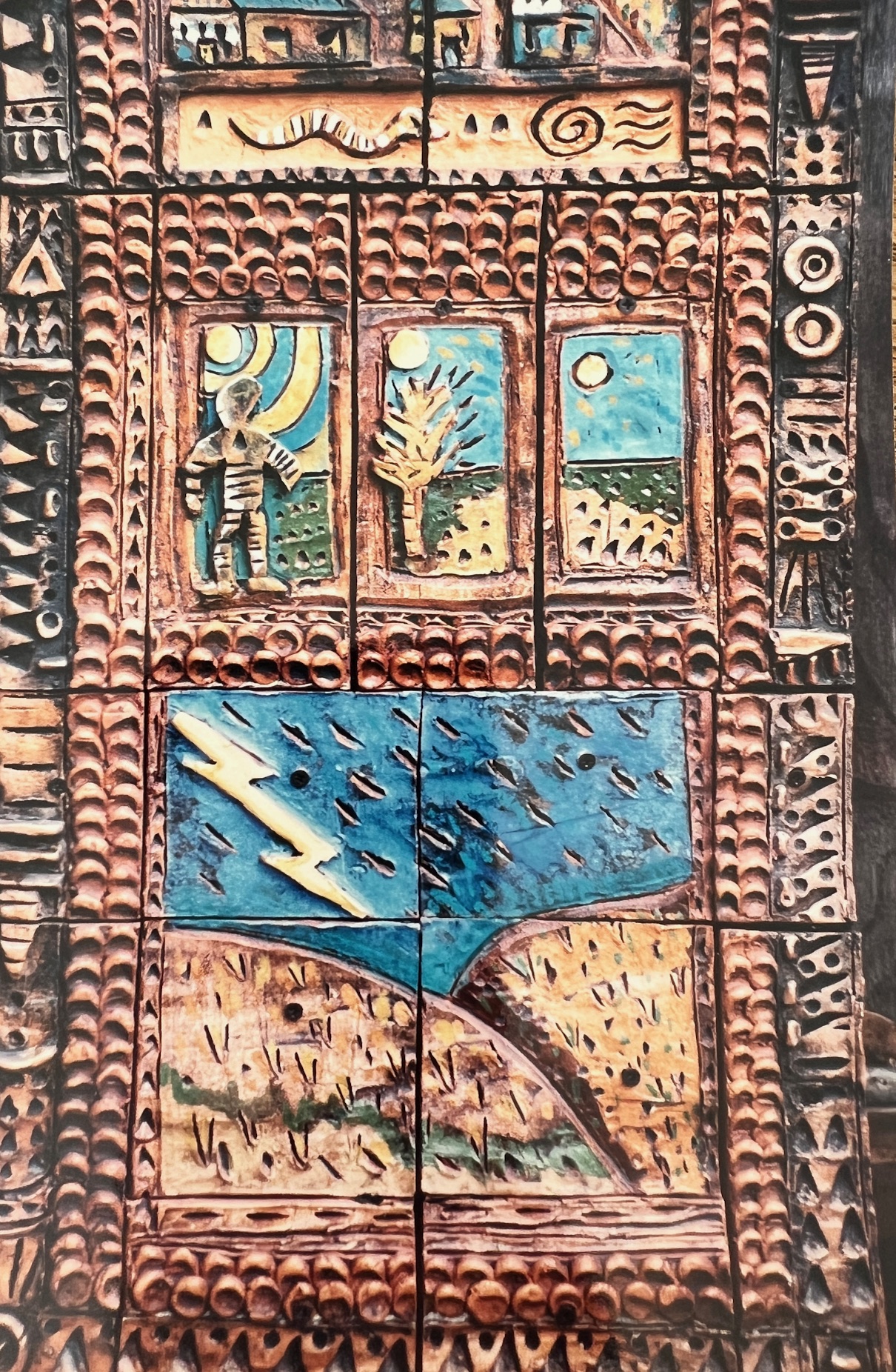
In 2000, Robert installed a huge ceramic work entitled “Mandala,” 8.5 metres in diameter, commissioned by the Tasmanian Government. The piece comprised 888 hand-made tiles, each hand-incised and hand-decorated. For the next few years, Robert consistently exhibited and installed public art throughout Tasmania.
Mandala 2001
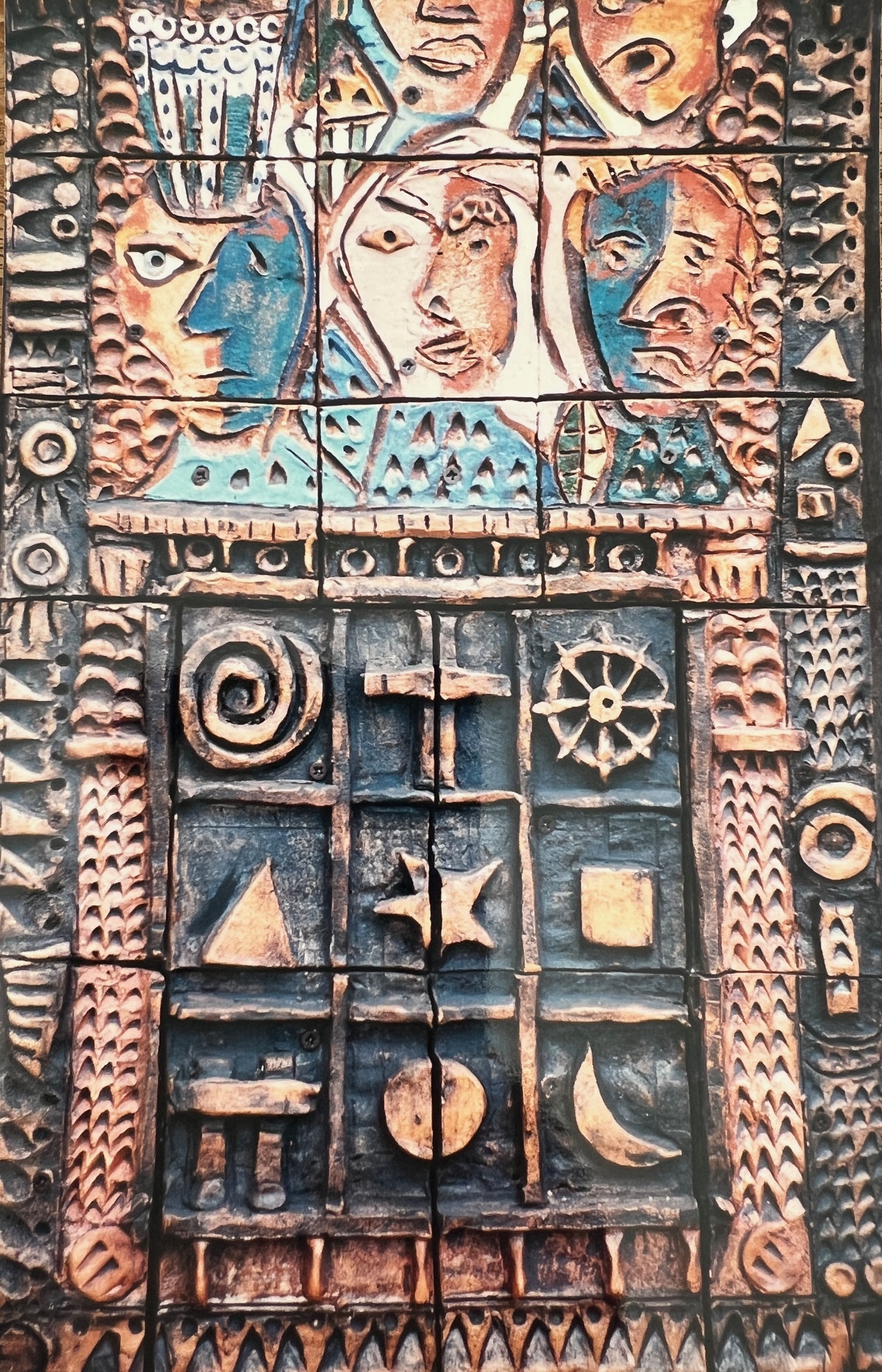
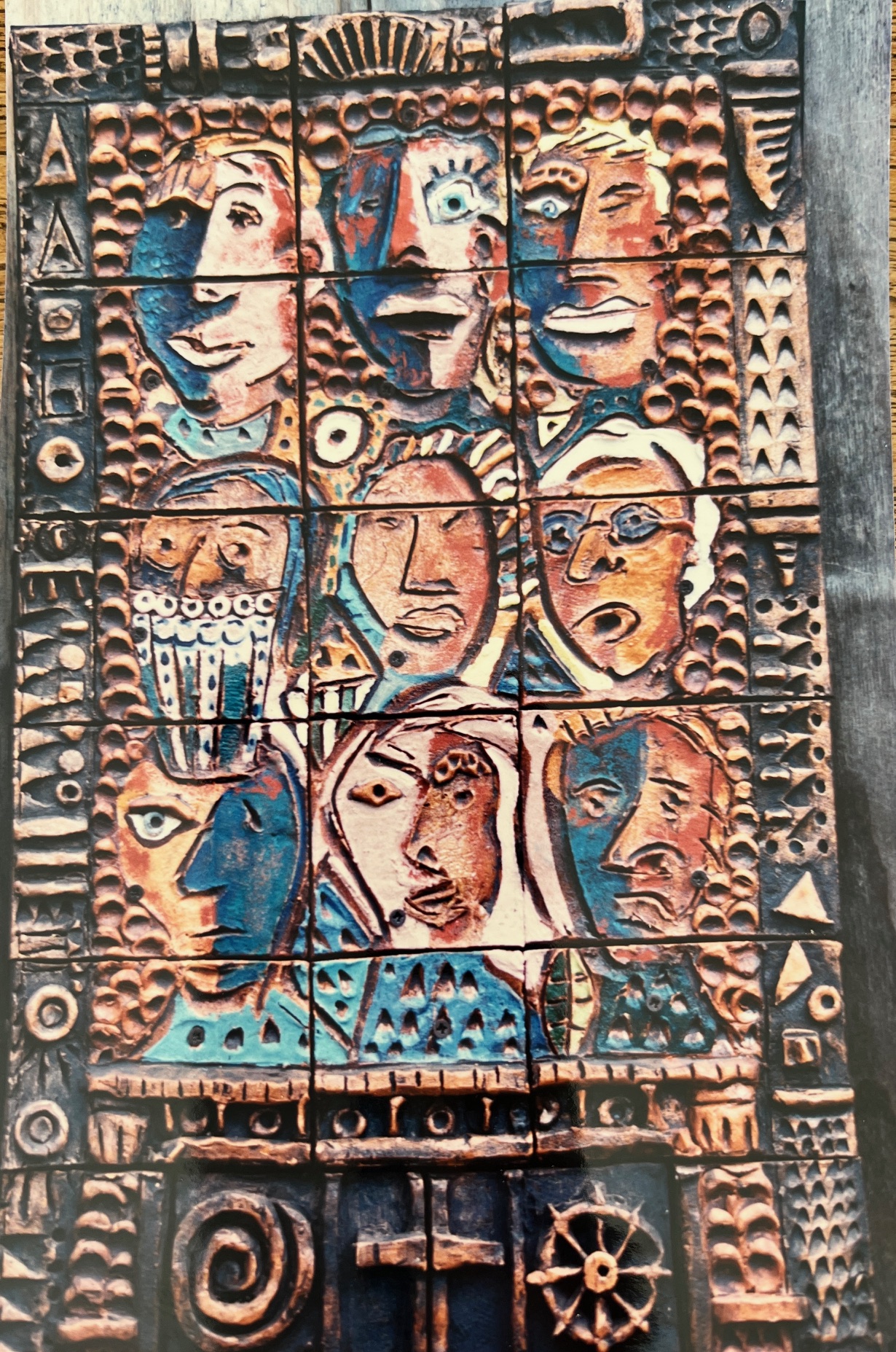
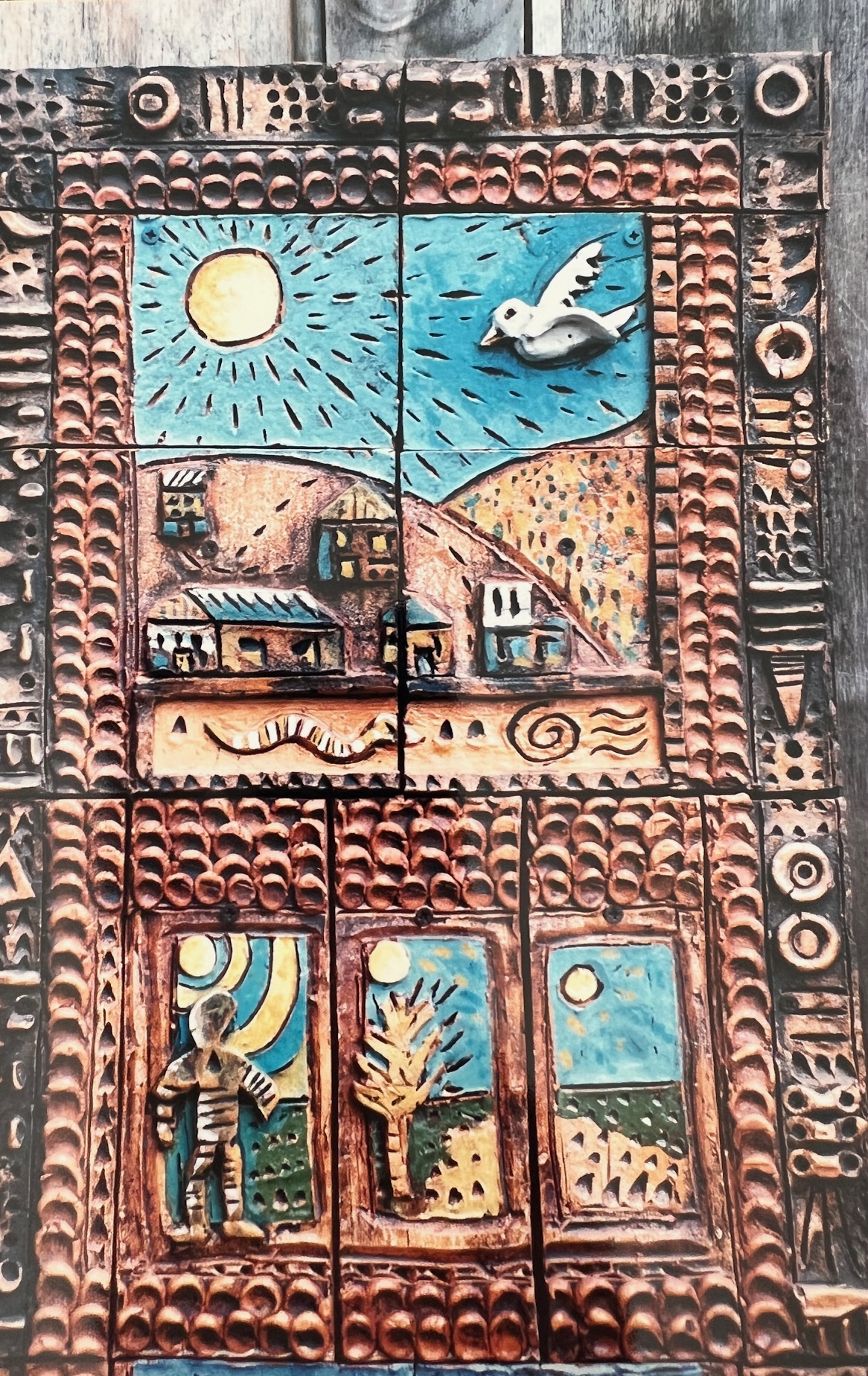
Pictured below is some detail of the ceramic tiles installed at the Ulverstone Police building in 1996.
European Connections
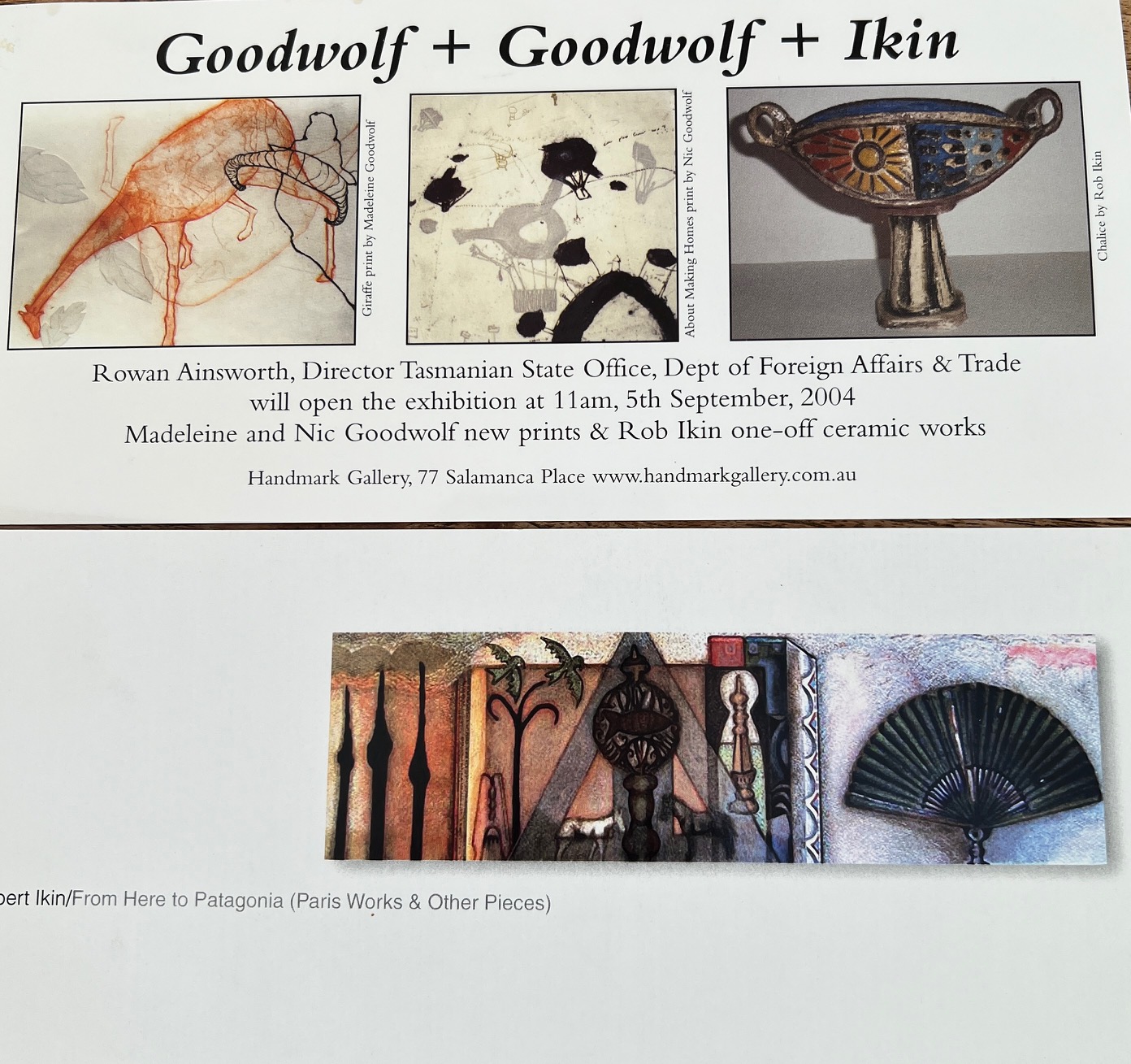
2007 saw the first collaboration with the Netherlands and the University of Tasmania. Robert was part of the Tasmanie Project, “No Person is an Island” suite of works and “At the Hop” – five short projection pieces at Gallerie de Meerse, Hoofdorp, Netherlands.
Between 2010 and 2015, Robert Ikin and his wife and fellow artist Gardie Palmer exhibited in the Netherlands multiple times:
Galerie ‘t Haentje Je Te Paart , Mels Dees. Middelburg
pARTners Kulturele Evenementen Groepen Schijndel in Schijndel
Museum allen Tijden.
Ateliers Patagonia + Guests – KEG-expo, Schindel.
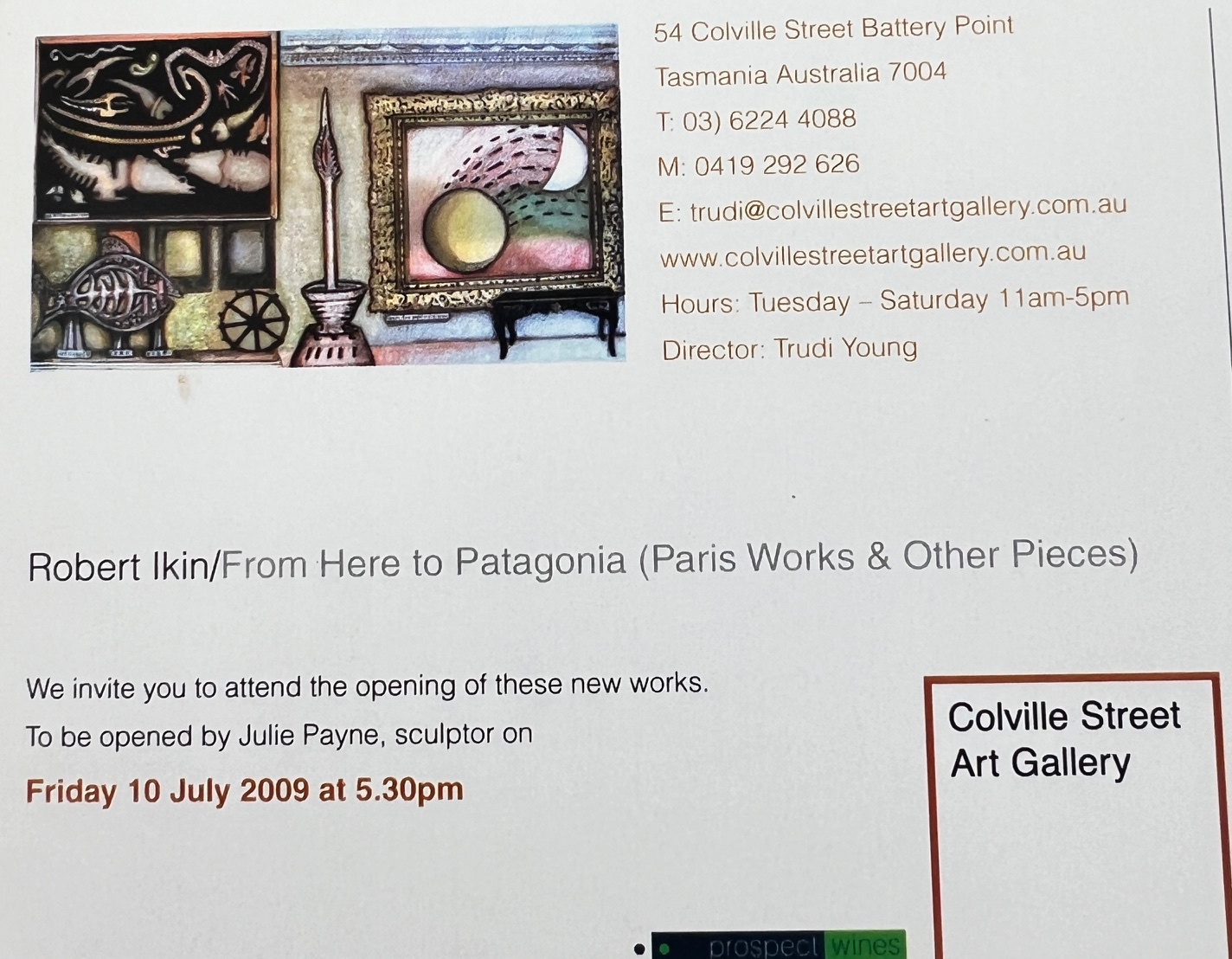
In 2008, he and Gardie lived in Paris as part of the prestigious Rosamond McCulloch Studio Residency at the Cite des Arts. Some of the work he made in Paris was exhibited in Marcher Sur La Pelouse—Exhibition from past residents of the McCulloch Studio in Paris at Plimsoll Gallery, Hobart, in 2009 and his ‘From Here to Patagonia’ show at Colville Street Art Gallery in Hobart in 2010.
Sculpture Projects
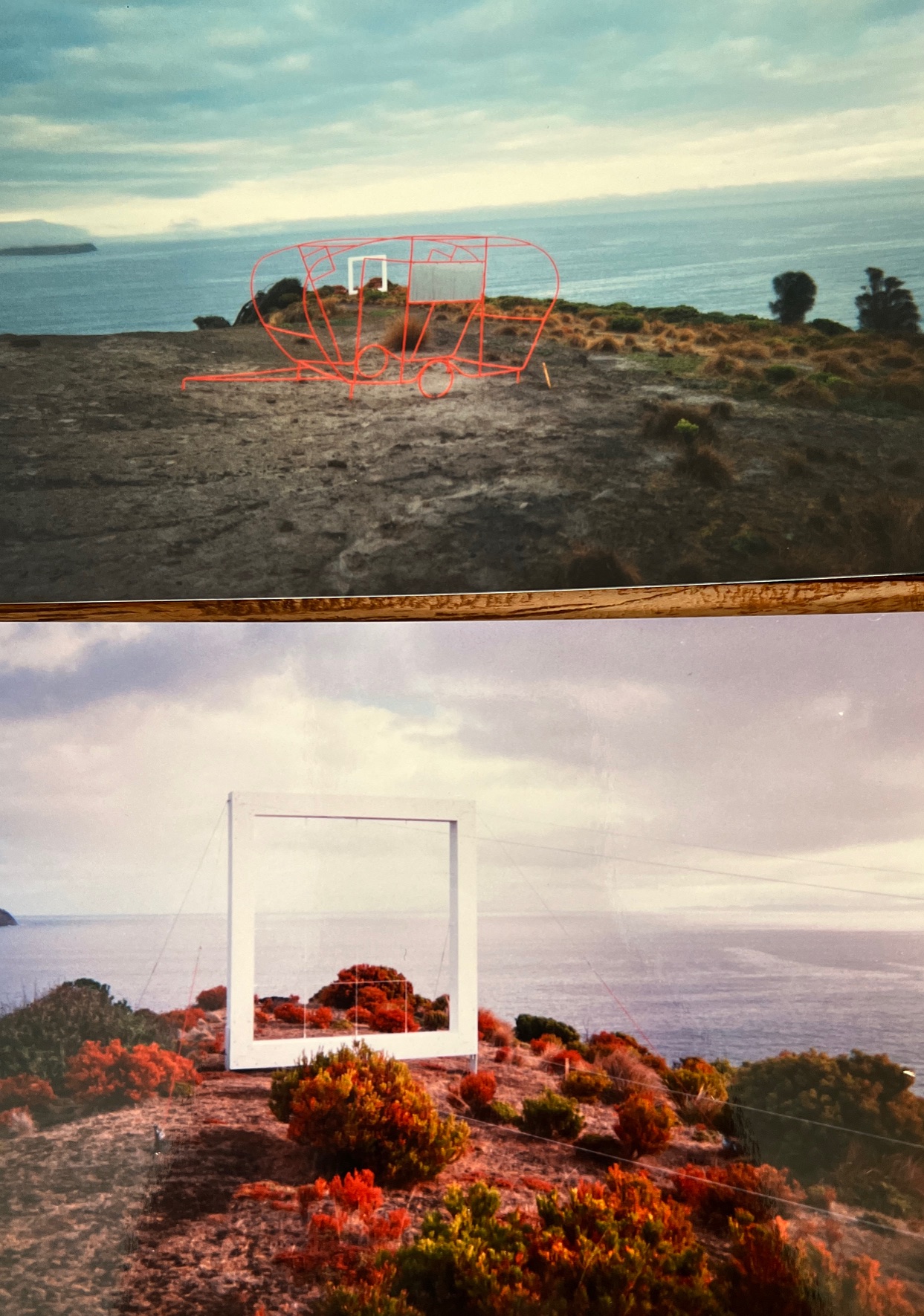
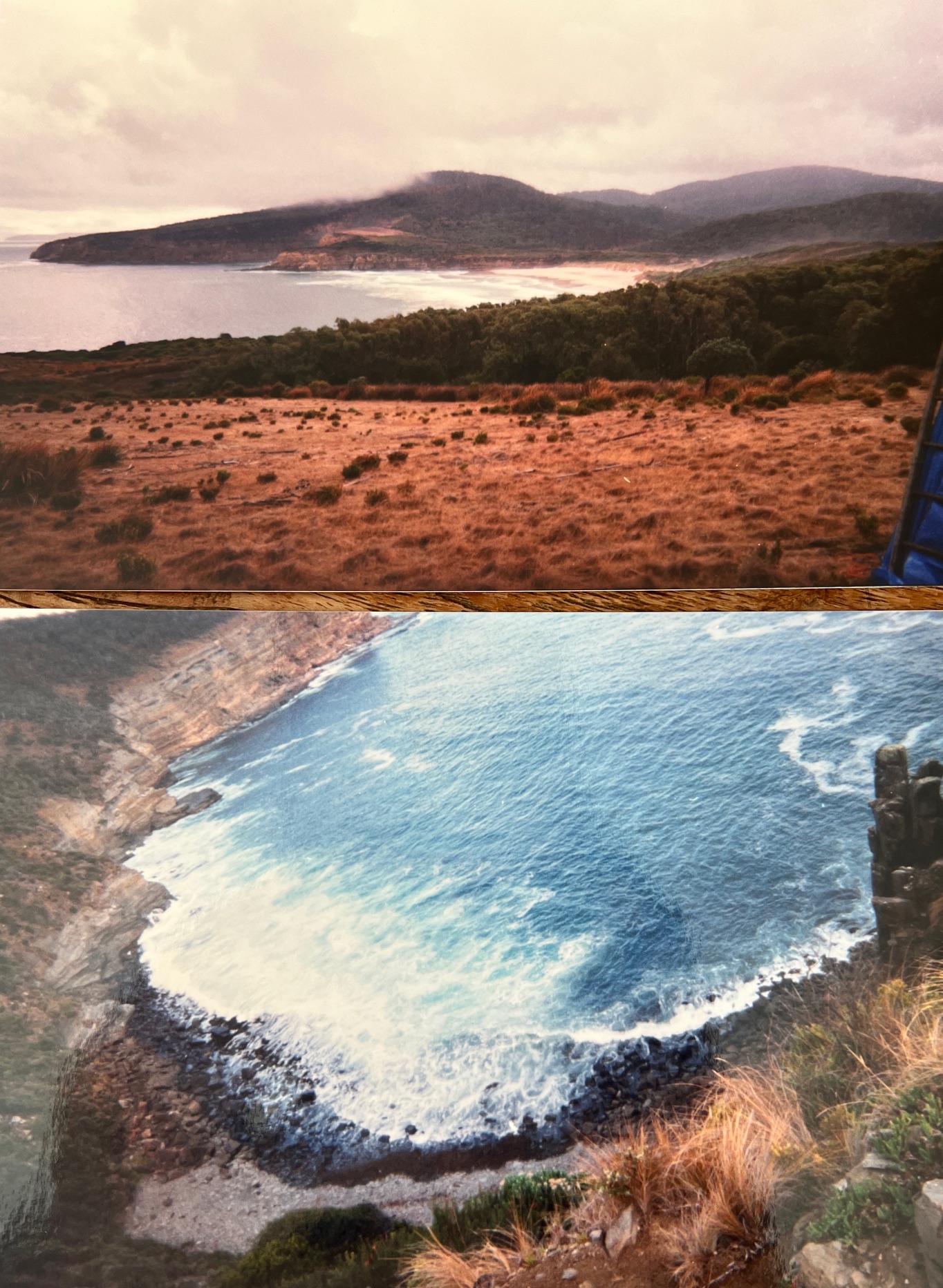
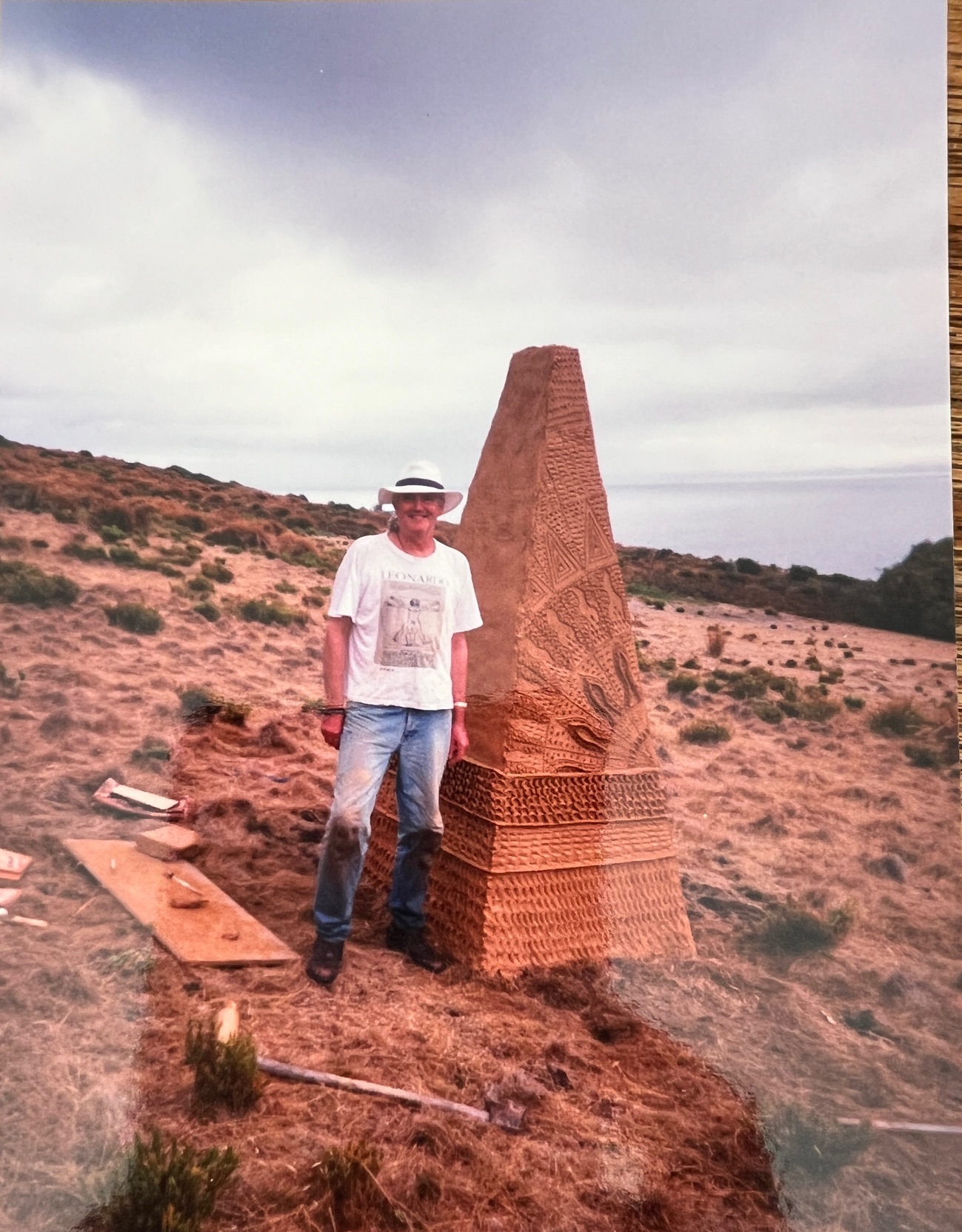
Robert has been involved in many site-specific sculpture projects at incredible outdoor sites, including twice at Roaring Beach on the Tasman Peninsula, the Mt. Wellington Sculpture Trail, Jackeys Marsh Sculpture Trail, Shadows on the Water on the Upper Esk in N.E. Tasmania, and The National Rose Garden at Woolmers, all in Tasmania.
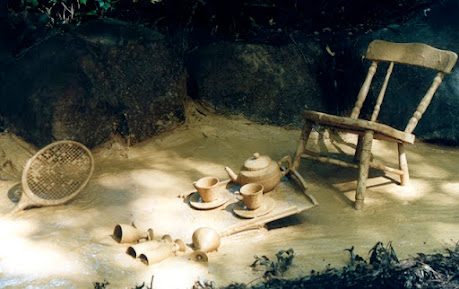
“dejeuner sur l’herbe” objects, clay and clay slip. Site specific work. Mount Wellington Sculpture Trail, 2002
I accompanied Dad to one of the Roaring Beach sculpture projects in 2001. The location and the incredible pieces became the backdrop to my marriage breakup – if you’re going to have a crisis, why not in one of Tasmania’s wilderness locations and surrounded by art!
Solo Exhibition
His most recent solo exhibition, “Interactions,” was at Poimena Gallery in 2013, where he had just completed an Artist-in-Residency. This show included video documentation of “Solstice to Solstice,” a piece based on daily divinations from winter solstice to summer solstice 2012, as well as new ceramics and digital works.
Exhibition 2024
Far from resting on his laurels, Robert has never stopped creating new work and is now on the eve of his first solo show in eight years.
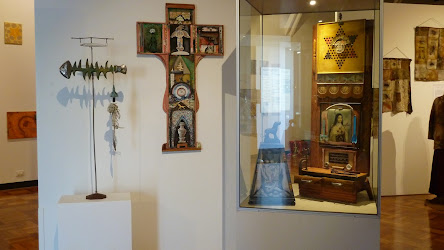
On May 16 2024, the walls at Gallows Art Space at Launceston College will become a temporary home to some of Robert’s newest works with a scattering of the old. He says it’s a retrospective without being a retrospective- spanning years and encompassing a multitude of mediums from ceramics and oil painting to digital images and a mixture of all those things. The show is a non-commercial show which Robert says gives him a lot of freedom to explore and create.
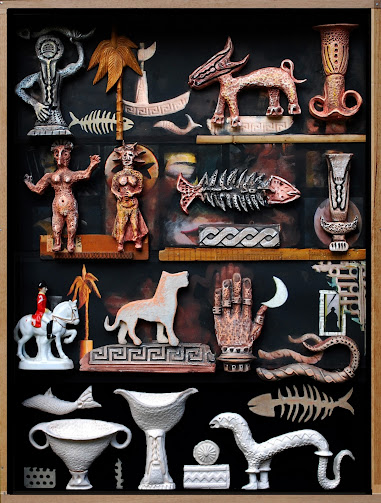
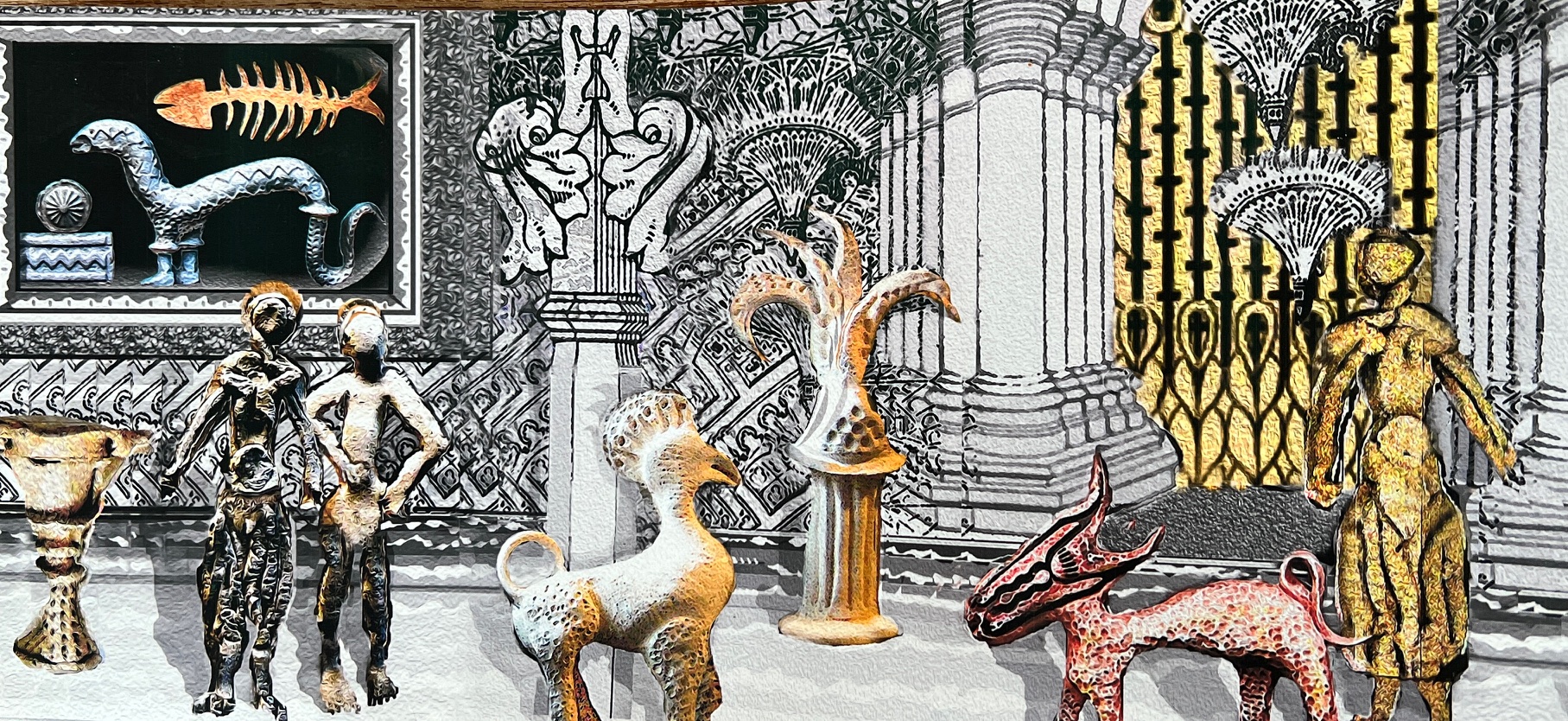
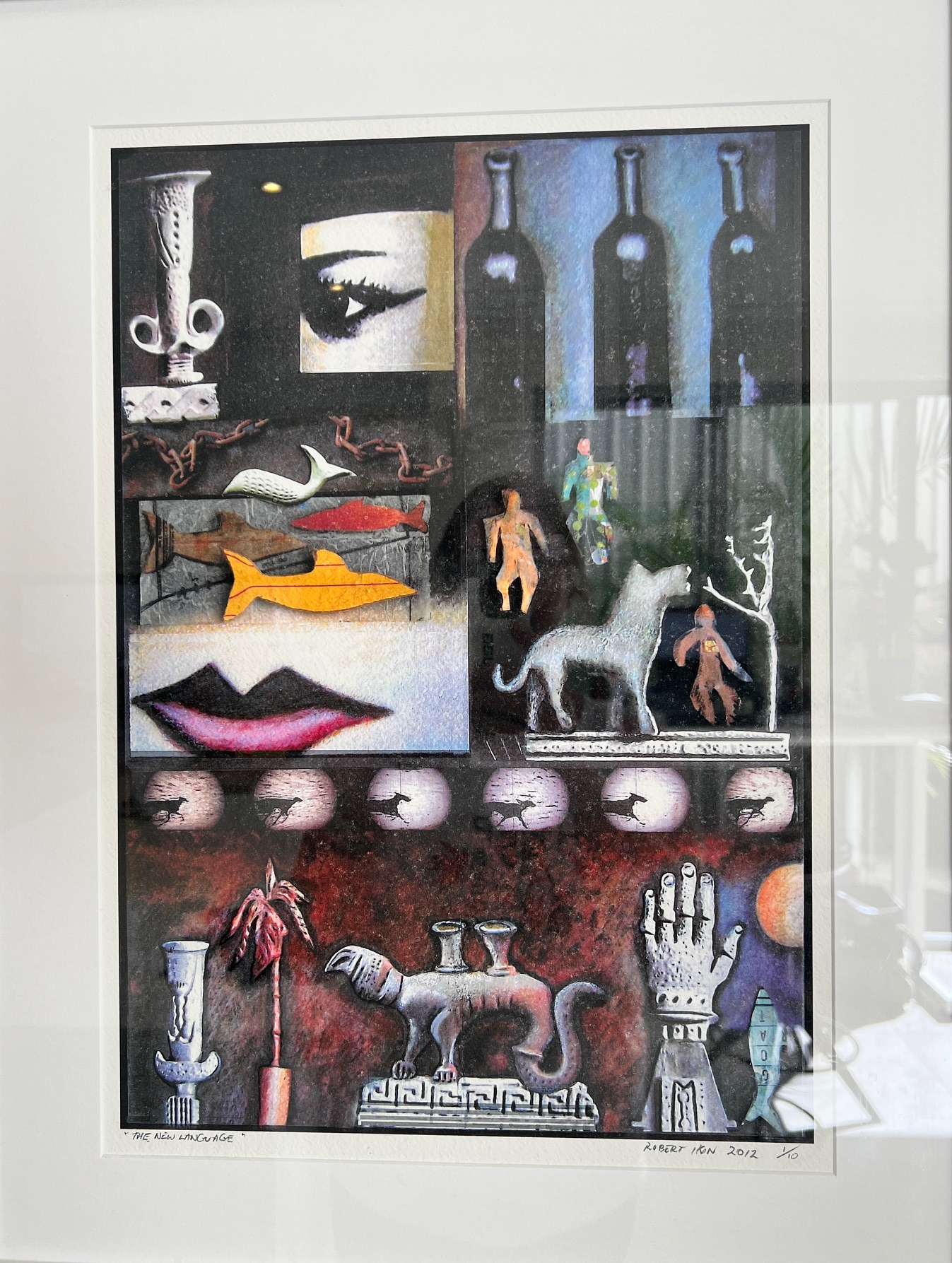
He wants to show the links between old and new. For example, the patterns on some of his old ceramic pots are echoed in the work he is producing today. Pieces from 10 years ago that he created using a lightbox have been brought back to life in new multimedia prints and collages. Small ceramic figures mounted in a display box were recently turned into images on bathroom tiles in a private Launceston home. The same figures have been featured for many years, both as ceramics and images.
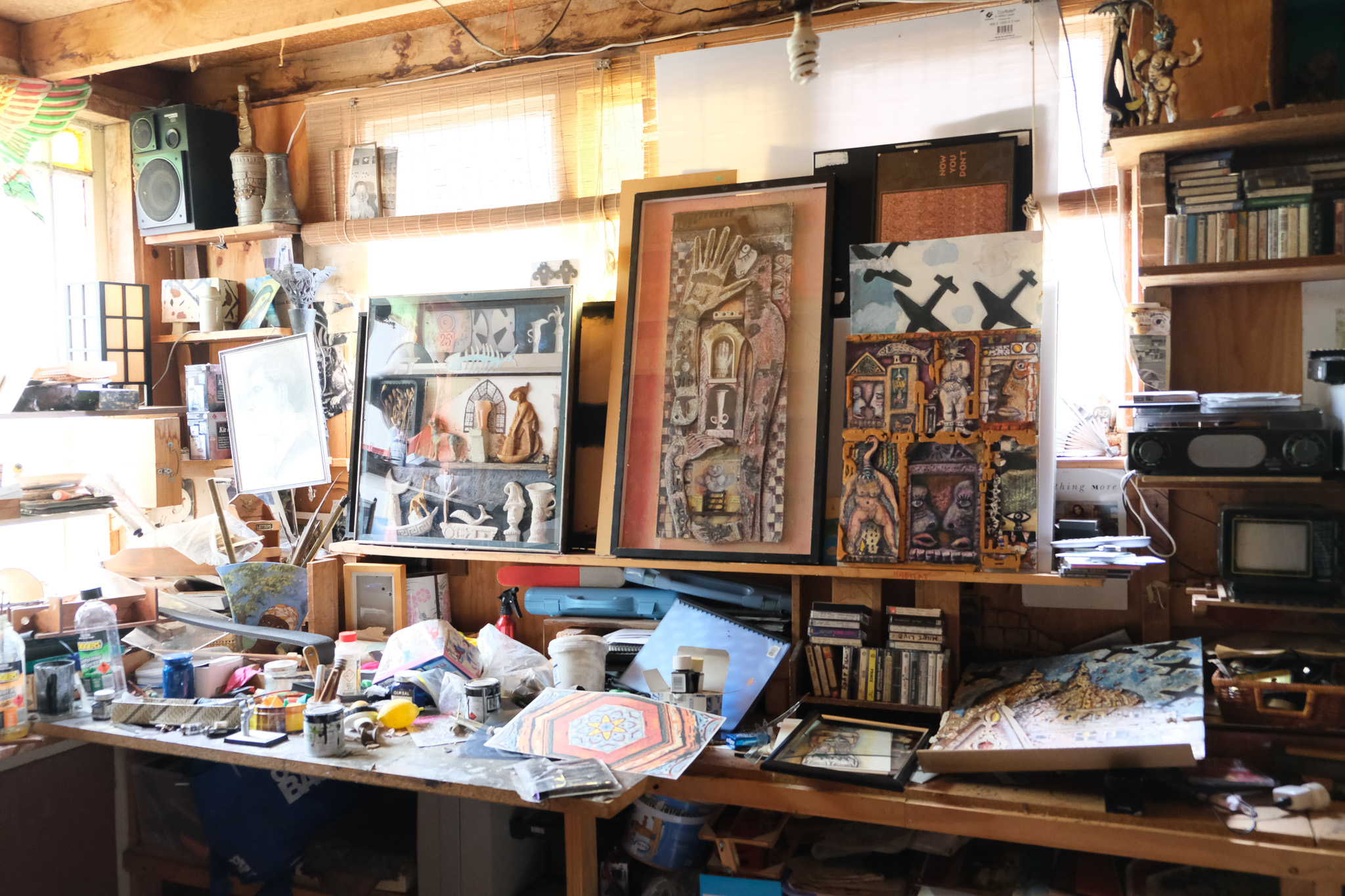
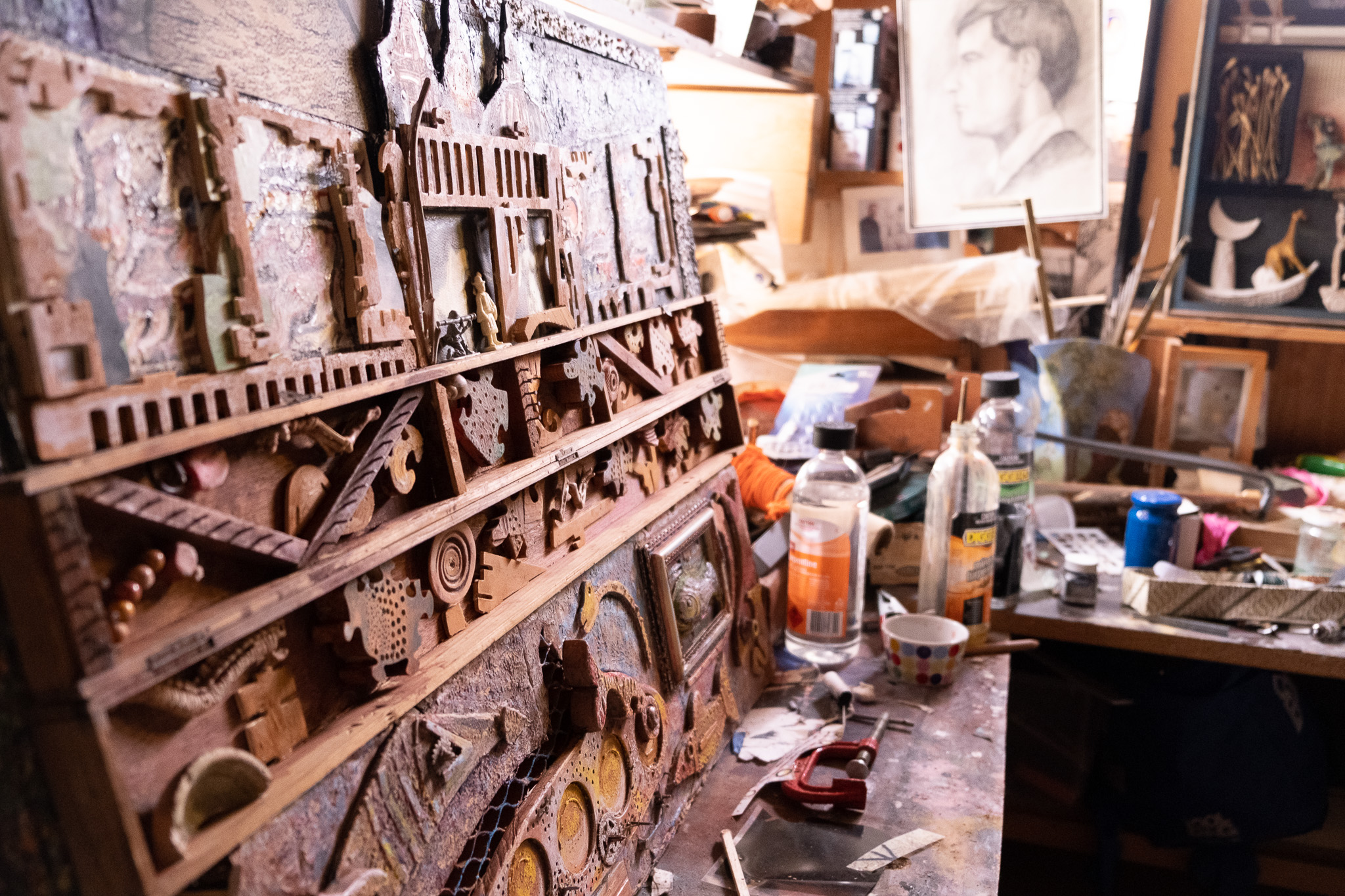
Robert currently works from his studio in the Tasmanian bush, a peaceful retreat from the hustle of city life, even though the closest semblance of ‘city life’ is the sleepy town of Launceston. His studio is a place of seeming disorder and multi-layers of works, finished, part finished and repurposed. It’s only when you spend time that you realise everything has its place in time and is a testament to Robert’s unique perspective and artistic processes.
Robert loves fine-tuning the pieces and eventually containing them in frames and perspex boxes, a process he finds exciting. He collects frames over a long period from second-hand shops, Op shops, and friends. He then personalises each one by stripping them back, extending them to fit the unique 3D quality of his work.
I was privileged to spend a couple of weeks with Dad earlier this year, observing the finishing touches to his latest exhibition. Come to the Gallows Art Space at Launceston College between 16 May and 16 June to see what promises to be the show of a lifetime. The opening will be held on Thursday 16 May 2024.




















 All in a Day Adventures